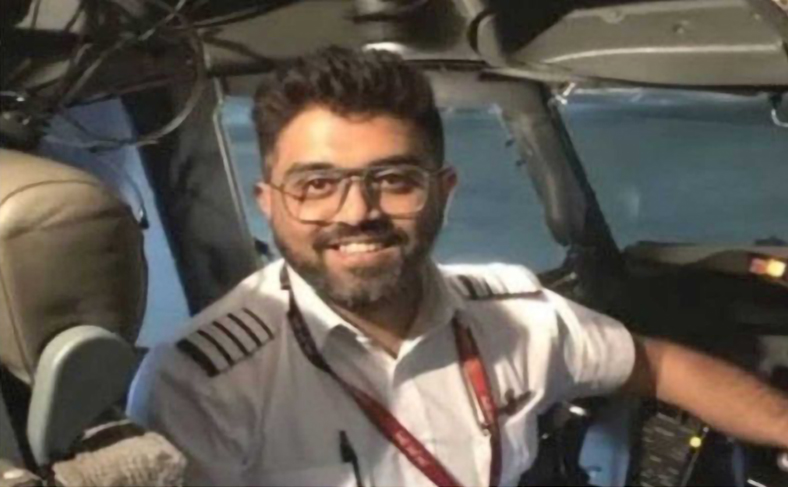







An Israeli singer learning the Hanuman Chalisa to honour an Indian pilot is an expression of gratitude few could have imagined. Another has dedicated a Hindi film song to the same man. Across social media, Captain Smit Machchhar’s courage has prompted tributes. He was the captain that brought passengers home alive. In doing so, he has given Indians and Israelis something deeply personal to share.
That gratitude followed a ruthless attack inside the cockpit of Flydubai flight FZ1073, travelling from Dubai to Tel Aviv on September 30. The co-pilot, identified by sources speaking to Reuters as Omani national Hammam al-Hammami, attacked Machchhar with a crash axe and attempted to seize control of the aircraft. UAE prosecutors have classified the incident as an attempted terrorist attack. Its full motives and possible connections still remain under investigation.
In his subsequent conversation with Benjamin Netanyahu, Machchhar described being struck repeatedly on the head. Initially, he thought something catastrophic had happened to the aircraft. Then he realised the blows were coming from the colleague beside him. His vision deteriorated. He could feel the aircraft descending and hear screaming. From the cockpit floor, he summoned the strength to reach the door and open it. Luckily passengers and crew were waiting outside to intervene.
The betrayal was absolute. The person entrusted with helping him fly the aircraft, a colleague had turned against him, placing everyone aboard in danger. Machchhar was wounded and struggling to see, yet still able to recognise the one action that could allow help to reach him.Pilots travelling aboard then secured the aircraft and landed it safely in Tabuk, Saudi Arabia. Flydubai has acknowledged the captain, those pilots, cabin crew and the passengers who assisted. Their combined actions prevented a catastrophe.
Machchhar’s life before that flight helps explain the professional behind the headlines. Raised in Mumbai in a family with Gujarati roots, he initially studied textile engineering and expected to join the family business. An aviation seminar changed his direction. He trained in New Zealand, joined SpiceJet in 2011 and rose to become a line training captain, helping prepare and assess other pilots. He moved to Flydubai in 2022. Years of preparation preceded the few moments for which he will now be remembered.
His faith accompanied him through the ordeal. Speaking to Narendra Modi from hospital, Machchhar said he had recited the Hanuman Chalisa, the prayer to Lord Hanuman, the son of the wind god, that conquers fear and gives courage to the devotee . The prayer was already part of his family life, something he shared with his young son during morning worship. He turned to it for strength.
Israelis have responded to that detail with remarkable warmth. Singer Ben Raivitz learned and performed part of the Hanuman Chalisa in his honour. Israeli-American musician Itay Benda dedicated the Hindi film song Tujh Mein Rab Dikhta Hai to him. Shared online, these tributes have carried gratitude beyond the passengers and their families. An Indian prayer and a Hindi song have become ways of expressing an Israeli thank you.
Machchhar has brought the two peoples closer through an experience no diplomatic agreement could reproduce. Indians recognise the upbringing, faith and ambition of a man who built his career abroad. Israelis recognise what his courage meant for all the people who came home safely. National pride and personal gratitude meet naturally in this story.
This is why we need heroes like him. The word is used generously for people whose achievements cost them little personally. Machchhar acted while his own life was in immediate danger. The passengers and crew who helped him also accepted risks they had never expected to face that morning.
Honouring them must go alongside a full accounting of how the attack became possible. Courage should never excuse a failure of security. But the attacker must not be allowed to define the memory of this flight. Families were reunited because a wounded captain opened a door and others had the courage to come through it. Smit Machchhar deserves to be remembered for giving them that chance, for going above and beyond the call of duty, without caring for his own life just so that the people behind that door could survice, could go home.
Views: 7