




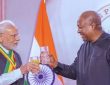
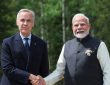
RIO DE JANIERO: Prime Minister Narendra Modi’s recent tour of Latin America attending the BRICS summit marked a significant diplomatic milestone. Beginning with a historic visit to Argentina—the first by an Indian Prime Minister in nearly six decades—Modi was warmly received by President Javier Milei. The visit focused on strengthening economic ties, particularly in sectors like pharmaceuticals, mining, and clean energy. Agreements were signed to facilitate trade and cooperation, especially in the area of lithium, as India eyes Argentina’s vast reserves crucial for electric vehicle batteries. The symbolic gesture of awarding Modi the “Key to the City” by Buenos Aires underscored the warmth of the bilateral relationship.
Following Argentina, Modi traveled to Brazil, where he participated in the 17th BRICS Summit under the theme “Inclusive and Sustainable Global South.” This year’s summit held particular significance as BRICS continues to evolve into a platform for the collective voice of emerging economies. Modi called for securing global supply chains of critical minerals to prevent geopolitical manipulation. He proposed redefining the BRICS acronym as Building Resilience and Innovation for Cooperation and Sustainability. Addressing the climate crisis, he underscored climate justice as a shared moral obligation and advocated for greater representation of the Global South in global governance institutions, including the UN and IMF.
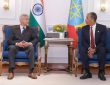
Beyond the summit, Modi held bilateral meetings with leaders from Malaysia, Cuba, South Africa, and Vietnam, reinforcing India’s “Act East” and “Neighborhood First” policies. Discussions ranged from regional security and energy partnerships to free trade agreements and technological collaboration. His dialogue with Malaysian Prime Minister Anwar Ibrahim focused on revamping the India–ASEAN free trade agreement.
Modi’s state visit to Brasília added another layer to the India–Brazil relationship. Welcomed with ceremonial honors, Modi and President Lula da Silva explored new avenues for cooperation, particularly in defense, information security, and counterterrorism. The visit emphasized shared democratic values and a mutual interest in a more equitable international order.
The BRICS summit itself was a showcase of ambition and complexity. With new members such as Iran, the UAE, and Indonesia invited to participate, the bloc is asserting a broader vision. However, internal tensions were evident, notably in the absence of Chinese President Xi Jinping. India’s role has emerged as pivotal, not only because of its economic heft but also due to Modi’s diplomatic agility in balancing relationships with both Western and developing nations.
The summit called for a united stand against protectionism, emphasized sustainable development, and advocated for inclusive global trade. Modi’s focus on technology, environmental ethics, and collective security offered a clear contrast to more transactional approaches to diplomacy. While BRICS has yet to evolve into a cohesive geopolitical alliance, India’s leadership has helped shape its narrative as a platform of transformative potential.
This tour reflects India’s growing diplomatic outreach beyond its traditional partners. It signifies an aspiration to be a bridge between regions, ideologies, and markets. Modi’s engagements in Latin America are not just symbolic—they align with India’s strategic goal of energy security, access to key minerals, and diversified economic ties.
As global politics becomes increasingly multipolar, India is positioning itself as a decisive voice. Modi’s Latin American tour and active participation in BRICS reaffirm India’s commitment to a more just, balanced, and cooperative world order. The message from this journey was clear: India is not merely participating in global realignment—it intends to shape it.
Views: 30


