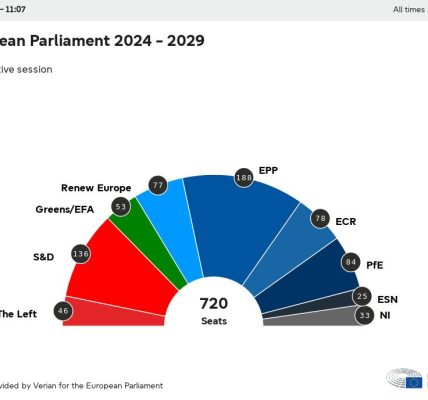






BRUSSELS: Ursula von der Leyen recently survived two no-confidence motions in the European Parliament—one from the far right and another from the left—but the narrow margins exposed deepening dissatisfaction with her leadership. Critics from across the political spectrum accuse her of weak management, poor communication, and inconsistent priorities on trade, defense, and climate policy. Though she remains in office, the repeated challenges have eroded her authority and underscored growing fragmentation within her own centrist coalition.
The Gap Between Ambition and Delivery
Von der Leyen has often been faulted for setting grand ambitions that fail to materialize. Her speeches continue to paint a vision of a “geopolitical Europe,” yet tangible results have been scarce. Her flagship projects—the Green Deal, the industrial competitiveness agenda, and defense cooperation—have lost momentum. Environmental groups accuse her of weakening climate protections in the name of deregulation, while trade unions and left-leaning parties charge that her market-oriented reforms have widened inequality.
The same dynamic is visible in external trade policy. Recent negotiations with the United States and Mercosur have raised questions about whether the Commission is prioritizing corporate interests over workers’ rights and environmental safeguards. Many lawmakers now view her as a leader more adept at headline promises than at executing lasting reforms.
Strategic Overreach and Backlash
Von der Leyen’s efforts to position the EU as a global security actor have also provoked controversy. Her proposal for an expanded defense fund and closer military coordination met resistance from several member states wary of transferring additional powers to Brussels. Likewise, her push to expand the EU budget through new revenue mechanisms has been denounced by fiscal conservatives as an overreach that risks turning temporary pandemic tools into permanent debt structures.
These initiatives, ambitious on paper, have alienated both northern and southern European governments. Even within her own political family, skepticism is growing that the Commission’s agenda is overstretched and politically unsustainable.
Eroding Credibility on Crisis and Moral Leadership
Von der Leyen has faced criticism for inconsistency and moral ambiguity in responding to international crises. Her initial handling of the Gaza conflict was viewed as one-sided, undermining the EU’s credibility as an impartial actor. Similarly, her slow response to mounting humanitarian concerns and trade disputes with China and Africa has reinforced perceptions of a Commission that reacts rather than leads.
Opposition parties in the Parliament have accused her of bypassing democratic scrutiny, especially when major decisions—on sanctions, procurement, or energy—are made without transparent consultation. Questions about accountability and ethics have also resurfaced following revelations about opaque contract negotiations during the pandemic and limited oversight of defense procurement.
What’s at Stake
While von der Leyen remains secure procedurally, her political capital is diminishing. The cracks within her coalition threaten her ability to pass the remaining pillars of her agenda before the next European elections. Without a strong consensus among member states, her vision of a more autonomous and assertive Europe could unravel.
For many in Brussels, her presidency now symbolizes a paradox: a leader who elevated the European Commission’s geopolitical ambitions yet struggles to hold together the domestic political base needed to sustain them. Unless she can rebuild trust and deliver measurable progress, Ursula von der Leyen may complete her term not as the architect of a stronger Union, but as the president who revealed the limits of European power.
Views: 82