






For decades, Pakistan was a place of refuge for Afghans fleeing war, political persecution and insecurity.
Families crossed the border with little more than what they could carry, built lives in Pakistani cities and villages, sent children to local schools and, in many cases, spent decades without returning to a country that remained unstable.
That history is now being reversed at speed.
Pakistan’s policy towards Afghan nationals has shifted from long-term accommodation to documentation checks, arrests, detention and deportation.
What began in 2023 as a drive against undocumented foreigners has expanded to include Afghan Citizen Card holders and, subsequently, people holding Proof of Registration cards.
By August 2026, United Nations data recorded more than 654,000 total returns from Pakistan to Afghanistan during the year, including more than 60,000 classified as deportations.
Behind those numbers is a question that is larger than immigration control: what happens when a state sends people back to a country where some may face persecution, serious human rights violations or threats to their lives?
That is where the principle of non-refoulement becomes central.
From decades of refuge to a policy of return
Pakistan has hosted Afghan populations through successive phases of conflict since the Soviet invasion of Afghanistan in 1979.
The country continued to accommodate millions after subsequent wars, the Taliban’s return to power in 2021 and the collapse of the internationally backed Afghan government.
By the end of 2025, UNHCR estimated that Pakistan still hosted around 1.4 million Afghan refugees and other Afghans in need of international protection.
But Islamabad’s approach changed dramatically in October 2023, when the government announced its Illegal Foreigners Repatriation Plan and ordered undocumented foreigners, including Afghans, to leave.
The government framed the initiative around national security, illegal migration and pressure on public resources.
Pakistan has repeatedly maintained that Afghan nationals without valid legal documentation have no automatic right to remain indefinitely and that the repatriation process is being conducted according to its laws.
The scale of the subsequent movement has been enormous. UNHCR and IOM data show that more than 2.59 million Afghans had returned from Pakistan between September 2023 and July 15, 2026.
During the first half of July 2026 alone, more than 53,500 returnees were recorded at five border crossing points. IOM reported that fear of arrest was cited by 96 percent of respondents as the most important reason for returning.
That figure complicates the distinction between a voluntary return and one undertaken under coercive circumstances.
Policy expanded beyond undocumented Afghans
The repatriation campaign did not remain confined to people without any documentation.
In March 2025, Pakistan announced that Afghan Citizen Card holders would also have to leave by March 31, with deportations to begin from April 1. The government said sufficient time had been provided for a dignified return and stressed that returning foreigners would not be mistreated.
The policy subsequently expanded again.
In August 2025, Pakistan announced that Proof of Registration card holders would also be repatriated. Formal repatriation and deportation of PoR holders was scheduled to begin from September 1 after a grace period.
For many Afghan families, the significance was profound. A PoR card was not simply a piece of paper. It had represented recognition of their presence in Pakistan after years of displacement.
Once that status ceased to provide protection against deportation, a population that had lived in Pakistan for years found itself exposed to a radically different legal and political environment.
The UN and rights organisations repeatedly warned that people with genuine protection needs could be swept into the process alongside those whose immigration status was more straightforward.
Arrests turned the policy into a protection crisis
The pressure intensified in Islamabad and other urban areas.
In January 2025, Amnesty International reported night raids, harassment and arbitrary detention of Afghan refugees and asylum seekers in Islamabad, including women and children. It said more than 800 Afghans had reportedly been detained in the capital since January 1.
The immediate trigger was a requirement that Afghan nationals in Islamabad obtain No-Objection Certificates, adding another administrative condition to already existing documentation requirements. Amnesty said Afghan refugees had faced detention even when holding valid documents or visas.
The organisation argued that Pakistan’s measures were contributing to an environment in which refugees were being pressured into returning to Afghanistan.
The issue was not merely whether Pakistan had the sovereign authority to regulate foreign nationals.
It was whether enforcement measures were being applied without adequate distinction between ordinary immigration cases and people who could face persecution if returned.
That distinction lies at the centre of international protection law.
What non-refoulement actually means
Non-refoulement is one of the foundational principles of refugee protection. In simple terms, it prohibits a state from forcibly returning a person to a place where there are substantial grounds for believing that the person would face persecution, torture or other serious human rights violations.
Pakistan is not a party to the 1951 Refugee Convention. Islamabad has repeatedly relied on this fact when discussing the legal status of Afghan nationals and has maintained that foreign nationals are governed by domestic immigration legislation, particularly the Foreigners Act, 1946.
But the legal debate does not end there.
The principle of non-refoulement also exists in broader international human rights law, particularly where return could expose an individual to torture or other grave violations. UN human rights mechanisms have repeatedly raised concerns about involuntary returns of Afghans from Pakistan.
In an October 2025 communication, UN special procedures expressed concern over the planned deportation of Afghan nationals and warned that returns could expose individuals to irreparable harm and grave violations of rights to life, liberty, security, physical integrity, education and other economic, social and cultural rights. Women and girls were identified as particularly vulnerable.
The legal question is therefore not resolved simply by checking whether an individual possesses a valid Pakistani visa.
Afghanistan’s post-2021 reality makes return especially sensitive
The protection question is inseparable from conditions inside Afghanistan.
Since the Taliban returned to power in August 2021, Afghan women and girls have faced sweeping restrictions on education, employment, movement and participation in public life.
Former government officials, security personnel, journalists, activists and civil-society workers have also faced serious protection concerns.
The International Commission of Jurists warned in 2023 that forced returns to Afghanistan could expose refugees and asylum seekers to persecution and other serious human rights violations. It highlighted particular risks for women and girls under the Taliban’s restrictions.
The United Nations has likewise repeatedly urged states not to return Afghans where they may face persecution or other serious risks.
Those circumstances make a blanket approach to deportation particularly contentious.
The risk faced by an undocumented migrant who has no protection claim is not necessarily the same as that faced by a former Afghan government official, a journalist, a woman previously employed in public life or a person who has specifically sought international protection.
Yet mass enforcement can make those distinctions difficult to establish before deportation.
Pakistan’s courts have begun confronting that contradiction
Pakistan’s judiciary has provided an important counterpoint to the increasingly expansive deportation policy.
In July 2026, the Peshawar High Court dealt directly with the principle of non-refoulement in a case involving around 140 Afghan families and individuals who feared persecution if returned to Afghanistan.
The court stopped their deportation and directed the federal government to determine their cases within 60 days, specifically requiring consideration of whether they qualified for asylum, temporary stay or other protection under the principle of non-refoulement.
The court ordered that the petitioners should not be deported while their cases were being considered. It also directed that, if the federal government required more than 60 days, temporary permits should be issued for the additional period.
The petitioners included former employees of the US-backed Afghan government, members of the security sector, judges, prosecutors, lawyers, teachers, journalists, NGO workers and women previously employed in Afghanistan.
Many had approached UNHCR seeking international protection and third-country resettlement.
The case illustrates the difficulty of applying a uniform deportation policy to a population with vastly different protection profiles.
Govt and courts are working from different legal premises
The federal government told the Peshawar High Court that the Foreigners Act governed the presence of foreign nationals and that Afghans without valid visas and passports were liable to repatriation.
It also argued that the final phase of the Illegal Foreigners Repatriation Plan had begun on September 1, 2025, and that sufficient time had been provided for third countries to process resettlement cases.
The petitioners, however, argued that non-refoulement was a fundamental principle of international law and that Pakistan’s constitutional protections for life, dignity, liberty and due process were relevant even though Pakistan had not joined the 1951 Refugee Convention.
The resulting legal tension is significant.
One side approaches the issue primarily through immigration status and domestic law. The other emphasises the consequences of return and the state’s obligations where an individual faces serious danger.
The courts are therefore being asked to examine not merely whether an Afghan national is legally documented, but whether returning that person would expose them to unacceptable harm.
Human cost is becoming visible at the border
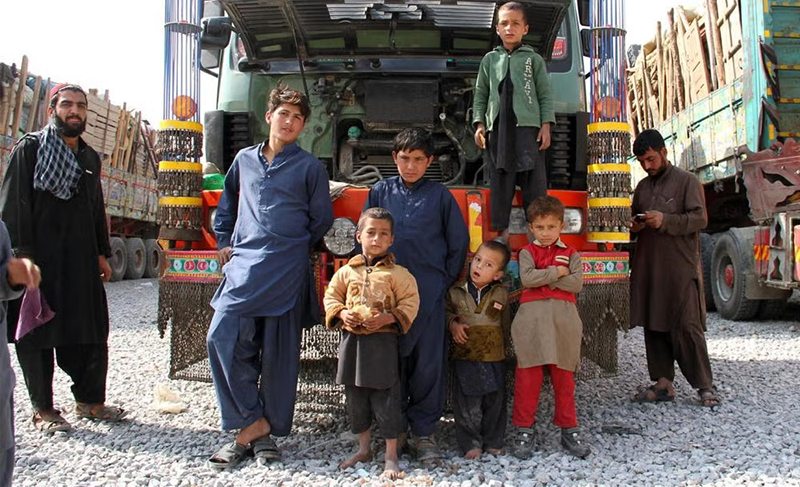
The consequences of the repatriation campaign have been particularly visible at Torkham, Chaman and other crossing points.
UNHCR has repeatedly reported large movements of Afghan families arriving in difficult circumstances.
In September 2025, the agency warned that Afghans were returning to areas of Afghanistan already affected by a devastating earthquake, creating what it described as a crisis within a crisis.
The returnees do not arrive as a homogeneous group. Some are undocumented migrants. Others hold or previously held recognised documentation. Some have lived in Pakistan for decades. Others arrived after the Taliban takeover and have outstanding protection or resettlement cases.
The distinction matters because the consequences of return vary dramatically.
For a family with no secure home, no employment and no support network in Afghanistan, deportation can mean immediate displacement.
For women and girls affected by restrictions on education, work and movement, the consequences can include loss of rights that they exercised while living in Pakistan.
For people associated with Afghanistan’s former government or security institutions, the risks can be more direct.
Numbers reveal scale of reversal
The scale of returns in 2026 has continued to grow.
UNHCR data updated on August 1 recorded 654,100 total returns from Pakistan to Afghanistan during 2026, accounting for about 60 percent of all returns to Afghanistan from neighbouring countries during the period. The same data recorded 60,100 deportations from Pakistan.
The figures include different categories of return and should not be treated as evidence that every person was forcibly deported. But they demonstrate the sheer magnitude of population movement generated by Pakistan’s policy.
IOM’s monitoring adds another important dimension. Between July 1 and 15, 2026, more than 53,500 Afghan returnees were identified at five border crossing points, while the organisation recorded a 136 percent increase in deportations compared with the previous reporting period.
Such numbers turn the issue from a series of individual immigration cases into a major regional displacement event.
A protection question Pakistan cannot reduce to paperwork
Pakistan’s position is that it has hosted Afghans for decades, has provided considerable humanitarian space and now has legitimate security and immigration concerns.
Those facts are part of the picture.
But the principle of non-refoulement asks a different question. It asks what happens to the individual after the border has been crossed.
The current debate is therefore not simply about Pakistan’s right to control its borders. It concerns whether that authority can be exercised without returning people to persecution, torture or serious human rights violations.
The distinction between voluntary return and return under the threat of arrest is also increasingly important.
When IOM surveys find that fear of arrest is cited by 96 percent of respondents as the principal reason for returning, the formal classification of the movement as voluntary becomes more difficult to interpret in human terms.
Pakistan’s policy has already transformed the lives of hundreds of thousands of Afghans. The next test is whether individual protection needs can remain visible within a deportation process operating at such scale.
The Peshawar High Court’s July intervention has placed non-refoulement directly into the domestic legal debate. International bodies have raised similar concerns.
However, the returns continue.
Views: 33