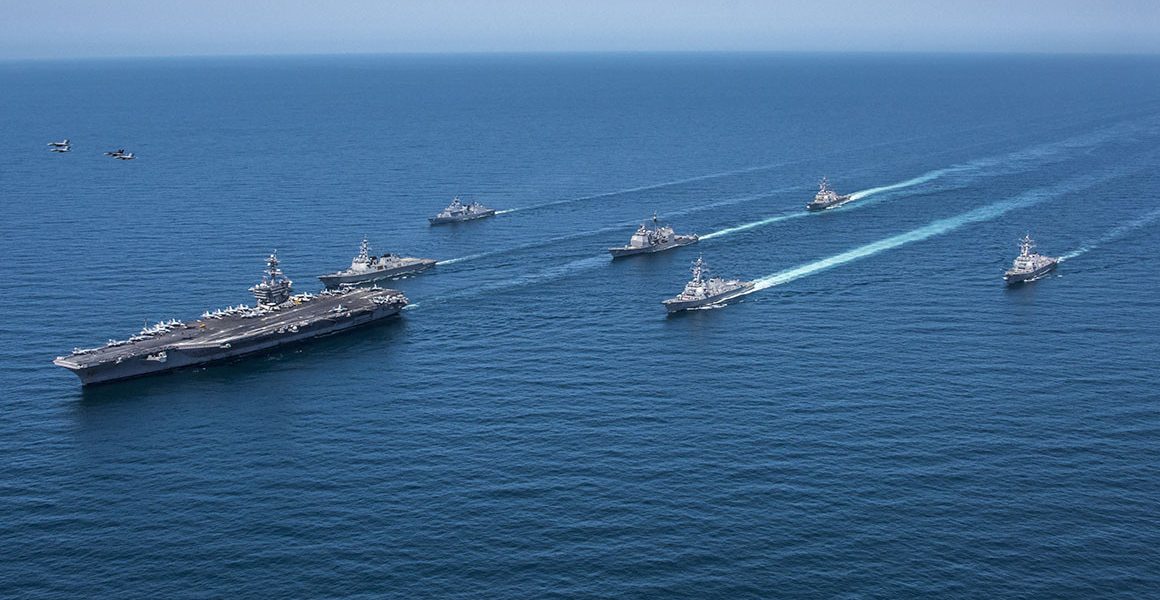







SANAA: President Trump has recently ramped up U.S. military presence in the Middle East, marking a significant shift in the U.S. approach to the ongoing conflict in Yemen. The Trump administration has deployed a second aircraft carrier, the USS Carl Vinson, to join the USS Harry S. Truman in the Red Sea. This move signals an intensification of the military campaign against Houthi rebels, who are backed by Iran. This rare double deployment highlights the administration’s commitment to countering Iranian influence in the region and bolstering support for U.S. allies in the area.
The USS Truman’s extended deployment marks a major commitment of U.S. resources to the Middle East at a time when President Trump’s focus has largely been on Asia. The extension of the Truman’s deployment by at least a month and the arrival of the Vinson will give the U.S. a potent strike capability in the region, aimed specifically at targeting Houthi missile sites and leadership. The U.S. military has already carried out multiple airstrikes against Houthi positions, with Trump promising the rebels would be “completely annihilated.”
This move comes after a week of intensive airstrikes on Yemeni territory, with the U.S. military focusing on key Houthi assets like missile storage and launch sites. These strikes are part of a broader strategy to weaken the Houthi fighters, who have gained control of large parts of Yemen during the ongoing civil war. The U.S. has also been targeting Houthi leadership in an effort to destabilize their command structure and diminish their ability to continue their offensive against the Yemeni government and Saudi-led coalition forces.
The decision to send a second aircraft carrier is also a significant one given the ongoing demands on U.S. naval forces. The Trump administration has repeatedly emphasized the strategic importance of the Indo-Pacific region, and yet this dual-carrier deployment to the Middle East demonstrates an increased focus on the volatile situation in Yemen and the wider Persian Gulf. It also reflects concerns over Iranian influence in the region, particularly as Tehran has been providing military support to the Houthis.
The Houthis’ conflict with the Yemeni government has drawn in regional powers, with Saudi Arabia leading a coalition to support the government, while Iran backs the rebels. This prolonged war has resulted in widespread devastation, causing a humanitarian crisis that has affected millions of civilians. The U.S. has been a key ally of Saudi Arabia in the region, and this recent military escalation shows a clear U.S. commitment to supporting its allies and pushing back against Iranian expansion.
The deployment of two aircraft carriers also highlights the growing complexity of U.S. military operations in the Middle East. With tensions running high between the U.S. and Iran, the added naval presence serves as both a deterrent and a signal of U.S. resolve. The extended presence of these carriers in the region will likely be a critical element of the Trump administration’s broader strategy in the region, ensuring that the U.S. maintains pressure on Iran and its proxies, including the Houthis, while also reinforcing U.S. support for its regional allies.
In conclusion, President Trump’s decision to send a second aircraft carrier to the Middle East underscores the importance the U.S. places on its military involvement in Yemen and the broader Middle East. The Trump administration’s focus on countering Iranian influence and supporting regional allies signals a significant shift in U.S. foreign policy in the region, with far-reaching implications for both military strategy and international diplomacy.
Views: 26