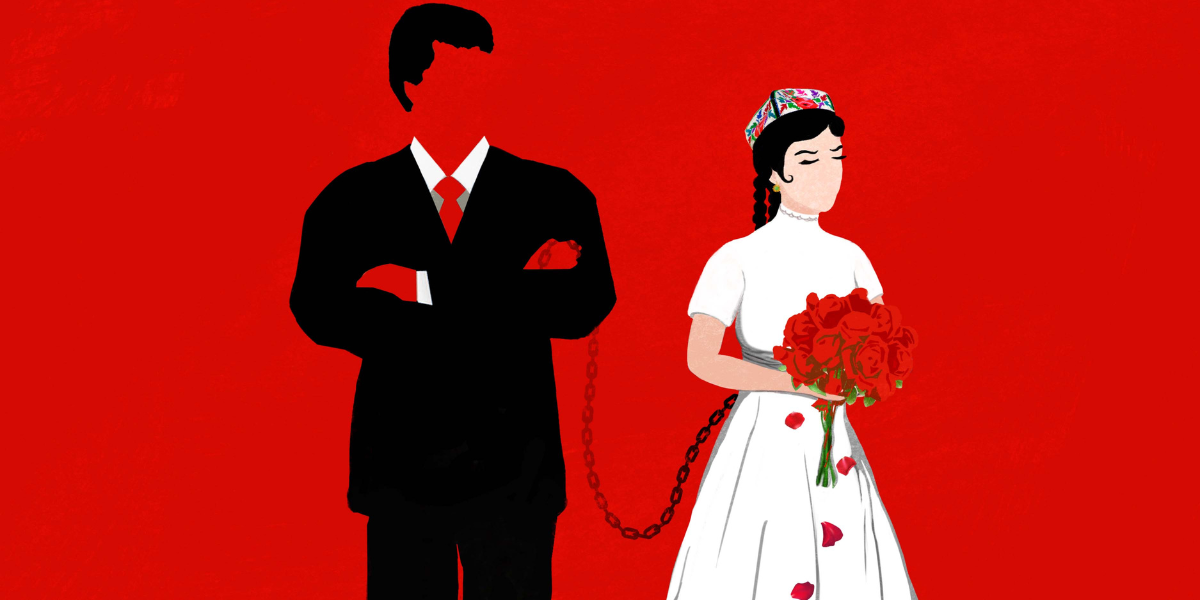







China’s growing gender imbalance and rapidly aging population have exacerbated the issue of bride trafficking, particularly from poorer neighboring countries in Asia. While Southeast Asian nations like Myanmar, Vietnam, and Cambodia have been primary targets for Chinese traffickers over the past two decades, the problem has expanded to South Asia, including Nepal, Pakistan, and Bangladesh. North Korea remains a major source of trafficked women, who are subjected to forced marriages and sexual slavery. Also there is strong pressure and force on Uyghur women to accept inter-ethnic marriages. New research by the Uyghur Human Rights Project (UHRP) has found, based on evidence from Chinese state media and policy documents, government sanctioned profiles and testimonials, and accounts from women in the diaspora, that government incentivized and forced interethnic marriages have been occurring in the Uyghur Region since 2014.
According to Visalaakshi Annamalai, a research fellow at the New York-based Model International Mobility Convention, reports of bride trafficking have increasingly emerged from Nepal, Pakistan, and Bangladesh. One recent case in Bangladesh highlighted the alarming trend: in 2024, a woman was coerced into marrying her daughter to a Chinese man, Cui Po Wei, under the false pretense that he was a Muslim residing in Gazipur city. However, the daughter was later trafficked to a brothel in China. The mother filed a complaint accusing organized traffickers of exploiting her family’s vulnerability. The Chinese Embassy denied involvement, claiming no formal notification from the Dhaka government.
Pakistan has also experienced a significant rise in bride trafficking, coinciding with an increase in Chinese nationals entering the country for the China-Pakistan Economic Corridor projects. A federal investigation revealed that over 600 Pakistani girls were sold to Chinese men, subjected to abuse, forced pregnancies, and prostitution. Despite the findings, the Pakistani government refrained from acting, fearing repercussions for its diplomatic relations with China. Marcus Andreopoulos, a senior research fellow at the Asia-Pacific Foundation, noted that human trafficking networks have occasionally been linked to elements within Pakistani state agencies.
North Korean women remain among the most vulnerable, with tens of thousands trafficked to China for forced marriages or sexual exploitation. Lee Yum, a North Korean defector, recounted being sold to a brothel operator by the broker she trusted. “When I found out, I felt so humiliated,” she said. “I cried and begged to leave, but the boss claimed I owed him for purchasing me.”
The U.S. Department of State’s 2024 Trafficking in Persons Report criticized China for its inadequate efforts to combat human trafficking. The report highlighted the Beijing government’s failure to prosecute traffickers, provide victim protection, or report comprehensive law enforcement data for the seventh consecutive year. Chinese courts have reportedly dismissed trafficking cases, detained victims, and, in some instances, repatriated them or returned them to abusive husbands in exchange for bribes.
Annamalai pointed to systemic corruption and bureaucratic negligence in China as major barriers to addressing the crisis. “Chinese authorities in rural areas have often ignored the pleas of trafficked women and even enabled their exploitation,” she said. Additionally, the U.S. report noted Beijing’s lack of initiatives to identify or assist trafficking victims among North Korean migrants, many of whom face repatriation without legal alternatives or support.
The expanding scope and persistence of bride trafficking across Asia underscore the urgent need for international attention and concerted action to combat this grave human rights violation.
Views: 70