


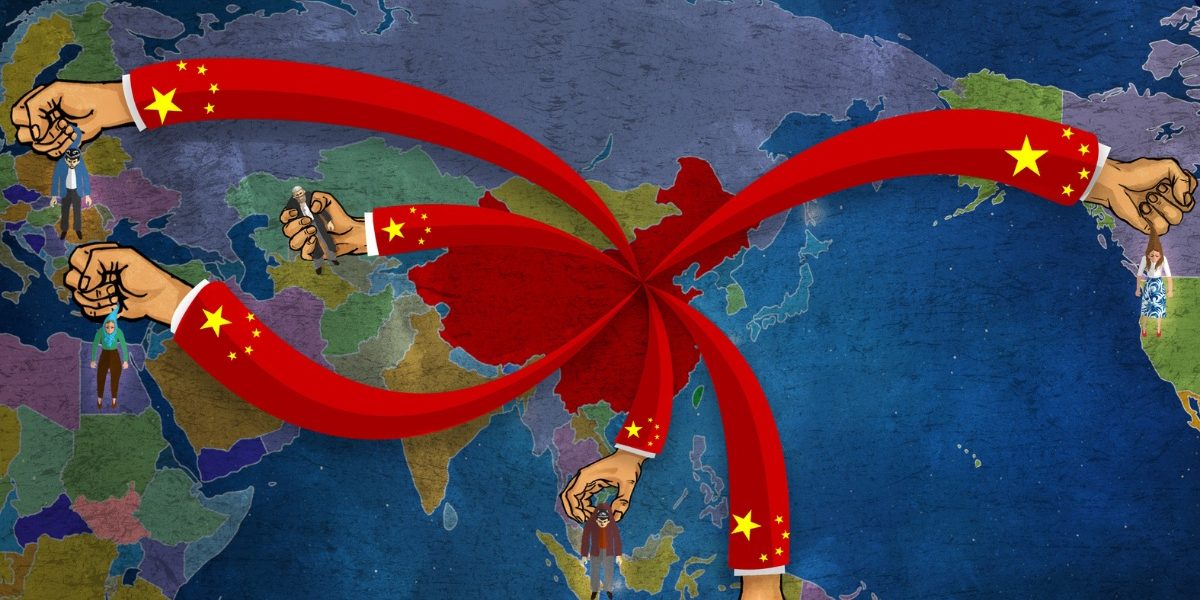







The Chinese Communist Party’s campaign of transnational repression has reached alarming new heights, posing a grave threat to global democracy and individual freedoms. No longer confined to the borders of mainland China, Beijing’s authoritarian control tactics now extend into democratic nations, undermining the very principles of liberty and free expression that these countries hold dear.
Recent events have demonstrated the CCP’s growing willingness to export its repressive tactics globally, targeting critics, overseas Chinese communities, and even foreign nationals who dare to speak out against Beijing’s policies. The conviction of two former editors of Hong Kong’s Stand News, Chung Pui-kuen and Patrick Lam, under the territory’s archaic sedition law serves as a stark reminder of the CCP’s determination to crush free speech. This case, one of the first since Hong Kong’s 1997 handover to China, signals a dire future for press freedom and open discourse in what was once a bastion of liberty in Asia.
The case of Wang Shujun, a 75-year-old naturalized U.S. citizen convicted of acting as an agent for the CCP, further illustrates the lengths to which Beijing will go to monitor and suppress dissent abroad. Wang’s conviction for spying on Chinese dissidents in the United States underscores the pervasive nature of China’s global surveillance apparatus.
According to Freedom House, the CCP’s transnational repression toolkit is both diverse and chilling. It includes assassination, rendition, unlawful deportation, physical assault, deployment of spyware, family intimidation, digital threats, abuse of Interpol mechanisms, and mobility controls. These tactics represent a clear and present danger to democratic values and individual freedoms worldwide.
In a brazen assault on U.S. sovereignty, 40 officers from China’s internal security forces were charged in April 2023 with orchestrating a transnational repression scheme targeting Chinese dissidents living in America. Their methods included creating fake social media accounts to harass and intimidate pro-democracy advocates and collaborating with employees of a U.S. telecommunications company to censor dissidents. This case reveals the extent of the CCP’s reach and its willingness to manipulate foreign institutions to silence critics.
The perpetrators of these acts of transnational repression come from various arms of the Chinese state apparatus, including the Ministry of Public Security, Ministry of State Security, People’s Armed Police, People’s Liberation Army, Chinese militia, and Cyberspace Administration of China. The involvement of these diverse agencies underscores the comprehensive nature of China’s global repression strategy and its belief that Chinese diaspora communities remain under Beijing’s authority, regardless of their location or citizenship.
The CCP’s transnational repression campaign gained momentum with the launch of Operation Fox Hunt in 2014 and Operation Sky Net in 2015. While ostensibly part of Xi Jinping’s “anti-corruption” drive, these programs have been weaponized to target political opponents and dissidents worldwide. The tactics employed include harassment, stalking, pressuring family members, and even kidnapping. Rights group Safeguard Defenders has documented an alarming 283 cases of extrajudicial returns from at least 56 countries and two territories, highlighting the global scope of Beijing’s repressive reach.
The CCP’s strategy extends beyond covert operations, leveraging pro-Beijing groups within diaspora communities to suppress dissent and control narratives. This was evident during Xi Jinping’s 2023 visit to San Francisco for the APEC summit, where pro-CCP groups violently confronted anti-CCP protesters. Such actions, often incentivized by the Chinese government, are part of a broader effort to silence critics and shape public opinion abroad.
At the heart of China’s transnational repression efforts lies the United Front Work Department, a powerful organ of the CCP tasked with influencing foreign governments, co-opting diaspora communities, and advancing Beijing’s political goals abroad. This organization plays a crucial role in coordinating China’s global network of influence, blurring the lines between civilian and state actors and establishing a pervasive system of control that spans from Chinese embassies to local community groups.
As China refines its methods of control and expands its influence, the implications for global democracy are profound. The CCP’s transnational repression campaign represents a direct challenge to the principles of free speech, individual liberty, and national sovereignty. It threatens not only Chinese dissidents and diaspora communities but also the very foundations of democratic societies worldwide.
The escalating threat of China’s transnational repression demands a coordinated and robust response from democratic nations. Governments, civil society organizations, and individuals must work together to strengthen legal protections for dissidents and vulnerable communities, enhance cybersecurity measures to counter digital threats, increase public awareness of CCP influence operations, and foster international cooperation to counter transnational repression.
Only through vigilant and concerted efforts can the global community hope to stem the tide of China’s expanding authoritarian reach and preserve the values of freedom and democracy for future generations. The battle against transnational repression is not just about protecting Chinese dissidents; it is about safeguarding the fundamental principles that underpin free societies everywhere. As China’s global influence grows, so too must our resolve to defend the rights and freedoms that define the democratic world.
In the face of this mounting challenge, it is imperative that democratic nations unite in their commitment to upholding human rights and individual liberties. The international community must recognize the far-reaching consequences of allowing China’s transnational repression to continue unchecked. By standing firm against these authoritarian tactics, we not only protect vulnerable individuals and communities but also reaffirm the universal values of freedom, democracy, and human dignity that are the bedrock of a just and open global society
Views: 39


