


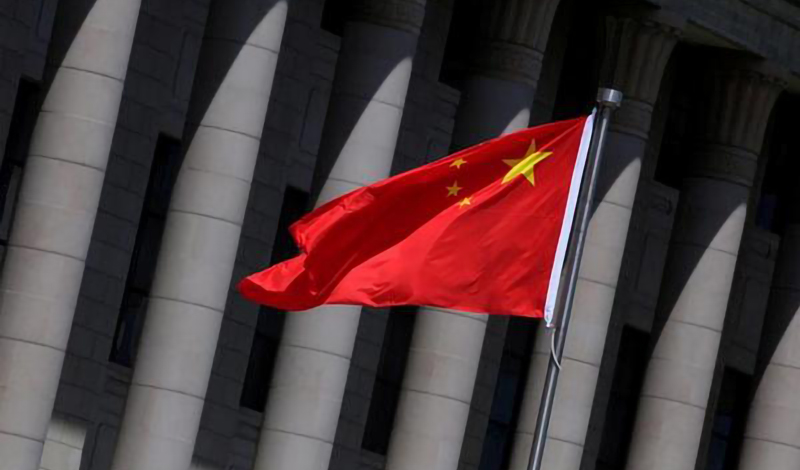







The case for why the world must prepare for the breakdown or transition of the CCP regime, and what an international strategy should look like. History teaches us that authoritarian regimes rarely collapse in a neat or predictable fashion. The Chinese Communist Party (CCP), despite its formidable machinery of control, is not immune to the pressures of economic stagnation, demographic decline, internal factionalism, and external confrontation.
The question is not whether the CCP will face a moment of breakdown or transition, but whether the international community will be ready when it does.
Preparation Is Necessary. The CCP’s legitimacy rests on two pillars viz; economic growth and nationalist strength. Both are eroding.
Economic slowdown, Debt crises, youth unemployment, and declining productivity undermine the Party’s promise of prosperity.
and demographic decline, a shrinking workforce and aging population strain the social contract. Geopolitical confrontations like escalating disputes with India, Taiwan, Japan, and the Philippines expose the limits of coercive diplomacy.
When these pressures converge, the CCP may resort to extreme measures – heightened repression at home or reckless adventurism abroad. Either path increases the risk of instability.
The Risks of Breakdown. A sudden CCP collapse could unleash refugee flows across Asia.
Fragmentation of governance, with provinces or factions asserting autonomy. Nuclear uncertainty if central control weakens. Economic shock reverberating through global markets. Conversely, a managed transition – toward pluralism or a softer authoritarianism – would still demand careful international coordination.
Elements of an International Strategy.
Contain and Stabilize
• Prevent spillover conflicts by reinforcing regional security alliances. Establish humanitarian corridors and refugee response mechanisms. Safeguard Nuclear Assets
• Coordinate intelligence and military readiness among trusted partners. Prepare contingency plans for securing or monitoring nuclear facilities. Economic Resilience
• Diversify supply chains away from China. Create stabilization funds to cushion global markets against shocks.
Support Peaceful Transition
• Engage with reformist elements inside China. Offer pathways for integration into the international community if governance shifts toward openness. Narrative and Legitimacy
• Frame the transition not as a humiliation of China but as an opportunity for renewal. Emphasize benefits for the Chinese people, avoiding rhetoric that fuels nationalist backlash.
The CCP has built a fortress of control, but fortresses can crumble from within. The international community must not be caught unprepared. A coherent strategy – combining containment, deterrence, resilience, and support for peaceful transformation – will ensure that when the CCP faces its moment of reckoning, the world responds with foresight rather than panic.
The lesson is clear. Preparing for breakdown is not provocation; it is prudence. The stakes are too high to leave to improvisation.
Views: 39

Khedroob Thondup
Khedroob Thondup is the son of Gyalo Thondup, elder brother of the Dalai Lama. Educated at St. Stephens College Delhi University and the University of San Francisco. He was a personal assistant to the Dalai Lama and accompanied him on his first trip to the U.S. in 1979. He was sent by the Dalai Lama to Beijing from 1980 till 1993 for dialogue talks where he interacted with Xi Zhongxun and Hu Jintao. He has served as Member of the Tibetan Parliament in Exile for three terms and is the President of the Tibetan Refugee Self Help Centre Darjeeling since 1987. He has edited two books, Dalai Lama My Son and Tibet in Turmoil and presently lives in Taipei, Taiwan.


