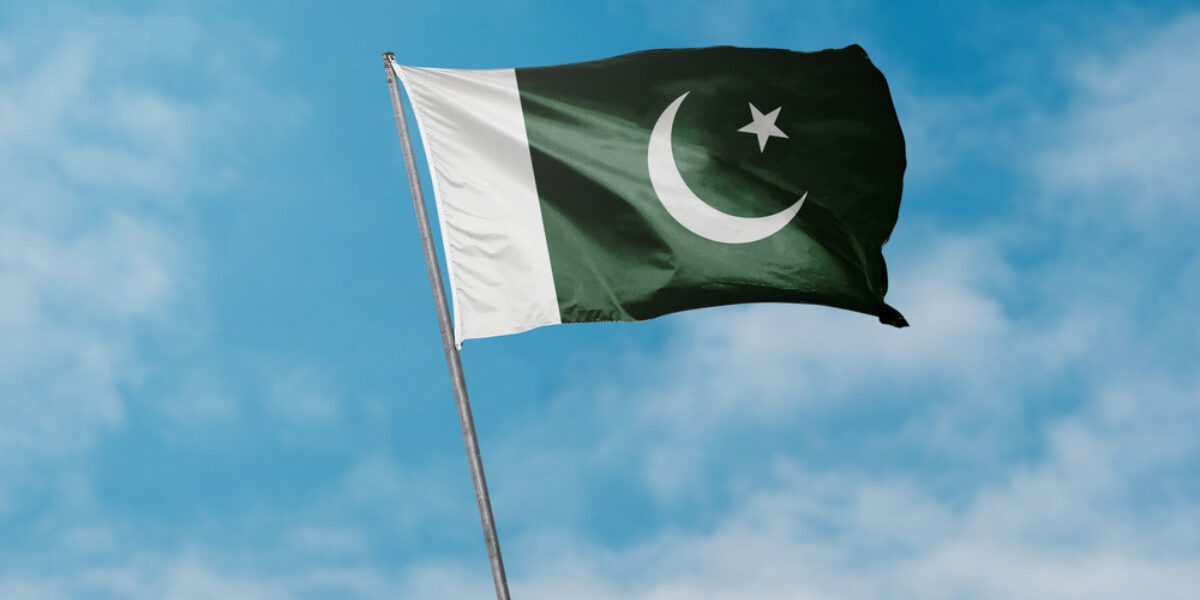







ISLAMABAD: In August 1947, the Indian Sub-Continent saw the birth of India and Pakistan. Pakistan was pre-dominantly Muslim dominated but with a healthy Hindu, majorly Sindhi and Christian population. and India was a diverse mix of religious communities and sects. However, the paths of the countries, in terms of treatment of their respective minorities, greatly diverged. The Indian Constitution, at the draft stage itself, adopted provisions for protection and development of it’s most vulnerable. Pakistan too started with the ideals of Qaid-e-Azam who famously declared that Hindus were free to go to their temples. Pakistan, however, soon feel victim to rising Islamism and it’s 1973 Constitutions formalised the integration of Islam into every sphere of polity, thus, squeezing out the minorities.
This contrast was deliberated upon during a side event organised at the Penultimate Day of the 60th UNHRC session in Geneva. The Sindhi Adhikar Manch discussed the constitutional safeguards provided by the Constitution of India to minorities in India and contrasted that with the persecution and discrimination faced by minorities, particularly, Sindhis in Pakistan.
At its inception in 1947, Pakistan was envisioned as a pluralistic state, a sanctuary for all citizens regardless of caste, creed, or religion. The founding promise was one of equality, tolerance, and freedom, where the state would not interfere in the religious beliefs of its people. Yet, over the decades, this vision has been systematically eroded. The Constitution of Pakistan, while outwardly offering protections to minorities, embeds within its structure a series of provisions, amendments, and legal interpretations that institutionalize religious discrimination.
The turning point came with the Objectives Resolution of 1949, which declared that Pakistan’s future constitution would be rooted not in secular democratic ideals but in the ideology and democratic faith of Islam. When the 1973 Constitution was introduced by Zulfiqar Ali Bhutto, the Objectives Resolution was retained as the Preamble to the constitution, which also declared Pakistan as an Islamic state. It restricted the offices of prime minister and president of Pakistan to Muslims only.
The Objectives resolution was later enshrined in Article 2A of the Constitution, setting the tone for a legal framework that prioritizes Islamic principles over universal human rights. Although the Supreme Court clarified that Article 2A is not supra-constitutional, its symbolic and practical influence remains profound.
While the Constitution allows minorities to practice their faiths, it does so under the caveat of Islamic principles. Islam is the state religion, and all laws must conform to the injunctions of the Quran and Sunnah (Article 227). The Islamic Council (Article 228) further entrenches this bias by shaping policy through an Islamic lens, often at the expense of minority rights.
Articles 41(2) and 91 explicitly bar non-Muslims from holding the highest offices in the land, the President and Prime Minister. This exclusion was not part of the original 1973 Constitution but was introduced during General Zia-ul-Haq’s regime in 1985. Attempts to amend these articles, such as the 2019 bill by Christian lawmaker Naveed Amir, have been blocked, reinforcing the systemic denial of political representation to minorities.
Article 260 of the constitution unequivocally declared the Ahmadiya community as a non-Muslim minority. This classification has far-reaching implications, including disenfranchisement and social ostracization. In the Shahid Orakzai case, the Supreme Court upheld the legislature’s right to bar non-Muslims from certain posts, further legitimizing exclusion.
General Zia-ul-Haq’s regime changed the entire continuum of policies for minority rights. Zia’s own religious inclinations further empowered parties like the Jamat-e-Islami and the Jamiat Ulema-e-Islam. During his tenure Zia introduced several amendments which significantly altered the 1973 Constitution.
The Hudood Ordinances of 1979, part of Zia’s Islamization drive, introduced Sharia-based punishments for crimes like theft and adultery. These laws require testimony from Muslim male witnesses for hadd (fixed) punishments, effectively disqualifying non-Muslims from seeking justice when the accused is Muslim. This evidentiary bias undermines the very notion of equal protection under the law.
The Ehtram-e-Ramazan Ordinance criminalizes eating, drinking, or smoking in public during Ramadan. Though minorities are theoretically exempt, in practice, they have been arrested and harassed, even within private spaces. This law exemplifies how religious norms are enforced on all citizens, regardless of faith.
In Pakistan, religious minorities, excluding Ahmadis who are constitutionally declared non-Muslim, comprise an estimated 3.5% of the population. This includes Christians, Hindus, Sikhs, and others. Based on Pakistan’s 2023 census, Muslims constitute 96.4% of the population. While the census indicates 1.4% Christians and 1.6% Hindus, these figures are disputed by Christian leaders who claim the census undercounts their population.
Since the Islamization during the Zia regime, polarization in society has increased. Violence against religious minorities has been escalating over time. Ahmadis, Hindus and Christians have all fallen victim to the controversial Section 295-C of the Pakistan Penal Code (PPC), 1860 dealing with blasphemy. Though this section should only be applicable to Muslims, religious minorities continually fall into this black hole. The Ahmadiya community has been under constant threat from Muslim extremists, with mass attacks being carried out in their prayer houses and target killings taking place in various parts of the country. The Christian community is also victim to discrimination and violence by Muslim extremists in the country.
The Governor of Punjab, Salman Taseer, was shot dead in 2011 by his bodyguard. Mr.Taseer had only stated that the law on blasphemy was a ‘bad law’ and had shown support for a Christian woman, Asia Bibi, who had been convicted of blaspheming. Such has become the state of affairs that this act of cowardice was applauded by showering flowers on the assassin and was condoned by some religious parties and Muslim extremists. Hindus also face forced conversions; young Hindu girls are abducted, forced to marry Muslim men and converted to Islam.
The legal provisions regarding Zakat and Ushr are part of a larger trend towards Muslim centric legislation that either ignores religious minorities or excludes them.
In a move aimed at curbing discrimination and fostering inclusivity, a provincial legislative assembly in Pakistan unanimously recommended on August 11, 2025, that the term “minority” be expunged from the Constitution and replaced with language that affirms the equality and dignity of all citizens, regardless of religion, caste, or creed. This symbolic gesture reflects a growing recognition of the need to dismantle institutional biases and promote a more unified national identity.
While the proposed linguistic shift is a step in the right direction, it remains insufficient to elevate the lived realities of religious minorities to parity with the Muslim majority. True equality demands more than semantic reform; it requires substantive legal, political, and social transformation. Without addressing the entrenched structural barriers and discriminatory laws that marginalize non-Muslim communities, the promise of equal citizenship will remain aspirational rather than actual.
Beyond constitutional provisions, the lived reality for minorities in Pakistan is grim. Churches, temples, and gurdwaras have been attacked; worshippers assaulted; and communities subjected to rape, murder, and forced conversions. Successive governments have failed to act decisively, and calls for an independent body to address these abuses remain unanswered.
The Constitution of Pakistan, far from being a shield for minority rights, has evolved into a tool of exclusion and discrimination. Through a combination of religiously charged amendments, judicial interpretations, and selective enforcement, it has institutionalized second-class citizenship for non-Muslims. The vision of a tolerant, inclusive Pakistan remains a distant dream, one that can only be realized through courageous legal reform and a recommitment to the principles of equality and justice for all.
As all state actions flow from the Constitution, it will be naive to think, that the state will be able to change it’s approach towards it’s minorities, till it changes the fundamental values that define the country.
Views: 183