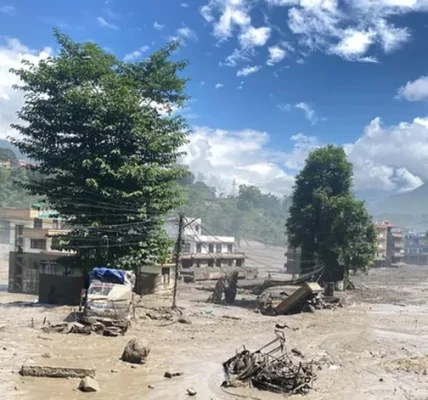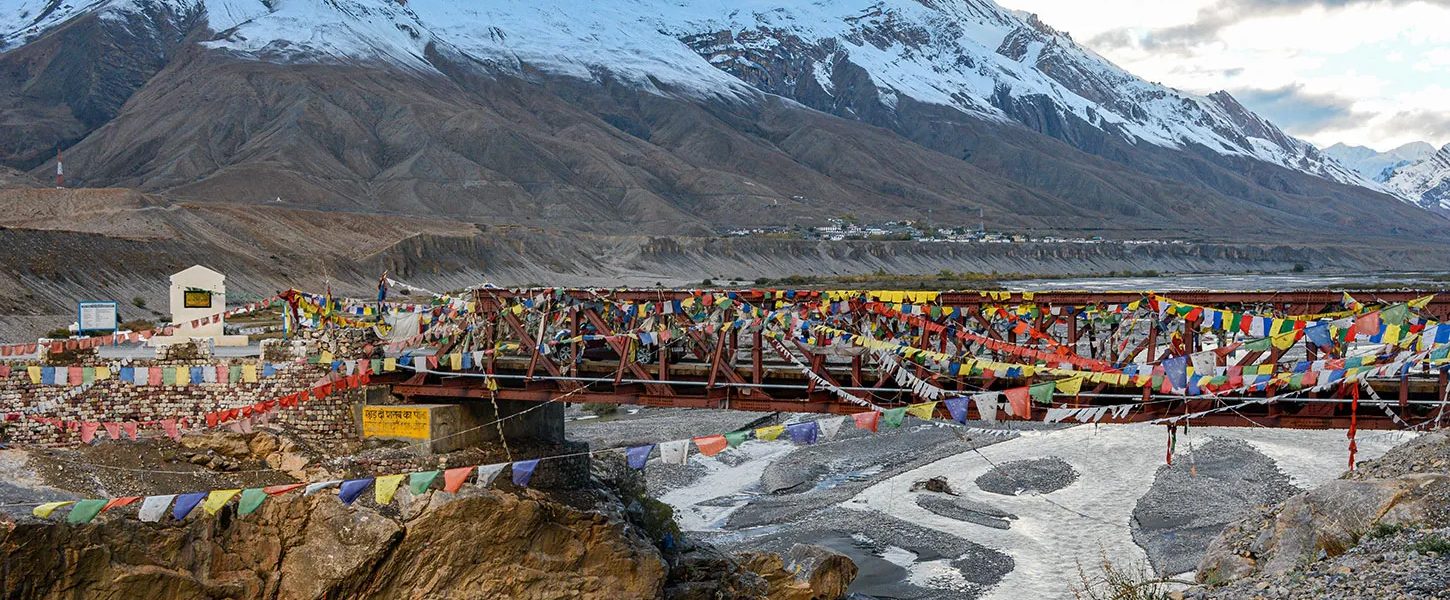







LHASA: For decades the Tibetan Plateau has been sold to the world as an ecological jewel. Asia’s “water tower,” a vast high-altitude reservoir that feeds ten major rivers and sustains hundreds of millions downstream. Today that jewel is being turned into a strategic asset-class by Beijing: carved for minerals, threaded with military roads, harnessed for mega-dams, and sanitized of local dissent. The result is not accidental climate vulnerability but policy-driven environmental collapse. An orchestrated tradeoff where geopolitical control and energy extraction trump ecological stewardship and human rights.
Scientific measurements now make the stakes brutally clear. Since 1980 the Plateau has warmed at roughly 0.42 °C per decade, a rate that has driven unusually rapid glacier retreat, changes in precipitation, lake expansion and alarming permafrost degradation. These climate shifts are already reordering river flows and freshwater storage across Asia.
Those climate trends are then amplified, not mitigated, by human choices. One of the starkest recent developments is the full steam ahead for a cascade of megadams on the Yarlung Zangbo/Brahmaputra, a river that begins in Tibet and becomes a lifeline for downstream India and Bangladesh. In 2025 China began construction on what documents describe as the largest hydropower cascade yet conceived on the eastern Plateau. A $170 billion, multi-station program intended to harness a 2,000-meter drop for enormous power yields. Projected annual generation numbers are eye-watering; so too are the geopolitical and ecological consequences for billions of people downstream. Beijing frames this as “development.” To everyone who depends on the Brahmaputra for irrigation, fisheries and flood buffering, it looks like strategic hydrological control thinly cloaked as progress.
If the dams demonstrate how infrastructure becomes a tool of state power over water, mining exposes a darker calculus: resource extraction at any cost. Recent policy and field reports document expanding mineral and uranium operations across the Plateau, with devastating local effects viz. soil stripping, heavy metal contamination of fragile oases, and the permanent scarring of alpine ecosystems poorly able to regenerate. Independent briefings note not only water pollution and livestock deaths near extraction sites, but also troubling allegations of nuclear-waste handling and dumping tied to uranium projects. These are not isolated accidents; they’re the product of a centralized economic strategy that privileges raw output and strategic stockpiles above local ecological resilience.
Air pollution, especially black carbon, provides another example of policy-driven acceleration of environmental harm. Studies show that black carbon aerosols, much of which originates from fossil fuels, industrial processes and regional emissions patterns, are disproportionately effective at darkening snow and ice, driving faster melt across high mountain environments. Some analyses attribute a substantial share of Plateau ice loss to black carbon deposition; combined with warming, these particles substantially worsen the Plateau’s water storage crisis. In short, fossil-fuel and industrial policies far from the “threatened glaciers” are materially speeding their demise.
None of these environmental harms occurs in a political vacuum. The CCP’s security-first management of Tibet, the militarization of transport corridors, the top-down planning of hydropower and mining, and the systematic sidelining of local voices creates an environment where scientific scrutiny, independent monitoring, and community resistance are all severely constrained. Official human-rights reporting and NGO briefings describe restrictions on civic space, movement, and information in the region; environmental harms that could be mitigated through local stewardship or transparent oversight are instead insulated from public contestation. The effect: ecological decisions are consolidated in security and economic ministries, not in communities who have lived in balance with these landscapes for centuries.
This is not merely a regional injustice. When a state converts the “third pole” into a mine, a dam chain and a military corridor, the downstream consequences are transnational: altered river timing, reduced snowpack buffering, and sediment and pollution flows that reshuffle food-security, hydropower and flood risk across South Asia. Beijing’s posture, presenting these projects as sovereign modernization while sharply limiting cross-border scientific collaboration and information sharing, amplifies regional mistrust just when cooperative water governance is most needed.
The unique cruelty of this policy mix is its predictability. Beijing’s models of development have long internalized a calculus: short-term energy and resource gains plus consolidated control. The long-term ecological cost and social friction is not taken into account. The damage to Tibet isn’t a tragic side effect; it is an anticipated and tolerated outcome of policy objectives that prioritize control and extractive capacity. That is not governance, it is strategic sacrifice.
If the international community is to respond, it must stop treating Tibet’s environmental crisis as a purely scientific lament and instead recognize the policy choices driving the collapse. Independent, cross-border monitoring of glaciers, black carbon and river flows must be reopened; multilateral environmental pressure should be applied to ensure comprehensive impact assessments and transparent project data; and regional forums that include downstream stakeholders must be resuscitated to demand accountability. Above all, Tibetan ecological knowledge and local stewardship practices which is consistently sidelined by centralized security logic must be restored as part of any viable long-term fix.
The Roof of the World cannot be treated as an expendable strategic frontier. The international water and climate security of billions depends on reversing a policy trajectory in which ecology is subordinated to control. Until that political choice is confronted and changed, glacial retreat, contaminated soils and dam-controlled rivers will remain a predictable legacy of a government that treats sovereignty as license to extract and Tibet as the price.
Views: 86