









DHAKA: With a number of Islamic parties in Bangladesh raising a host of preconditions to be fulfilled before the national elections can be held, the formation of an elected government may be deferred indefinitely in the beleaguered country.
The real motive of these parties and groups is to get themselves organized sufficiently before going to the elections, so that fundamentalists can capture power in Bangladesh in the coming days. With the interim government led by Mohammed Yunus playing ball with fundamentalist forces to keep deposed Prime Minister Sheikh Hasina’s party the Awami League from staging a comeback, Bangladesh may slide down the path of hardcore Islam.
A host of Islamic parties and groups, among them Bangladesh Jamaat-e-Islami, Islami Andolan Bangladesh and Gono Adhikar Parishad, have clearly stated that they want the local government elections to be held first before the national elections. They have also demanded that the system of elections in Bangladesh be changed from the present first-past-the-post, under which the candidate who polls the largest number of votes wins, to one of proportional representation. These two steps, if implemented, are sufficient to push back the national elections in Bangladesh indefinitely. On the top of this, the newly floated National Citizen Party, which is led by fundamentalist student leaders who had ensured the ouster of the Sheikh Hasina government, has demanded that the planned elections in Bangladesh in February next year be halted until the “justice and reform” agenda of the Mohammed Yunus government is completed.
The Bangladesh Nationalist Party of Khaleda Zia is the only player in the political scene in the country now which wants early elections, within December this year. The Awami League has no say, having been banned. In fact, the banning of the Awami League has left the field wide open for BNP now; till the Islamic fundamentalist parties can put their own houses in order. Mohammed Yunus had earlier announced that the polls would be held in April next year. In a meeting with Acting Chairman of BNP Tarique Rahman during his visit to London last June, Mohammed Yunus agreed to the holding of the elections in February 2026.
This, however, does not suit the agenda of the Islamic fundamentalists who had been thrown into disarray during the rule of Sheikh Hasina; their leaders who had taken a leading role in the genocide of Bengalis during the freedom struggle in Bangladesh having been put into prison and hanged. Some of them had escaped abroad. They want more time to put their own houses in order before going to the polls.
On April 23, following a meeting between Islami Andolan Bangladesh and Gono Adhikar Parishad, Amir of the former Mufti Syed Muhammad Rezaul Karim and President of the latter Nurul Haque separately announced that the two parties had reached a consensus regarding the holding of local government elections prior to the national elections. Two days later, on April 25, Bangladesh Jamaat-e-Islami Ameer Shafiqur Rahman jumped into the bandwagon; calling upon the Election Commission to organize the local government elections before the parliamentary elections.
While the Islamic Andolan and Gono Adhikar Parishad justified their demand with the argument that since the fall of the Sheikh Hasina government the absence of local government representatives had caused considerable sufferings for the common people in accessing services, the Jamaat Ameer argued that if the promise of the Election Commission of Bangladesh that it would hold “the best election in the history of the country” was to be accepted, it must go through the “acid test” of holding the local government elections first to justify their “goodwill and capacity.”
On July 5, the National Citizen Party added a new precondition that the national elections must be postponed till the Mohammed Yunus government fulfilled its promised “justice and reform” agenda, meaning thereby that the trial in absentia of deposed Prime Minister Sheikh Hasina in the International Crimes Tribunal of Bangladesh on the charge of “committing crime against humanity” must be completed first.
Many other political parties — among them Bangladesh Islamic Front and Islami Andolan Bangladesh — have also been demanding, since the formation of the Mohammed Yunus government, reform in the electoral system of Bangladesh and the introduction of the proportional representation system.
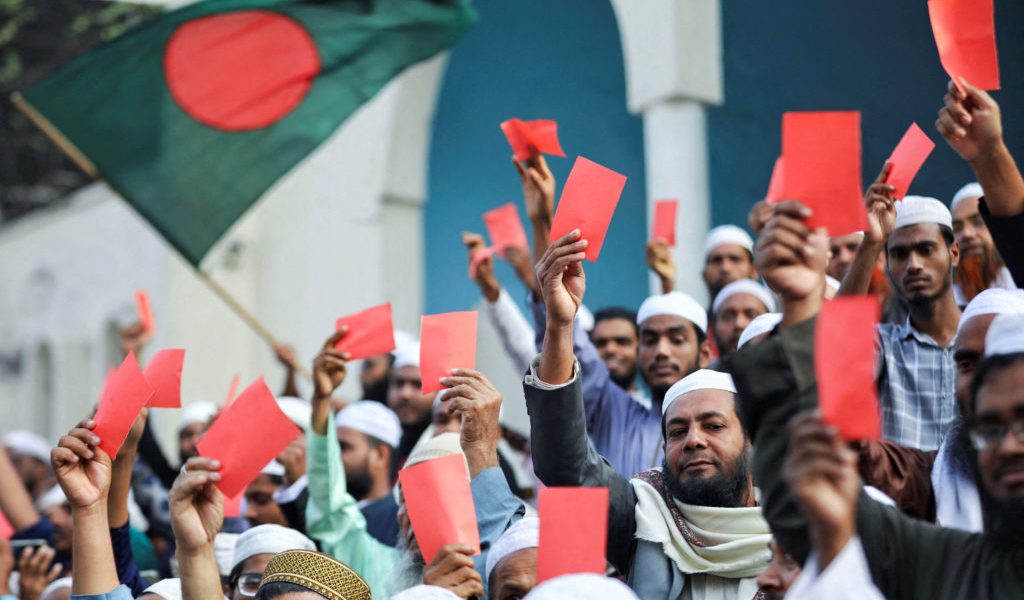
Clearly, if these demands, in fact any one of them, have to be met, it will not be possible to the elections in Bangladesh in February next, let alone in the coming December. The Jamaat Amir has observed that the people of Bangladesh will extend full support to the Election Commission in holding the national elections only if they are satisfied with the way the Election Commission had conducted the local government elections. “Otherwise they will show the EC a red card,” he has said.
The BNP has the apprehension that the holding of the local government elections before the national elections could lead to widespread disorder in the country, delaying the elections further. BNP leaders are also afraid that if the elections to the local bodies are held first, internal squabbles within the party on local issues will undermine the chance of the BNP winning in the national elections.
A switchover to the proportional representation system of election is a time-consuming process and will delay the national elections indefinitely. Experts in Bangladesh are of the view that this will require an amendment of the constitution of Bangladesh. Besides, the proportional representation system under which a party will get parliamentary seats on the basis of the percentage of votes it has received may make the formation of coalition governments inevitable; leading to instability.
“Those who are talking about a proportional representation system have a motive. Those who want local government elections before the national elections also have a motive,” BNP spokesman Salahuddin Ahmed has said. “Either they want the elections to be delayed, or they want no election at all in Bangladesh.”
The Islami Andolan Bangladesh held a huge rally in Dhaka on June 28 demanding justice and the introduction of the proportional representation system. With leaders from Gono Odhikar Parishad, Nezam-e-Islam Party, Khilafat Majlis, Islami Oikya Jote, Bangladesh Khilafat and Khilafat Andolan attending the rally, it now seems that in Bangladesh elections may be deferred indefinitely to pave the way for the Islamic fundamentalist groups to capture power in the coming days.
Views: 43


