


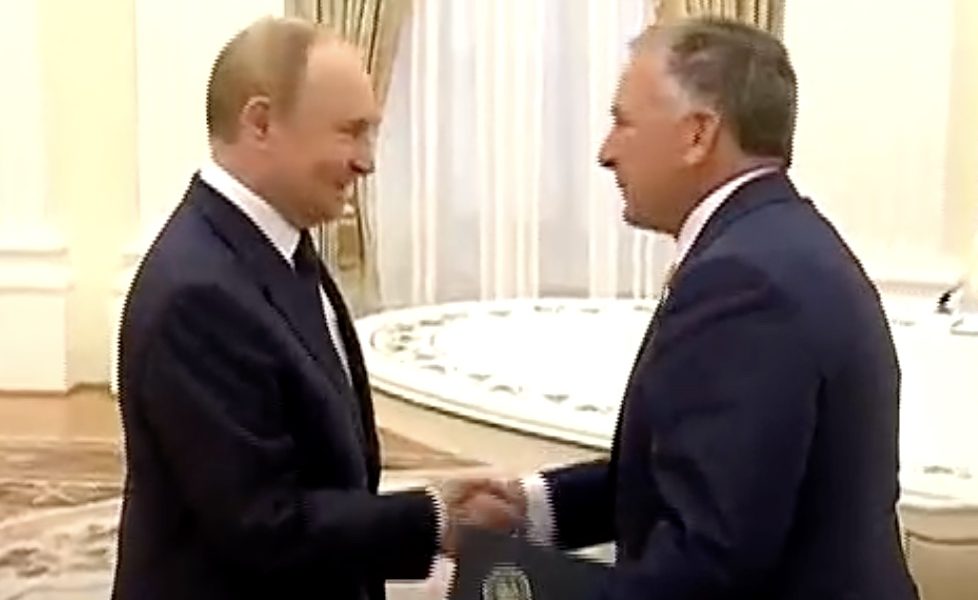







OP-ED: The war in Ukraine, a conflict that has defined the geopolitical landscape of the early 2020s, now faces a pivotal moment. U.S. President Donald Trump’s announcement to meet with Russian President Vladimir Putin in Alaska for peace negotiations has created a global political earthquake. This summit, the first of its kind since Trump’s return to office, is framed as a last-ditch effort to stop the bloodshed and stabilise a volatile region. This high-stakes diplomatic effort to end the protracted conflict in Ukraine, however, is critically challenged by the conflicting territorial demands of the involved parties, the exclusion of Ukrainian leadership from the initial talks, and the potential for a peace deal that legitimises Russian aggression. This essay will examine the core problems the summit seeks to address, the significant challenges standing in the way of a durable peace, and the profound geopolitical implications of a resolution—or failure—to end the conflict. The focus will be on the critical issues of territorial integrity, the role of Ukraine in its future, and the ethical and legal questions surrounding any deal that might be struck. The stakes are immense, as the outcome will not only determine the fate of Ukraine but also serve as a defining moment for the international rules-based order, testing the limits of diplomacy in the face of military aggression and the political will of major global powers.
The diplomatic effort in Alaska is a direct response to the core problem identified in the thesis: the failure of previous diplomatic channels to resolve the protracted conflict. For over three years, the war has ravaged Ukraine, leading to a devastating humanitarian crisis and a staggering loss of life. While direct talks between Moscow and Kyiv have been attempted, they have consistently faltered due to irreconcilable differences. Early on, a glimmer of hope appeared in the negotiations held in Istanbul, where a preliminary framework for a peace deal was discussed. However, these talks ultimately collapsed, largely due to Russia’s shifting demands and the discovery of atrocities in Ukrainian territories previously occupied by Russian forces, which hardened Kyiv’s resolve. The failure of these talks, coupled with the long-stalled Minsk agreements that were meant to resolve the earlier conflict in the Donbas, underscores a deep-seated diplomatic stalemate that has made a direct resolution between the combatants nearly impossible.
As the war has progressed, Russia’s unilateral annexation of four Ukrainian provinces—Luhansk, Donetsk, Zaporizhzhia, and Kherson—has created an even greater chasm between the two sides. From Ukraine’s perspective, any negotiation that does not restore its 1991 borders is an unacceptable surrender of sovereign territory. Ukrainian President Volodymyr Zelenskyy has repeatedly stated that any deal involving the cession of land is a non-starter. From Russia, the annexed territories are non-negotiable, having been formally incorporated into the Russian Federation following what Moscow claims were legitimate referendums. This stalemate, fuelled by military advances and a lack of a clear path to a mutually acceptable solution, has created an opening for an outside arbiter. Trump, in his role as a self-proclaimed dealmaker, has positioned himself to fill this void, believing that his unique relationship with Putin and his unconventional approach to diplomacy can succeed where traditional methods have failed. However, the very existence of this summit underscores the profound failure of the international community to broker a lasting peace through traditional diplomatic channels, signalling a significant shift in the global balance of power and influence. The Alaska resolution process faces major obstacles which may be impossible to overcome, according to the thesis statement. The main obstacle exists in the opposing territorial claims that which two nations maintain. The proposal made by Trump regarding the exchange of territories stands as an extremely flawed possible solution. The proposal seems to provide a logical solution, yet it directly violates Ukraine’s fundamental national interest and international legal standards. The Ukrainian government has consistently maintained it will never surrender any territory to Russia. The proposed “land swap” stands as a severe violation of the Ukrainian soldiers who sacrificed their lives defending their national borders. The strategic regions which form a Russian land link to Crimea and enable access to the Black Sea possess such crucial importance that any Ukrainian leader would find their surrender impossible to accept. The four annexed provinces remain an issue of national pride and defence according to Putin’s government, which continues to demand full control over them. The acceptance of Russian territorial gains through a peace agreement would create major political challenges for Kyiv while also encountering opposition from EU members who supplied military and financial assistance because they support international law and territorial sovereignty. A deal that appears to reward aggression would undermine the fundamental structures of the international order established after World War II.
The thesis is challenged by the exclusion of Ukrainian leadership from the first bilateral talks, which presents a major difficulty. The absence of President Zelenskyy, together with his European allies, from the Trump-Putin meeting has triggered widespread concern. Such a method indicates that Ukraine might face a situation where a deal would be made and possibly imposed upon them without their explicit approval. Such an exclusion stands as an untypical diplomatic approach while simultaneously showing disrespect to a nation fighting for its survival. The strength of a peace agreement depends on how well the participating parties maintain their commitment to uphold it. An agreement reached during the Alaska meeting without Ukrainian involvement and acceptance would most likely be unstable because it would lack essential legitimacy to persist in the future. The exclusion establishes a harmful precedent because major powers can make decisions about smaller nations without their input, which violates both principles of self-determination and sovereign equality. The decision has caused Washington to face opposition from its European allies, who worry about being excluded from a choice affecting their mutual security.
According to the thesis, the most critical challenge involves the risk of obtaining a peace deal that validates Russian military aggression. The international legal framework would suffer a devastating blow if any settlement permits Russia to maintain its acquired territories. Such an arrangement would establish a precedent that territorial conquest through military power leads to successful outcomes, thereby damaging national sovereignty and creating future security risks. The ICC arrest warrant against Putin that remains unenforceable in Alaska adds complexity to the meeting’s moral and optical implications. The international community would view any agreement between the US and Putin as unethical because it would validate his actions while he faces international criminal charges. A deal that emerges from this situation would generate massive geopolitical effects, which could lead to losing crucial U.S. allies and creating divisions within NATO and the G7, thereby weakening the alliance against Russian expansion. Such an arrangement would lead to the breakdown of international standards and the revival of a system based on power dominance.
To conclude, the Trump-Putin summit in Alaska stands as a vital point which shapes the Russia-Ukraine war and the entire international framework. The fundamental obstacles, including territorial disputes, together with Ukrainian leadership exclusion and aggressive legitimisation, present insurmountable challenges for establishing sustainable peace. The achievement of universal desire for conflict termination depends on both the methods of peace pursuit and the specific conditions of any resulting agreement. Success in these talks depends on their ability to address their fundamental obstacles. A hasty peace agreement that compromises Ukrainian sovereignty to achieve rapid results would create conditions for future instability rather than establish lasting peace. The world observes with interest the process of finding a resolution which upholds international laws together with national sovereignty. A successful outcome would require both conflict cessation and a strong peace framework that ensures Ukraine receives proper security protection and establishes a clear path toward complete territorial recovery. A deal that rewards aggression while undermining global norms would create dangerous and destabilising consequences which would last for many decades. The Alaska summit stands as the last chance for innovative diplomatic strategies to achieve success in areas where established methods have failed or become another chapter of diplomatic errors. The future of Ukraine, together with the international legal system, remains uncertain in this critical moment.
(The opinions expressed in this article are the authors, Europeantimes.org bears no responsibility for the same).
Views: 59


