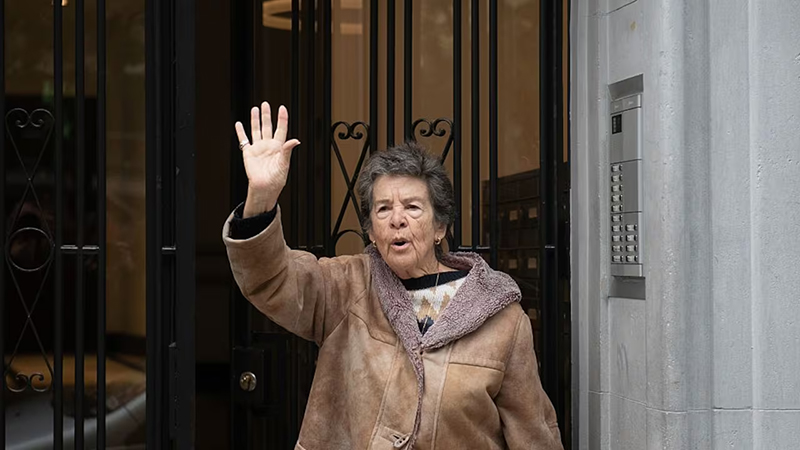







Maricarmen Abascal had lived in her Madrid home for more than seventy years. On 23 September, aged 87, she was evicted and taken to hospital. On 7 October, she died, before an agreement allowing her to return home could be realised. No medical cause of death had been publicly announced. But the images of an elderly woman being removed from the home in which she had spent almost her entire life had already become a political indictment.
Her eviction brought thousands into the streets and gave Spain’s housing crisis a face that no party could easily dismiss. The government responded with housing decrees. The Partido Popular, Vox and Junts voted them down. On 5 October, two days before Maricarmen’s death, Pedro Sánchez called elections for 29 November. A personal tragedy had become part of the confrontation over whether Spain’s government could still govern.
Sánchez’s difficulties began well before this eviction. The agreements that allowed him to remain in office have become increasingly inadequate for passing legislation. Spain has not approved a new budget since 2023. The economy has continued to grow, but political negotiation has failed to produce the decisions needed to address some of the most immediate concerns of ordinary Spaniards. Housing has exposed that failure with particular force.
For Sánchez, the election is an attempt to turn parliamentary weakness into a public mandate. He wants voters to hold responsible those who blocked his measures. The difficulty is that, after eight years in power, he cannot place himself outside the system that failed Maricarmen. The opposition can be held accountable for its votes. The government must also answer for its record.
This is where Alberto Núñez Feijóo sees his opportunity. The PP has demanded elections and now has to demonstrate that it can offer a functioning alternative. Its proposals emphasise construction, faster permits and lower taxes. There is a clear economic argument for increasing housing supply. There is also a question of time. An 87-year-old facing eviction cannot wait for a building programme to produce results.
The right’s prospects are strong, but its political direction remains open. Polling reported by Reuters points to a possible parliamentary majority for the PP and Vox. How that majority is divided would determine the authority Feijóo could exercise and the concessions Santiago Abascal could demand.
A PP-led government would likely pursue lower taxes, deregulation and a larger role for private investment in housing. Dependence on Vox would bring pressure to make national preference and immigration restrictions central to its programme. Abascal’s emphasis on “remigration” signals ambitions that go well beyond replacing Sánchez. He wants to influence the character of the state and whom it prioritises.
Feijóo therefore faces two negotiations, one with the electorate and another with the party that may make him prime minister. A stronger Vox could help secure a majority while limiting his freedom to govern. Sánchez will try to exploit that contradiction, asking voters to consider what follows his departure. Whether that argument can overcome frustration with his own government remains uncertain.
Maricarmen’s story has made this election harder to conduct entirely through slogans. Sánchez must explain why a government committed to social protection could not deliver it in time. Feijóo must explain how his alternative would protect those who cannot wait for the market to adjust. Her case leaves both facing the same uncomfortable fact. The agreement that would have allowed her to return home came too late.
Views: 9