The European Union’s Generalised Scheme of Preferences Plus (GSP+) is meant to reward countries that demonstrate concrete progress in human rights, labour standards, good governance and environmental protection. Pakistan has been one of the largest beneficiaries of GSP+ since 2014, with its exports to the EU particularly textiles more than doubling due to zero or reduced tariffs. Yet, over more than a decade of preferential access, Pakistan has consistently failed to show sustained, structural improvement in core human‑rights which is conditional to the GSP+ conditionality framework. In light of the current trajectory, there is a strong, evidence‑based case for suspending Pakistan’s GSP+ status until it meaningfully complies with its obligations.
Under GSP+, Pakistan has pledged to effectively implement 27 international conventions, including the International Covenant on Civil and Political Rights (ICCPR), the Convention Against Torture (CAT), and core ILO conventions on labour rights. EU monitoring missions and the GSP Hub highlight that, for the 2024–2025 review cycle, Brussels is focusing on priority issues such as freedom of expression, judicial reforms, prevention of torture, the death penalty, women’s and minority rights, and civic space. However, EU reports and parliamentary questions show persistent non‑compliance, especially regarding blasphemy laws, enforced disappearances, the use of military courts for civilians, and the persecution of religious minorities.
One of the clearest indicators of Pakistan’s violations is the tightening, not loosening, of its blasphemy regime. In 2023, Pakistan’s National Assembly passed the Criminal Laws (Amendment) Bill, increasing the penalty for insulting revered Islamic figures from three to ten years’ imprisonment. Members of the European Parliament explicitly flagged this law as incompatible with Pakistan’s commitments under ICCPR, particularly on freedom of expression and freedom of religion or belief, and asked the Commission whether it would weigh this heavily in its biennial GSP+ review. EU‑linked analyses and rights groups further note continuing misuse of blasphemy provisions, mob violence, and the burning of churches and Christian neighbourhoods such as the 2023 Jaranwala attacks without adequate state protection or prosecution of perpetrators. Maintaining GSP+ in the face of such legislative regression undermines the core purpose of conditional trade incentives.
The situation of religious and other minorities remains particularly alarming. EU monitoring reports and European civil‑society inputs describe systematic discrimination, harassment, and violence against Christians, Ahmadis, Hindus and Shia Muslims, often fuelled by incitement and legal impunity. The EU’s own GSP+ review highlighted that freedom of religion or belief and minority rights “continue to be regularly violated,” and called on Islamabad to take clear action against blasphemy‑related discrimination, false accusations, and mob lynchings. Yet no comprehensive reform of the blasphemy framework has occurred, and high‑profile cases continue to surface, signalling that the state either cannot or will not protect those most vulnerable. Granting continued tariff privileges despite this pattern sends a message that minority persecution carries no real economic consequences.
Freedom of expression and civic space that is central to both ICCPR and GSP+—have also deteriorated. Human Rights Watch’s World Report 2024 and 2025 chapters on Pakistan document an expanding crackdown on dissenting media, journalists, opposition politicians, and NGOs. Journalists have faced intimidation, surveillance, arbitrary arrest and disappearances; one prominent journalist, Imran Riaz Khan, was detained for months in 2023 without charge before being released. The EU GSP+ monitoring report similarly raised serious concerns over media freedom and noted that women journalists in particular face threats and targeted harassment. The enactment of restrictive laws such as the Peaceful Assembly and Public Order Act 2024, plus bans on movements like the Pashtun Tahaffuz Movement (PTM), reinforce the impression that Pakistan is systematically shrinking civic space rather than expanding it.
Enforced disappearances, extrajudicial killings, and abuses in regions such as Balochistan and Khyber Pakhtunkhwa represent another major area of non‑compliance. International and EU‑adjacent assessments describe Balochistan as a “human‑rights black hole,” where security forces are accused of systematically targeting political activists, students, and human‑rights defenders through abductions and secret detentions. In its 2024 submission to the UN Human Rights Committee, Amnesty International stressed ongoing enforced disappearances, torture, and crackdowns on peaceful protests, including harassment of prominent Baloch activist Dr Mahrang Baloch. These practices directly violate obligations under ICCPR and CAT, yet they have not been curbed in any meaningful way despite repeated international scrutiny.
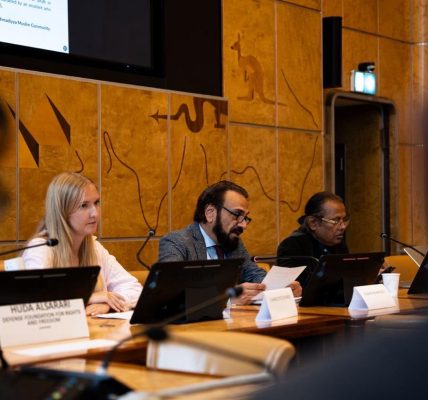
Recent policies on refugees and migration further illustrate Pakistan’s disregard for key international commitments. In late 2024 and 2025, authorities launched a mass campaign to force undocumented Afghans, including long‑term residents and registered asylum seekers, back to Afghanistan under threat of arrest, detention and deportation. By December 2026 more than 4.5 million Afghans had been expelled, amid reports of police extortion, abuse and denial of due process. European politicians, campaigners and political representatives recently at a side event of ongoing 61st United Nations Human Rights Council in Geneva expressed their views for closer scrutiny of Pakistan’s GSP+ status. They urged that the Pakistan’s human rights record, core refugee‑protection norms raise serious concerns under conventions tied to GSP+, such as CAT and ICCPR’s non‑refoulement principles. Continuing GSP+ despite such mass expulsions severely weakens the EU’s credibility as a human‑rights‑driven actor.
Views: 156