


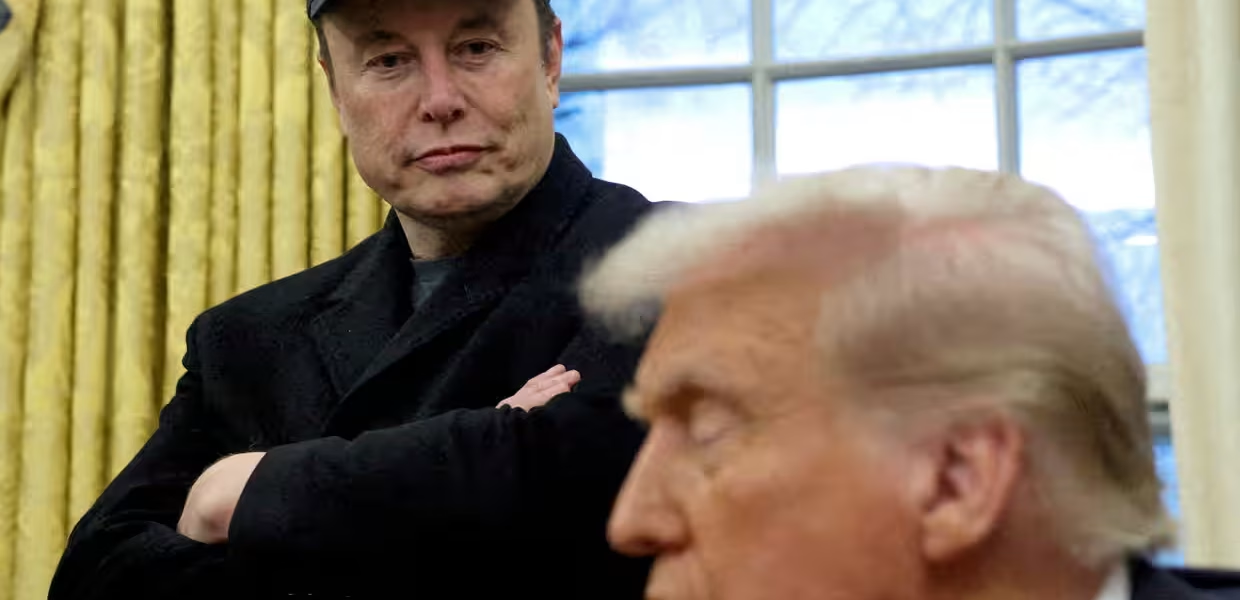







On May 30, 2025, Elon Musk concluded one of the most unorthodox and controversial chapters of his career: his brief, high-profile stint in the U.S. government. As head of the Department of Government Efficiency—dubbed “DOGE” in a nod to his online persona—Musk entered Washington with Silicon Valley bravado, promising to “disrupt” federal bureaucracy and trim trillions from the budget. He leaves behind a trail of bold claims, fierce resistance, and unanswered questions.
Musk’s appointment in January as a special advisor to President Donald Trump shocked many, both in Washington and the business world. It was an unprecedented move: the world’s richest man stepping into a formal government role to redesign the machinery of the American state. With the White House’s blessing, Musk was given sweeping, if vaguely defined, authority to identify waste, restructure departments, and push efficiency at scale.
He immediately set to work, announcing that his team had already uncovered $175 billion in “potential savings” across federal agencies. DOGE initiatives ranged from automating payroll systems with AI to slashing staff in departments he labeled “redundant.” Supporters praised his audacity and results-oriented mindset; critics accused him of bypassing legal norms and gutting essential services.
Over the course of 130 days, Musk’s reform agenda collided repeatedly with the realities of politics. Legislative leaders balked at his push to override budget processes. Cabinet secretaries clashed with his office over policy priorities. Some of his most radical proposals—like merging multiple agencies under private management—were blocked by courts or quietly shelved after internal pushback.
Tensions between Musk and the Trump administration also came to a head. While Musk had initially embraced the role with enthusiasm, his open criticism of a multi-trillion-dollar spending bill pushed by the GOP earned him rebukes from within the White House. He publicly denounced the plan as fiscally irresponsible and warned that it undermined the very efficiencies he was tasked with promoting.
Outside the Beltway, Musk’s presence in government reverberated through his businesses. Tesla’s stock tumbled amid investor unease and international boycotts, particularly in Europe, where customers viewed his alignment with Trump’s policies as deeply problematic. Meanwhile, SpaceX faced scrutiny over potential conflicts of interest tied to new government contracts.
Public reaction was just as volatile. Nationwide protests erupted against what many perceived as the privatization of government through a tech billionaire’s unchecked influence. Lawsuits were filed, watchdog groups called for investigations, and civil service unions decried the chaos unfolding in federal offices under Musk’s oversight.
On his final day, Musk offered a brief, characteristically blunt statement: “Mission complete. Time to get back to Mars.” While his defenders hailed him as a visionary who tried to inject innovation into a stagnant system, others viewed his exit as an overdue correction to a failed experiment.
Though his official tenure is over, Musk is expected to remain an informal advisor to President Trump, a role that may continue to shape federal policy behind the scenes. The DOGE office, battered by controversy, faces an uncertain future as it awaits restructuring—or dissolution.
Elon Musk’s foray into government may have lasted less than five months, but its impact—and the debates it ignited—will be felt for much longer. It was a rare collision of tech and governance, ambition and reality, disruption and disorder. In true Musk fashion, it ended not with consensus, but with spectacle.
Views: 28


