





Silencing Gilgit-Baltistan: The federal crackdown on dissent – Highlighted at the 60th UNHRC
The events unfolding in Pakistan’s Gilgit-Baltistan (GB) region in recent months illustrate a troubling pattern that extends beyond economic grievances and into the realm of political repression.
The protests by traders over unfair taxation is a manifestation of the frustration of the citizens of GB over the decades of exploitation and neglect they have faced at hands of successive Pakistan establishments. GB is a region which finds itself in a Constitutional limbo. It is not fully a part of Pakistan, as per its Constitution.
This seemingly provides a carte blanche to the Establishment to trample over basic human rights of the people of GB and exploit its rich mineral and hydrological resources without ploughing anything back in terms of services and facilities for its people.
What began as protests over unfair taxation has quickly turned into a wider confrontation between the federal government, local communities, and political groups demanding rights long denied to them.
At the heart of the crisis lies the systematic suppression of political voices, most notably the Awami Action Committee (AAC), which has become a symbol of resistance in the face of state coercion.
On September 8, the Pak-China Traders Action Committee (PCTAC) announced a complete suspension of immigration facilities at the Khunjerab Pass, escalating their fight against what they described as unjust federal taxation policies.
This bold move forced Prime Minister Shehbaz Sharif’s administration to establish a federal committee in an attempt to pacify the outrage.
Yet, instead of resolving matters, the response became mired in bureaucracy.
By forming multiple committees—including a proposed seventh one—the federal government appeared to many as stalling, a perception reinforced by the Gilgit-Baltistan Supreme Council’s outright rejection of such measures.
In an emergency meeting, the Supreme Council condemned Islamabad’s tactics, describing them as deliberate attempts to delay meaningful reform.
The Council issued a sharp ultimatum: meet the traders’ demands by the night of September 10, or face a region-wide shutter-down strike and road blockades.
This ultimatum revealed not just an economic standoff but a political flashpoint that has deepened the rift between Gilgit-Baltistan and Pakistan’s central authorities.
Role of Awami Action Committee
Amid this growing unrest, the Awami Action Committee stepped into the fray, amplifying the traders’ demands and linking them to a broader struggle for rights.
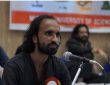
On August 27, the AAC dispatched a large convoy led by its Chairman, Advocate Ehsan Ali, to show solidarity with the traders. Ali’s words were both defiant and cautionary: if the traders’ demands were not met, a long march would soon follow.
This was not mere rhetoric. The AAC has long been at the forefront of political mobilisation in GB, pushing not only for economic justice but also for constitutional recognition, civil liberties, and local autonomy.
Its consistent involvement in grassroots mobilisation makes it a thorn in the side of the federal government, which has repeatedly responded with surveillance, intimidation, and police crackdowns.
Recent months have seen police suppress AAC gatherings, detain activists, and restrict their movements under the guise of “maintaining law and order.” Such measures expose the federal government’s unwillingness to allow dissenting voices a platform.
A pattern of suppression
The crackdown on AAC is not an isolated episode. It reflects a wider trend of silencing opposition in Gilgit-Baltistan that stretches back years but has become more pronounced since 2024.
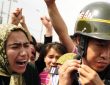
Last year witnessed multiple instances of protest suppression across the region, where police used force to disperse demonstrators demanding lower electricity tariffs and an end to land seizures. Dozens of activists were arrested under harsh laws, with their trials dragged through a sluggish judicial system.
These measures underscore the paradox at the heart of Islamabad’s policy toward Gilgit-Baltistan: while the federal government insists the region is integral to Pakistan’s territorial and strategic interests, it refuses to grant its people genuine political agency.
This contradiction breeds frustration, resentment, and a sense of betrayal among the local population.
Beyond economics: The political core
The federal government has attempted to frame the current unrest as an economic dispute confined to taxation and trade.
Yet such a narrative oversimplifies and distorts the reality. The grievances of Gilgit-Baltistan’s people are deeply humanitarian.
They stem from decades of disenfranchisement, lack of constitutional status, and systematic denial of representation in Pakistan’s national decision-making processes.
The economic protests led by traders highlight immediate concerns, but the AAC’s participation underscores that the real issue is not just taxation—it is voice.
By supporting the traders, the AAC has sought to highlight how Gilgit-Baltistan’s people are forced to live under policies imposed from Islamabad without meaningful consultation or participation.
This political marginalisation, compounded by federal repression, threatens to turn routine protests into a sustained movement for self-determination.
Human rights under strain
The suppression of political activity in Gilgit-Baltistan is having severe human rights consequences.
Reports of arbitrary arrests, police brutality, and restrictions on freedom of assembly have become increasingly common.
Peaceful protestors, including students and community leaders, have been subjected to harassment and intimidation.
The constant deployment of heavy-handed tactics against unarmed demonstrators not only erodes trust in the state but also delegitimises Pakistan’s claims of democratic governance.
In 2024, similar patterns of repression were visible when protesters in Skardu and Gilgit were beaten and detained for organising demonstrations against land allocation policies favouring outside investors.
That year also witnessed the targeting of journalists who dared to report on the AAC’s rallies, with some facing prolonged detention.
The continuation of these practices into 2025 demonstrates a dangerous entrenchment of authoritarian control in the region.
Fight for Survival
For the people of GB, this is not a mere protest, it is a fight for their survival. It is a fight fir their rights and for their homeland.
Their voices need to be heard beyond the beautiful valleys of GB. An Establishment fixated on their exploitation and denigration cannot be entrusted with finding solutions to their problems.
As history from 2024 and the unfolding events of 2025 demonstrate, the federal government’s reliance on suppression has only hardened local resolve.
A Voice to be Heard
International aid organisations and human rights groups worldwide are now waking up to the deep humanitarian crisis unfolding in GB. In one such instances, the plight of the people of GB was raised on 10th September at the ongoing 60th UNHRC session in Geneva where such direct attacks on the existence of the people of GB were exposed. The communities of GB need urgent international support, before their very identity is wiped off by an exploitative military establishment.
What began as economic protests is now unmistakably a humanitarian struggle, one that has laid bare the deep fault lines between Gilgit-Baltistan and Islamabad.
Views: 78


