


LATEST NEWS







ARCHIVES
TAGS
2026
Afghanistan
asia
balochistan
bangladesh
brazil
brics
China
Dalai Lama
economy
elections
environment
EU
europe
france
germany
Human Rights
hungary
immigration
India
international relations
iran
iranwar
Iran war
israel
italy
Japan
kashmir
minorities
myanmar
NATO
oped
pakistan
politics
russia
security
spain
taiwan
terrorism
tibet
UAE
ukraine
ukrainewar
USA
war
Spain’s Sánchez goes to China to appease Xi as trade wars begin
European Newsdesk
Posted on
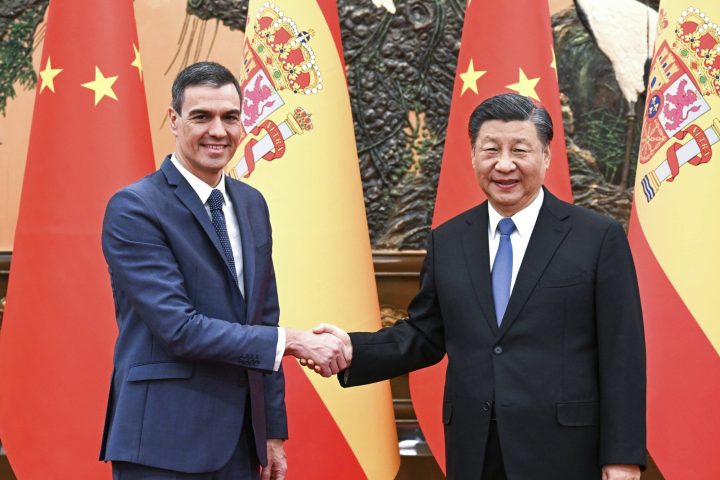
MADRID/BEIJING: While the rest of Europe seeks to derisk from China and Italian Deputy Prime Minister and Minister of Foreign Affairs Antonio Tajani visited New Delhi to strengthen ties, Spanish Prime Minister Pedro Sánchez’s recent visit to China underscores a strategic pivot in Spain’s foreign policy, aiming to strengthen bilateral ties amid escalating global trade tensions with China. As the first European leader to meet with President Xi Jinping following the United States’ announcement of new tariffs on Chinese goods, Sánchez’s trip highlights Spain’s intent to position itself as a bridge between China and the European Union (EU).
During their meeting in Beijing, President Xi and Prime Minister Sánchez emphasized the importance of multilateralism and open cooperation. Xi criticized unilateral trade policies, particularly those involving tariffs, and advocated for a fair international governance system. Sánchez echoed these sentiments, calling for dialogue and a balanced EU-China relationship, especially in light of the EU’s significant trade deficit with China .
The visit resulted in the signing of several bilateral agreements in sectors such as science, technology, education, and agriculture. Notably, discussions also focused on expanding cooperation in high-tech areas like renewable energy and smart cities. Spain’s interest in diversifying its markets is evident, particularly as it seeks to attract Chinese investments in green technology and electric vehicles. Companies like CATL and Envision are reportedly exploring ventures in Spain, signaling a mutual interest in sustainable development .
Sánchez’s visit also addressed trade sensitivities, such as the Chinese anti-dumping investigation into Spanish pork exports. While the U.S. has expressed concerns over Spain’s deepening ties with China, Spanish officials maintain that their engagement is rooted in national interests and a commitment to balanced international relations .
This diplomatic engagement reflects a broader European trend of seeking constructive relations with China, contrasting with the more adversarial stance taken by the United States. As global economic dynamics continue to evolve, Spain’s proactive approach may serve as a model for balancing national interests with international cooperation.
Views: 48

- European Newsdesk
- European Newsdesk
- European Newsdesk
- European Newsdesk
- European Newsdesk
- European Newsdesk
- European Newsdesk
- European Newsdesk
- European Newsdesk
- European Newsdesk
- European Newsdesk
- European Newsdesk
- European Newsdesk
- European Newsdesk
- European Newsdesk
- European Newsdesk
- European Newsdesk
- European Newsdesk
- European Newsdesk
- European Newsdesk
- European Newsdesk
- European Newsdesk
- European Newsdesk
- European Newsdesk
- European Newsdesk
- European Newsdesk
- European Newsdesk
- European Newsdesk
- European Newsdesk
- European Newsdesk
- European Newsdesk
- European Newsdesk
- European Newsdesk
- European Newsdesk
- European Newsdesk
- European Newsdesk
- European Newsdesk
- European Newsdesk
- European Newsdesk
- European Newsdesk
- European Newsdesk
- European Newsdesk
- European Newsdesk
- European Newsdesk
- European Newsdesk
- European Newsdesk
- European Newsdesk
- European Newsdesk
- European Newsdesk
- European Newsdesk
- European Newsdesk
- European Newsdesk
- European Newsdesk
- European Newsdesk
- European Newsdesk
- European Newsdesk
- European Newsdesk
- European Newsdesk
- European Newsdesk
- European Newsdesk
- European Newsdesk
- European Newsdesk
- European Newsdesk
- European Newsdesk
- European Newsdesk
- European Newsdesk
- European Newsdesk
- European Newsdesk
- European Newsdesk
- European Newsdesk
- European Newsdesk
- European Newsdesk
- European Newsdesk
- European Newsdesk
- European Newsdesk
- European Newsdesk
- European Newsdesk
- European Newsdesk
- European Newsdesk
- European Newsdesk
- European Newsdesk
- European Newsdesk
- European Newsdesk
- European Newsdesk
- European Newsdesk
- European Newsdesk
- European Newsdesk
- European Newsdesk
- European Newsdesk
- European Newsdesk
- European Newsdesk
- European Newsdesk
- European Newsdesk
- European Newsdesk
- European Newsdesk
- European Newsdesk
- European Newsdesk
- European Newsdesk
- European Newsdesk
- European Newsdesk
- European Newsdesk
- European Newsdesk
- European Newsdesk
- European Newsdesk
- European Newsdesk
- European Newsdesk
- European Newsdesk
- European Newsdesk
- European Newsdesk
- European Newsdesk
- European Newsdesk
- European Newsdesk
- European Newsdesk
- European Newsdesk
- European Newsdesk
- European Newsdesk
- European Newsdesk
- European Newsdesk
- European Newsdesk
- European Newsdesk
- European Newsdesk
- European Newsdesk
- European Newsdesk
- European Newsdesk
- European Newsdesk
- European Newsdesk
- European Newsdesk
- European Newsdesk
- European Newsdesk
- European Newsdesk
- European Newsdesk
- European Newsdesk
- European Newsdesk
- European Newsdesk
- European Newsdesk
- European Newsdesk
- European Newsdesk
- European Newsdesk
- European Newsdesk
- European Newsdesk
- European Newsdesk
- European Newsdesk
- European Newsdesk
- European Newsdesk
- European Newsdesk
- European Newsdesk
- European Newsdesk
- European Newsdesk
- European Newsdesk
- European Newsdesk
- European Newsdesk
- European Newsdesk
- European Newsdesk
- European Newsdesk
- European Newsdesk
- European Newsdesk
- European Newsdesk
- European Newsdesk
- European Newsdesk
- European Newsdesk
- European Newsdesk
- European Newsdesk
- European Newsdesk
- European Newsdesk
- European Newsdesk
- European Newsdesk
- European Newsdesk
- European Newsdesk
- European Newsdesk
- European Newsdesk
- European Newsdesk
- European Newsdesk
- European Newsdesk
- European Newsdesk
- European Newsdesk
- European Newsdesk
- European Newsdesk
- European Newsdesk
- European Newsdesk
- European Newsdesk
- European Newsdesk
- European Newsdesk
- European Newsdesk
- European Newsdesk
- European Newsdesk
- European Newsdesk
- European Newsdesk
- European Newsdesk
- European Newsdesk
- European Newsdesk
- European Newsdesk
- European Newsdesk
- European Newsdesk
- European Newsdesk
- European Newsdesk
- European Newsdesk
- European Newsdesk
- European Newsdesk
- European Newsdesk
- European Newsdesk
- European Newsdesk
- European Newsdesk
- European Newsdesk
- European Newsdesk
- European Newsdesk
- European Newsdesk
- European Newsdesk
- European Newsdesk
- European Newsdesk
- European Newsdesk
- European Newsdesk
- European Newsdesk
- European Newsdesk
- European Newsdesk
- European Newsdesk
- European Newsdesk
- European Newsdesk
- European Newsdesk
- European Newsdesk
- European Newsdesk
- European Newsdesk
- European Newsdesk
- European Newsdesk
- European Newsdesk
- European Newsdesk
- European Newsdesk
- European Newsdesk
- European Newsdesk
- European Newsdesk
- European Newsdesk
- European Newsdesk
- European Newsdesk
- European Newsdesk
- European Newsdesk
- European Newsdesk
- European Newsdesk
- European Newsdesk
- European Newsdesk
- European Newsdesk
- European Newsdesk
- European Newsdesk
- European Newsdesk
- European Newsdesk
- European Newsdesk
- European Newsdesk
- European Newsdesk
- European Newsdesk
- European Newsdesk
- European Newsdesk
- European Newsdesk
- European Newsdesk
- European Newsdesk
- European Newsdesk
- European Newsdesk
- European Newsdesk
- European Newsdesk
- European Newsdesk
- European Newsdesk
- European Newsdesk
- European Newsdesk
- European Newsdesk
- European Newsdesk
- European Newsdesk
- European Newsdesk
- European Newsdesk
- European Newsdesk
- European Newsdesk
- European Newsdesk
- European Newsdesk
- European Newsdesk
- European Newsdesk
- European Newsdesk
- European Newsdesk
- European Newsdesk
- European Newsdesk
- European Newsdesk
- European Newsdesk
- European Newsdesk
- European Newsdesk
- European Newsdesk
- European Newsdesk
- European Newsdesk
- European Newsdesk
- European Newsdesk
- European Newsdesk
- European Newsdesk
- European Newsdesk
- European Newsdesk
- European Newsdesk
- European Newsdesk
- European Newsdesk
- European Newsdesk
- European Newsdesk
- European Newsdesk
- European Newsdesk
- European Newsdesk
- European Newsdesk
- European Newsdesk
- European Newsdesk
- European Newsdesk
- European Newsdesk
- European Newsdesk
- European Newsdesk
- European Newsdesk
- European Newsdesk
- European Newsdesk
- European Newsdesk
- European Newsdesk
- European Newsdesk
- European Newsdesk
- European Newsdesk
- European Newsdesk
- European Newsdesk
- European Newsdesk
- European Newsdesk
- European Newsdesk
- European Newsdesk
- European Newsdesk
- European Newsdesk
- European Newsdesk
- European Newsdesk
- European Newsdesk
- European Newsdesk
- European Newsdesk
- European Newsdesk
- European Newsdesk
- European Newsdesk
- European Newsdesk
- European Newsdesk
- European Newsdesk
- European Newsdesk
- European Newsdesk
- European Newsdesk
- European Newsdesk
- European Newsdesk
- European Newsdesk
- European Newsdesk
- European Newsdesk
- European Newsdesk
- European Newsdesk
- European Newsdesk
- European Newsdesk
- European Newsdesk
- European Newsdesk
- European Newsdesk
- European Newsdesk
- European Newsdesk
- European Newsdesk
- European Newsdesk
- European Newsdesk
- European Newsdesk
- European Newsdesk
- European Newsdesk
- European Newsdesk
- European Newsdesk
- European Newsdesk
- European Newsdesk
- European Newsdesk
- European Newsdesk
- European Newsdesk
- European Newsdesk
- European Newsdesk
- European Newsdesk
- European Newsdesk
- European Newsdesk
- European Newsdesk
- European Newsdesk
- European Newsdesk
- European Newsdesk
- European Newsdesk
- European Newsdesk
- European Newsdesk
- European Newsdesk
- European Newsdesk
- European Newsdesk
- European Newsdesk
- European Newsdesk
- European Newsdesk
- European Newsdesk
- European Newsdesk
- European Newsdesk
- European Newsdesk
- European Newsdesk
- European Newsdesk
- European Newsdesk
- European Newsdesk
- European Newsdesk
- European Newsdesk
- European Newsdesk
- European Newsdesk
- European Newsdesk
- European Newsdesk
- European Newsdesk
- European Newsdesk
- European Newsdesk
- European Newsdesk
- European Newsdesk
- European Newsdesk
- European Newsdesk
- European Newsdesk
- European Newsdesk
- European Newsdesk
- European Newsdesk
- European Newsdesk
- European Newsdesk
- European Newsdesk
- European Newsdesk
- European Newsdesk
- European Newsdesk
- European Newsdesk
- European Newsdesk
- European Newsdesk
- European Newsdesk
- European Newsdesk
- European Newsdesk
- European Newsdesk
- European Newsdesk
- European Newsdesk
- European Newsdesk
- European Newsdesk
- European Newsdesk
- European Newsdesk
- European Newsdesk
- European Newsdesk
- European Newsdesk
- European Newsdesk
- European Newsdesk
- European Newsdesk
- European Newsdesk
- European Newsdesk
- European Newsdesk
- European Newsdesk
- European Newsdesk
- European Newsdesk
- European Newsdesk
- European Newsdesk
- European Newsdesk
- European Newsdesk
- European Newsdesk
- European Newsdesk
- European Newsdesk
- European Newsdesk
- European Newsdesk
- European Newsdesk
- European Newsdesk
- European Newsdesk
- European Newsdesk
- European Newsdesk
- European Newsdesk
- European Newsdesk
- European Newsdesk
- European Newsdesk
- European Newsdesk
- European Newsdesk
- European Newsdesk
- European Newsdesk
- European Newsdesk
- European Newsdesk
- European Newsdesk
- European Newsdesk
- European Newsdesk
- European Newsdesk
- European Newsdesk
- European Newsdesk
- European Newsdesk
- European Newsdesk
- European Newsdesk
- European Newsdesk
- European Newsdesk
- European Newsdesk
- European Newsdesk
- European Newsdesk
- European Newsdesk
- European Newsdesk
- European Newsdesk
- European Newsdesk
- European Newsdesk
- European Newsdesk
- European Newsdesk
- European Newsdesk
- European Newsdesk


