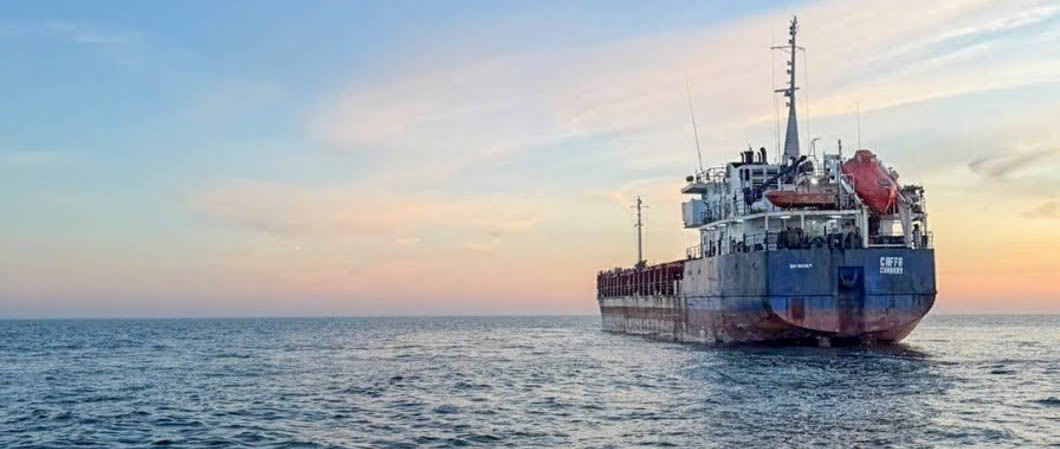







On Sunday afternoon, south of Trelleborg, Sweden sent another signal across the Baltic Sea. The Swedish Coast Guard and police boarded the Jin Hui, a 182-metre tanker flying the Syrian flag, in Swedish territorial waters. Authorities suspect the vessel of sailing under a false flag, lacking proper seaworthiness and operating without credible insurance. It is also reported to appear on European Union and British sanctions lists.
The operation was not an isolated maritime inspection. It was the latest in a series of Swedish interventions against vessels suspected of operating in Russia’s so-called shadow fleet, the opaque network of ships used to evade sanctions, move restricted cargoes and obscure commercial links to Moscow’s war economy.
For years, the shadow fleet was treated mainly as a sanctions problem. In the Baltic Sea, it has become something more immediate. A security risk, an environmental threat and a test of European enforcement. Sweden appears to have chosen a more assertive course.
The Jin Hui is reportedly the fifth vessel stopped by Swedish authorities this year on suspicion of offences ranging from false flag operations to environmental violations. In March, the Swedish Coast Guard boarded the Sea Owl I, a 228-metre tanker off Trelleborg flying the Comorian flag. Swedish authorities suspected the vessel was not properly registered with the Comoros and therefore lacked a valid flag state responsible for safety on board. The ship was also listed under EU sanctions.
That same month, Sweden took control of the Caffa, a vessel linked to the suspected transport of stolen Ukrainian grain and said to have sailed under a false Guinean flag. Prosecutors later confiscated the ship so that a court could examine whether it could be handed over to another state. The case marks a potentially important legal step. Sweden is no longer merely inspecting suspect vessels and allowing them to move on. It is beginning to test whether ships used to circumvent sanctions or move stolen goods can themselves become instruments of enforcement.
The environmental risk is just as serious. In April, the tanker Flora 1 was investigated after a 12-kilometre mineral oil slick was detected east of Gotland. The vessel was later released after investigators found insufficient evidence to prove it had caused the spill. Yet the episode exposed the vulnerability created by ageing tankers, unclear ownership and doubtful insurance arrangements.
These vessels are not only geopolitical tools. They are floating liabilities. Many operate outside the normal compliance systems that govern international shipping. In a semi-enclosed and ecologically fragile sea like the Baltic, one major accident would not remain a local problem for long.
Sweden’s posture has shifted with the strategic map around it. Since joining NATO in 2024, Stockholm has moved from cautious monitoring to active enforcement. Together with Finland’s accession, Sweden’s entry into the Alliance has transformed the Baltic into a far more closely watched maritime space.
Russia’s shadow fleet depends on ambiguity. It relies on uncertain flags, hidden ownership, weak insurance and routes designed to blur responsibility. Sweden’s recent boardings attack that ambiguity directly. The central questions are ownership, insurance, flag-state responsibility, seaworthiness and the real purpose of these vessels’ presence in Swedish waters.
The answer increasingly matters. The shadow fleet was built to move through gaps in international law. Sweden is narrowing those gaps. The boarding of the Jin Hui may be one case, and the facts will still need to be established. But the broader message is already clear. Russia’s ghost ships were designed to operate in darkness. Sweden is turning on the lights.
Views: 55