


MUZAFFARABAD: Pakistan-occupied Kashmir (PoK) is witnessing widespread unrest as the Awami Action Committee (AAC), an umbrella body of civil society organizations, has called for an indefinite strike. The strike is a direct response to the soaring prices of flour and electricity, and a demand for the abolition of the 12 legislative seats reserved for Kashmiri refugees in Pakistan. The protests have laid bare the deep socio-economic challenges faced by the people of PoK and the chronic neglect by the Pakistani establishment.
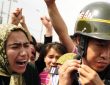
8 civilians have been killed and more than 100 injured in the ongoing unrest across PoK. Pakistani forces opened fire on protestors in Dhirkot, Bagh district, killing 4. Two more deaths were reported in Dadyal, Mirpur and Chamyati village near Kohala, while 2 others were killed in Muzaffarabad. Protestors clashed with security forces, resorting to stone-pelting amid heavy shelling. The civilian uprising, ongoing for three days, has now claimed 10 lives in total. Thousands from various towns have now joined a Long March to Muzaffarabad, demanding basic rights and challenging the Pakistani establishment.
For over two years now, the people of PoK have grappled with an economic crisis marked by exorbitant inflation, especially of essential commodities like flour, a staple in Kashmiri diets, and crippling electricity costs. Despite PoK being home to major hydropower projects like the Mangla Dam, which generates substantial electricity, locals have been subjected to inflated tariffs and frequent power cuts, with no meaningful subsidies or relief in sight. Flour prices have been kept artificially high without adequate government intervention. The AAC’s demands for subsidized flour and fair electricity tariffs directly address these critical grievances. The strike commenced after earlier negotiations between AAC leaders and PoK and Pakistani federal governments failed to yield concrete results, indicating Islamabad’s dismissive attitude towards PoK’s needs.
The strike has disrupted daily life across the region, shuttering markets, schools, and transport services as thousands took to streets raising slogans against the government. Authorities responded by deploying heavy paramilitary forces and imposing partial communication blackouts, including internet and mobile services, aiming to curb the scale of these demonstrations. Police firing and teargassing of protesters in some areas have further exacerbated tensions. This heavy-handed approach reflects a recurring pattern of repression rather than engagement with legitimate civil concerns.
A particularly contentious demand of the AAC is the abolition of the 12 legislative seats in the PoK assembly that are reserved for Kashmiri refugees residing outside PoK in Pakistan. Established under Pakistan’s 13th Amendment in 2018, these seats are widely seen by locals as a tool for Islamabad to exert undue influence over PoK’s political landscape at the expense of genuine local representation. The AAC argues that these seats undermine representative governance and perpetuate political marginalization of the people actually living in PoK. This demand highlights the broader dissatisfaction with PoK’s political administration, which critics describe as puppeteered by Islamabad, leaving the local populace voiceless in key governance decisions.
The protests underscore the fundamental contradiction faced by PoK residents living under Pakistani administrative control but persistently denied political autonomy, economic rights, and infrastructure development. Economic neglect is painfully evident as the region produces electricity and has agricultural potential, but benefits are siphoned off while locals endure hardship. The persistent inflation in essential goods such as flour without proper subsidies feeds into a cycle of poverty and unrest.
Moreover, the political marginalization, especially through the manipulation of legislative seats and lack of meaningful reforms, intensifies alienation among locals. Shaukat Nawaz Mir, a core AAC leader, summed it up succinctly, stating the campaign is not against any institution but for the restoration of fundamental rights that have been denied for over seven decades. “Enough is enough,” he declared publicly, reflecting deep frustration and the growing willingness of people to openly challenge Islamabad’s control.
This unrest in PoK is emblematic of a broader pattern of neglect and misgovernance by Pakistan in the region. Years of promises by Islamabad to bring reforms, improve economic conditions, and grant political rights remain largely unfulfilled. Instead, repression has often been the response to dissent. The ongoing crisis shows that the Pakistani establishment’s approach to PoK is disconnected from the lived reality of its residents, who face economic deprivation and political disenfranchisement.
The indefinite strike led by the Awami Action Committee acts as a stark warning to Pakistan’s leadership. The people of PoK demand economic justice in the form of subsidized flour and fair electricity tariffs, alongside crucial political reforms to restore genuine representative governance. The Pakistani government’s dismissive attitude and security crackdown only deepen the alienation, fueling instability in this strategically sensitive region. For Islamabad, ignoring these legitimate voices threatens to erode its grip further, risking prolonged unrest that could have wider geopolitical ramifications.
The crisis in PoK demands urgent attention not only for humanitarian reasons but also to prevent further deterioration of governance and stability. The neglect of PoK’s economic and political rights under Pakistan’s stewardship has reached a tipping point, and only meaningful dialogue and reforms can address the entrenched grievances of its people. Until then, the protests and strikes are likely to continue, underscoring the growing disconnect between the aspirations of PoK’s residents and Pakistan’s reluctant administrative approach.
Views: 73