


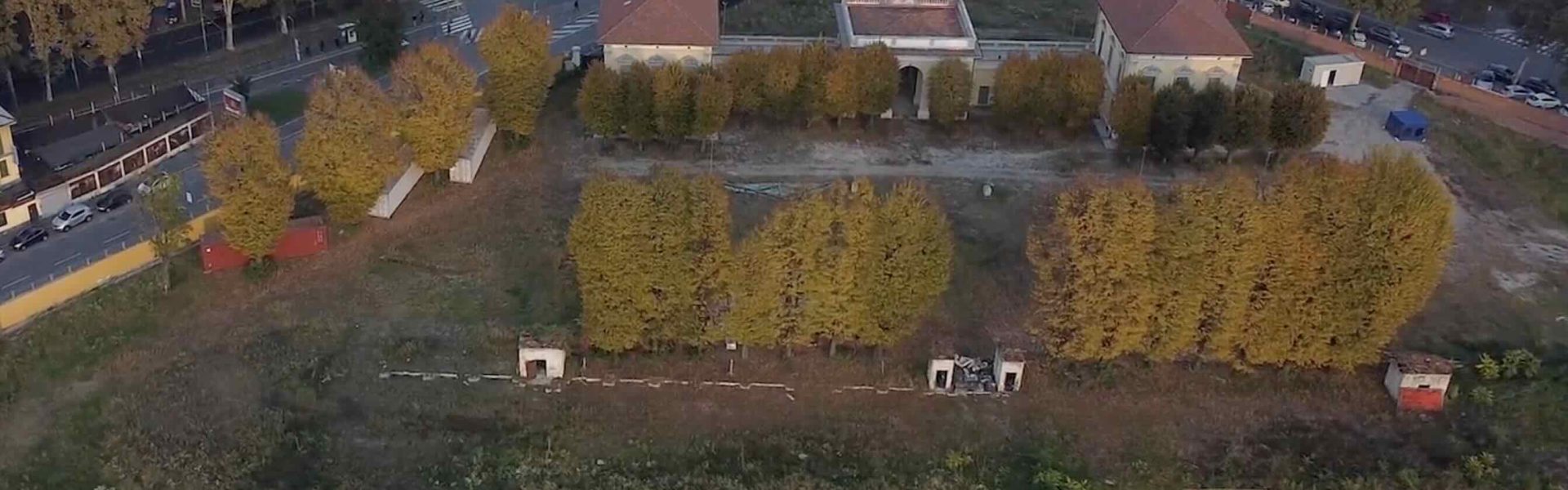







MILAN: The construction site of the new United States Consulate in Milan was meant to symbolize renewal. Instead, according to reporting by Corriere della Sera and Euronews, it has become the centre of a disturbing labour exploitation investigation involving hundreds of Indian workers allegedly subjected to conditions Milan prosecutors describe as “para-schiavismo”, or quasi-slavery.
The project is one of the most prestigious urban regeneration works underway in Milan. It concerns the former Tiro a Segno area in piazzale Accursio, where the new U.S. Consulate General is being built by the Italian branch of Caddell Construction, an Alabama-based American construction giant known for building U.S. diplomatic and military facilities abroad. Corriere della Sera reports that the construction site is worth around 200 million dollars, while Reuters places the contract at almost 210 million dollars and notes that work began in 2022, with completion now expected in 2028.
According to the Milan prosecutor’s office, the case concerns alleged illegal labour intermediation and exploitation. The Italian branch of Caddell Construction has been placed under urgent judicial control, a measure that does not stop the work but places the company alongside a court-appointed administrator tasked with correcting unlawful practices and regularizing the workers’ position. Euronews reports that the administrator appointed by the Milan prosecutor is accountant Francesco Brigatti, who has been asked to “bonificare” the situation, meaning to clean up and reorganize the company’s practices even against the company’s own proposed arrangements.
The allegations are specific and severe. Corriere della Sera reports that Indian labourers were allegedly recruited in India through an intermediary agency and required to pay what the paper describes as a “pizzo” for recruitment and visas. Reuters, citing judicial documents, reports that 35 Indian workers said they had each been asked to pay 500,000 Indian rupees, about 5,225 dollars, to obtain a 36-month contract and travel to Italy. One worker, identified as Gopal Nayak, said he had to sell his wife’s gold and borrow from friends and relatives to raise the money.
The recruitment chain, according to Italian reporting, began in India. The workers were allegedly recruited through Dynamic House, a company based in New Delhi. Repubblica, citing the Milan prosecutors’ decree, reports that the workers were “arruolati” through Dynamic House and brought to Milan to work for Caddell on the U.S. Consulate site. Il Fatto Quotidiano adds that investigators allege workers paid employees of Dynamic House around 500,000 rupees, roughly 5,000 euros, in cash to obtain the work visa and the job itself.
The pay structure allegedly concealed the real exploitation. According to Corriere della Sera, workers arrived in Milan accepting payslips that showed roughly 4 euros an hour, already far below the 10 to 12 euros per hour declared by Caddell in documents filed with the Prefecture under the Edilizia Industria contract. But after forced deductions for food and lodging, the effective wage allegedly fell to around 2 euros an hour. The paper notes that this was far below the 8.50 euro hourly threshold identified by Istat’s 2024 report as the “working poverty” line.
The deductions are central to the case. Euronews reports that the effective pay was allegedly 2 euros an hour, despite the formal contractual framework. Reuters adds that workers formally earned between 1,300 and 1,500 euros a month, but around 800 euros were deducted each month for housing and food, services the workers allegedly had not been warned they would have to pay for. One worker, Manoj Kumar, said he sent 300 euros a month to India to support his wife, three children and brother, leaving him with very little money even to buy dinner.
The working hours were also allegedly illegal. Reuters reports that investigators found Indian workers were made to work 12 hours a day, six days a week, far beyond Italy’s legal 40-hour working week. Corriere della Sera reports a similar pattern, describing 10-hour days for six days a week in its account of the alleged system. The judicial documents cited by Reuters also refer to threats, mistreatment by team leaders and the denial of sick leave.
The contracts themselves appear to have played a key role. Reuters reports that workers first signed contracts in India in English, with hourly pay ranging from 1.31 to 1.91 euros and with food and accommodation supposedly covered by the company. The workers said they did not know English, and two reportedly said they could not read at all. Once in Italy, they signed another contract with Caddell’s Italian unit, compliant with Italian labour law and useful for regularizing their work-related entry into Italy, but the workers said that contract was never handed over to them.
The investigation currently names Ulas Demir, a 47-year-old Turkish manager responsible for the Italian branch of Caddell, as a suspect for alleged caporalato, Italy’s offence covering illicit labour intermediation and worker exploitation. Euronews also reports that Caddell Construction itself is under scrutiny under Italy’s Law 231 on the administrative liability of entities.
For Milan prosecutors, the issue is not merely low pay. It is the combination of recruitment debt, linguistic vulnerability, opaque contracts, excessive hours, forced deductions, dependence on the employer and threats of dismissal. Taken together, these elements allegedly created a system in which Indian workers were formally present in Italy through a legal procedure but materially trapped in conditions prosecutors consider exploitative.
The symbolism is stark. A U.S. diplomatic building, intended to represent American institutional presence in northern Italy, is now associated with allegations that Indian workers were used as disposable labour in one of Milan’s most visible regeneration projects. The judicial control measure allows the site to continue, but it also confirms the gravity of the allegations. The court-appointed administrator’s task is to ensure that the construction of a consulate proceeds under Italian labour law, not on the backs of men allegedly paid poverty wages after arriving in Europe indebted, dependent and afraid.
At this stage, the allegations remain part of an ongoing investigation and must still be validated by a judge. Caddell Construction, its Italian unit and the U.S. embassy in Rome did not immediately respond to Reuters’ requests for comment. But the facts reported so far by Corriere della Sera, Euronews and Reuters already raise a larger question: how could a diplomatic construction site, subject to high scrutiny and involving a major U.S. contractor, allegedly become a place where hundreds of Indian workers were treated as cheap and vulnerable labour in the heart of Milan?
Views: 95
