


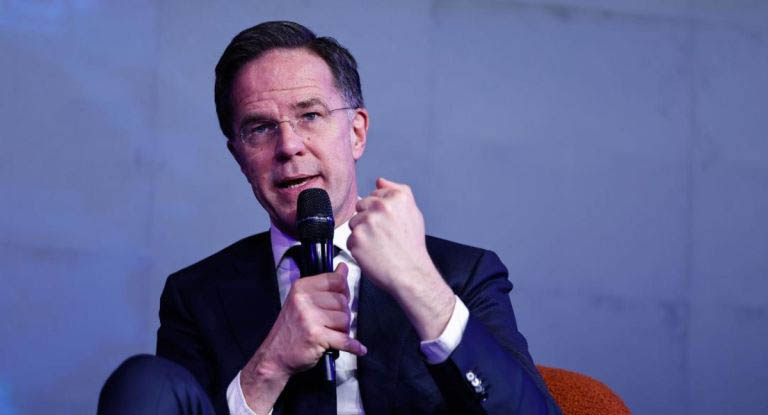







NATO Secretary General Mark Rutte said on Monday that European allies have “gotten the message” from U.S. President Donald Trump and are moving to implement military base and logistical agreements with Washington, signalling a broader strategic shift inside the alliance.
Speaking at the European Political Community summit in Yerevan, Armenia, Rutte acknowledged that there had been “some disappointment” in Washington over Europe’s response to the U.S. war with Iran. But he said European governments were now ensuring that bilateral agreements on the use of bases were being put into effect.
His remarks came only days after Washington announced plans to withdraw around 5,000 troops from Germany over the next six to twelve months. Trump has since suggested that further reductions could follow, raising concern that U.S. military commitments in Europe are becoming increasingly conditional on European support for American strategic priorities.
Rutte’s comments point to a shift from abstract burden-sharing to operational burden-sharing. The question is no longer only whether European states spend enough on defence. It is whether they will provide territory, infrastructure, logistics and naval assets when Washington asks.
Several European allies are now responding to U.S. requests for base access and logistical support. Germany, France, Britain, Italy, Greece, Portugal, Romania, Croatia and Montenegro have been cited among those facilitating American requests. Spain remains the most visible exception, maintaining that bases on its territory cannot be used for the war with Iran.
That divide is politically significant. Europe is not acting as a single bloc, but as a group of governments trying to protect their own domestic red lines while avoiding a rupture with Washington. For Italy, Germany, Britain and Greece, base access allows them to reassure the United States without necessarily committing combat forces. For Spain, refusal reflects the political and strategic risk of being drawn too visibly into the Iran conflict.
Italy has moved cautiously but clearly. Prime Minister Giorgia Meloni said she would not support any U.S. withdrawal of troops from Italy, even while recognising that such a decision would ultimately belong to Washington. Rome’s position reflects the importance of the American presence at a time when the Mediterranean, the Red Sea and the Gulf are increasingly connected theatres of crisis.
Germany is more directly exposed. The planned U.S. troop cut affects German territory and comes as Berlin is still trying to rebuild the Bundeswehr after years of underinvestment. German officials have stressed that NATO’s deterrence remains intact, but the withdrawal has sharpened the debate over whether Europe can continue relying on U.S. power as the backbone of its security architecture.
The military response now extends beyond Europe. Rutte said more European countries were pre-positioning naval assets, including minehunters and minesweepers, near the Gulf to prepare for a future phase focused on freedom of navigation through the Strait of Hormuz once hostilities subside.
For NATO, the shift is uncomfortable but unavoidable. Trump is testing the political price of Europe’s reliance on American power. European governments are being asked to prove their usefulness to Washington while preparing for a less predictable United States.
Rutte’s message in Yerevan was meant to reassure. Europe had heard Trump and was acting. But behind that reassurance lies a harder reality. The United States is no longer simply asking Europe to spend more. It is asking Europe to align more visibly with American military priorities.
Most European powers are trying to do both: satisfy U.S. demands to preserve the alliance, while slowly building the capacity to act more independently if American priorities diverge. That tension now defines the new phase of NATO politics.
Views: 25


