






Italy’s “Family in the Woods” Case Triggers National Debate Over State Intervention
A long running child protection case in central Italy has moved into the national spotlight after Prime Minister Giorgia Meloni publicly questioned how authorities handled the situation and asked Justice Minister Carlo Nordio to send inspectors to the Juvenile Court of L’Aquila. The development has turned what began as a local judicial dispute into a wider debate about parental rights, alternative lifestyles and the limits of state intervention in family life.
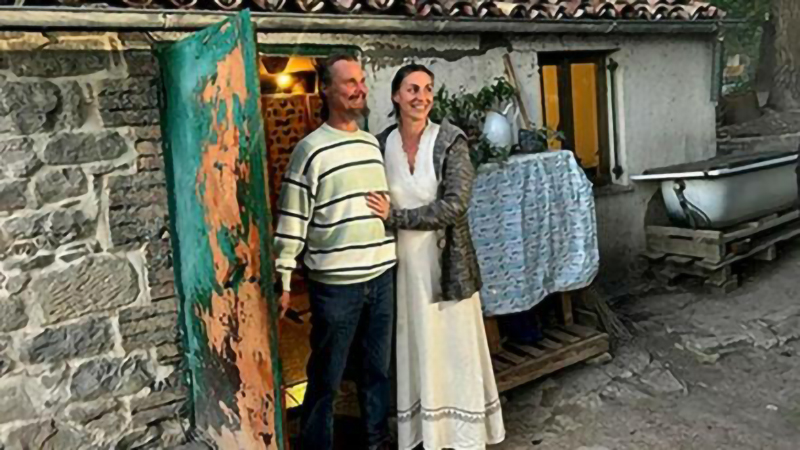
The case concerns Catherine Birmingham, an Australian former riding instructor, and Nathan Trevallion, a British chef and craftsman. The couple had been living with their three children, an eight year old girl and six year old twin boys, in an isolated farmhouse near the small town of Palmoli in the Abruzzo region. Their lifestyle has often been described in the Italian press as neo rural, combining a remote environment with a form of home education outside conventional schooling.
Authorities first became aware of the family after a mushroom poisoning episode in late 2024 led to the children being treated in hospital. The incident triggered reports to social services and a subsequent investigation into the children’s living conditions and education. According to court documents and reporting by Italian media, the house where the family lived lacked stable access to electricity, running water and sewage systems. Officials also raised concerns about the children’s social isolation and their limited exposure to the Italian language.
Education became one of the central issues in the case. Italian law allows parents to educate children at home, but it requires families to notify school authorities each year and to ensure that children sit periodic examinations demonstrating that they are meeting national education standards. The parents described their approach as unschooling, a philosophy that favours self directed learning without a formal curriculum. The juvenile court concluded that this approach did not meet the legal obligations associated with compulsory education.
In November 2025 the Juvenile Court of L’Aquila, presided over by Cecilia Angrisano, suspended the parents’ custodial authority and ordered the children removed from the family home. The children were placed in a protected residential facility in the nearby coastal town of Vasto. The parents challenged the decision through the courts, but an appeal was rejected in December, leaving the precautionary measures in place while further evaluations were conducted.
The case entered a new and more controversial phase in early March 2026 when the court ordered that Catherine Birmingham leave the residential facility where she had been allowed to remain close to the children. The ruling followed reports from educators and staff describing growing tensions between the mother and the personnel responsible for supervising the children. Judges said the atmosphere had become incompatible with the educational programme planned for the minors and concluded that the children’s well being required separation from their mother within the facility.
The order also provided for the children to be transferred to another location. Lawyers representing the family have tried to block the transfer, arguing that the children have already experienced repeated disruptions and that further moves could aggravate their emotional distress.
The decision quickly became the most contested element of the case. Court officials and some of the professionals involved in the evaluation process maintain that the measures were necessary to stabilise the situation and to allow the children to adapt to a structured environment. Reports submitted to the court indicated that the mother’s presence and her disagreements with staff were undermining that process.
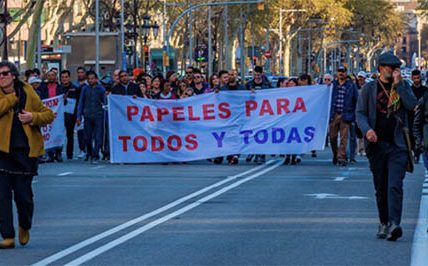
Opponents of the decision have offered a different interpretation. The parents’ lawyers say the separation is disproportionate and unnecessary. Public demonstrations have taken place in the town of Vasto, where residents have left toys and messages of support outside the facility where the children had been staying. The national children’s ombudsman has also expressed concern about the psychological impact of separating the children from their mother.
The political reaction intensified the controversy. Prime Minister Meloni said the case left her astonished and asked Justice Minister Nordio to send ministry inspectors to the juvenile court in L’Aquila to examine whether procedures had been applied correctly. Interior Minister Matteo Salvini also criticised what he described as excessive intervention by the state.
The judicial proceedings themselves continue independently. Lawyers Danila Solinas and Marco Femminella are preparing a new appeal against the March order, while court appointed psychiatrist Simona Ceccoli is carrying out a detailed assessment of the family situation that will help determine whether reunification is possible.
For many observers the case has become a test of how Italy balances the protection of children with respect for family autonomy. Supporters of the court argue that institutions must intervene when living conditions and education fall outside legal standards. Critics say the state has gone too far in punishing a family for an unconventional lifestyle.
What began as an isolated story in the hills of Abruzzo has therefore become something larger. The fate of three children living in an off grid farmhouse now sits at the centre of a national discussion about law, education and the reach of public authority into private life.
Views: 465