






As Bangladesh hurtles towards parliamentary elections on 12th February 26 Europe is facing a question it would rather not answer. Can democratic credibility be defended through engagement or does mere engagement risk validating an increasingly fragile political environment?
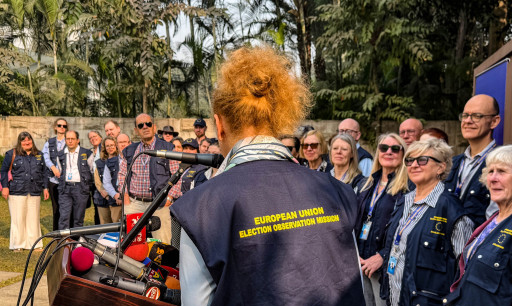
This is an election that is taking place in a charged political scenario follwing a period of upheaval, contested authority and deep public distrust. The European Union considering the circumstances has deployed an Election Observation Mission with long term observers across the country. The scale and commitment of the mission points to a comprehension in brussels as to the intricacies of this vote as Europe waits to see If the elected govrnment is indeed accepted by its citizens and its international partners
International monitors have been careful to stress that electoral integrity is of paramount importance before ballots are cast. Campaign conditions, freedom of expression, security, and equal access to political space matter as much as the mechanics of polling day. It is precisely this arena that solicits concern.
Political polarisation has intensified in the run-up to the vote. Reports of intimidation, sporadic violence, and pressure on journalists and activists have created an atmosphere of caution and fear rather than confidence. While none of this automatically invalidates an election, it narrows the space in which meaningful political choice can occur. Elections held under constraint may be orderly, yet still fail the deeper test of democratic legitimacy.
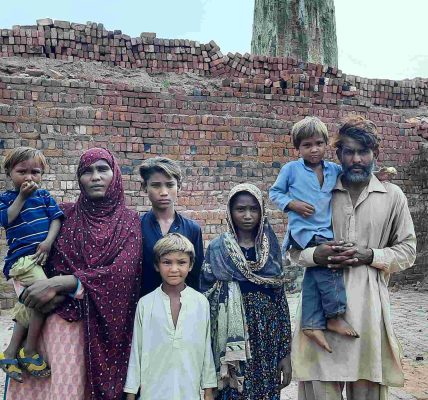
What gives this election an added moral and political dimension is the deterioration of security for religious minorities, particularly Hindus. Attacks on homes and places of worship, mob violence linked to allegations of blasphemy, and uneven accountability have generated a pervasive sense of fear. For minority communities, participation in the public sphere currently carries significant risk. This eventually affects not only how people vote, but whether they campaign, speak, or appear at all
From a European perspective, this cannot be treated as a marginal human-rights issue to be addressed after political stability is secured. Insecurity in the minority communities alters the electoral climate itself. When sections of the electorate feel unprotected, the principle of equal participation is hollowed out. Over time, fear becomes a political actor, shaping behaviour in ways that distorts representation and encourages informal power structures
This places Europe in an uncomfortable position. Bangladesh is an important partner on trade, migration, and regional stability. European policy has long balanced pragmatic cooperation with normative commitments to democracy and human rights. The current moment strains that balance. A narrow focus on procedural compliance risks validating an outcome produced in a climate of intimidation. Yet disengagement would weaken European leverage at precisely the moment scrutiny is needed most.
The credibility of the EU’s role will therefore depend less on observation itself than on what follows. Election missions document conditions. They do not correct them. If findings on violence, minority insecurity, or restrictions on civic space are acknowledged but ignored to favor stability, Europe risks giving the precedence to the idea that such conditions are tolerable. It’s a message that might resonate far beyond Bangladesh.
How Brussels responds will shape not only its relationship with Bangladesh, but the credibility of its claim to be a values-based actor in a region where democratic norms are increasingly under strain.
Views: 59