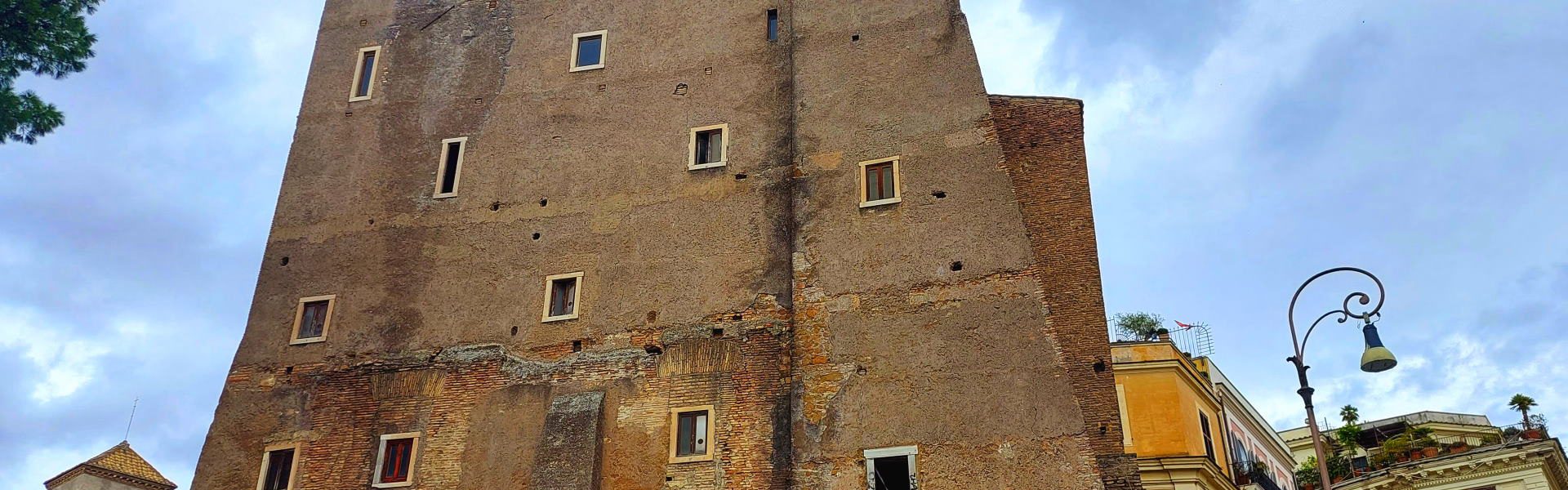







The collapse of part of the medieval Torre dei Conti, one of the capital’s most symbolic monuments, has left Rome in mourning and raised serious questions about safety standards on restoration sites across Europe. The incident, which unfolded on the morning of Monday 3 November 2025, claimed the life of a worker and exposed the fragility of Italy’s ancient architectural heritage.
The Torre dei Conti stands between the Colosseum and the Roman Forum, a proud remnant of medieval Rome built in 1238 by Richard Conti, brother of Pope Innocent III. Once rising to nearly sixty metres, the tower had already suffered partial destruction through centuries of earthquakes and neglect. The surviving structure, about twenty-nine metres high, had been closed to the public since 2007 and was undergoing a complex restoration financed in part by European and National Recovery funds.
The events of 3 November
At around 9.45 in the morning, a section of the tower’s masonry suddenly gave way while workers were carrying out reinforcement work. Emergency services arrived quickly, cordoning off Via dei Fori Imperiali as debris scattered across the area. Within an hour and a half, while firefighters were still stabilising the structure, a second collapse occurred, complicating rescue efforts.
Among the workers trapped was sixty-six-year-old Romanian labourer Octav Stroici, who had been part of the restoration team. For almost eleven hours rescuers worked through rubble and unstable scaffolding to reach him. He was finally pulled out alive shortly before 21.00 but died of his injuries soon after being transferred to hospital. Several others were injured, one of them seriously.
By late evening the site was sealed off completely, and investigators from the Carabinieri’s cultural heritage unit began preliminary inspections.
The following day
On Tuesday 4 November the public prosecutor’s office in Rome opened a case for manslaughter and negligent disaster. The investigation will determine whether errors in the restoration design, materials, or safety procedures contributed to the collapse. Preliminary reports indicated that the building had passed recent structural checks and had been considered stable before work resumed.
Authorities also confirmed that the project was part of a wider restoration programme funded under Italy’s National Recovery and Resilience Plan, which uses EU resources for safeguarding historical heritage. The collapse has therefore triggered scrutiny at both national and European levels about the monitoring of such projects.
Reactions and wider implications
Rome declared a day of mourning in memory of Stroici. The mayor called the tragedy “a painful reminder of how much responsibility comes with preserving our history”. Trade unions denounced chronic underinvestment in workplace safety, especially on construction and cultural heritage sites.
The event briefly entered the international political arena when the Russian Foreign Ministry’s spokeswoman made disparaging remarks linking the collapse to Italy’s financial support for Ukraine. The Italian Foreign Ministry summoned the Russian ambassador and described the comments as vulgar and unacceptable.
A fragile monument and a fragile system
The Torre dei Conti has witnessed almost eight centuries of Roman history. Earthquakes, urban transformations, and time itself had already reduced it from its original grandeur. Yet it remained a potent symbol of the medieval city that once towered over the ruins of the Empire.
Experts now warn that the tragedy highlights not only structural fragility but also the bureaucratic and logistical challenges of restoring ancient monuments in dense urban areas. The combination of modern machinery, limited access, and centuries-old masonry requires extraordinary precision and oversight.
Timeline of key events
- Before 2025 – Tower closed to the public since 2007 pending restoration funding
- Early 2025 – Renovation project begins under EU and Italian heritage funds
- Monday 3 November 09.45 – First partial collapse during restoration works
- Around 11.15 – Second structural failure while rescue teams on site
- 21.00 – Worker Octav Stroici rescued after eleven hours but later dies in hospital
- Tuesday 4 November – Manslaughter inquiry formally opened
- 4–5 November – Rome declares mourning and halts all work on comparable heritage sites pending safety review
The road ahead
Engineers and cultural authorities will now assess whether the remaining part of the tower can be stabilised or whether sections must be dismantled. Heritage experts fear that the incident could delay dozens of restoration projects planned under the same funding scheme.
The Torre dei Conti once symbolised the endurance of Rome through centuries of upheaval. Its collapse, however partial, is a tragic reminder that even the most solid stones require constant vigilance. For Europe, where much of the urban landscape rests upon ancient foundations, the disaster is also a warning about the delicate balance between preserving history and protecting the people who work to save it.
Views: 89