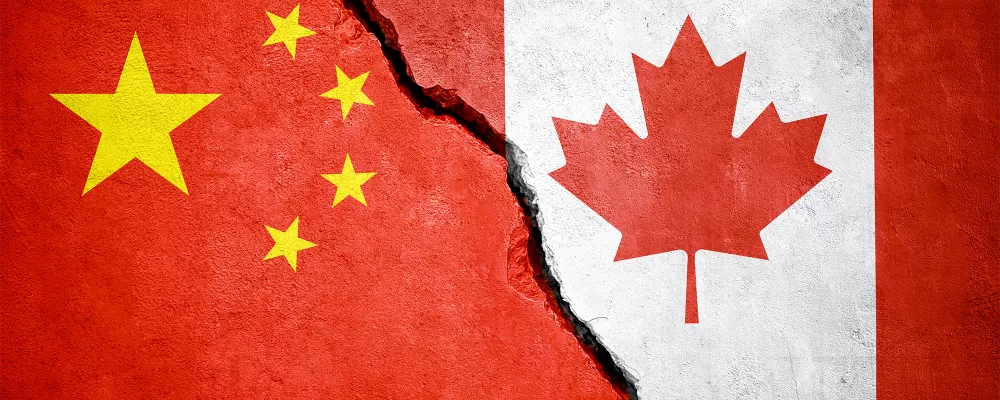







In recent years, allegations of foreign interference in Canada’s internal affairs have escalated, with growing concerns centered on China’s influence.
Advocacy groups across Canada are increasingly vocal, urging the government to take decisive action to protect Canadian democracy and shield vulnerable communities from China’s interventions as the foreign interference inquiry wrapped up public hearings on Oct. 24.
Canada has long prided itself on being a diverse and democratic society with a strong commitment to civil liberties and the rule of law.
However, recent reports suggest that this stability is being challenged by foreign interference, particularly by the Chinese government.
Advocacy groups, human rights organizations, and political experts are warning of China’s covert efforts to exert influence on Canadian society, politics, and institutions.
Chinese interference, they argue, threatens not just Canada’s democratic integrity but also the safety and rights of specific communities within the country.
Allegations include attempts to manipulate elections, exert pressure on politicians, and target diaspora communities to suppress dissent and intimidate critics of the Chinese government.
In light of these growing concerns, many advocacy groups are calling on the Canadian government to implement urgent measures to counteract foreign influence.
“Today, more than ever, individuals of Chinese descent in Canada are facing unprecedented challenges due to foreign interference,” stated Neil Chantler, counsel for the grassroots organization Chinese Canadian Concern Group.
Chantler highlighted the numerous issues confronting the Chinese diaspora, including threats of violence, harassment, coercion, cyberattacks, and widespread disinformation campaigns designed to suppress dissent and discourage democratic engagement.
He noted that the Chinese Communist Party (CCP) often employs rhetoric that “blurs distinctions among people of Chinese descent,” and labels efforts to counteract its influence as racist.
“This strategy is used to stifle or divert legitimate criticism of the Communist Party’s policies and actions,” he explained, adding that this approach has caused “politicians and law enforcement agencies to hesitate in taking action due to fears of being accused of racism.”
As a consequence, Chantler pointed out, victims of foreign interference lose faith in the government and law enforcement, often refraining from reporting their experiences altogether.
Sarah Teich, representing the Human Rights Coalition—which encompasses several diaspora and human rights organizations—discussed the impact of foreign interference on various communities across Canada.
She emphasized the importance of protecting victims and preventing foreign actors from meddling in Canadian affairs.
“Canada has a duty not only to safeguard its democratic institutions and elections, but also to protect its people, especially those most vulnerable to foreign authoritarian regimes,” said Teich.
Teich remarked that trust in Canadian law enforcement has diminished among groups such as Uyghurs, Tibetans, Hongkongers, and Falun Gong practitioners, partly due to Canada’s mutual legal assistance treaty with China.
Additionally, she expressed concern over Canada’s extradition agreement with Cuba, which she argued poses a risk to Cuban activists.
Teich called for these agreements to be revoked, better reporting mechanisms for victims to be established, and sanctions to be imposed on those responsible for malign actions.
Teich’s comments came during the final session of the inquiry’s policy consultation hearings, held from October 21 to 24.
The inquiry is expected to continue its work on a final report, due by the end of the year.
Chinese interference in Canada allegedly manifests in multiple ways, ranging from election meddling to exerting pressure on media outlets.
One key area of concern is the political domain, where reports have indicated that Chinese agents might have attempted to influence election outcomes.
These efforts could include clandestine donations to political campaigns, cultivating relationships with politicians, or spreading disinformation to sway voters.
The Foreign Interference Inquiry, initiated in September, was established in response to widespread reports of Beijing’s interference in Canadian elections.
While the inquiry did not exclusively focus on China, discussions heavily revolved around the CCP’s targeting of politicians and alleged collusion between certain Canadian parliamentarians and Beijing.
Fraser Harland, legal counsel for Conservative MP Michael Chong, referenced testimonies detailing how Beijing targeted Chong’s family in Hong Kong.
He noted that the Canadian Security Intelligence Service (CSIS) employed threat assessment tools due to security concerns for Chong, who has been an outspoken critic of the CCP’s human rights record.
“Considering all of this, Madam Commissioner, I assert that Mr. Chong was clearly a target of foreign interference,” Harland stated.
“The clandestine collection of information by a diplomat from a foreign intelligence agency constitutes foreign interference and is a breach of the Vienna Convention. Any reasonable person in Mr. Chong’s position would have genuine concerns about the safety of their relatives in Hong Kong,” he added.
Similarly, Sujit Choudhry, representing NDP MP Jenny Kwan, urged Commissioner Marie-Josée Hogue to establish guidelines for creating an independent body tasked with monitoring and countering foreign interference during elections and party leadership races at all levels of government.
Kwan has also been identified by CSIS as a target due to her criticism of the CCP.
Choudhry emphasized that this proposed independent body must be empowered to inform Canadians about cases of foreign interference during elections and by-elections.
“Our intelligence partners and allies need to see Canada as a credible and reliable partner. They are all questioning whether Canada is taking this matter seriously,” he said.
Human rights advocates and community groups have also raised alarms about targeted intimidation campaigns against Chinese-Canadian communities, especially activists and critics of Beijing.
Several members of these communities report being harassed, threatened, or subjected to disinformation campaigns aimed at discrediting them or their work.
Experts note that China’s tactics often rely on exploiting divisions within communities to foster mistrust, encouraging self-censorship, and suppressing dissent.
Another concerning issue is China’s alleged control over Chinese-language media in Canada.
Advocacy groups have pointed out that many of these outlets face pressure to align their narratives with Beijing’s interests.
This has led to an increasing concern that communities relying on these media sources are not receiving impartial information, which could impact public opinion and political behaviour.
The Chinese-Canadian community, in particular, faces unique challenges in the face of foreign interference.
For many, the pressure to conform to Beijing’s narrative and the fear of retaliation against family members in China is a daily reality.
Advocacy organizations working with Chinese-Canadian activists have reported incidents of cyberbullying, threats, and attempts at character assassination by online operatives allegedly connected to China.
Additionally, Uyghur and Tibetan communities in Canada have been vocal about the harassment and intimidation they face due to their advocacy against human rights abuses in China.
Activists have reported being followed, receiving threatening phone calls, and having their private information leaked online.
These incidents have been interpreted as attempts to silence criticism of Beijing’s policies and dissuade individuals from speaking out.
Human rights organizations have also expressed concerns over China’s alleged influence in academic institutions in Canada.
Chinese students and academics in Canada have reported being monitored and facing pressure to refrain from discussing politically sensitive issues like Hong Kong, Tibet, or Xinjiang.
Some institutions have faced criticism for their partnerships with Chinese organizations or accepting donations from entities linked to the Chinese government.
In response to these mounting concerns, advocacy groups across Canada are pushing for more robust measures to counteract foreign interference.
They argue that the Canadian government needs to prioritize transparency, accountability, and the protection of democratic institutions and vulnerable communities.
The Canadian government has acknowledged the concerns raised by advocacy groups and pledged to take action to protect democratic institutions.
In recent months, senior officials have vowed to increase efforts to counter foreign interference, including by introducing new legislation and boosting security measures.
Public Safety Canada has been tasked with strengthening intelligence-sharing and coordinating responses to foreign influence threats.
However, advocacy groups argue that these efforts must go beyond rhetoric and result in concrete action.
They call on the government to listen to the voices of vulnerable communities, engage in meaningful dialogue, and adopt a proactive rather than reactive stance.
The increasing calls for urgent measures to protect Canadian democracy and vulnerable communities from China’s interference underscore the serious threat foreign influence poses.
Advocacy groups are adamant that safeguarding Canada’s democratic values and institutions requires a concerted effort from the government, civil society, and the public.
Advocacy groups continue to press the government for decisive action, emphasizing that protecting democracy is not just a political issue but a fundamental human rights imperative.
Views: 76