






First BRICS MSME Forum: India’s BRICS Chairship and the Microeconomic Foundations of Multipolarity
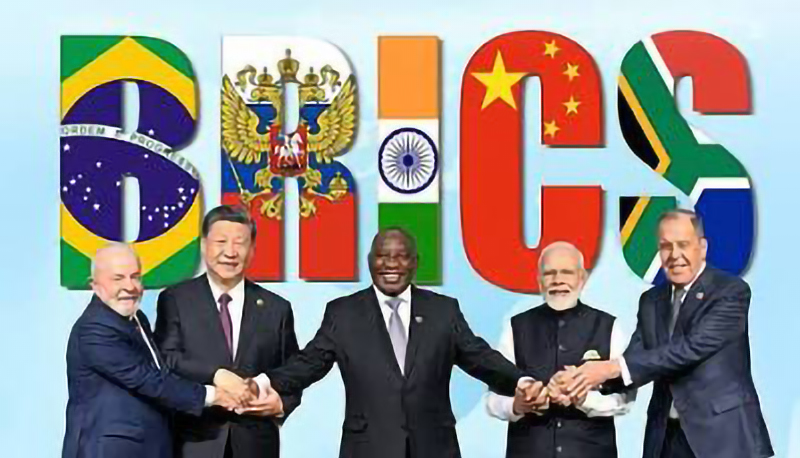
From 19–21 June 2026, India convened the First BRICS MSME Forum at Agra, inaugurating the first permanent institutional mechanism that BRICS has ever devoted exclusively to micro, small and medium enterprises. Overshadowed by the louder debates on de-dollarisation, strategic competition and global financial governance, the Forum nonetheless represents one of the most consequential institutional innovations in the history of the grouping. It signals a shift from a predominantly macroeconomic coalition toward an enterprise-centred architecture of development, and it carries an implication that this essay will pursue to its conclusion: that the durability of multipolarity will rest not only upon states and financial institutions but equally upon resilient productive enterprises.
The making of a multipolar world is conventionally explained through the rise of new powers, the redistribution of economic capability, the reform of global institutions and strategic competition among major states. This narrative overlooks a more fundamental reality. No international order endures unless it is anchored in resilient productive societies capable of generating employment, innovation, technological capability and broad-based prosperity. The durability of multipolarity therefore depends not only on states, financial institutions and diplomatic coalitions, but on the millions of enterprises that constitute the productive foundations of national economies. Yet this microeconomic architecture of world order remains among the least examined dimensions of scholarship on international relations and global governance, and the omission is consequential, for it leaves us able to describe the redistribution of power without being able to explain what would make any new distribution last.
To grasp why the Agra gathering mattered, one must first abandon a habit of mind that long governed how the small enterprise was perceived. For most of the twentieth century, development theory worshipped scale. The commanding heights were to be occupied by national champions and large public undertakings; the small firm was a residual, a waiting room for surplus labour, an object of welfare rather than a driver of growth. That hierarchy has now inverted, and the inversion is not ideological but arithmetical. In the populous democracies of the Global South, the small enterprise is the principal manufacturer of livelihoods. Across the BRICS economies, such firms account for more than half of all employment, and they constitute the connective tissue through which larger enterprises source their inputs, distribute their outputs and reach their markets. In India alone, more than sixty-three million MSMEs generate close to thirty per cent of national output and approaching forty-five per cent of exports. These are not peripheral actors. They are the economy’s load-bearing structure.
The reason this matters for the architecture of world order, rather than merely for the economics of developing states, is that the small enterprise performs functions no other institution performs as widely. It absorbs labour at the scale a young population demands. It diffuses entrepreneurship across regions, castes and genders that capital-intensive industrialisation systematically bypasses. It is the form in which women most often enter the formal economy as owners rather than employees, the vehicle through which rural and artisanal production industrialises without uprooting itself, and the natural habitat of the first-generation entrepreneur for whom the firm is simultaneously an act of social mobility. In societies of a billion people, these are not secondary virtues. They are the difference between growth that integrates and growth that fractures. Any serious project of inclusive globalisation, and therefore any durable multipolarity, must finally rest upon the vitality of these firms, because a multipolar order that exists only among states is a multipolarity of declarations, while one that reaches down to the workshop floor acquires a society beneath it.
It is against this understanding that India’s decision to place the small enterprise at the centre of its fourth BRICS Chairship becomes legible as statecraft rather than sectoral routine. The dominant image of BRICS has long been macroeconomic and frequently oppositional: a theatre of de-dollarisation debates, of an alternative reserve currency forever announced and forever deferred, of a counter-hegemonic bloc measured against the very institutions it claims to challenge. That image is not false, but its incompleteness carries a political cost, for it invites the conclusion that BRICS is a coalition of communiqués without a society to sustain them. The Agra Forum is the empirical rebuttal. It marks the moment at which BRICS began, deliberately and institutionally, to construct the microeconomic floor its macroeconomic ambitions had always presupposed but rarely laid. This essay argues that the Forum represents a decisive evolution of BRICS from a macroeconomic coalition of states into a microeconomic architecture of development, and that India is the principal architect of that transformation, acting not through confrontation but through the older and subtler instruments of institution-building, developmental diplomacy and the provision of public goods.
To name this transformation, the article advances a framework it calls Resilient Enterprise Multilateralism, developed in full in its closing pages. The framework holds that a sustainable multipolar order cannot be built through macroeconomic institutions and geopolitical alignments alone, but must rest upon resilient networks of enterprises connected through shared institutions, digital public infrastructure, technological collaboration and innovation ecosystems. Read through a constructivist lens, one attentive to the way institutions and interests are made through interaction rather than handed down by an unchanging structure of power, the argument treats enterprise-centred cooperation as a case of institution-building in the Global South, traced through the proceedings at Agra and the genealogy that produced them. Its effect is to shift analytical attention from the geopolitics of power to the political economy of productive capacity, and thereby to recover a dimension of multipolarity that the prevailing debates have left in shadow.
From Acronym to Institution: The Evolution of BRICS
BRICS is unusual among the institutions of world politics in having been named before it existed. When Jim O’Neill of Goldman Sachs coined the term in 2001, he intended a category of investment analysis, a projection that Brazil, Russia, India and China would occupy a progressively larger share of global output. He did not prescribe a politics. That a marketing abstraction should within a decade acquire summits, declarations, a development bank and a reserve arrangement is the single most instructive fact about the grouping, because it reveals that BRICS interests were never discovered, lying ready to be activated by a pre-existing structure of power. They were constructed, through the deceptively simple act of agreeing to meet under a shared name and thereby to treat one another as members of a category that confers expectations and obligations. The grouping is, in the most precise sense, an intersubjective project: a sustained act of collective self-description by states that chose to see themselves, and to be seen, as something other than peripheral takers of rules made elsewhere.
The grouping’s subsequent biography confirms that it has consistently privileged meaning over mass. South Africa’s admission in 2011 made econometric nonsense and political sense, for its economy was a fraction of its partners’; its inclusion is intelligible only if one reads BRICS as a project of representation, willing to purchase the symbolic completeness of a five-continent coalition at the price of arithmetic tidiness. The institutional turn that followed lent this self-understanding permanence. It was India’s 2012 Delhi Chairship that first floated a New Development Bank; the Fortaleza Treaty of 2014 brought both the Bank and the Contingent Reserve Arrangement into being; and India’s 2016 Goa Chairship operationalised them. The balance sheets remain modest beside the Bretton Woods institutions, but their significance was never primarily financial. A coalition that builds a bank has begun to imagine itself as permanent, as an actor with a future that requires institutions rather than an episodic alignment of convenience. Institutions, once built, acquire their own momentum, their own constituencies, their own capacity to outlast the circumstances that produced them.
The enlargement of January 2024, admitting Egypt, Ethiopia, Iran and the United Arab Emirates as full members, with a wider circle drawn in as partners, transformed the bloc into something qualitatively new. The grouping India chairs in 2026 represents nearly half the world’s population, roughly two-fifths of global output and more than a quarter of world trade. Yet enlargement multiplied representativeness and heterogeneity in equal measure, importing into a single institution the contested frontier of India and China, the disputed waters of Egypt and Ethiopia over the Grand Ethiopian Renaissance Dam, and sharply divergent postures toward Iran and the West. The BRICS Plus condition is thus weight purchased at the cost of coherence, and the defining challenge of India’s Chairship is to convert mass into outcomes without allowing heterogeneity to harden into paralysis. The participant roll at Agra, spanning Brazil, China, Egypt, Ethiopia, Indonesia, Iran, Russia, South Africa, the Emirates, Belarus, Cuba, Malaysia, Uganda and India, was the enlarged bloc in microcosm, a room of states agreeing on the one thing they could all agree upon.
Here lies the quiet brilliance of the MSME as a convening instrument. A bloc divided on Iran, on the dollar and on the proper degree of confrontation with the West can nonetheless agree, without a flicker of reservation, that small enterprises generate employment, that women-led firms deserve support, that artisans should reach distant markets. The small enterprise is the rare BRICS subject upon which consensus is not merely possible but effortless, because it engages the developmental self-image every member shares while threatening the strategic sensitivities of none. India’s achievement, in elevating it to the centre of a Chairship, was to locate the one domain in which a fractious, enlarged coalition could behave as a community rather than merely co-exist as an alignment. This is consensus-building as a deliberate technology of leadership, and it reflects a theory of order in which influence is exercised by identifying and cultivating the ground that unites, rather than by forcing decisions on the terrain that divides.
From PartNIR to the First BRICS MSME Forum
The Forum did not materialise from rhetoric. It was the planned culmination of a process that unfolded across three successive presidencies, and that genealogy is the strongest available evidence that BRICS has acquired something rare among loose intergovernmental coalitions: an institutional memory. The Partnership on the New Industrial Revolution, the standing platform charged with shepherding members through digital transformation and the green transition, houses the SME Working Group that made Agra possible. China proposed the group; Russia’s 2024 presidency established it and secured its endorsement in the Kazan Declaration; Brazil’s 2025 presidency gave it substance, drafting its terms of reference, producing a study on empowering small enterprises in the age of artificial intelligence, and shepherding the SME Action Plan for 2025 to 2030, which the Industry Ministers recognised as a milestone at Brasília in May 2025. India’s 2026 Chairship then operationalised the design, convening preparatory meetings on finance in April and technology in May before the Forum itself in June.
The progression matters more than any single declaration within it. A Chinese proposal, advanced through Russian establishment, Brazilian institutionalisation and Indian operationalisation, demonstrates that the rotating Chairship can function as a relay rather than a reset, each presidency carrying a shared project forward rather than substituting its own vanity. This continuity is an institutional accomplishment of the first order, for the besetting weakness of summit-driven multilateralism is amnesia, the tendency of each gathering to begin anew. The Action Plan that structures the work is organised around three pillars: the exchange of policy information across diverse national landscapes; the promotion of direct synergy among BRICS small enterprises, of which a permanent Forum is the centrepiece; and the deeper integration of these firms into trade flows and global value chains. Agra was the direct operationalisation of the second pillar, the moment a mechanism mandated in principle was brought into being in practice. The Working Group’s own theme captured the double aspiration with unusual precision: sustainable roots and global routes, honouring the local and traditional while connecting them to the global and modern.
India’s Model of Enterprise-Centred Cooperation
The Forum opened, tellingly, with an exhibition. Before any minister spoke, the diversity of small enterprise was placed on display and a film of Indian entrepreneurial success was screened, asserting through staging that the substance of the gathering lay in the firms themselves rather than in the rhetoric of the principals. When the principals did speak, they held to a consistent script, but one sentence carried the entire intellectual weight of the proceedings. The Secretary of the Ministry urged a movement beyond dialogue toward actionable cooperation in finance, technology adoption, digitalisation, sustainability and value-chain integration. The injunction to move beyond dialogue names the precise anxiety that shadows every BRICS gathering, the suspicion that the bloc produces declarations in inverse proportion to deeds, and it sets the standard against which the Forum, and any framework derived from it, must ultimately be judged.
The intellectual centrepiece of India’s contribution was the presentation of its digital public infrastructure as an instrument for empowering small business. This was not a peripheral talking point but the core of the Indian offer, and it repays close attention because it distinguishes the Indian theory of development from both the Western aid paradigm and the Chinese infrastructure paradigm. A payments system a micro-enterprise can join at no cost, an identity the unbanked can establish without intermediaries, a credit history the formerly invisible can accumulate and carry across institutions, these are the foundations upon which the abstraction of empowerment becomes the concrete reality of a vendor accepting digital payment or an artisan accessing formal credit. In offering this stack to its partners, India offered neither money nor infrastructure in the conventional sense but a method, and the offer of a replicable method is the characteristic gesture of a power seeking influence through emulation rather than dependence. It is a form of leadership that enlarges the sovereignty of those who accept it, which is precisely why it travels where conditional finance does not.
A further and easily overlooked feature of Agra was the structured entry of the private sector into a process that has historically been resolutely intergovernmental. The Associated Chambers of Commerce presented the outcomes of a stakeholder meeting that had gathered industry perspectives across the member states, identifying technology exchange, digital trade, sustainable manufacturing, capacity building and supply-chain integration as the priorities on which business itself sought progress. The presence of organised enterprise at a BRICS table marks a maturation of the grouping’s practice, for a coalition of states discussing small firms in the absence of those firms would merely reproduce the top-down abstraction the agenda is meant to overcome. By treating business consultation as an input rather than an afterthought, the Forum began to weave the multi-stakeholder texture that distinguishes a living economic community from a diplomatic ritual.
It would misrepresent the Forum to claim it closed with a portfolio of signed transactions; it did not, and intellectual honesty requires saying so plainly. It concluded instead with a strong consensus to deepen cooperation and, more consequentially, with the establishment in practice of the permanent annual mechanism the Action Plan had mandated in principle, together with a consolidated agenda of agreed priorities drawn from the preceding Working Group meetings. To a sensibility schooled in transactional summitry, an outcome consisting principally of a recurring meeting may appear thin. The judgement appropriate to a young institution is different. The creation of a permanent forum is the creation of a site of repeated interaction, and it is through repeated interaction that shared understandings are forged, mutual expectations stabilise, and a coalition of strangers becomes a community of partners. The annual Forum will, if it endures, do for the small enterprises of the Global South what the summit has done for their heads of state: instil the habit of turning to one another. Measured against transactions, Agra produced little. Measured against institution-building, the standard a coalition still writing itself into existence deserves, it produced something of lasting value.
Agra and Évian: Two Grammars of Development
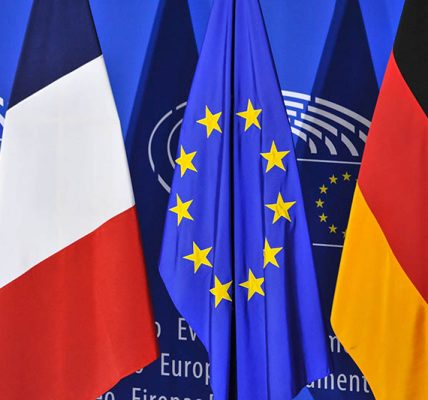
The Forum acquires its sharpest definition when set against an event that preceded it by days. From the fifteenth to the seventeenth of June 2026, the Group of Seven gathered at Évian-les-Bains under the theme of forging new partnerships and rebuilding solidarity, and India’s Prime Minister attended the outreach session as an invited guest for the eighth consecutive time. The juxtaposition is almost too neat to be accidental, and it offers a natural experiment in the comparative grammar of development cooperation. Within a single fortnight, India sat as a guest at the table of the advanced democracies and then convened, as host, the small enterprises of the Global South. The two roles, and the two cities, illuminate one another with rare clarity.
At Évian the G7, conscious of a diminishing share of global output and of intensifying Chinese economic competition, advanced a narrative of partnership over aid, proposing economic corridors to connect developing nations to its markets, with emphasis on critical minerals and on the demand of resource-rich states that more supply-chain value be retained on their own soil. India used the platform with evident seriousness, arguing that mutual trust is the world’s most valuable strategic asset, which many crises stem from a shortage of trust rather than of resources, and that cooperation must move beyond the donor-recipient model. Yet for all its sincerity, the Évian grammar remains one of the centre extending itself to the periphery. Its instruments are the corridor connecting the developing economy to the advanced market and the partnership offered, however generously, by those who convene to those who are invited. Even India’s most constructive interventions there were necessarily the interventions of a guest, an indispensable guest whose role was to press the hosts toward equity rather than to set the terms of the gathering.
At Agra the grammar inverted. India was not the guest but the host, not the invited voice of the South within a Northern institution but the convening centre of a Southern one. The instruments were not corridors and capital flows but the exhibition, the demonstration of a replicable method, the structured exchange of policy experience and the establishment of a mechanism owned by its participants rather than extended to them. Where Évian offered the periphery a better deal from the centre, Agra proposed to dissolve the distinction between centre and periphery altogether, gathering states that have all known the developing condition around a problem they share rather than a hierarchy they inhabit. This is the deeper meaning of strategic autonomy as India practises it. Autonomy is not the refusal of engagement with the G7, for India engages at Évian with seriousness and success. It is the capacity to engage at Évian and to convene at Agra in the same fortnight, to be a valued guest in one institution and the architect of another, and thereby to refuse the false choice between alignment and isolation that a less imaginative statecraft accepts as given.
It would be an error to cast the two cities as rivals demanding a choice of loyalty, and the most telling evidence against such a reading is the continuity of India’s offer across both. The same digital public infrastructure shown to BRICS partners at Agra is extended to the developing world through the G7’s outreach at Évian. That continuity is the surest sign that India pursues not a bloc politics of opposition but a network politics of convening, in which the measure of influence is the number of coalitions one can assemble rather than the number of adversaries one can confront. In a fragmented order, the states that matter most are those able to communicate across the divides that separate other powers, and India’s distinctive asset is precisely this convening capacity, exercised through issue-based coalitions rather than binding alignment. The small enterprise, threatening to no one and useful to all, is the ideal currency of such a politics.
Finance Meets Enterprise: Building the Productive Foundations of BRICS
The MSME agenda is not a self-contained sectoral exercise; it connects directly to the financial and technological architecture BRICS has spent a decade assembling, and in doing so it supplies that architecture with something it has conspicuously lacked. Consider finance. The chronic constraint on small enterprise everywhere is access to affordable credit, which is why India’s first preparatory meeting addressed exactly this question and why the New Development Bank now positions itself, through memoranda with the PartNIR structure, as a financier of small-enterprise infrastructure and value-chain integration. The deeper significance lies in the connection to the local-currency project. The case for settling trade in local currencies is conventionally made in the grand language of de-dollarisation and financial sovereignty, an abstraction that frightens as much as it persuades. Yet the constituency that benefits most concretely from local-currency settlement is the small exporter, for whom the conversion spreads, correspondent fees and exchange-rate exposure of dollar intermediation weigh far more heavily than upon the large corporation with a treasury to manage them. The MSME agenda thus furnishes monetary multipolarity with a sympathetic and legitimate beneficiary. It is far easier to argue for local-currency settlement as a means of helping the artisan exporter than as a means of weakening the dollar, and the reframing is substantive rather than cosmetic, for it names the actual economic agent the project would serve.
Candour requires acknowledging the gap between aspiration and instrument. The Contingent Reserve Arrangement, the bloc’s supposed financial safety net, remains largely untested, with no recorded activation in a genuine crisis, its de-linked portion modest, its operations still predominantly dollar-based, and seventy per cent of any member’s access tethered to an on-track IMF programme, a standing reminder of the limits of autonomy. Reforms are under discussion, including a revised treaty admitting eligible currencies beyond the dollar and proposals for an independent surveillance unit, and India’s Chairship has lent them momentum. But the architecture remains an assertion of intent that has yet to become an instrument of consequence, and the MSME agenda will test whether the financial machinery of BRICS can be made to serve the real economy of the bloc rather than merely to symbolise its ambitions.
The technological dimension is theoretically richer still, for the placement of the SME Working Group within a Partnership on the New Industrial Revolution locates the small firm at the intersection of two transformations the last century would have thought opposites: the transformation of scale and the transformation of intimacy. The technologies of the fourth industrial revolution, artificial intelligence, the industrial internet, cloud computing and the rest, are usually cast as forces of concentration that extend the dominance of the largest firms. The BRICS agenda inverts this expectation, treating them as instruments of democratisation by which the small enterprise might acquire capabilities once reserved for the large. From the Indian vantage, this is inseparable from digital sovereignty. The Indian proposition is that a developing state can build, own and govern its own digital foundations, and then extend the enterprises operating upon them into cross-border commerce on terms it controls, escaping both dependence on proprietary Western platforms and the strategic disquiet of Chinese infrastructure. Beneath its developmental surface, the technology agenda is therefore an argument about who shall write the rules of the digital economy, advancing the proposition that those rules are not dictated by the technology itself but constructed by the political choices of those who deploy it.
Security, understood in the expanded sense the century demands, completes the architecture. The resilience that supplies the keyword of India’s Chairship is at bottom a security concept, the capacity of an economy to absorb shocks, sustain supply and recover from disruption without dependence on adversaries. The pandemic and the successive disruptions of the decade, including the recent pressures on global trade transmitted through the Strait of Hormuz that India raised at Évian, taught that concentrated supply chains are fragile supply chains, and that diversifying sourcing across a wider range of producers, including the small and medium enterprises of the Global South, is not merely a developmental good but a security imperative. A world in which small firms across many countries can participate in global value chains is a world of distributed and therefore resilient production. The same logic governs sustainability, the fourth term of the Chairship theme, which functions less as an afterthought than as a condition of market access, since environmental compliance is increasingly a prerequisite of global competitiveness rather than an optional virtue. Addressed collectively, the green transition can help small firms meet such standards through shared knowledge rather than leaving each to bear the cost alone, converting an instrument that might otherwise operate as a protectionist barrier against developing-country exports into a shared developmental project.
Challenges and Constraints of Enterprise-Centred Multilateralism
An argument that only celebrated the Forum would forfeit the standing it seeks, and the constructivist premise that organises this analysis is no licence for optimism, for if interests and institutions are constructed through interaction, they can be unmade as readily as made. Several substantial objections deserve confrontation rather than dismissal. The first is the objection from implementation. BRICS has a documented propensity to generate ambitious frameworks whose realisation lags far behind their announcement, and the untested Reserve Arrangement stands as the cautionary monument to this tendency. The Forum produced consensus and a mechanism, but consensus is cheap and mechanisms easily atrophy. Whether the annual gathering generates the operating repository, the functioning platforms and the actual financing facilities the Action Plan envisages, or settles into a comfortable ritual congratulating itself on its own existence, cannot yet be known, and the burden of proof rests squarely with the institution.
The second is the objection from heterogeneity. The enlargement that conferred weight conferred division, and the unresolved antagonisms within the bloc are not trivial. The MSME agenda survives them precisely because it is unthreatening, but this strength is also its boundary, for an agenda that succeeds only by avoiding the questions that divide cannot itself convert BRICS into the coherent actor its larger ambitions require. The small enterprise can build a floor of cooperation; it cannot dismantle the strategic contradictions that constrain the bloc’s ceiling. The third objection, which bears with particular force on the Indian reading offered here, is the objection from asymmetry. China’s economic mass exceeds that of all other members combined, and the suspicion cannot be waved away that the bloc’s institutions, however collectively governed in form, may in substance serve the interests of its largest economy. Yet this is where the Indian wager becomes most interesting, for the elevation of the small enterprise can itself be read as a quiet assertion of an alternative developmental model, decentralised, democratic and employment-intensive, against the state-directed industrial scale of the Chinese path. That the small firm should become the vehicle of Indian leadership within a bloc dominated by Chinese mass is a subtle exercise in autonomy, an attempt to define the agenda in a domain where India leads rather than follows. Whether it succeeds, or whether the gravitational pull of the largest economy reasserts itself, is among the genuinely open questions of the coming decade.
A fourth objection concerns external constraint. Several members operate under the shadow of Western sanctions and the threat of secondary measures against those who trade with sanctioned states, a reach that extends into the bloc’s own practice and bounds the room for manoeuvre that strategic autonomy describes. The aspiration to financial autonomy underlying the local-currency project is, in part, an aspiration to escape this constraint, but the constraint is real and the escape incomplete. These objections are serious, and the argument advanced here does not require their refutation, only their proper placement. The claim is not that Agra solved the problems of BRICS, but that it represents a genuine shift in the kind of institution BRICS is becoming, from a coalition that bargains to a community that builds. The objections establish the limits within which that shift must occur; they do not establish that it is illusory. A young institution is entitled to be judged by its trajectory as much as its present achievement, and the trajectory running from O’Neill’s acronym through the Fortaleza instruments to the Agra Forum is one of steady deepening, of an idea acquiring ever more concrete institutional form. Criticism, properly conducted, does not refute the thesis. It disciplines it.
Resilient Enterprise Multilateralism
The institutional innovation inaugurated at Agra calls for a conceptual framework capable of explaining its wider significance. This article therefore advances Resilient Enterprise Multilateralism as a framework for understanding how enterprise-centred cooperation can strengthen the foundations of a durable multipolar order. Its central proposition is that the multipolarity to which BRICS aspires cannot be constructed solely through reserve currencies, development banks, summit diplomacy or geopolitical coordination. It must also rest upon resilient enterprises embedded in productive societies and connected through institutions jointly created and governed by participating states.
The framework rests upon four mutually reinforcing pillars. The first is the microeconomic foundation of multipolarity. A multipolar order that reaches the level of productive enterprise acquires a societal constituency that summit diplomacy alone cannot provide. MSMEs are its irreducible units because they represent the most widely distributed form of economic agency, generating employment, innovation, entrepreneurship and local resilience.
The second pillar is method over dependence. Rather than exporting dependency through resources or conditionalities, cooperation is built upon replicable developmental methods, shared policy experience, digital public infrastructure, technological collaboration and institutional innovation. Strategic autonomy is thereby enlarged through the diffusion of capability rather than the transfer of dependence.
The third pillar is institutional permanence through repeated interaction. The annual BRICS MSME Forum and its supporting Working Group transform episodic dialogue into sustained cooperation, gradually converting a coalition of states into a community of developmental partners. The fourth pillar is consensus through practical cooperation. Instead of beginning with the most divisive geopolitical questions, cooperation expands from areas of shared developmental interest, building the institutional trust required to address more complex challenges over time.
The significance of Resilient Enterprise Multilateralism extends beyond BRICS. It offers developing countries a model of cooperation that does not require prior resolution of strategic differences before meaningful institutional collaboration can begin. At the same time, the framework has clear limitations. Enterprise-centred cooperation cannot by itself resolve major geopolitical conflicts, nor does progress at the microeconomic level automatically translate into macroeconomic transformation. Nevertheless, every enduring institutional architecture requires a resilient foundation, and the First BRICS MSME Forum represents an important step towards constructing one.
If the framework is to evolve from interpretation into practice, several priorities follow. The Forum should be supported by a permanent secretariat within the PartNIR framework to preserve institutional continuity and monitor implementation. The New Development Bank should establish a dedicated MSME financing window for credit, supply-chain finance and export guarantees. Local-currency settlement initiatives should be designed to reduce transaction costs for small enterprises, while India’s Digital Public Infrastructure should be institutionalised as a shared developmental public good through common repositories, interoperability standards and collaborative governance. Equally important, women-led, artisanal and first-generation enterprises should become measurable institutional priorities through agreed targets and regular reporting so that inclusion becomes an institutional outcome rather than an aspirational principle.
The broader significance of this framework extends well beyond BRICS. It suggests that the durability of twenty-first-century multipolarity will depend not only upon the strategic choices of states but equally upon the institutional vitality of millions of enterprises, entrepreneurial ecosystems and productive communities. Like the anonymous artisans who transformed stone into one of the world’s enduring monuments, resilient enterprises transform productive capacity into durable institutions. The First BRICS MSME Forum reminds us that multipolarity will not endure simply because states declare it, but because productive societies sustain it. The foundations of the twenty-first-century international order are being laid not only in summit halls and finance ministries, but equally on the workshop floor.
Views: 1556

Dr. Maheep
Dr. Maheep is Director, Indian Perspective on Global Affairs (IPGA), and a leading analyst of India’s foreign policy and South Asian geopolitics. He earned his PhD in Arab and Islamic Studies. With more than a decade of teaching and research experience in International Relations and Global Politics, he contributes regularly on issues shaping national and global affairs.