




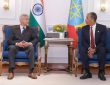


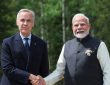

MUMBAI: At dawn in Mumbai, before the choreography of motorcades and memoranda, President Emmanuel Macron jogged along Marine Drive — the sweeping promenade curving beside the Arabian Sea — an image that travelled faster than any communiqué. Later, he recorded a podcast reflecting on democratic technology and youth ambition; by evening, he stood beside Prime Minister Narendra Modi at the AI Impact Summit, declaring 2026 the Year of Innovation between India and France — and the optics mattered. In a world marked by tariff skirmishes, protracted war in Ukraine, NATO’s internal strain, and the weaponisation of interdependence, the choreography signalled not spectacle but strategic intent: two autonomy-seeking powers translating symbolism into structure, scripting a dense, forward-leaning compact designed not merely to navigate global disorder, but to shape the emerging multipolar equilibrium.
The formal elevation of relations between India and France to a Special Global Strategic Partnership, announced in the India–France Joint Statement of 17 February 2026, is not rhetorical inflation. It codifies a dense, multi-sectoral framework encompassing defence industrial co-production, civil nuclear cooperation, artificial intelligence governance, Indo-Pacific maritime stabilisation, green energy transitions, fiscal and tax harmonisation, resilient supply chains, and deepening people-to-people connectivity. What is unfolding is not episodic diplomacy but deliberate geopolitical design — institutionalised through the Joint Statement and the MEA’s 21 outcome measures from President Macron’s fourth visit to India (17–19 February 2026), which directly followed Prime Minister Narendra Modi’s February 2025 engagement in France for the AI Action Summit.
Theoretical Underpinnings: Neorealism in an Age of Fractured Interdependence
The international system remains anarchic, yet its character has profoundly mutated. Today’s disorder is not classical bipolar confrontation but fractured interdependence: economic coercion through tariffs and secondary sanctions, supply chains securitised and weaponised, NATO internal stress and transatlantic recalibration, the prolonged Russia–Ukraine conflict reshaping European defence and energy doctrine, technology regimes becoming instruments of geopolitical leverage, and climate insecurity intensifying developmental asymmetries.
In such an environment, neorealism must adapt. States no longer seek mere balancing; they pursue strategic autonomy through capability aggregation. India and France represent convergent autonomy traditions: France’s Gaullist inheritance of independent deterrence and strategic sovereignty within Europe, and India’s multi-alignment doctrine, refusal of bloc entrapment, and leadership claim within the Global South. Their cooperation reflects what may be termed autonomy-maximising alignment — deep strategic integration without surrender of sovereign agency. This is not alliance politics. It is calibrated, sovereign interdependence — a pragmatic response to systemic volatility that allows both capitals to hedge against great-power coercion while building resilient capabilities. The Special Global Strategic Partnership, elevated during President Macron’s February 2026 visit and anchored in the Horizon 2047 Roadmap, institutionalises this logic through concrete mechanisms such as the new annual Foreign Ministers’ Dialogue and reaffirmed commitments across defence, technology, and global governance.
Historical Continuity: Trust as Strategic Capital
The endurance of the partnership between India and France cannot be understood without revisiting 1998. When India conducted its nuclear tests at Pokhran, France resisted the reflex of sanction politics and chose engagement over estrangement. That decision embedded strategic trust — a rare and durable currency in international relations. In the years that followed, cooperation deepened across defence modernisation, civil nuclear dialogue, space collaboration, maritime security, and cultural and educational exchanges symbolised by Puducherry. Institutional density steadily accrued: annual strategic dialogues, defence roadmaps, nuclear task forces, Indo-Pacific frameworks, and ultimately the Horizon 2047 long-range vision adopted in 2023.
The 38th Strategic Dialogue in New Delhi on 13 January 2026, co-chaired by NSA Ajit Doval and Emmanuel Bonne, was therefore not procedural routine but strategic consolidation — ensuring that President Macron’s visit would elevate the relationship structurally rather than ceremonially. Writing in European Times, Dr Maheep termed it a decisive shift from consultation to operational strategic partnership. Trust accumulated across decades is now being converted into sovereign capability, with the 2026 Joint Statement serving as the formal capstone of this evolutionary arc. From an Indian perspective, this continuity affirms a foreign policy that prizes reliability over transactionalism, enabling New Delhi to deepen ties with a European power that has consistently respected India’s strategic autonomy even amid moments of intense global pressure.
Defence Industrial Sovereignty: From Buyer to Co-Architect
The most consequential transformation in India–France relations today lies in defence industrialisation. The Rafale programme epitomises this shift. The 36 aircraft already inducted have decisively upgraded Indian Air Force capabilities across precision strike, network-centric warfare, and deterrence credibility. This trajectory deepened with the 26 Rafale-M naval variants under the 2025 inter-governmental agreement, extending cooperation into carrier-based aviation with full technology transfer, indigenous weapons integration, and dedicated maintenance, repair, and overhaul (MRO) ecosystems in India.
Building on this foundation, the Defence Acquisition Council’s approval on 12 February 2026 of a ₹3.6 lakh crore (approximately US$40 billion) defence package explicitly included clearance for 114 additional Rafale jets, with substantial domestic production through the Dassault–Tata collaboration and targeted indigenous content of up to 50 per cent. President Macron publicly endorsed co-production during the visit, describing it as a “new step forward” that would make India stronger — a clear affirmation of the transition from buyer–seller transactions to co-design and co-production partnerships.
Maritime cooperation reinforces this industrial turn. With all six Scorpène submarines commissioned under Project-75 by January 2025, India’s undersea deterrence posture has materially strengthened, particularly in the Indian Ocean Region — a theatre of intensifying strategic competition. During Macron’s visit, France reiterated its readiness for follow-on submarine platforms, further embedding naval sovereignty and continuity in undersea capability development. Complementing this, the Bharat Electronics Limited–Safran joint venture for HAMMER standoff precision-guided munitions, formalised during the visit, localises critical components while preserving French quality standards and enabling seamless integration across Rafale and indigenous platforms.
Simultaneously, the inauguration of the Airbus–Tata H125 helicopter final assembly line at Vemagal, Karnataka — involving an investment exceeding ₹1,000 crore — links civil–military aerospace manufacturing, supports high-altitude operational requirements, and opens pathways for regional exports, particularly to the Indo-Pacific and African markets.
These developments yield layered strategic dividends. Operationally, they enhance readiness, shorten turnaround times, and strengthen air and maritime deterrence. Industrially, they accelerate MSME integration, workforce upskilling, and spillovers in avionics, composites, propulsion, and materials science. Diplomatically, they position India as a credible regional exporter of advanced defence platforms. Geoeconomically, they reduce exposure to arms-embargo politics and external supply disruptions.
From a neoclassical realist perspective, this constitutes internal balancing through industrialisation — the most durable form of power accumulation in an era of contested supply chains. The Joint Statement’s emphasis on co-design and co-development reflects a mature strategic recognition: sovereignty in defence is best secured not through isolation, but through selective, high-trust interdependence. Success, however, will hinge on timely technology absorption, credible offset realisation, and long-term order visibility to amortise fixed costs. Here, the institutional scaffolding of Horizon 2047 provides the essential governance anchor, aligning industrial ambition with strategic endurance.
Civil Nuclear and Energy Geopolitics
Energy security today is no longer merely economic; it is profoundly strategic. The Jaitapur nuclear power project — alongside expanding cooperation on Small Modular Reactors (SMRs) and Advanced Modular Reactors (AMRs), institutional training linkages between India’s DAE/GCNEP and France’s CEA/INSTN, and joint initiatives on green hydrogen and climate-resilient infrastructure — anchors a multi-decade framework of technological and strategic interdependence between India and France.
For India, these initiatives directly support the national objective of achieving 500 GW of non-fossil energy capacity by 2030 and reinforce the Nuclear Energy Mission’s long-term ambitions toward 2047, essential for sustaining high-growth industrialisation while meeting climate commitments. For France, they secure industrial scale and market depth at a time of Europe’s post-Ukraine energy recalibration, while consolidating its position as a global leader in civil nuclear technology.
Civil nuclear cooperation also performs a deeper geopolitical function. It raises the transaction cost of strategic divergence, stabilising the relationship through duration and sunk institutional commitment — a quiet yet powerful multiplier of bilateral resilience. By binding energy infrastructure, technical expertise, regulatory cooperation, and climate objectives across decades, the partnership embeds strategic continuity while preserving sovereign autonomy.
The Joint Statement’s parallel commitments to renewable energy expansion, buildings decarbonisation under the Declaration de Chaillot, and collaboration in hard-to-abate industrial sectors further demonstrate how Indo-French cooperation converts shared climate vulnerability into strategic advantage. Together, these initiatives provide both nations with a structural hedge against energy volatility in a fractured global order, while positioning them as co-architects of a secure and sustainable energy transition.
AI Governance: Power in the Algorithmic Century
The AI Impact Summit repositioned technological governance at the very centre of contemporary geopolitics. India brings to this domain one of the world’s most extensive digital public infrastructures — from the Unified Payments Interface (UPI), which now processes over 14 billion transactions monthly and has been successfully extended across major French commercial and tourist hubs, to Aadhaar-linked service delivery platforms that enable real-time welfare, banking, and healthcare access for more than 1.3 billion citizens. France, in turn, contributes regulatory leadership anchored in the European Union’s pioneering AI governance frameworks, emphasising transparency, accountability, and risk-based oversight.
Jointly launched during President Macron’s visit, the India–France Innovation Network, collaborative AI applications in healthcare and education, and coordinated initiatives on critical minerals and advanced materials resilience are crafting what may be termed a third technological pathway — democratic, inclusive, and strategically sovereign. This model seeks to combine large-scale innovation with ethical safeguards, resisting both the surveillance-heavy digital authoritarianism of some regimes and the unregulated market dominance of global tech monopolies.
In a world increasingly polarised between algorithmic control and corporate concentration, Indo-French AI cooperation represents normative statecraft. It positions both nations as co-shapers of responsible global standards rather than passive rule-takers. By operationalising people-centric AI at population scale — from diagnostic healthcare platforms to adaptive learning systems — the partnership advances domestic technological capacity while offering the Global South a credible alternative model of digital development. In doing so, it reinforces India’s leadership in inclusive innovation and anchors France’s broader vision of responsible European technological sovereignty in the emerging global AI order.
Indo-Pacific Stabilisation
France is not an external observer in the Indo-Pacific; it is a resident power. With sovereign territories in Réunion and Mayotte, an Exclusive Economic Zone exceeding 9 million square kilometres globally (a significant portion within the Indo-Pacific), and regular carrier strike-group deployments, Paris maintains enduring strategic presence in the region.
Indo-French maritime initiatives — reciprocal logistics agreements, enhanced maritime domain awareness coordination, joint naval exercises such as Varuna, and updated Indo-Pacific roadmaps — are constructing a distributed deterrence lattice that reinforces freedom of navigation and strengthens capacity-building for littoral states across the Indian Ocean Region. This framework complements Quadrilateral Security Dialogue (QUAD) efforts without alliance rigidity or bloc entrapment. It reflects calibrated balancing: overlapping security networks designed to deter coercion while preserving sovereign flexibility.
In an era marked by supply-chain vulnerability, chokepoint anxieties, and intensifying great-power rivalry in the South China Sea and western Indian Ocean, such coordination enhances sea-lane security that carries nearly 90 per cent of global trade by volume. It also mitigates risks arising from energy transit disruptions — a concern sharpened by the prolonged Russia–Ukraine conflict and Red Sea instability. The Joint Statement’s emphasis on a rules-based maritime order and coordinated multilateral engagement — including President Macron’s invitation to Prime Minister Narendra Modi for the 2026 G7 Summit — further embeds Indo-French cooperation within global governance structures.
From a neo-realist vantage, this is not symbolic alignment but strategic depth: France anchors a sovereign European presence in the Indo-Pacific, while India consolidates its role as the region’s pivotal maritime power. Together, they reinforce equilibrium across the chequered chessboard of regional dynamics.
Trade, Taxation, and Economic Sovereignty
The amendment to the bilateral tax treaty — reducing dividend withholding to 5 per cent for substantial French investors (stakes ≥10 per cent) while simultaneously enhancing India’s taxation rights on capital gains and specified transactions — reflects calibrated economic diplomacy. It balances capital attraction with fiscal sovereignty, a delicate equilibrium in an age of aggressive tax competition and regulatory arbitrage.
Bilateral goods trade reached €12.67 billion in FY 2024–25, more than doubling over the past decade, with Indian exports accounting for €6.6 billion. France remains India’s third-largest trading partner within the European Union. Cumulative French FDI, standing at €9.79 billion (April 2000–March 2025), positions France as the 11th-largest investor in India, representing 1.61 per cent of total inflows. Notably, 38 of the 40 CAC-40 companies maintain a presence in India, collectively employing approximately 300,000 people with turnover exceeding €16.67 billion.
France’s strategic advocacy for deeper EU–India Free Trade Agreement integration — negotiations concluding in January 2026 — adds systemic momentum. In a global climate shaped by tariff disputes, supply-chain decoupling, and industrial policy competition, Indo-French economic engagement represents structural interdependence rather than episodic exchange. It aligns with India’s Atmanirbhar Bharat framework while providing French capital predictable access to one of the world’s fastest-growing major markets — an economy projected to remain among the top global growth performers in the coming decade.
Critically analysed, the partnership navigates regulatory asymmetries pragmatically. It converts potential frictions into opportunities for resilient supply chains in aerospace, defence manufacturing, renewable energy, telecom infrastructure, agri-food systems, and advanced technology sectors. From a strategic perspective, this economic compact functions as geoeconomic balancing — diversifying partnerships, reducing exposure to unilateral coercive instruments, and embedding mutual stakes in long-term prosperity.
Human Capital Statecraft
The commitment to expand Indian student enrolment in France to 30,000 by 2030 marks a decisive transformation of education into strategic infrastructure. This builds on the current base of approximately 10,000 students — with 9,100 recorded in the academic year 2024–25, reflecting a robust 17 per cent year-on-year increase that has elevated India to the 11th-largest source country among France’s 443,500 international students.
Complementing this surge are five-year Schengen alumni visas, reciprocal military officer exchanges, joint doctoral programmes, and innovation-driven research pipelines, collectively creating durable corridors of talent mobility. These are not temporary exchanges but irreversible human-capital linkages that bind innovation ecosystems, security communities, and professional networks across generations.
Diaspora communities — exceeding 119,000 in mainland France and substantially larger across French overseas territories — further embed societal stakes into bilateral relations. In strategic terms, power is no longer solely material; it is increasingly relational. Talent flows generate enduring diplomatic goodwill, entrepreneurial capital, and knowledge transfer, reinforcing long-term interdependence while maintaining sovereign control. This human-capital architecture exemplifies a sophisticated liberal-realist equilibrium — mobility without vulnerability, openness without strategic dilution.
Risk, Restraint, and Governance
No strategic partnership of this scale is without friction. Intellectual-property asymmetries, procurement delays, regulatory divergence, cost overruns, and potential geopolitical backlash from regional competitors remain persistent risks. Yet what distinguishes the Indo-French relationship is the depth of its institutional shock absorbers.
Annual strategic dialogues, Horizon 2047 oversight mechanisms, sector-specific task forces, defence-industrial monitoring frameworks, and the newly instituted Foreign Ministers’ Dialogue collectively provide robust governance architecture capable of correcting course without destabilising momentum. Rather than episodic crisis management, the partnership operates through continuous strategic calibration.
This reflects mature realism: ambition disciplined by institutional restraint. Transparent roadmaps, joint review mechanisms, and long-term capability planning ensure that co-production and technology transfer deliver genuine indigenisation rather than dependency substitution. From an Indian vantage, this calibrated governance preserves strategic autonomy while maximising industrial, technological, and security gains within an increasingly multipolar and volatile global landscape.
Indian Perspective: Sovereign Rise without Subordination
For India, the Indo-French partnership affirms a trajectory of rise without alliance dependency, defence sovereignty without isolation, technological leadership without regulatory subordination, and energy security without fossil entrapment. It demonstrates that strategic autonomy in the twenty-first century is not withdrawal from cooperation, but the intelligent construction of capability-enhancing partnerships.
India thus remains the pre-eminent voice of the Global South while engaging Europe on genuinely equal footing — not as a junior partner, but as a co-shaper of global norms, technologies, and security architectures. This is not alignment drift; it is strategic confidence in motion. It reflects a calibrated assertion of multipolar agency that accelerates Atmanirbhar Bharat while preserving the doctrinal independence that has anchored Indian foreign policy since independence. India is converting cooperation into power accumulation without sacrificing sovereignty — a rare equilibrium between engagement and autonomy in a fractured international system.
Conclusion
The Year of Innovation 2026 inaugurates a new phase of strategic convergence between India and France, driven by President Macron’s forward-looking engagement and India’s rising leadership of the Global South. Through defence co-production and Rafale manufacturing in India, ethical AI governance and interoperable digital payment systems, civil nuclear and green-energy corridors, Indo-Pacific maritime stabilisation, deepening trade and India–EU FTA momentum, and expansive human-capital mobility, the partnership transforms cooperation into sovereign capability.
As strategic analysts such as Dr Maheep have underscored, the 2026 engagements — rooted in the 38th Strategic Dialogue — reflect not reactive adjustment to Sino-Atlantic pressures but deliberate institutional design, embedding capability-building and normative leadership. In neo-realist terms, India is internalising power while France anchors European strategic autonomy in the world’s fastest-growing geopolitical theatre. Together, they are not merely adapting to a geopolitics of coercive interdependence but shaping a resilient multipolar order where innovation, security, sustainability, and economic integration reinforce one another. The Indo-French compact thus emerges as a win-win model of twenty-first-century statecraft — autonomy without isolation, growth without vulnerability, and leadership grounded in technological and strategic synergy.
Views: 1370

Dr. Maheep
Dr. Maheep is Director, Indian Perspective on Global Affairs (IPGA), and a leading analyst of India’s foreign policy and South Asian geopolitics. He earned his PhD in Arab and Islamic Studies. With more than a decade of teaching and research experience in International Relations and Global Politics, he contributes regularly on issues shaping national and global affairs.


