


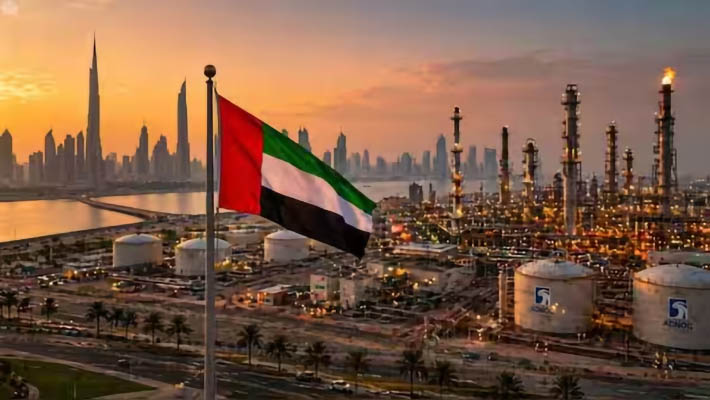


UAE’s Strategic Withdrawal from OPEC: Opening New Horizons for India-UAE Synergy
On 28 April 2026, the United Arab Emirates announced its withdrawal from OPEC and OPEC+, effective 1 May 2026, ending fifty-nine years of membership inaugurated by Abu Dhabi in 1967. Read through an Indian strategic lens, the move is less a rupture than a maturation: the eclipse of cartelised energy governance and the rise of bilateral, civilisational, and minilateral diplomacy in which India holds a pivotal seat. Drawing on Indian, Emirati, and global sources—including European Times analyses of Dr. Maheep and SIPRI’s data on Gulf armaments—this article situates the Emirati exit within the architecture of CEPA, IMEC, I2U2, BRICS+, and India’s G20 stewardship, and argues that it augurs enhanced energy security and deeper civilisational interdependence for New Delhi.
Eclipse of Cartelisation and the Dawn of Sovereign Energy Diplomacy
Few institutions of the post-war order have shaped the lifeblood of modern industry as profoundly as the Organization of the Petroleum Exporting Countries. Founded at Baghdad in September 1960 by Iran, Iraq, Kuwait, Saudi Arabia, and Venezuela, OPEC stood as both a producers’ bulwark against Western majors and a vehicle of collective sovereignty over hydrocarbon wealth. Through the 1973 embargo, the 2014 price collapse, and the unprecedented negative-price episode of 2020, the cartel sought to project a unified Gulf voice. That fiction has now come undone.
On 28 April 2026, the UAE announced its decision to exit OPEC and OPEC+ with effect from 1 May 2026, severing fifty-nine years of membership that began with the Emirate of Abu Dhabi in 1967, four years before the federation itself was founded (Reuters; Al Jazeera; CNBC, 2026). The official statement issued through the Emirates News Agency framed the decision as a reflection of “the UAE’s long-term strategic and economic vision and evolving energy profile” (WAM, 28 April 2026). Energy Minister Suhail Al Mazrouei told Reuters it was a “sovereign national decision” taken without prior consultation with Riyadh, anchored in the imperative of production flexibility. The Atlantic Council captured the wider sentiment from Abu Dhabi in three telling words: “a long time coming” (Atlantic Council, 2026).
The Indian vantage point is neither distant nor incidental. India is the world’s third-largest crude consumer and the UAE’s most consequential strategic partner east of the Mediterranean. Read against the 2023 G20 Presidency, the launch of the India–Middle East–Europe Economic Corridor (IMEC), the operationalisation of CEPA, and the BRICS+ momentum, the Emirati departure invites not anxiety but opportunity. It signals the eclipse of cartelisation and the rise of bilateral, civilisational, and minilateral energy diplomacy in which India holds a pivotal seat.
UAE Within OPEC, 1967–2026: From Disciplined Member to Strategic Outlier
From the moment Abu Dhabi joined the cartel in 1967, the Emirates approached OPEC with a discipline rare among Gulf producers, investing patient capital in upstream capacity, refining, and downstream petrochemicals. By February 2026, on the eve of the war on Iran, the UAE had emerged as OPEC’s third-largest producer behind Saudi Arabia and Iraq, contributing roughly twelve per cent of cartel output. Its installed capacity reached approximately 4.8 million barrels per day, with an avowed ambition of five million by 2027 (CNBC; Al Jazeera, 2026). Yet its OPEC quota of about 3.2 million barrels per day forced it to sit on more than a million barrels of unutilised daily capacity—a constraint increasingly incompatible with the diversification ambitions of We-the-UAE 2031.
Whereas Saudi Arabia’s fiscal arithmetic, with break-even oil prices well above ninety dollars, demands disciplined supply curtailment, the UAE’s sovereign-wealth funds—Mubadala, ADIA, ADQ—had decoupled state finances from spot oil prices. The arithmetic of restraint thus diverged sharply between Riyadh and Abu Dhabi. Open differences over Yemen culminated in the December 2025 Saudi air strike on Southern Transitional Council positions backed by the UAE; rivalry over Sudan, Red Sea logistics, and Iran posture compounded the rupture (Atlantic Council, 2026). Then came the watershed of 28 February 2026: the US–Israeli war on Iran inflicted, in the words of the IEA Director, “the greatest global energy and food security challenge in history.”
Iran’s retaliatory doctrine concentrated some eighty-three per cent of its missile and drone strikes on the GCC, with the UAE absorbing the heaviest blow of any country, including Israel; over six hundred and sixty attack events were recorded across Gulf territories (Geopolitical Monitor, 2026). The Strait of Hormuz, conduit for one-fifth of global oil and LNG, was effectively sealed at Tehran’s discretion. Iran, an OPEC member, had weaponised the cartel’s most vital corridor against its Gulf brethren—and Abu Dhabi concluded that continued OPEC membership had become strategically untenable.
| Why Abu Dhabi Walked Away: The Convergent Drivers ▸ Capacity surplus of ~1.6 mb/day untapped under OPEC quotas (4.8 mb/d capacity vs. 3.2 mb/d quota). ▸ Strategic divergence with Saudi Arabia over Yemen, Sudan, Red Sea logistics, and Iran posture (late 2025–early 2026). ▸ Iranian targeting of the UAE in 83% of missile/drone strikes during the 2026 war; Hormuz blockade exposed cartel limits. ▸ Decoupling of state finances from spot oil prices via sovereign-wealth diversification (ADIA, Mubadala, ADQ). ▸ Pursuit of strategic autonomy under We-the-UAE 2031 and an aspiration of 5 mb/d capacity by 2027. |
Aftershocks for the Gulf Architecture
The exit’s implications reverberate well beyond Vienna. Gulf observers describe the move as “an amputation” rather than a defection: the UAE accounted for roughly twelve per cent of OPEC’s output and was, alongside Saudi Arabia, one of few members with meaningful spare capacity (Al Jazeera Opinion, 2026). The departure strips the cartel of a crucial swing-producer instrument when global supply chains are most fragile. Anwar Gargash, diplomatic adviser to the UAE President, signalled the breadth of Emirati frustration when he described the GCC’s political-military response during the Iran war as “historically the weakest”, surprising him more than the Arab League’s comparable reticence (Fox Business, 2026). Atlantic Council analysts have suggested that Abu Dhabi may, in time, reconsider participation in other multilateral groupings, although Emirati officials have for now ruled out further withdrawals.
OPEC, however, retains substantial leverage; OPEC+ still commands roughly forty-one per cent of global supply. The cartel’s legitimacy has been wounded—the question is no longer whether others will follow, but whether the institution can credibly fulfil its historic function of collective price discipline. Kazakhstan and Nigeria are flagged by Kpler analysts as plausible “flight-risk” candidates owing to chronic over-production and the rise of domestic refining (CNBC, 2026). For the GCC, the Emirati assertiveness will likely accelerate a quiet bifurcation between two visions: a Saudi-led model of price-disciplined hydrocarbon hegemony, and an Emirati model of bilateral, technology-intensive, globally networked diversification.
India–UAE Relations: From Civilisational Trade to Comprehensive Strategic Partnership
If any external power has cause to read the Emirati exit with strategic equanimity—indeed with quiet optimism—it is the Republic of India. The civilisational substrate is ancient: dhows from Mangalore and Surat have plied the Arabian Sea for two millennia. What has changed is the institutional thickness of the relationship. The keystone is the India–UAE Comprehensive Economic Partnership Agreement (CEPA), signed on 18 February 2022 between Prime Minister Narendra Modi and President Sheikh Mohamed bin Zayed Al Nahyan, and brought into force on 1 May 2022 (PIB India, 2025). It was India’s first comprehensive FTA with a GCC partner and was concluded in a record eighty-eight days of negotiation.
Bilateral merchandise trade nearly doubled from USD 43.3 billion in FY 2020-21 to USD 83.7 billion in FY 2023-24, crossing the USD 100 billion milestone in FY 2024-25; in January 2026, both nations set a fresh target of USD 200 billion in annual trade by 2032 (Drishti IAS; The Hindu, 2026). Crucially, non-oil bilateral trade reached USD 57.8 billion in FY 2023-24, surpassing oil trade for the first time and confirming the diversification of the basket. In January 2026, the two governments signed a Letter of Intent for a formal Strategic Defence Partnership; Desert Cyclone (army) and Desert Flag (air force) bilateral exercises now feature multi-domain operations and high-intensity combined drills. The IIT-Delhi Abu Dhabi campus, inaugurated in 2024, will double its enrolment to four hundred students by late 2026, and the 2025 MoU on Mutual Recognition of Qualifications eases mobility for the 3.5-million-strong Indian community. Bharat Mart at Jebel Ali Free Zone and the planned Bharat-Africa Setu integrate Indian MSMEs into the UAE’s global re-export network. The bilateral relationship has acquired the texture of what Robert Keohane and Joseph Nye called “complex interdependence”—multiple channels, no hierarchy among issues, and the de-emphasis of military force.
| Milestones of the India–UAE Comprehensive Strategic Partnership ▸ CEPA signed 18 February 2022; in force 1 May 2022 — India’s first FTA with a GCC partner. ▸ Bilateral trade: USD 43.3 bn (FY 2020-21) → USD 83.7 bn (FY 2023-24) → USD 100+ bn (FY 2024-25); target USD 200 bn by 2032. ▸ Non-oil trade USD 57.8 bn in FY 2023-24, surpassing oil trade for the first time. ▸ BAPS Hindu Mandir, Abu Dhabi: consecrated 14 February 2024; 2.2 million visitors in inaugural year. ▸ IIT-Delhi Abu Dhabi (2024); Bharat Mart at JAFZA (2025–26); IMEC anchor MoU (G20 New Delhi, September 2023). ▸ Strategic Defence Partnership Letter of Intent (January 2026); ~USD 22 bn UAE→India remittances in 2023 (18% of total inward). |
G20, IMEC, BRICS+: India’s Geoeconomic Architecture
India’s G20 Presidency in 2023 was a watershed of geoeconomic statecraft, and its most enduring deliverable—the India–Middle East–Europe Economic Corridor—was unveiled in New Delhi on 9 September 2023 by India, the United States, the UAE, Saudi Arabia, France, Germany, Italy, and the European Union (Atlantic Council, 2025). IMEC envisions an integrated multimodal corridor linking Mumbai through the Emirati ports of Jebel Ali and Fujairah, across the Arabian Peninsula by rail to Haifa, thence by sea to Piraeus, Marseille, and Trieste. For India, IMEC is at once a strategic alternative to China’s Belt and Road, an operational answer to the chronic vulnerability of the Suez–Red Sea route, and a civilisational rediscovery of the Indian Ocean’s westward arc.
The Gaza war and the 2026 Iran war have stress-tested the corridor; ISPI argues that the Hormuz crisis “has exposed the fragile assumptions on which IMEC was constructed” (ISPI, 2026). Yet, as Fortune observed in April 2026, IMEC has begun to function less as a single corridor and more as a “resilience framework,” advancing through nested bilateral agreements where multilateral coordination has stalled. The UAE’s newly-untethered energy diplomacy fits this pattern with striking precision: an Abu Dhabi liberated from OPEC quotas can engage India and Europe through long-term, market-determined contracts that bypass cartel rigidities. Parallel to IMEC stands the I2U2 minilateral—India, Israel, the UAE, and the United States—launched in 2022. The 2025 BRICS+ enlargement, which includes the UAE, deepens India’s confluence with Abu Dhabi within Global South architectures. India and the UAE thus share a singular distinction: both are simultaneously embedded in I2U2 and in BRICS+, exemplifying “multialignment”—a stance of strategic autonomy that refuses bloc politics.
The Iran War, the Rentier Reckoning, and Dr. Maheep’s Diagnosis
No reading of the Emirati exit is complete without addressing the security earthquake of February–April 2026. The US–Israeli war on Iran transformed the Gulf overnight from a pole of stability into a theatre of attrition. The UAE became the single most-targeted state, exceeding even Israel; for the first time in history, Israel’s Iron Dome was deployed on foreign soil to defend Emirati airspace (The Week, 2026). The vaunted “Gulf safe-haven” narrative was punctured. Dr. Maheep, writing in the European Times, has captured this moment with rare analytical acuity. His essay “Mosaic Resilience: Iran and the New Art of Decentralized Attrition” (April 2026) demonstrates how the decapitation strikes of 28 February produced not Iranian collapse but adaptation—a distributed, asymmetric continuity grounded in saturation tactics. Crucially, he highlights how “excessive reliance on AI-enabled targeting and algorithmic decision-making fostered a dangerous strategic overconfidence,” anticipating why Gulf states must now rethink the externalisation of their security to a single patron. His earlier piece, “Closing the Strait of Hormuz: A Strategic Illusion?” (March 2026), warned that any “controlled” closure of the chokepoint would inflict catastrophic costs on import-dependent economies from Europe to South Asia—a prescient diagnosis that has reshaped Indian thinking on supply-route diversification. His corpus on the Gulf, including the analysis of the end of Saudi Arabia’s kafala system, anchors the case that India’s human-capital and energy interests in the region demand a partnership architecture which is plural, sovereign, and resilient.
The Stockholm International Peace Research Institute (SIPRI) has long documented the Gulf’s heavy reliance on imported armaments. SIPRI yearbooks indicate that Saudi Arabia and the UAE consistently rank among the world’s top ten arms importers, with the United States supplying the dominant share. The 2026 conflict has demonstrated that imported deterrence cannot fully substitute for indigenous and diversified security partnerships. India’s offer is unique within this reckoning: it brings reliable energy demand, a 3.5-million-strong civilian community, naval presence in the Western Indian Ocean, and—critically—no hegemonic ambition. India’s evacuation operations, including Operation Raahat from Yemen (2015) and Operation Kaveri from Sudan (2023), have repeatedly proved New Delhi’s capacity to extract its citizens from regional crises with quiet efficiency, reinforcing trust in Gulf capitals.
Civilisational Bridge: BAPS Mandir, Diaspora, and Soft Power
Among the most luminous expressions of the India–UAE bond is the BAPS Hindu Mandir of Abu Dhabi, consecrated on 14 February 2024 by Prime Minister Modi and Mahant Swami Maharaj on twenty-seven acres gifted by the UAE leadership at Abu Mureikhah. Built according to the shilpa shastras, standing 108 feet tall with seven shikars symbolising the seven Emirates, it is the largest Hindu mandir in West Asia and the first traditional Hindu stone shrine in the Arabian Peninsula. In its inaugural year alone, it received over 2.2 million visitors. Sheikh Nahyan bin Mubarak Al Nahyan, the UAE Minister of Tolerance and Coexistence, framed it as “a reflection of our appreciation for the Indian community” (ThePrint, 2025). Combined with the gurudwaras of Dubai and the churches of Sharjah, it signals what Drishti IAS aptly terms a “cultural extension of India”—a neutral platform for managing sensitive South Asian engagements. The 3.5-million-strong Indian community, approximately thirty per cent of the federation’s population, remains the connective tissue of the relationship. Indian remittances from the UAE in 2023 stood at nearly USD 22 billion—some eighteen per cent of total inward remittances to India. Cumulative UAE FDI into India between 2000 and 2023 reached USD 16 billion, while Indian investment into the UAE during the same period crossed USD 19 billion (ThePrint, 2025).
Energy Security Dividends and the Rupee–Dirham Frontier
The most direct dividend of the UAE’s OPEC exit accrues to India’s energy security calculus. The Middle East still supplies the majority of Indian crude imports; the UAE has the highest share of India’s petroleum-product imports at twenty-three per cent, with the broader region accounting for sixty-eight per cent (US EIA, 2025). The Indian Strategic Petroleum Reserve Limited (ISPRL) maintains a unique commercial-strategic arrangement with the Abu Dhabi National Oil Company at Mangalore: ADNOC stores roughly six million barrels there, with provision for ISPRL’s preferential access in emergencies (US EIA, 2026). This makes the UAE the only foreign producer with stored crude on Indian soil—a sovereign trust unparalleled in the Indian Ocean.
The exit liberates Abu Dhabi to ramp output toward its five-million-barrel target by 2027, opening longer, more flexible bilateral supply contracts with Indian Oil, Bharat Petroleum, Hindustan Petroleum, and Reliance. As Kingsmill Bond of Ember has argued, the UAE is “preparing for a world after the Iran war where oil demand is in decline,” a strategy of monetising reserves before the energy transition matures (Al Jazeera, 2026). For India—whose oil-import bill swings dramatically with crude price volatility—the prospect of stable, long-duration, possibly partially rupee-denominated contracts is transformative. The UAE’s Fujairah terminal on the Gulf of Oman allows India to receive Emirati cargoes that bypass the Strait of Hormuz altogether; in 2025, approximately 1.7 million barrels per day flowed through Fujairah—a figure poised to expand. Fujairah is, in effect, the maritime counterpart to IMEC.
The currency frontier is no less consequential. In July 2023, the Reserve Bank of India and the Central Bank of the UAE concluded an MoU to settle bilateral trade in rupees and dirhams; the first transaction under the framework was a procurement of one hundred thousand barrels of crude by Indian Oil from ADNOC, paid in rupees. Within the BRICS+ enlargement of 2025, the architecture of de-dollarised settlement has acquired durable institutional weight. Released from the dollar-anchored OPEC pricing logic, Abu Dhabi gains greater latitude to denominate selected Asian flows in dirhams or rupees, reducing exposure to Federal Reserve policy and to sanctions weaponisation—a sovereign-protective hedge for India that does not seek to displace the dollar but to provide a complementary track.
| Strategic Energy-Security Gains for India from the UAE’s OPEC Exit ▸ Volume: Emirati capacity ramp toward 5 mb/d by 2027 enables larger long-term bilateral supply contracts. ▸ Price: Pricing flexibility beyond OPEC quotas may soften Asian benchmark prices, easing India’s import bill. ▸ Routes: Fujairah terminal on the Gulf of Oman provides a Hormuz-bypass corridor — a maritime IMEC complement. ▸ Reserves: ADNOC’s ~6 mb commercial storage at Mangalore SPR — only foreign crude held on Indian soil. ▸ Currency: Scope to deepen rupee–dirham settlement under the 2023 RBI–CBUAE MoU. ▸ Transition: SHANTI civil-nuclear, green-hydrogen, and solar partnerships accelerate India’s 500 GW renewables goal. |
Green Transition and the Climate Diplomacy Frontier
The UAE hosted COP28 in 2023 and oversaw the historic UAE Consensus on transitioning away from fossil fuels. India has pledged 500 GW of non-fossil installed capacity by 2030 and net-zero by 2070. The convergence is not rhetorical. The Joint Hydrogen Task Force established under CEPA, multi-billion-dollar Adani-led solar partnerships with Emirati financiers, and the SHANTI framework—Sustainable Harnessing and Advancement of Nuclear Energy, including Small Modular Reactors—position the UAE as a primary financier of India’s green transition. Critical minerals offer the next frontier: the UAE’s logistics dominance and India’s downstream processing ambitions are complementary, both seeking to insulate their supply chains from Chinese chokepoints. The OPEC exit, by liberating Abu Dhabi from the cartel’s residual hydrocarbon mindset, makes it a more flexible partner in the post-carbon economy India is striving to build.
| Pathways toward a De-Dollarised, Climate-Resilient Partnership ▸ Scale rupee–dirham crude settlement under the 2023 RBI–CBUAE MoU; expand to refined products and petrochemicals. ▸ Operationalise the Joint Hydrogen Task Force (CEPA) with concrete green-H2 export pilots from India to Europe via the UAE. ▸ Co-finance Small Modular Reactors and SHANTI civil-nuclear cooperation as part of India’s 500 GW non-fossil target. ▸ Expand India–UAE critical-minerals partnership through Bharat-Africa Setu and Fujairah/Jebel Ali logistics chains. ▸ Use the IMEC ‘resilience framework’ to interlink CEPA, I2U2, and BRICS+ flows — multi-aligned, sovereign, climate-aware. |
A Multipolar Energy Order and India’s Sovereign Confidence
The UAE’s exit from OPEC, set against the smoking horizon of the Iran war, is best read not as a flight from collective discipline but as the maturation of a Gulf state confident enough to substitute cartel for civilisation, quotas for partnerships, and dollar for plural currency baskets. The cartel of 1960 was a producer’s shield against the consuming powers of the Atlantic; the partnership of 2026 is a sovereign’s scaffolding for a multipolar, climate-conscious, and Asia-anchored century. From an Indian vantage point, the development is uncommonly auspicious. India has invested in the relationship over a decade with patient capital of trust, talent, and treaty: CEPA, IMEC, I2U2, BRICS+, SHANTI, the Strategic Defence Partnership, the BAPS Mandir, and the rupee–dirham settlement. Every one of these channels strengthens precisely as the cartelised model weakens.
There remains a sober caveat. The Iran war is not concluded; the ceasefire is fragile; the Hormuz architecture is unresolved; and the Saudi-Emirati rivalry, however productive of bilateral opportunities for India, is also a source of regional volatility. New Delhi must therefore continue its hallmark posture of multialignment—deepening ties with Abu Dhabi without abandoning Riyadh, Tehran, or any constructive Gulf partner. India’s energy security demands plurality, not exclusivity. Yet within that plural commitment, the UAE has emerged as primus inter pares—the closest, most institutionally embedded, and most civilisationally resonant of India’s Gulf partners. The OPEC exit therefore confirms what the BAPS Mandir already symbolised: that the Indian Ocean is, once again, the principal stage on which the next chapter of the world’s energy and civilisational drama will be written. India and the UAE have already taken their seats.
Views: 583

Dr. Maheep
Dr. Maheep is Director, Indian Perspective on Global Affairs (IPGA), and a leading analyst of India’s foreign policy and South Asian geopolitics. He earned his PhD in Arab and Islamic Studies. With more than a decade of teaching and research experience in International Relations and Global Politics, he contributes regularly on issues shaping national and global affairs.


