



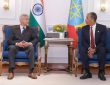

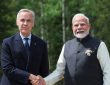
With BRICS as a major multilateral institution marking 20 years since its inception and with the presidency coming to India in 2026 and the foreign ministers meeting of the 11-nation grouping held in Delhi, May 14-15 , India as its Chair has been at the forefront in leading BRICS with a straight bat. A number of relevant BRICS Working Groups meetings ranging from cultural heritage protection and ethical use of AI, disaster risk reduction mechanisms to debating sustainable and resilient housing, mobility, inclusive smart cities enterprises under the urban forum , are taking place currently in various Indian cities on an ongoing basis.
The focus has been on India’s proactive leadership and its agenda on ‘building for resilience, innovation, cooperation, and stability’ for the mega summit meeting being scheduled in September 9-10 in Delhi. India also believes in nurturing the representation of the non-Western block and the Global South in having a meaningful, shared partnership. Amidst rising geopolitical tensions and tumult, India’s initiative as BRICS 2026 chairmanship draws inspiration from Prime minister Modi’s ‘Humanity First and People-centric” vision for BRICS within the fulcrum of ‘Sabka Saath, Sabka Vikas, Sabka Viswas, and Sabka Prayas’.
Synergy between Mission and Objectives:
The idea of BRICS originated in 2001 when the economist Jim O’ Neill coined the term ‘BRIC’ for Brazil, Russia, India, China in a Goldman Sachs Report with the aim of focusing on four core areas: strengthening multilateral institutions, and facilitating global governance; promoting sustainable economic cooperation and new financial architecture.
With the addition of South Africa in 2010 and subsequent expansion of BRICS in 2024-25 when Egypt, Ethiopia, Iran, Saudi Arabia, UAE, and Indonesia have become full members. BRICS has also notable partner countries which includes: Belarus, Cuba, Kazakhstan, Malaysia, Nigeria, Thailand, Uganda, and Uzbekistan. On the sidelines of the G-20 meeting at Hangzhou, China, on 4 September 2016, Prime minister Narendra Modi described BRICS as ‘an influential voice in international discourse’ and how it was their ‘shared responsibility in the shaping of the global agenda’.
Important Deliverables from past BRICS Summits:
So far, 17 BRICS summits have taken place with India hosting it thrice already in 2012 (Delhi), 2016(Goa), 2021(Delhi) and again for the fourth time in 2026. In the 2021 BRICS summit in Delhi which was held virtually due to outbreak of Covid-19, a consensus was arrived at on four critical sectors: a. reform of the multilateral system, b. active consultation on counter terrorism, c. developing digital and necessary technological tools for achieving Sustainable Development Goals, enhancing people-to-people educational and cultural exchanges.
At the summit held in 2025 in Brazil, the focus was on Global South Cooperation and BRICS partnerships for social, economic, and environmental development. Along with it, some other notable flagship priorities were also identified for 2026 Delhi summit meeting and beyond which included: climate change, Artificial Intelligence (AI), trade, finance, and investment, governance, restructuring the multilateral security architecture, reinforcing institutional development, and global health cooperation with a mission towards universal health security.
Important initiatives were also undertaken during other past BRICS summits. For example, the First Summit (2009) focused on discussing economic and financial issues arising out of the 2008 financial crisis with emphasis on reform of international financial institutions and assist in the fast recovery of the global economy. After South Africa joined to the BRICS bloc, an Action Plan was formulated at the 2011 summit in diverse fields such as renewable energy, peaceful use of nuclear energy, eradication of hunger and poverty and in fulfilling the various target goals of the UN Millennium Development Program.
For reinforcing financial cooperation among member countries of BRICS, the summit of 2013 laid the foundation of creating Contingent Reserve Arrangement as a short-term liquidity support with an initial amount of USD$100 billion. New Development Bank (NDB) was envisaged as an alternative to Western-led financial institutions like the World Bank and IMF. NDB was launched with a startup capital of USD$50 billion and the capital increased to USD$100 billion over time and with equal voting rights for the founders. Initial priority fundings were earmarked for sectors such as clean energy, water, digital projects, transport and for mobilization of sustainable and infrastructure development in emerging markets and developing countries. (EMDCs)
Challenges arising out of the Iranian Crisis:
BRICS countries are acutely aware of fractured nature and lack of collective identity in terms of class, culture, race, and ethnicity; differing strategic cultures and geographical imperatives, ideological leanings, economic dependencies, geopolitical alignments and imperatives, diverse national interests including on the notion of strategic autonomy and strategic hedging. This divergence in core interests have manifested vividly in the aftermath of the Israel-US joint military strikes on Iran on February 28 and one which is currently in a state of temporary pause arising out of recent negotiated deal arrived in Geneva, Switzerland.
Although BRICS ss a multilateral body issued a strong statement after the June 2025 US- Israel attack on Iran as a “violation of international law and the Charter of the United Nations”, a joint statement by BRICS countries is still elusive in the more recent US-Israel attack on Iran in February 2026. The divergence in viewpoints is also reflected at the intra-BRICS level including between Iran and the UAE onthe former’s attack on key energy outlets on UAE as well as between Egypt and Ethiopia over the latter’s plan to expand the Grand Ethiopian Renaissance Dam and which is opposed by Egypt due to fear of the reduced downstream flow of the Nile River.
Within the BRICS, President Vladimir Putin of Russia has called for ‘immediate cessation’ of rising tensions in West Asia in his call with Iran’s President Masoud Pezeshkian, and for ‘abandonment of forceful solutions to problems around Iran and throughout the Middle East’ and for a swift return to the path of political and diplomatic options for resolution of the crisis. In spite of Russia being embroiled since February 2022 with nearly a five-year war over Ukraine, Russia’s Ministry of Foreign Affairs, has criticized Israel and US military action over Iran.
China’s foreign minister, Wang Li, is on record saying, ‘China opposes any military strikes launched by Israel and the US against Iran’. As an important founding member, China, has always supported the broad objectives of BRICS emphasizing upon resolving vexed issues and differences though multilateral framework, peaceful settlement and through collective voice of the Global South standing as a viable anti-Western Front. South Africa, another key member of BRICS grouping, its President Cyril Ramaphosa has made a statement in favor of ceasefire and has urged for ‘the madness to come to an end’ and in offering to play the role of a mediator in diffusing the crisis. For Saudi Arabia and UAE, Iran’s retaliatory action against the commercial, trade and energy sectors including in the Strait of Hormuz have only accentuated the cleavages as it seriously undermines their rising economic status in the West Asian region.
For India, it is one of balancing act in the context of its long historical and civilizational links with Iran including some high-profile collaborations such as over Chabahar port, the disruption of oil and energy has India scrambling to look for plausible alternatives in other parts of the world as part of diversified strategy. Recent Trump Administration’s 30-day waiver to allow India to purchase Russian oil amidst West Asian supply woes is a welcome relief at least in the immediate short term. India is already in talks with Saudi Arabia to reroute its energy supply through the Red Sea instead of the Strait of Hormuz which is under Iran’s constant attack.
India has other important concerns as over crores of Indian expatriates are working, living, studying in various Gulf and West Asian countries and their safety and well beings are of paramount consideration for Indian foreign ministry. India has made continuous calls for an ‘early end to the conflict’ and in emphasizing on dialogue and diplomacy to be the proper path for ending the conflict for the sake of deescalation and regional stability. While maintaining a balanced status in having ‘special strategic partnership’ with Israel, India’s Secretary for External Affairs, Vikram Mistri, has visited Iran Embassy in Delhi to sign in the condolence book condoling the assassination of Ayatollah Seyed Ali Hosseni Khamenei, the Supreme leader of Iran.
India’s external affairs minister, S. Jaishankar has also been in frequent touch with his Iranian counterpart, Abbas Araghchi, as well as with foreign ministers of Saudi Arabia and UAE for finding ways aimed at cessation of hostilities at the earliest. India, too has permitted emergency docking of Iran’s naval ship, IRIS Lavan, off the coast of Kochi.
Apart from the Iran issue, for some within the BRICS bloc, balancing trade deficit with China is a huge challenge as Contingent Reserve Arrangement (CRA) has yet to reach its full potential. Similarly, increasing rise of protectionism, upsurge in populism and ultra nationalism in world’s major economies have posed onerous challenges for BRICS in terms of trade, investment, and access to critical rare earth minerals.
Also, intra-BRICS trade volume which remains low due to the overall global trade share need to overcome limited economic integration among the BRICS member countries. Similarly, India prefers a more meaningful reforms of international financial institutions and for providing greater representation and voice to the developing countries. While India is hesitant to have a currency shared with China, both Russia and China want to initiate the process of de-dollarization including the development of alternativepayment systems such as BRICS Pay and even to the extent of exploring the possibility of a common BRICS currency for reduction of vulnerability of western sanctions and for less dependence on US dollar as a hard currency. China also wants to advance its political agenda through BRICS by showcasing the Belt and Road Initiative (BRI) and Global Development Initiative (GDI).
Future Directions:
Aside from the current Iranian crisis arising out of US strikes that has tested the limits of resilience and of BRICS as a viable bloc, overall, BRICS, as of date, can be described as a reasonably successful and vibrant multilateral body with an upward trajectory operating in South-South bloc and with diversification in representation in Eurasian and continental fronts as a counterweight to G-7 group of industrialized nations.
In the short to medium term, BRICS as a multilateral body and through consensus is likely to make more mutually-beneficial institutional mechanisms and build economic solidarity among member states in areas such as supply chains, green initiative, clean energy, water security, food security, youth employability, skill development, increased women’s workforce participation, digital public infrastructure and financial resilience. Similarly, other measures can be made to usher in universal security, and global health governance along the lines of India’s vision of ‘One Earth, One Health’, and in establishing BRICS Vaccine Research and Development Center and BRICS Early Warning Mechanism for preventing large-scale infectious diseases.
BRICS does have the capacity and potential in bridging internal differences, and in handling geopolitical fluctuations (including the one over the Iranian crisis) with emphasis on respect for sovereign equality, cultural diversity, diversified consensual approach, and in providing a viable platform for dialogue and development. BRICS under India as its current chairmanship offer tangible solutions for shared global challenges for inclusive growth for one and all while complimenting the broader multilateral world order.
Views: 56

Mohammed Badrul Alam
Dr. Mohammed Badrul Alam is Formerly, Director of Research; Professor and Head, Department of Political Science, Retd; Faculty of Social Sciences, Jamia Millia Islamia University, New Delhi. Prof. Alam is a a well regarded expert in International Relations and area studies with over four decades of teaching and research experience. He writes regularly on issues related to global and regional geopolitics.


