




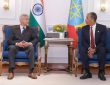




When External Affairs Minister Dr. S. Jaishankar touched down in Kingston, Jamaica, on 2 May 2026, inaugurating a seven-day Caribbean tour that would carry him through Paramaribo in Suriname and culminate in Port of Spain, Trinidad and Tobago, the international commentary largely treated the visit as a courteous diplomatic interlude — a warm engagement with small island states on the periphery of the world’s strategic imagination. That reading was profoundly mistaken. What unfolded across those seven days was one of the most strategically significant exercises in Indian diplomacy of the twenty-first century: a carefully calibrated, institutionally dense, and historically resonant outreach that announced, with unmistakeable clarity, that the Caribbean has ceased to be peripheral to India’s foreign policy imagination and has instead become a purposeful pillar of its multipolar statecraft.
The visit was not improvised. It was the operational culmination of a strategic architecture years in the making — the Second India–CARICOM Summit hosted in Georgetown, Guyana, in November 2024, the seven-pillar cooperation framework that Prime Minister Narendra Modi placed before CARICOM leaders, and the institutional mechanisms of the Joint Commission, ITEC expansion, and Lines of Credit that have steadily deepened the scaffolding of the partnership. Dr. Jaishankar’s tour translated that architecture into lived diplomatic reality: twenty-plus agreements spanning renewable energy, healthcare, digital infrastructure, Ayurveda, defence cooperation, fisheries, agro-processing, vector control, and heritage restoration, delivered across three sovereign capitals with a combination of developmental generosity and strategic intentionality that the multipolar order demands of its rising powers.
The central argument of this essay is direct: India–Caribbean relations are emerging as one of the most sophisticated models of twenty-first-century Global South diplomacy, where historical memory, strategic statecraft, maritime cooperation, climate partnership, digital connectivity, and multipolar coalition-building are converging into a durable architecture of geopolitical cooperation. To understand why this matters — for India, for the Caribbean, and for the future shape of the international order — one must begin not with the communiqués of May 2026 but with the indentured ships of the nineteenth century.
Girmitiya Foundation: Inherited Connectivity As Strategic Capital
Between 1838 and 1917, the British colonial system transported over half a million indentured labourers — Girmitiyas, so named from the vernacular rendering of “agreement” — from the plains of Uttar Pradesh, Bihar, and Tamil Nadu to the sugar plantations of Trinidad and Tobago, British Guiana, Jamaica, and Suriname. They arrived dispossessed of caste privilege and regional identity, inserted into a plantation economy engineered to replicate, under the legal fiction of contract, the coercive productivity of slavery. What they achieved in response constitutes one of the most remarkable acts of diasporic resilience in the modern history of human migration.
From the fragments of north Indian religious tradition, Bhojpuri and Awadhi linguistic inheritance, Ramayana recitation, Diwali and Phagwa celebration, tassa drumming, culinary practice, and Ayurvedic knowledge that they carried within themselves, the Girmitiyas built new communities and new identities — simultaneously Indian and Caribbean, simultaneously rooted in ancestral memory and open to the creative possibilities of their new societies. Today, Indo-Caribbean communities constitute approximately 35 to 42 per cent of the national populations of Trinidad and Tobago, Guyana, and Suriname. Indo-Trinidadian and Indo-Surinamese political leadership has shaped the governance trajectories of those nations across multiple generations. This is not mere demography — it is structural geopolitical fact.
For Indian foreign policy, the Girmitiya heritage represents what this essay terms civilisational capital: a pre-existing infrastructure of cultural affinity, shared spiritual reference, political familiarity, and deep interpersonal trust that constitutes India’s deepest and most durable source of Caribbean strategic advantage. This depth of identity-linked connectivity — forged across seven generations of diasporic life — is precisely what gives India’s engagement in the region a quality of foundational legitimacy that external powers without comparable diasporic linkages cannot easily replicate. When Prime Minister Kamla Persad-Bissessar of Trinidad and Tobago welcomed Dr. Jaishankar not merely as a foreign minister but as a representative of the ancestral homeland, she was identifying India as something more than a development partner. She was recognising it as a civilisational state whose engagement operates simultaneously on the registers of history, culture, identity, and strategy — and whose transoceanic kinship with the Caribbean compounds rather than depletes with time.
The May 2026 Tour: Development Diplomacy As Strategic Architecture
The institutional density of Dr. Jaishankar’s May 2026 Caribbean tour deserves analytical attention that goes beyond the inventory of agreements signed. Each deliverable, considered in strategic context, reveals a dimension of India’s statecraft that is simultaneously people-centric and geopolitically calculated — developmental in form, normatively consequential in effect.
In Jamaica, three MoUs covered health and medicine cooperation, the solarisation of the Hugh Lawson Shearer Building, and broadcasting and media collaboration. The health agreement is strategically significant in a domain where India’s pharmaceutical leadership — as the world’s largest supplier of generic medicines by volume, responsible for approximately one-fifth of global generic pharmaceutical exports — translates directly into healthcare sovereignty for Small Island developing states. The solarisation initiative expresses India’s International Solar Alliance leadership in concrete infrastructure terms, delivering clean energy at the precise point of Caribbean climate vulnerability. The media cooperation MoU carries its own quiet strategic logic: deepening communicative infrastructure between societies whose affinities already run deep sustains the people-to-people connectivity that outlasts individual governments.
In Suriname, the 9th Joint Commission Meeting generated a broader portfolio of deliverables whose cumulative significance exceeds any single element. New Lines of Credit extend India’s concessional development financing to Surinamese priorities on terms that respect sovereign decision-making — a pointed contrast to the conditionality structures of some multilateral institutions. The Passion Fruit Processing Unit and agro-processing initiatives speak to India’s understanding that meaningful development partnership must reach farming communities and household economies. Defence and security cooperation enhancements, digital and AI collaboration frameworks, Early Warning Services infrastructure, and Quick Impact Projects together constitute a comprehensive portfolio that addresses Suriname’s developmental requirements with precision. India’s ITEC programme has trained hundreds of Surinamese professionals across information technology, public administration, and healthcare — generating cadres whose professional orientations carry long-term dividends for institutional alignment and bilateral goodwill.
It was in Trinidad and Tobago, however, that the visit found its fullest expression. Eight MoUs were signed, covering tourism cooperation, solarisation of the Ministry of Foreign and CARICOM Affairs building, vector control, the infrastructure upgrade of Nelson Island, the establishment of an Indian Chair on Ayurveda at the University of the West Indies, healthcare, pharmaceuticals, and broader infrastructure development. The Ayurveda Chair at UWI institutionalises a healing tradition that Girmitiya communities have sustained through oral transmission and community practice across more than 180 years of Caribbean life, transforming diasporic cultural memory into academic knowledge infrastructure with dividends across generations of medical researchers and practitioners.
The Nelson Island heritage upgrade and the digitisation of indenture migration records carry the deepest strategic symbolism of the entire tour. Nelson Island — where arriving indentured labourers were processed upon reaching Trinidad — is the most potent material site of Girmitiya historical memory in the Caribbean. India’s commitment to its restoration is simultaneously development partnership and heritage diplomacy whose message to the Indo-Caribbean community is unambiguous: the ancestral homeland remembers, honours, and claims its diasporic children. The digitisation MoU enables Indo-Caribbean families to trace genealogical connections severed by indenture, transforming historical rupture into contemporary belonging with a precision that no geopolitical calculation could have engineered better. The laptop distribution programme, National Prosthetics Centre support, and India–UN Development Partnership Fund projects complete a portrait of development partnership that is genuinely people-centric rather than government-to-government in its primary orientation.
Maritime Horizons And The Energy Geopolitics Of The Atlantic
No serious strategic assessment of India–Caribbean relations in 2026 can ignore the maritime and energy dimensions quietly transforming the geopolitical weight of the Caribbean basin. The Caribbean Sea is not merely a body of water connecting island states — it is a maritime corridor of growing strategic significance, positioned at the intersection of North American, South American, and transatlantic shipping lanes, and increasingly relevant to the energy geopolitics of the Western hemisphere as Guyana’s offshore oil discoveries reshape the region’s economic geography.
Guyana’s emergence as a major petroleum producer — with offshore reserves now estimated at over eleven billion barrels, managed through partnerships with ExxonMobil, Hess, and CNOOC — has transformed the strategic calculus of the Caribbean’s continental fringe in ways whose implications India is well positioned to leverage. As one of the world’s largest energy importers, India’s interest in diversifying hydrocarbon sourcing away from the Middle East toward Atlantic producers carries direct relevance to Guyana’s expanding production capacity. The India–CARICOM seven-pillar framework, with its Ocean Economy and Maritime Security pillar, provides the institutional architecture within which energy cooperation can be developed alongside the broader developmental partnership — a convergence of interests that the May 2026 tour began to operationalise.
The maritime security dimension is equally consequential. Caribbean small island developing states confront endemic governance challenges — narcotics trafficking, illegal fishing, piracy, and environmental threats to the blue economy — that exceed individual national capacities. India’s SAGAR doctrine of maritime cooperation (Security and Growth for All in the Region), its expertise in coastal radar networks, maritime surveillance, and coast guard capacity-building, and its expanding blue-water naval capability offer the Caribbean a South–South maritime partnership of genuine strategic value. The defence and security cooperation enhancements discussed during the Suriname leg of the May 2026 tour represent the earliest institutional expression of a maritime relationship whose logic is compelling for both sides: India strengthens its Atlantic strategic footprint while Caribbean states gain access to India’s defence capabilities on terms of sovereign equality. Renewable energy cooperation — delivered through the ISA architecture and expressed through the solarisation projects in Jamaica and Trinidad and Tobago — further addresses the acute energy vulnerability of SIDS nations whose dependence on imported fossil fuels constrains sovereign development choices and amplifies climate risks of existential proportions.
Commercial Architecture, Caricom Coalitions, And The Voice Of The Global South
India increasingly views the Caribbean not as a distant diplomatic constituency but as an integral partner in shaping the normative and institutional architecture of the Global South — and the commercial dimension of that partnership is now beginning to acquire the institutional weight its strategic significance demands. India–CARICOM bilateral trade, documented in MEA bilateral briefs and UNCTAD South–South cooperation data, approached the US$1 billion mark in 2023–24, with pharmaceuticals, engineering goods, chemicals, refined petroleum products, automobiles, and digital services emerging as the principal vectors of Indian export strength into the region. Trinidad and Tobago, as the Caribbean’s most industrialised economy and a significant petrochemical exporter, accounts for a substantial share of Indian imports from the region — a relationship that CARICOM’s larger energy producers, particularly Guyana, are poised to expand considerably as offshore production ramps toward its projected output ceiling. Suriname’s bauxite and gold resources, Jamaica’s alumina sector, and the broader mineral endowments of the Guiana coastlands further diversify the import profile, positioning CARICOM as a supplier of extractive commodities that India’s industrial growth trajectory will increasingly require.
Ongoing discussions around a Comprehensive Economic Partnership Agreement reflect recognition on both sides that the next phase of India–Caribbean convergence must move beyond historical affinity toward deeper commercial institutionalisation. Geographic distance and logistical fragmentation remain the most significant structural constraints on trade expansion — a return voyage between India and the Caribbean adds substantially to both cost and transit time relative to India’s more proximate trade partners. Yet the growth trajectories visible in Guyana, Jamaica, and Trinidad and Tobago indicate substantial untapped potential for Indian private-sector investment across renewable energy infrastructure, agro-processing, healthcare services, fintech and digital payments, tourism, and maritime logistics. India’s digital public infrastructure architecture — UPI’s interoperable payment rails, Aadhaar’s identity verification framework, and the ONDC open commerce network — offers Caribbean governments proven templates for digital financial inclusion and e-governance transformation that are designed for developmental contexts and deployable at a fraction of the cost of proprietary Western platform alternatives, creating a commercial-strategic synergy that the CEPA framework is well placed to systematise.
The multilateral dimension of the CARICOM partnership reinforces and amplifies every bilateral investment India makes in the region. CARICOM’s fourteen member states constitute a coherent bloc within the United Nations system whose collective voice on climate finance, SIDS vulnerabilities, WTO governance reform, and UN Security Council expansion aligns systematically with India’s own multilateral priorities. Each ITEC-trained Caribbean professional who carries a positive orientation toward Indian governance models into a national public service, each Ayurveda researcher at UWI who maintains academic connections with Indian institutions, each renewable energy project that generates goodwill toward India’s ISA leadership — all constitute cumulative accretions of diplomatic capital that compound into reliable multilateral alignment. India’s Voice of the Global South initiative finds in CARICOM a natural and enthusiastic constituency: small-state experience of climate vulnerability, developmental constraints, and multilateral marginalisation mirrors the structural concerns that India seeks to amplify on the global stage. The framework of Vasudhaiva Kutumbakam — the ancient Vedic principle of the world as one family, adapted to twenty-first-century statecraft — represents India’s most compelling answer to what distinguishes its Global South leadership from the patronage dynamics that have historically characterised North–South development relationships.
India’s Comparative Advantage: The Indispensable Differentiator
The Caribbean geopolitical space has attracted intensified attention from multiple external actors in recent years. China’s Belt and Road Initiative has extended infrastructure financing to several CARICOM member states; Western bilateral donors and multilateral institutions maintain longstanding programmatic presences; and the United States, awakening to the strategic significance of its near-abroad, has reinvigorated Caribbean engagement through initiatives such as the Caribbean Energy Security Initiative and more recent climate finance commitments. India navigates this complex external landscape from a position of structural distinctiveness that no competitor fully replicates.
China brings capital and construction capacity but not transoceanic kinship. Western partners bring institutional resources and governance expertise but carry the weight of colonial histories and conditionality frameworks that complicate their reception. The United States brings proximity and market access but not the post-colonial solidarity that undergirds India’s developmental partnerships. India alone brings the combination of inherited connectivity — through the Girmitiya heritage — developmental competence, technological sophistication, democratic legitimacy, climate credibility, and South–South solidarity that the Caribbean’s twenty-first-century aspirations require. India’s pharmaceutical sector offers healthcare systems access to quality medicines at prices that make public health equity achievable. India’s agricultural research institutions offer tropical farming expertise directly relevant to Caribbean climate adaptation challenges. And India’s digital infrastructure achievements offer governments the tools to advance digital sovereignty without dependency on proprietary foreign platforms.
What makes India’s Caribbean engagement strategically irreplaceable, however, is not any single sectoral capability but the integration of historical trust, developmental competence, and multilateral solidarity into a coherent partnership model whose foundational legitimacy derives from shared history rather than strategic convenience. This integration is what Indo-Caribbean political leaders recognise when they describe India not merely as a development partner but as a member of the extended family — an ancestral homeland whose contemporary engagement feels like the fulfilment of a continuity rather than the inception of a transaction. That sense of foundational legitimacy, renewed by the archival pacts, Ayurveda chairs, and heritage restoration commitments of May 2026, constitutes India’s deepest and most durable source of Caribbean strategic advantage.
Conclusion
When the Girmitiyas sailed across the kala pani under colonial indenture, they carried within them — in language, prayer, song, memory, and the knowledge of medicinal plants — the seeds of a relationship between India and the Caribbean that would outlast every transformation of the world around them. They could not have imagined that those seeds would flower, across seven generations and two centuries, into an architecture of strategic partnership encompassing renewable energy diplomacy, digital public infrastructure, maritime cooperation, pharmaceutical sovereignty, academic exchange, and multilateral coalition-building within the United Nations system. But that is precisely what the May 2026 Caribbean tour represents: the latest and most sophisticated expression of a partnership whose foundations were laid not by diplomats in air-conditioned ministries but by indentured labourers in the cane fields of Trinidad, the bauxite mines of Guyana, and the plantation settlements of Suriname.
India’s Caribbean engagement in 2026 is a masterclass in civilisational statecraft: the deliberate and strategic deployment of historical memory, diasporic kinship, and shared inheritance as the foundational infrastructure of a contemporary geopolitical partnership. It is people-centric without being naively humanitarian. It is developmental without being patronising. It is strategically calculated without being cynically transactional. It demonstrates, with vivid practical specificity, that the most durable partnerships in the multipolar order are those built on genuine historical intimacy and mutual respect rather than on the transient calculations of geopolitical convenience.
The untapped potential remains vast. Guyana’s emerging oil wealth opens energy cooperation dimensions of transformative significance. Caribbean digital transformation — from e-governance to fintech to agricultural monitoring via satellite — invites India’s DPI expertise in forms that could reshape developmental trajectories across small island economies. Maritime domain awareness cooperation, nascent in 2026, carries the logic of a long-term partnership between India’s expanding naval capacity and the Caribbean’s sovereign maritime governance needs. A network of Girmitiya Heritage Centres — in Port of Spain, Georgetown, Paramaribo, and Kingston — would give permanent institutional expression to the identity-linked connectivity that undergirds every MoU, every Line of Credit, every ITEC scholarship, and every solar panel installed on a Caribbean government building.
The broader significance of the India–Caribbean partnership transcends its bilateral parameters. It is, ultimately, a demonstration that the emerging multipolar order need not be a theatre of great-power competition among colossal states trading influence over smaller ones. It can instead be an architecture of genuine solidarity among nations whose shared experiences of colonialism, common commitments to sovereign development, and strategic-cultural affinities equip them to construct partnerships of mutual enrichment, mutual dignity, and mutual advancement. India–Caribbean relations, at their deepest and most strategic, embody that possibility with rare eloquence. The Girmitiya ancestors who rebuilt their world from the wreckage of indenture with nothing but cultural memory, communal solidarity, and inextinguishable aspiration would recognise in the diplomatic architecture of May 2026 the same creative genius that sustained them across the kala pani: the capacity to transform historical continuity into contemporary possibility, and shared identity into shared strategic purpose. That transformation — from diasporic rootedness to geopolitical architecture — is India’s most distinctive contribution to the theory and practice of twenty-first-century statecraft, and the Caribbean is its most eloquent proof of concept.
Views: 1618

Dr. Maheep
Dr. Maheep is Director, Indian Perspective on Global Affairs (IPGA), and a leading analyst of India’s foreign policy and South Asian geopolitics. He earned his PhD in Arab and Islamic Studies. With more than a decade of teaching and research experience in International Relations and Global Politics, he contributes regularly on issues shaping national and global affairs.


