





Cinema often reveals, with unintended yet striking clarity, the political conscience that shapes the exercise of state power. Beyond entertainment or narrative artifice, political cinema functions as a reflective surface through which the ethical assumptions, insecurities, and justificatory logics of authority become visible. By dramatizing how dissent is criminalised, legality suspended, and violence normalised in the name of order, cinema captures the latent moral architecture of the modern state. These representations do not merely mirror power; they expose the conditions under which coercion is rendered legitimate and domination reframed as necessity. In doing so, cinema anticipates and illuminates the lived realities of societies where governance is increasingly defined by exceptionalism rather than consent.
The recently released film Dhurandhar (December 2025), though fictional and geographically detached from Pakistan, exemplifies this dynamic with unsettling precision. Its portrayal of authority—masculinised, securitised, and morally insulated—finds resonance in the lived political reality of Balochistan. What Dhurandhar dramatizes symbolically, Balochistan experiences structurally and continuously. For more than seven decades, Pakistan’s largest province has been governed not through constitutional accommodation or political dialogue, but through repression, militarisation, and systematic dehumanisation. This article argues that the ongoing freedom struggle in Balochistan is neither a “law and order problem” nor merely a counterterrorism challenge. It represents a profound crisis in the political conscience of the Pakistani state, where coercion has replaced consent and violence has substituted for legitimacy.
Balochistan: From Federating Unit to Securitised Colony
Balochistan constitutes nearly 44 percent of Pakistan’s landmass yet houses barely five percent of its population. Rich in natural gas, copper, gold, and a strategically vital coastline, the province paradoxically remains Pakistan’s poorest, least developed, and most politically marginalised region. This contradiction is not accidental; it is structural. Since its coerced accession in March 1948, Balochistan has been treated less as a federating unit within a constitutional framework and more as a securitised internal colony—valuable for its resources and geography, expendable for its people.
Successive Pakistani regimes, civilian and military alike, have framed Baloch political assertion as sedition. Demands for autonomy, cultural recognition, and equitable resource-sharing have consistently been met with military operations, intelligence surveillance, and legal exceptionalism. Recurrent insurgencies—from 1948 through the post-2004 phase—testify not to Baloch intransigence but to the state’s persistent refusal to pursue political integration. The conflict is thus embedded in the very architecture of Pakistan’s postcolonial statehood.
Militarisation and Masculinistic State Power
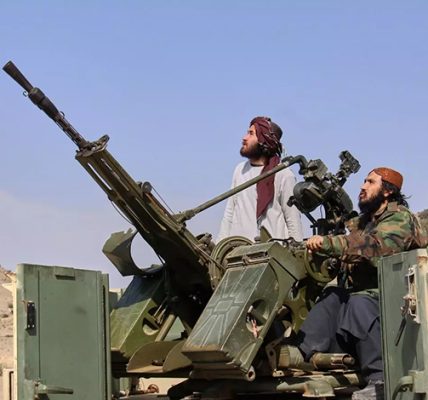
Governance in Balochistan is defined by a masculinistic security ethos in which authority is exercised through force rather than legitimacy. The omnipresence of the Pakistan Army, Frontier Corps, and intelligence agencies has transformed civilian life into a permanent zone of surveillance. Checkpoints, raids, cordon-and-search operations, and arbitrary detentions are not exceptional measures; they are routine practices of rule.
This masculinised conception of power equates coercion with strength and dialogue with weakness. Civilian institutions—courts, provincial assemblies, and local governments—have been hollowed out and subordinated to the security apparatus. Law functions less as a protective framework than as an enabling instrument of repression. Counterterrorism statutes are deployed to criminalise political identity itself. In such an environment, citizenship becomes conditional, and being Baloch itself becomes grounds for suspicion.
Enforced Disappearances: The Architecture of Dehumanisation
The most chilling expression of state repression in Balochistan is the systematic practice of enforced disappearance. Since the early 2000s—and with renewed intensity during 2024–2025—thousands of Baloch students, journalists, activists, poets, and ordinary civilians have been abducted by security agencies, often in broad daylight. Many never return; others reappear as tortured corpses, their bodies dumped as warnings.
These disappearances are not operational excesses. They constitute an architecture of terror designed to discipline an entire population. By erasing individuals without due process, the state asserts absolute sovereignty over life and death, reducing citizens to disposable subjects. Families are condemned to permanent liminality—trapped between hope and grief, denied even the dignity of mourning. Under international law, enforced disappearance constitutes a crime against humanity when practiced systematically; in Balochistan, it has become a governing technique.
Gendered Repression and Violence Against Women
State violence in Balochistan is profoundly gendered. While men are disproportionately abducted and killed, women bear the cumulative and intergenerational burden of repression. Mothers, sisters, and daughters of the disappeared face harassment, surveillance, and intimidation when they protest. Women-led sit-ins and long marches—particularly during the 2024–2025 mobilisations—were forcibly dispersed; participants were beaten, detained, and publicly humiliated.
This violence is not incidental but strategic. By targeting women, the state seeks to fracture social cohesion and silence resistance through fear and shame. Yet this strategy has failed. Baloch women have emerged as the moral vanguard of resistance, transforming private grief into public indictment. Their sustained presence in protest spaces reframes the conflict from insurgency to conscience, exposing the ethical bankruptcy of a state that claims authority while brutalising women seeking justice.
Insurgency, Criminalisation, and the Collapse of Legality
In Balochistan, legality has been inverted. Peaceful protest is treated as terrorism, while state violence is normalised as security policy. The Pakistani state systematically collapses the distinction between civic dissent and armed rebellion, foreclosing political resolution and legitimising perpetual repression.
Groups such as the Baloch Liberation Army emerge within this suffocated political space. The sharp escalation of insurgent operations during 2024–2025—including attacks on transport networks, security installations, and state institutions—must be read not as spontaneous radicalisation but as the outcome of closed political channels. This article does not endorse violence; it insists on analytical honesty. When lawful avenues of expression are systematically denied, violence becomes, for some, a language of last resort. The state’s refusal to distinguish dissent from militancy ensures the reproduction of conflict.
Resource Loot, Internal Colonialism, and Economic Extraction
Despite fuelling a significant share of Pakistan’s energy needs, Balochistan remains economically devastated. Natural gas extracted from Baloch lands powers industries elsewhere, while Baloch villages remain without electricity. Mineral wealth is exported; poverty stays local. Royalties are minimal, employment negligible, and environmental degradation severe.
This extractive model reflects classic internal colonialism: extraction without representation, development without consent. Resource decisions are made in Islamabad, not Quetta. Economic policy thus becomes another instrument of domination, deepening alienation and reinforcing perceptions of occupation rather than inclusion.
China, CPEC, and the Internationalisation of Repression
The China–Pakistan Economic Corridor has intensified these dynamics. Marketed as transformative development, CPEC has functioned in Balochistan as enforced dispossession. Gwadar Port has displaced fishing communities, restricted access to land and sea, and militarised urban space to protect foreign assets.
China’s role, though rarely vocal, is structurally complicit. By partnering with an authoritarian security state, Beijing enables repression under the banner of infrastructure. CPEC exhibits features of debt-trap diplomacy and strategic entrapment—prioritising corridors over communities. Attacks on Chinese engineers and installations reflect not xenophobia, but resistance to development imposed without local consent.
Politico-Cultural Superimposition and Epistemic Domination
Beyond economics and security, the Pakistani state has imposed a homogenised national identity that systematically marginalises Baloch language, history, and cultural memory. This politico-cultural superimposition deepens alienation by denying the Baloch the right to narrate their own past, articulate their present grievances, and imagine their own political future. Identity here is not merely suppressed; it is overwritten by a state-sanctioned narrative that privileges uniformity over pluralism and obedience over recognition.
Education, media, and official discourse actively erase Baloch perspectives, replacing them with curated narratives of unity, patriotism, and territorial loyalty. This symbolic violence does not operate in isolation; it complements and legitimises physical repression by rendering Baloch subjectivity politically suspect and morally expendable. The result is a condition of epistemic domination in which dissent is delegitimised at the level of knowledge itself, allowing coercion, disappearance, and militarisation to appear not as moral failures, but as necessary instruments of statecraft.
Conclusion
Balochistan exposes the moral and political failure of coercive statehood. Pakistan’s approach—defined by militarisation, enforced disappearance, gendered violence, cultural erasure, and economic extraction—has secured neither loyalty nor stability. It has instead entrenched resistance, internationalised grievance, and eroded the political conscience of the state itself.
Like Dhurandhar, the Pakistani state operates under the illusion that force can substitute for consent. Unlike cinema, however, the consequences are not fictional. They are lived daily by a population subjected to systematic cruelty.
Balochistan is not Pakistan’s periphery. It is the mirror in which the political conscience of the state stands exposed.
Views: 1609

Dr. Maheep
Dr. Maheep is Director, Indian Perspective on Global Affairs (IPGA), and a leading analyst of India’s foreign policy and South Asian geopolitics. He earned his PhD in Arab and Islamic Studies. With more than a decade of teaching and research experience in International Relations and Global Politics, he contributes regularly on issues shaping national and global affairs.