






The Silence that Became Consensus: India, BRICS and the New Delhi Declaration in a Plural World Order
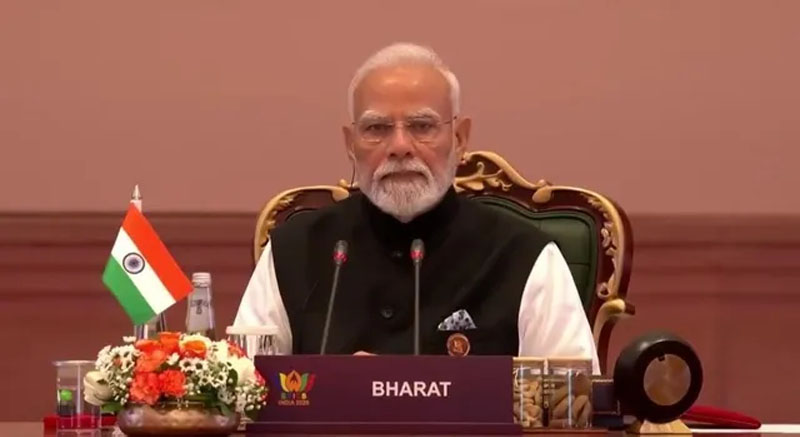
There is a species of silence that is not emptiness but achievement. It descended upon the plenary hall of Bharat Mandapam on the afternoon of 12 September 2026, in the instant after Prime Minister Narendra Modi laid the New Delhi Declaration before the assembled leaders of an expanded BRICS and asked, in the unadorned grammar of consensus diplomacy, whether the text carried the assent of the room. No hand rose in objection. No delegation sought the floor to enter a reservation. No caveat, no footnote of dissent, no eleventh-hour amendment disturbed the stillness. For a measured moment the chamber held its breath, and in that pin-drop quiet a document of one hundred and forty paragraphs passed into the record of international relations by the oldest and most demanding method known to plurilateral bodies: the absence of a single “no.” Then the silence broke into applause, warm and sustained, and the leaders rose to the choreography of recognition, exchanging handshakes across the table, offering embraces, performing the practised warmth of statesmen who understand that a photograph of concord is itself an instrument of statecraft.
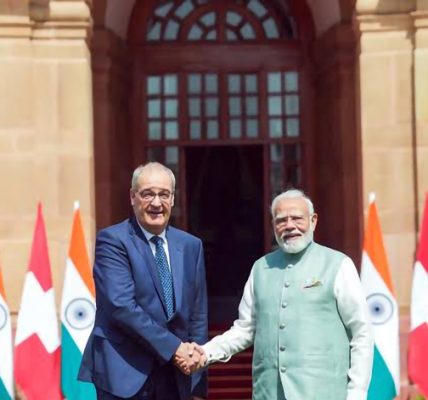
The optics alone were extraordinary, and they deserve to be named before they are interpreted. In a single diplomatic constellation, beneath the lotus-flame emblem of India’s chairship, stood Narendra Modi as host and author of the consensus, insisting in his own idiom that BRICS was not against anyone but for a fairer world; Vladimir Putin, arriving in New Delhi to press the case against Western economic restriction; and Xi Jinping, setting foot on Indian soil for the first time in nearly seven years, his entourage carrying the weight of the Chinese party-state. Around them gathered Masoud Pezeshkian of Iran, Cyril Ramaphosa of South Africa, Abdel Fattah el-Sisi of Egypt, Prabowo Subianto of Indonesia, Abiy Ahmed of Ethiopia, the Crown Prince of Abu Dhabi for the United Arab Emirates, and Foreign Minister Mauro Vieira representing a Brazil whose President remained home for his electoral season, while Prince Faisal bin Farhan attended for a Saudi Arabia still calibrating the finality of its accession. That these leaders, drawn from rival security architectures, incompatible political systems and divergent civilisational memories, could subscribe together to a common text is the summit’s first and most underestimated accomplishment. Consensus, here, was not the absence of difference. It was the disciplined diplomatic labour of making difference cohere.
This is the analytical question the New Delhi Declaration compels us to ask: how did India convert the extraordinary strategic plurality of a ten-member BRICS, joined by an eleventh still finalising its accession and ringed by ten partner states, into a negotiated language of peace, reform, development and shared global agency? The answer advanced in this article is that the Declaration represents India’s distinctive capacity to transform plurality into practical cooperation without demanding conformity. New Delhi did not impose a template; it engineered the political space within which distinct national interests could locate their zones of convergence. The document that emerged is therefore no ordinary communiqué. It is at once an affirmation of the Global South’s political agency, a programme for the reform of global governance, a framework for development-oriented cooperation, a collective plea for peace through dialogue, a defence of an open and predictable trading order, a platform for techno-geoeconomic collaboration, an architecture of institutional resilience, and, not least, a statement of civilisational confidence in a plural international order.
| THE CONSENSUS ITSELF The New Delhi Declaration was adopted on 12 September 2026 by the ten members whose accession is complete, Brazil, Russia, India, China, South Africa, Egypt, Ethiopia, Indonesia, Iran and the United Arab Emirates, without a single recorded objection. Saudi Arabia, invited and participating at foreign-minister level, has yet to confirm full membership, and stands apart from the vote it will one day join. In a grouping of constitutional democracies, civilisational party-states, monarchies and a sanctioned republic, unanimous assent to a 140-paragraph text is not a formality. It is the summit’s first substantive deliverable: proof that plurality, disciplined by patient diplomacy, can still produce a common voice. |
From Geography to Shared Ownership: The Grammar of India’s Chairship
The intellectual architecture of India’s presidency is compressed into its theme, “Building for Resilience, Innovation, Cooperation and Sustainability”, and the Declaration itself records, at paragraph six, that this framework was carried through more than four hundred meetings and engagements convened at the level of ministers, parliamentarians, heads of agencies, officials, experts, businesses and citizens across thirty Indian cities. This is a figure of genuine institutional significance, and it should be read for what it accomplishes rather than admired for its scale. By distributing the sinews of a plurilateral chairship across the length of a continental federation, New Delhi transformed what is conventionally a diplomatic calendar into a nationwide process, endowing the presidency with geographical depth, public visibility and a federal, civilisational and people-centred character that few chairs before it have attempted. The Declaration at paragraph five commends precisely this “balanced, practical, actionable, inclusive, development-oriented and people-centered approach,” language that is neither accidental nor merely flattering, for it encodes the Indian conviction that legitimacy in international cooperation is earned at the intersection of elite diplomacy and wider social participation.
The strategic proposition embedded in this method is subtle and characteristically Indian. A chairship that moves through Jaipur and Bhopal, through Chandigarh, Nagpur and Bhubaneswar, refuses to treat multilateralism as the exclusive property of foreign ministries; it socialises the grouping’s agenda into the everyday economic life of the host, and in doing so models the very ownership India wishes the wider Global South to claim over the institutions of global governance. Resilience, innovation, cooperation and sustainability are thus not four slogans but four operating principles, and the Declaration converts each into concrete institutional residue: task forces, working groups, centres of excellence, knowledge portals, all engineered to outlast the passage of the gavel.
Consensus as the Grammar of a Plural Order
At its second paragraph the Declaration reaffirms the BRICS spirit of “mutual respect and understanding, sovereign equality, solidarity, democracy, openness, inclusiveness, collaboration and consensus,” and it is worth pausing on the deliberateness of that inventory. Consensus among ten heterogeneous sovereignties, with an eleventh still weighing the terms of its entry, is neither automatic nor superficial; it is a disciplined form of diplomatic accommodation, in which each participant surrenders the satisfaction of maximalist language in exchange for the durability of a shared position. BRICS derives its legitimacy from precisely this capacity to preserve plurality while producing common ground. The Declaration’s recall, at paragraph sixteen, of the 1955 Asian-African Conference at Bandung, and of its principles of equality, independence, non-intervention and mutual benefit, is not antiquarian sentiment. It anchors the grouping in a genealogy of Global South solidarity that predates the Cold War’s bloc logic and consciously refuses it, offering the “Bandung Spirit” as a reference point for a fairer, more inclusive and representative multilateral system.
This is where an Indian reading of the summit becomes indispensable. The convergence of interests that the Declaration performs is not the manufactured uniformity of an alliance but the negotiated overlap of states that retain full freedom of judgement on every other question. Repeated interaction across the summit cycle, Johannesburg, Kazan, Rio, and now New Delhi, constructs the trust, the shared vocabulary and the mutual recognition through which a grouping of rivals acquires a collective identity. Diplomatic language here does the work of political possibility: by naming shared meanings, the text makes cooperation thinkable among parties whose material interests do not spontaneously align. Plurality, in this light, is not a liability to be managed but a source of diplomatic resilience, for a coalition that can absorb its own contradictions is harder to fracture than one that depends on likemindedness.
Reforming Global Governance Through Representation
The Declaration’s most sustained argument concerns the reform of global governance, and it is here that the politics of dignity and the politics of effectiveness become indistinguishable. Marking the twentieth anniversary of BRICS, paragraph seven demands a “more just, equitable, agile, effective, efficient, responsive, representative, legitimate, democratic and accountable” international and multilateral system, with the United Nations Charter as its “indispensable cornerstone.” At paragraph thirteen the Declaration reiterates support for comprehensive reform of the UN, including the Security Council, to enlarge the voice of Africa, Asia and Latin America; it recognises the African aspirations captured in the Ezulwini Consensus and Sirte Declaration; and, in language of real diplomatic weight, it records that China and Russia, as permanent members, “reiterate their support to the aspirations of Brazil and India to play a greater role in the UN, including its Security Council.” For Indian diplomacy this is a hard-won reaffirmation, and a mature analyst will read it precisely: it is a restatement of a standing position rather than an endorsement of a specific permanent seat, and the distinction between rhetorical reformism and concrete concession remains the axis on which India’s own ambition turns.
The reformist programme extends well beyond the Council. The Declaration presses, at paragraphs seventeen through nineteen, for the reform of the Bretton Woods institutions, the entry into effect of the sixteenth General Review of Quotas and meaningful realignment under the seventeenth, and a World Bank shareholding realignment that corrects the “historic underrepresentation” of developing economies. On trade it demands, at paragraph twenty, the restoration of an “accessible, effective, fully functioning, two-tier binding” dispute-settlement mechanism at the World Trade Organization, while extending explicit support to the accession bids of Ethiopia and Iran. Paragraph nine adds a pointed note on the politics of representation, observing that no woman has ever been elected Secretary-General of the United Nations. Across these provisions runs a single constructivist insight: the Global South seeks recognition not as a recipient of decisions made elsewhere but as a co-author of the norms that bind it.
Dialogue Before Destruction: India’s Peace Proposition
Peace occupies the moral centre of the Declaration, and it is articulated in a formulation that has become the signature of Indian statecraft. The text at paragraph twenty-three underscores that “security among all countries is indivisible” and reaffirms the commitment to “the peaceful resolution of international disputes through dialogue, consultation and diplomacy,” elevating preventive diplomacy, mediation and the role of regional organisations to the status of essential instruments. This is the doctrinal expression of a proposition India has pressed with unusual consistency: that the present is an era for dialogue, diplomacy and development, and that war consumes the resources, the confidence and the human possibilities upon which collective advancement depends. No to endless war, yes to the patient power of dialogue, the Declaration does not use those words, but its architecture is built upon that conviction.
The peace agenda is neither abstract nor evasive. Paragraph twenty-four registers alarm at the “critical increase in global military spending, to the detriment of the provision of adequate financing for development,” framing militarisation as a theft from the developmental future of the poor, while paragraph twenty-five confronts the “growing risks of nuclear danger and conflict.” The summit’s hardest test lay in West Asia, and the Declaration met it with a single disciplined instrument. Paragraph twenty-eight expresses “deep concern over the continued escalation,” calls for “maximum restraint,” and, significantly, preserves the phrase “recalling our respective national positions,” a formulation that both acknowledges divergence and contains it. That so contentious a catalogue of theatres, from Gaza and Jerusalem to Lebanon, Sudan and Syria, could be rendered in language acceptable to Iran and the United Arab Emirates seated at the same table is the diplomatic accomplishment concealed within the prose.
| THE PEACE LEDGER, IN THE DECLARATION’S OWN TERMS The text holds a divided room to a common line across every live conflict: attacks on IAEA-safeguarded “peaceful nuclear facilities” condemned; Gaza ceasefire, humanitarian access and the two-state solution affirmed ; Lebanon’s ceasefire under Resolution 1701 upheld and UNIFIL peacekeepers, including four Indonesians, mourned); “African solutions to African problems” invoked for Sudan; and an “inclusive Syrian-led and Syrian-owned” process endorsed. The achievement is not the positions themselves but their coexistence in one consensus text. |
Counter-Terrorism and a Signal Indian Achievement
Paragraph forty of the Declaration deserves to be read as a discrete diplomatic victory for India, and it should be stated plainly rather than triumphally. The assembled leaders condemn “in the strongest terms the terrorist attack in Jammu and Kashmir on 22 April 2025, during which 26 people were killed and many more injured,” and they proceed to reaffirm a comprehensive counter-terrorism doctrine: opposition to the “cross-border movement of terrorists, terrorism financing and safe havens”; the principle that terrorism must not be associated with “any religion, nationality, civilization or ethnic group”; a demand for “zero tolerance” and an explicit rejection of “double standards in countering terrorism”; and a call for “concerted actions against all UN designated terrorists and terrorist entities,” alongside the early finalisation of the Comprehensive Convention on International Terrorism and the continued work of the BRICS Counter-Terrorism Working Group and its five subgroups.
The strategic significance of securing this language from an expanded and internally diverse BRICS is considerable. To have the Pahalgam atrocity named and condemned in a consensus document subscribed to by China, whose diplomatic shielding of certain designations has long complicated India’s counter-terrorism diplomacy, is to convert a national security imperative into international legitimacy. The rejection of “double standards” is not a rhetorical flourish; it is a coded but unmistakable assertion of India’s long-standing position that the selective tolerance of terrorism, its instrumentalisation as an adjunct of state policy, is incompatible with the responsible conduct of states. Here national interest and collective institutional action are fused, and the fusion is precisely what strategic autonomy, properly understood, is meant to achieve.
The Political Economy of Fairness: Trade and Tariffs
On trade the Declaration mounts a sustained defence of a “non-discriminatory, open, equitable, transparent, fair, inclusive, predictable and rules-based multilateral trading system, with the WTO at its core.” Paragraph twenty-one voices “serious concerns about the rise of unilateral tariff and non-tariff measures which distort trade and are inconsistent with WTO rules,” while paragraph twenty-two condemns “unilateral coercive measures,” including secondary sanctions, as instruments that inflict “far-reaching negative implications for the human rights, including the rights to development, health and food security, of the general population of targeted states.” The subtext is unmistakable to any reader of the contemporary geoeconomic moment: tariffs and sanctions have increasingly become instruments of geopolitical leverage rather than of commercial policy, and the Declaration positions the Global South against their weaponisation.
The Indian preference legible throughout these provisions treats trade as a bridge connecting production, opportunity, resilience and development rather than as a theatre of coercion. Crucially, the Declaration does not present open trade and strategic autonomy as antagonists; it argues, through its emphasis on “resilient and diversified supply chains” and the movement of developing economies into “higher-value added segments of global manufacturing,” that diversified trade relationships enlarge rather than constrain sovereign policy space. The Jaipur Consensus on invoice discounting for MSMEs (paragraph eighty-five), the emphasis on special and differential treatment for developing members and least developed countries, and the attention to trade finance and customs digitalisation together compose a political economy of fairness, one in which the rules of exchange are asked to serve development rather than to entrench asymmetry.
Financial Autonomy Without Monetary Spectacle
The Declaration’s treatment of financial cooperation is a study in calibrated ambition, and it rewards a reading attentive to what is deliberately not said. As the New Development Bank enters what paragraph one hundred and fifteen calls its “second golden decade,” the text encourages the Bank to “expand local currency financing, diversify funding sources” and follow the “member-led and demand-driven principle,” and it welcomes the BRICS-NDB Knowledge Portal launched under India’s chairship as a repository of the Finance Track’s work, explicitly designed to support “continuity and knowledge exchange across Chairships.” On cross-border payments, paragraph ninety records the work of the BRICS Payment Task Force on the “cross-border interoperability of payment and messaging channels” and on “trade settlements and investments using BRICS local currencies,” while insisting, in a phrase of considerable analytical importance, that there is “no one-size-fits-all approach” and that national priorities are to be respected throughout.
The crucial distinction, which the Declaration observes with discipline, is between diversification and dramatic currency replacement. Nowhere does the text announce a common BRICS currency; the vocabulary is consistently that of optionality, interoperability, lower transaction costs and institutional capacity. The Cross-Border Payments Initiative, the Contingent Reserve Arrangement whose treaty amendments are welcomed at paragraph ninety-seven, the BRICS Multilateral Guarantees initiative at paragraph one hundred and two, and the annual cyber exercises safeguarding financial-sector resilience are the building blocks of practical autonomy, not the trumpet-blasts of monetary confrontation. Strategic autonomy in the monetary domain, the Declaration implicitly argues, grows through additional choices rather than through the premature and destabilising pursuit of a single currency, diversification as prudence, in an Indian sensibility that prizes resilience over spectacle.
Innovation and the Architecture of Techno-Geoeconomic Resilience
Technology in the Declaration is at once a development multiplier and an arena of normative leadership, and the text treats it with an ambition matched by procedural care. Paragraph eighty-one recognises that artificial intelligence “presents immense opportunity to stimulate economic growth and sustainable development for all,” congratulates India on the AI Impact Summit of February 2026, acknowledges the World AI Conference in Shanghai, and commits the grouping to implement the BRICS Leaders’ Statement on the Global Governance of Artificial Intelligence, anchoring a vision of “trustworthy, safe, inclusive and reliable” AI with equitable access for the Global South. The space agenda is equally substantive: paragraph forty-five records progress toward the Terms of Reference for a BRICS Space Council and the amendment of the Remote Sensing Satellite Constellation agreement, while paragraph forty-six reaffirms the prevention of an arms race in outer space. Paragraph seventy-three welcomes the proposal to create the BRICS Global Research Advanced Infrastructure Network, the GRAIN centres, alongside cooperation in quantum technologies.
What binds these provisions is a concept the Declaration enacts without naming: techno-geoeconomic resilience: the capacity of developing countries to innovate, regulate, connect and create value without reproducing new structures of dependency. Paragraph sixty-seven’s insistence on “reliable, responsible, diversified, resilient, fair, sustainable and just supply chains of critical minerals”, with “benefit sharing, value addition and economic diversification in resource-rich countries” and the full preservation of “sovereign rights over their mineral resources”, is the sharpest articulation of this ambition, distinguishing, as any rigorous account of techno-geoeconomic power must, between the mere extraction of minerals and the capture of value through processing, manufacturing and intellectual property. Technological sovereignty and technological cooperation, the Declaration suggests, need not be adversaries: the digital public infrastructure that India has pioneered, commended at paragraph seventy-seven as “resilient, safe, secure, inclusive and interoperable,” is offered as the paradigm of a shared good that enlarges the autonomy of all who adopt it.
Human-Centred Resilience: People at the Core of Power
The Declaration’s most quietly radical move is to place people, rather than the abstractions of power, at the centre of resilience. Its human-security architecture is expansive and concrete: a commitment to universal health coverage and a BRICS Integrated Early Warning System for mass infectious diseases (¶50–51); a Network of Centres of Excellence on mental health coordinated by India’s NIMHANS and a formal acknowledgement of Traditional, Complementary and Integrative Medicine (¶54, 56), a provision resonant with India’s civilisational investment in its own therapeutic heritage; and, on food security, the BRICS Grain Exchange and the farmer-centric AGRIN network embedding regenerative and digital agriculture within a developmental frame (¶60–61).
The vision extends into the fabric of social protection and gender. Paragraph one hundred and twenty-three, anchored in the “vision of women-led development,” recognises women as “leaders, decision-makers and drivers of economic growth” and affirms the role of care policies in enabling their full economic participation, while paragraph one hundred and twenty-six addresses the portability of social-security benefits and the rights of workers in the gig and platform economy. The animating conception is that resilience is a property not of states but of capable societies, of skilled citizens, accessible healthcare, secure food systems and inclusive education, reasoning outward from the human being to the state, and carrying an unmistakably Indian civilisational signature.
Energy, Climate and the Justice of Transition
On the reconciliation of development with ecological responsibility the Declaration performs a delicate and characteristically Global South balancing act. Paragraph sixty-four affirms that “energy security is a crucial foundation for social and economic development” and acknowledges frankly that “fossil fuels will still play an important role in the world’s energy mix, particularly for emerging markets and developing economies,” while committing to “just, orderly, equitable and inclusive energy transitions” governed by the principle of “common but differentiated responsibilities and respective capabilities.” This is the diplomatic key that unlocks a room containing hydrocarbon exporters and climate-vulnerable importers alike. Paragraph one hundred and seven reaffirms the UNFCCC and Paris Agreement, commends the Brazilian COP30 presidency and supports Ethiopia’s COP32; paragraph one hundred and eight opposes “unilateral, punitive, discriminatory and protectionist measures,” naming carbon border adjustment mechanisms as instruments that undermine the developmental efforts of the Global South.
The ecological vision is textured with attention to adaptation and to nature itself. Paragraph one hundred and ten insists that “developed countries shall provide additional, adequate, predictable, accessible financial resources” for adaptation, and it valorises “traditional knowledge systems, indigenous and local communities’ practices” as instruments of climate resilience. Paragraph one hundred and eleven takes note of India’s International Big Cats Alliance; paragraph one hundred and twelve welcomes the Tropical Forest Forever Facility launched at the Belém Climate Summit and the Mangrove Alliance for Climate co-led by the UAE and Indonesia; paragraph ninety-six welcomes central-bank work on making “climate finance projects more bankable.” The animating conviction is that a just transition must expand developmental opportunity even as it strengthens ecological responsibility, that climate ambition, severed from equity and from the finance that operationalises it, is neither just nor durable. India’s climate diplomacy, legible throughout, seeks to marry ambition with equity, technology with access, and sustainability with developmental justice.
Corridors, Cultures and the Confidence of Civilisations
The Declaration’s treatment of connectivity is disciplined by a principle India holds close: that infrastructure must respect “the sovereignty and territorial integrity of all member states,” a phrase at paragraph one hundred and four that reads, to the informed observer, as a quiet Indian reservation against connectivity projects traversing contested space. Within that guardrail the text welcomes the BRICS Logistics Supply-Chain Cooperation Framework, the Urban Mobility Hub, sustainable aviation fuels and a railway research network, resilient corridors that, together with the secure sea lanes the Declaration treats only obliquely, connect the energy flows, commerce and food security on which the everyday welfare of the Global South depends.
It is in the cultural register, however, that the Declaration voices its deepest civilisational confidence. Paragraph one hundred and twenty-seven welcomes the Bhopal Declaration of the BRICS Culture Ministers, calling for the protection of cultural heritage in conflict zones and, tellingly, for “the restitution and repatriation of cultural heritage, antiquities, and objects of spiritual, ancestral, historical and cultural value” to their countries of origin, a demand that speaks directly to the postcolonial memory of the Global South. Paragraph one hundred and twenty-two recalls the UN’s “International Day for Dialogue among Civilizations,” framing BRICS not as a bloc but as a conversation among civilisations, historical memories and developmental experiences. Here the Indic sensibility surfaces with restraint and relevance: the conviction that coexistence, plurality and mutual respect are not concessions wrung from difference but the very ground on which a durable international order must be built. The world is not asked to become one; it is asked to recognise that it is already many, and to govern itself accordingly.
The Achievement, and Its Measure
The New Delhi Declaration will be parsed by its critics for what it withholds: a specific permanent seat, a common currency, a resolution of the contradictions that a grouping this diverse necessarily contains. Those absences are real. Yet to measure the Declaration by what it does not say is to misunderstand the nature of the accomplishment. The document’s achievement is the consensus itself: the demonstration, at paragraph one hundred and thirty-nine’s commendation of India’s chairship and paragraph one hundred and forty’s handover to China’s 2027 presidency, that a rising India can convene the most improbable constellation of powers, from Putin and the Crown Prince of Abu Dhabi to Xi and Pezeshkian, the representative of an electioneering Brazil and the foreign minister of a hedging Saudi Arabia, and send them home subscribed to a common text. That is not the arithmetic of an anti-Western alliance, nor the choreography of an ideological camp, nor the mobilisation of a military bloc. It is the patient construction of a reformist, development-oriented platform seeking wider participation, equitable representation and a more responsive international system.
What India accomplished at Bharat Mandapam was to make convergence possible without demanding conformity, to hold open a space in which sovereign equality, strategic autonomy, mutual respect, negotiated consensus and development partnership could each find expression without any one delegation being asked to surrender its freedom of judgement. This is multipolarity given institutional form, grounded in the civilisational legitimacy of plural voices rather than in the discipline of a hegemon. The silence that fell before the applause on 12 September was, in the end, the sound of that accomplishment: not the silence of imposed agreement, but the rarer silence of a room that had been given room enough to say yes. The gavel now passes to Beijing. The true measure of this Indian moment will not be the eloquence of the text adopted at Bharat Mandapam, but whether its instruments survive China’s 2027 chairship intact: the task forces and knowledge portals, the payment rails and climate platforms, the counter-terrorism language and the reformist demands. Consensus was the first deliverable; continuity will be the verdict.
Views: 1332

Dr. Maheep
Dr. Maheep is Director, Indian Perspective on Global Affairs (IPGA), and a leading analyst of India’s foreign policy and South Asian geopolitics. He earned his PhD in Arab and Islamic Studies. With more than a decade of teaching and research experience in International Relations and Global Politics, he contributes regularly on issues shaping national and global affairs.