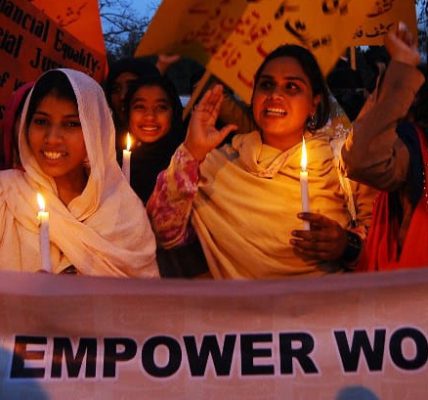







Beneath the Veil, Beyond the Glass Ceiling: Global Struggles and India’s Horizon of Women’s Empowerment
International Women’s Day 2026: A Gender Lens on the Global Landscape
On 5 September 1995, at the United Nations Fourth World Conference on Women in Beijing, Hillary Rodham Clinton delivered one of the most consequential speeches in modern feminist history. “Human rights are women’s rights, and women’s rights are human rights — once and for all,” she declared before a global assembly. The sentence, spare in construction yet volcanic in implication, crystallised a truth that philosophers, activists, and scholars had articulated for generations but that the international community had repeatedly deferred, diluted, and domesticated. Clinton’s declaration was not merely rhetorical flourish; it was a moral challenge to a world that had long treated the rights, bodies, and dignities of half its population as negotiable and culturally contingent.
More than three decades after Beijing, that moral challenge remains only partially fulfilled. Women constitute approximately 49.7 per cent of the world’s population — nearly four billion human beings — yet they own less than one-fifth of the world’s land, earn some twenty per cent less than men for comparable work, and occupy fewer than 27 per cent of parliamentary seats globally. They perform nearly three-quarters of the world’s unpaid care and domestic labour while remaining disproportionately represented among the poor, the displaced, and the economically vulnerable. In conflict zones their bodies are weaponised as instruments of war; in corporate boardrooms they encounter glass ceilings reinforced by structural inertia; and in many religious traditions their participation is circumscribed by interpretive frameworks authored exclusively by men.
International Women’s Day 2026 is an occasion to examine these realities through a multidisciplinary gender lens — drawing upon feminist theory, development economics, and international relations — tracing the arc from the enforced veiling of Iranian women to the grassroots economic revolution of Bangladeshi microfinance, and from the structural architecture of India’s empowerment policies to the civilisational imperative that animates them all.
Theoretical Foundations of Gender Justice
The intellectual foundations of this analysis rest upon a constellation of feminist thinkers whose insights remain indispensable. Simone de Beauvoir’s declaration in The Second Sex (1949) — “one is not born, but rather becomes, a woman” — demolished biological determinism and established that femininity is a social construction enforced through institutions, norms, and cultural expectation. Gender inequality, de Beauvoir argued, is not natural; it is historical, and therefore mutable. Judith Butler extended this insight through the theory of gender performativity, demonstrating that gender is not an inner truth expressed outwardly but a repeated set of performances that constitute identity through daily rituals of dress, speech, and conduct. The compulsory veil in post-revolutionary Iran is, in Butler’s terms, a state-mandated performance designed to reproduce a specific feminine subject.
Bell hooks deepened feminist theory by insisting on intersectionality — that race, class, and gender are interlocking systems of oppression that cannot be analysed in isolation. Any feminism that universalises the experience of privileged women, hooks argued, replicates the exclusions it purports to challenge. In the Indian context, this insight maps directly onto the compounded vulnerability of Dalit women navigating the intersection of caste and gender. Vandana Shiva’s ecofeminism connects the subordination of women to the colonial and capitalist exploitation of nature, arguing that both are products of the same extractive logic. Finally, Asef Bayat’s concept of the “quiet encroachment of the ordinary”captures how women in restrictive societies achieve social transformation not through dramatic confrontation alone but through the patient accumulation of everyday freedoms. Together, these frameworks provide the analytical scaffolding for what follows.
The Overnight Veil: Iran, Revolutionary Islam, and Women’s Resistance
No episode in modern history illustrates the fragility of women’s rights as starkly as the 1979 Islamic Revolution in Iran. Before Khomeini’s return from exile, Tehran was a cosmopolitan city in which women attended universities, participated in professional life, and appeared in public spaces without compulsory religious dress. Within months of the revolution, the compulsory hijab was legislated, women were barred from judicial positions, the minimum marriage age for girls was reduced, and the system of male guardianship (mahram) was reinforced. What had once been a matter of personal choice became an instrument of ideological control.
At the same time, the condition of Iranian women has often been invoked in global political discourse, where narratives of “liberating” Muslim women have sometimes served as rhetorical justification within broader geopolitical agendas, even though meaningful advances in women’s rights are historically driven by domestic social movements themselves.
Yet the Iranian experience equally documents the tenacity of women’s resistance. Despite formal restrictions, women constituted over 60 per cent of university entrants by 2000; they became writers, filmmakers, athletes, and entrepreneurs, practising what Asef Bayat calls the “quiet encroachment of the ordinary.” The moral rupture came in September 2022 when twenty-two-year-old Mahsa Amini died in the custody of the Morality Police for an alleged headscarf violation. The “Woman, Life, Freedom” (Zan, Zendegi, Azadi) movement that erupted across Iran was not merely a protest about dress; it was a generational declaration that the social contract of compulsory submission had expired.
Epstein Files: Power, Wealth, and Exploitation
If Iran illustrates how state ideology can subjugate women through legislation, the Epstein affair exposes the complementary mechanism of subjugation through elite impunity. The unsealed court documents reveal a trafficking network that operated for decades by targeting young women and girls from economically precarious backgrounds — girls for whom an offer of a hundred dollars constituted a genuine life-changing sum. Economic vulnerability was not incidental to the abuse; it was its structural precondition. Jeffrey Epstein’s network systematically identified young women who lacked money, family stability, and institutional protection, and instrumentalised that poverty as coercion. This is, asUN Women (2023) documents, the global logic of trafficking: poverty and gender converge to produce populations that are systematically exploitable.
The Epstein case is also a study in the failure of institutional accountability. A 2008 plea agreement widely condemned by legal scholars as scandalously lenient allowed Epstein to continue operating for another decade while elite social networks provided political cover. The lesson is stark: women’s rights are only as strong as the political will to enforce them. The case dismantles any comfortable assumption that gendered exploitation belongs exclusively to non-Western or illiberal societies; it thrives equally within advanced economies when wealth and power operate without adequate social accountability.
The Double Burden: Invisible Labour and Structural Inequality
Much of women’s oppression does not occur in revolutionary violence or elite trafficking networks. It occurs in the kitchen before sunrise and the nursery after midnight. The “double burden” — women who enter paid employment whilst bearing sole or primary responsibility for domestic labour and childcare — is among the most globally pervasive forms of structural gender inequality. The ILO (2018) estimates that women perform approximately three times more unpaid care work than men. This labour sustains economies, yet it is systematically excluded from GDP calculations, unremunerated, and socially invisible.
The consequences are cumulative and severe: interrupted careers, reduced lifetime earnings, and the persistent underrepresentation of women in leadership positions across all sectors. In much of the Global South, the burden is amplified by infrastructural scarcity — women collecting water, managing subsistence farms, and caring for extended families, leaving what development economists describe as “time poverty” — insufficient time for education, civic participation, or professional advancement. The Nordic countries demonstrate the corrective: public investment in childcare, gender-equal parental leave, and flexible employment has dramatically increased women’s labour force participation, benefiting national GDP and child welfare simultaneously. The double burden is not an inevitability; it is a policy choice.
War, Conflict, and the Weaponisation of Women’s Bodies
In armed conflict, gender inequality reveals its most extreme expression. Throughout history, the bodies of women have been treated as instruments of domination: the comfort women enslaved during the Korean War, the systematic rapes of Bosnia and Rwanda, and the formalised enslavement of Yazidi women by the Islamic State — all documented, in Nadia Al-Dayel’s UN Women analysis, as deliberate strategies of ideological warfare rather than incidental atrocity. The UN formally designated ISIS’s treatment of Yazidi women as genocide in 2016. In refugee camps designed as spaces of protection, women continue to face elevated risks of trafficking, sexual coercion, and exclusion from humanitarian support. Wolfgang Stojetz’s (2021) World Bank study of Darfur describes this as the “double burden of displacement.” Yet conflict also reveals evolving possibilities: Israeli women serve in fighter roles and intelligence positions through compulsory conscription; India’s women officers now hold permanent commissions; and research consistently shows that women’s participation in peacekeeping operations improves humanitarian outcomes. The presence of women within security institutions does not merely signal inclusion — it improves institutional performance.
Property, Inheritance, and Economic Exclusion
Women own less than 20 per cent of global land and barely 13 per cent of agricultural land (FAO, 2011; UN Women, 2023) — the accumulated sediment of centuries of inheritance systems that have routed property transmission through male lineages. In India, daughters were excluded from coparcenary rights in ancestral property until the Hindu Succession Act amendment of 2005; the Supreme Court in Vineeta Sharma v. Rakesh Sharma (2020) was required to clarify that those rights could not be made contingent on the father’s survival at the time of amendment. Property is not merely shelter; it is collateral, creditworthiness, and autonomy. As Esther Duflo (2012) demonstrates, transferring assets directly to women generates measurably superior household welfare outcomes — better nutrition, higher child educational attainment, lower maternal mortality — because women invest in human capital rather than discretionary consumption. Property exclusion is, therefore, one of the most efficiently transmitted mechanisms of women’s subordination across generations.
Intersectional Inequalities: Caste and Gender in India
In India, gender inequality often intersects with caste hierarchy, producing compounded forms of marginalisation for women from Scheduled Castes and Scheduled Tribes. Scholars such as Gopal Guru and Sharmila Rege emphasise that Dalit women occupy a distinctive social location shaped simultaneously by caste and gender discrimination. Empirical evidence, including NCRB statistics and cases such as the 2020 Hathras incident, reflects the persistence of these structural vulnerabilities. As B.R. Ambedkar observed, caste represents not merely a division of labour but a hierarchy of human dignity. Understanding women’s inequality in India therefore requires recognising how gender and caste intersect within broader social structures.
The Scandinavian Model: Gender Equality as an Engine of Human Development
The Nordic countries — Norway, Sweden, Denmark, Finland, and Iceland — occupy the top positions on both the UN Human Development Index and the World Economic Forum’s Global Gender Gap Index with deliberate consistency. Iceland has ranked as the world’s most gender-equal society for fourteen consecutive years. This is not coincidence; it is policy. The Scandinavian model combines universal suffrage, comprehensive publicly funded childcare, gender-equal parental leave, progressive taxation, legislative quotas, and corporate governance mandates (Norway’s 2006 law required 40 per cent female board representation) into a coherent institutional architecture. The results are measurable: women hold approximately 45 per cent of parliamentary seats in several Nordic countries, female labour force participation approaches 80 per cent in Sweden, and national HDI scores are consistently among the world’s highest. As Gita Sen (2019) argues, the exclusion of women from economic and political participation is not merely unjust — it is strategically irrational. The Nordic model offers the Global South an empirically validated proof of concept: gender equality is not a luxury that follows development; it is the precondition of it.
Microfinance as Feminist Praxis: The Bangladesh Revolution
Isobel Coleman’s landmark essay “The Payoff from Women’s Rights” (Foreign Affairs, 2004) brought global scholarly attention to a finding already well established in development economics: extending small loans directly to women generates developmental outcomes that consistently exceed equivalent interventions targeting male borrowers. Muhammad Yunus’s Grameen Bank and BRAC demonstrated that women invested borrowed funds in productive assets — livestock, small businesses, children’s education and nutrition — while male borrowers in comparable contexts were statistically more likely to allocate loans toward discretionary consumption. The Grameen Bank reported female repayment rates approaching 97 per cent. Beyond finance, participation in lending groups built social capital: women’s confidence expanded, household decision-making authority shifted, and community networks of mutual support emerged, gradually eroding restrictive gender norms. The model has been replicated globally. India’s Self-Help Group movement — over 12 million groups, approximately 90 million women — is the world’s largest microfinance ecosystem. Bihar’s Jeevika programme alone has mobilised over 10 million women, connecting them to formal banking, livelihood training, and social empowerment platforms. Deininger and Liu (2013) confirm that participation significantly enhances women’s social capital, economic resilience, and household welfare outcomes. Coleman’s insight holds: give women financial agency and they transform not merely their own lives but their families, communities, and societies.
India’s Advancing Frontier of Women’s Empowerment
India’s approach to women’s empowerment has evolved from welfare paternalism to a strategic recognition of women as agents of national development. This shift is visible across every institutional domain.
In the sphere of academic leadership, a transformation both quiet in its unfolding and momentous in its implications is reshaping the intellectual architecture of India’s universities. Professor Uma Kanjilal’s appointment as Vice-Chancellor of the Indira Gandhi National Open University — the world’s largest open university, whose reach extends to millions of learners across the furthest margins of geography and society — stands as both an administrative milestone and a civilisational statement. It signals that India’s foremost institutions of knowledge are steadily opening to women’s scholarship, intellectual vision, and institutional imagination, allowing their leadership to shape the future of higher learning.
Professor Kanjilal brings to this office a distinguished intellectual inheritance. A trailblazer in the theory and practice of digital learning, open knowledge systems, and educational inclusion, her academic stewardship is guided by the conviction that knowledge should remain open, inclusive, and accessible to all — beyond the constraints of geography, class, or circumstance. Under her leadership, IGNOU emerges as more than a university of distance education; it stands as a democratic project — a living affirmation that the right to learn is universal and inalienable. Her appointment carries the force of both symbol and substance: the world’s largest university guided by a scholar whose life’s work has been dedicated to expanding the horizons of learning for those historically beyond the reach of traditional institutions.
She also stands within a broader constellation of distinguished academic leadership. The elevation of Professor Shantishree Dhulipudi Pandit as the first woman Vice-Chancellor of Jawaharlal Nehru University and Professor Naima Khatoon as the first woman Vice-Chancellor of Aligarh Muslim University reflects a wider transformation within India’s intellectual landscape. These appointments represent a deeper cultural recognition of women’s intellectual authority — one in which women scholars increasingly guide institutional governance, animate scholarly discourse, and direct the nation’s universities toward their highest academic purpose. In their collective ascent, India’s academic world moves closer to what democracy has always promised: a space where merit, vision, and the courage to imagine a different future remain the truest credentials of leadership.
The 73rd and 74th Constitutional Amendments (1992) mandated at least one-third reservation for women in Panchayati Raj Institutions — extended to 50 per cent in several states. Today over 1.4 million elected women representatives serve India’s decentralised democratic institutions. The Women’s Reservation Act (Nari Shakti Vandan Adhiniyam) of 2023, providing 33 per cent reservation in the Lok Sabha and State Assemblies after delimitation, represents the most consequential step toward parliamentary gender parity since independence.
The Self-Help Group ecosystem — over 12 million groups and approximately 90 million women — constitutes the world’s largest microfinance infrastructure. The Lakhpati Didi initiative targets two crore rural women achieving annual incomes exceeding ₹1 lakh through micro-enterprise. Beti Bachao Beti Padhao, combined with the Sukanya Samriddhi Yojana and state-level conditional cash transfers, has addressed son preference through financial incentive and social awareness. Drone Didi trains women from SHGs as agricultural drone operators, placing precision technology in rural women’s hands. Electronics manufacturing clusters, including Foxconn and Tata Electronics facilities, have generated formal employment at scale for women from semi-urban and rural backgrounds.
In national defence, the Supreme Court judgment in Secretary, Ministry of Defence v. Babita Puniya (2020) granted women officers permanent commission in the Indian Army, ending decades of restriction. Women now serve in operational roles across the Army, Navy, and Air Force, including as fighter pilots. The admission of women to the National Defence Academy from 2022 completes their integration into India’s foundational military training pipeline.
STEM, G20, Viksit Bharat 2047, and Ecofeminism
India’s commitment to women’s participation in knowledge economies is institutionally expressed through the WISE-KIRAN fellowship programme and the CURIE scheme for women’s universities, contributing to a rise in female engineering enrolment from roughly 12 per cent in the early 2000s to over 30 per cent today. India’s G20 presidency in 2023 placed the Women-20 (W20) engagement group at the centre of multilateral development discourse, with digital inclusion, financial access, and climate leadership as thematic pillars. The Viksit Bharat 2047 vision explicitly positions women’s economic and technological participation as foundational to India’s aspiration for developed-nation status.
Vandana Shiva’s ecofeminist scholarship provides a complementary analytical lens. India’s rural women — constituting approximately 65 per cent of the agricultural labour force whilst owning a fraction of agricultural land — are the primary custodians of water, soil, and biodiversity. Strengthening their land rights, credit access, and climate adaptation capacities is simultaneously a gender justice and an ecological imperative, grounded in the recognition that the domination of women and the exploitation of nature are products of the same extractive logic.
Conclusion
The evidence assembled in this study leads to an unambiguous conclusion. Women’s empowerment is not a peripheral social objective; it is the foundational precondition of sustainable development, democratic resilience, and civilisational progress. From the struggles of Iranian women reclaiming their bodies from ideological authority, to the Bangladeshi women who repaid their Grameen loans and sent their daughters to school, to the Dalit women of Bihar negotiating their first bank loans, to the Indian Air Force pilot breaking the sound barrier — these are not exceptional stories. They are the ordinary consequences of what happens when structural barriers to women’s participation are systematically dismantled.
India’s policy architecture, taken in its entirety, reflects a growing institutional recognition of this truth. The Women’s Reservation Act, Beti Bachao Beti Padhao, Lakhpati Didi, Drone Didi, defence integration, university leadership, SHG ecosystems, and the G20 women’s agenda collectively represent a renegotiation of the social contract between the state and its female citizens. Within this evolving landscape, the rise of women to the highest levels of academic leadership — exemplified by Professor Uma Kanjilal’s stewardship of the world’s largest Open University — symbolises the widening horizons of intellectual authority and opportunity in contemporary India. Yet the state alone cannot complete this transformation. The accountability for women’s empowerment must be distributed across society — to men in particular, who must accept the redistribution of domestic labour, equal inheritance, and the full participation of women in economic and public life, not as concession but as an act of justice and mutual flourishing.
Simone de Beauvoir wrote that one is not born but becomes a woman. By extension, one does not inherit but builds a just society. India’s journey toward that condition — contested, iterative, and magnificent — is the defining civilisational project of Viksit Bharat 2047. On International Women’s Day, the aspiration is luminous: a society in which every woman, regardless of caste, class, language, or geography, lives with dignity, exercises her rights in full, and contributes her irreplaceable intelligence to the shared human project. That aspiration, as Hillary Clinton declared in Beijing, is nothing less than human rights — once and for all.
Views: 2093

Dr. Maheep
Dr. Maheep is Director, Indian Perspective on Global Affairs (IPGA), and a leading analyst of India’s foreign policy and South Asian geopolitics. He earned his PhD in Arab and Islamic Studies. With more than a decade of teaching and research experience in International Relations and Global Politics, he contributes regularly on issues shaping national and global affairs.