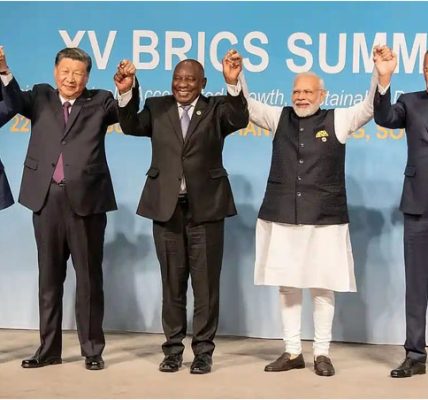







Central Asia holds the hinge of India’s Eurasian future. Energy, uranium and rare earths lie there. So do transit routes that bypass a closed western land gate, and a living civilisational memory of the Silk Route. Thousands of Indian medical students now study in Bishkek and Osh. Prime Minister Narendra Modi has treated this whole cluster, from the five-republic tour of 2015 to the Bishkek summit of 2026 and the talks with President Kassym-Jomart Tokayev in New Delhi a fortnight later, as a strategic neighbourhood rather than a distant theatre. The Twenty-Sixth Council of Heads of State of the Shanghai Cooperation Organisation, held in Bishkek on 31 August and 1 September 2026 under the theme “Twenty-Five Years of the SCO: Together for Sustainable Peace, Development and Prosperity,” gave that judgement a continental room.
India signed the Bishkek Declaration and a package of twenty-eight instruments, advanced English as an official working language of the Organisation, and kept its established refusal to endorse Belt and Road language that travels through territory New Delhi claims as its own. Strategic autonomy, on this reading, is the capacity to sit at a China-anchored table, draw connectivity, minerals, nuclear-safety language and people-to-people space from it, and walk out with the freedom of choice intact.
Kazakhstan, the Prime Minister and the Weight of Central Asia
Kazakhstan is the largest economy of Central Asia, a principal uranium producer, a holder of chromium and rare-earth endowments, and the current chair of the Eurasian Economic Union. For India it is the natural first door of a region that geography has placed just beyond easy reach. Prime Minister Modi’s 2015 tour of all five republics—Commerce, Connectivity, Consular access, Culture and Contacts—raised the region from episodic attention to structured partnership. The India–Central Asia Dialogue and the summit format of 2022 gave that partnership a standing calendar. Full membership of the SCO in 2017 gave it a multilateral home.
Twelve days after Bishkek, on the margins of the Eighteenth BRICS Summit in New Delhi, Modi met President Tokayev. The Prime Minister recalled ancient civilisational linkages and reviewed cooperation in trade, defence and security, connectivity, energy, critical minerals, emerging technologies, the creative economy and people-to-people ties. The two sides discussed an India–EAEU free trade agreement, terms of reference for which were signed in Moscow in August 2025; Tokayev, as EAEU chair, offered to advance the talks. They spoke of linking Astana Hub with Hyderabad’s technology ecosystem, of energy and digitalisation, of education and tourism. Some six hundred companies with Indian capital operate in Kazakhstan; nearly one hundred and fifty thousand Indian citizens visited the country in 2025. Tokayev invited the Prime Minister to pay a state visit to Kazakhstan. That invitation is the logical next sentence of Bishkek: what the SCO convenes, the India–Kazakhstan channel must convert into offtake, transit and investment.
Central Asia matters to India because it is the land bridge to Russia and Europe that Pakistan will not open; because Chabahar and the International North–South Transport Corridor recover a route the map otherwise denies; because Kazakhstan’s uranium and the region’s copper, lithium and antimony feed semiconductors, magnets and civil nuclear fuel; and because a generation of Indian doctors trained in Kyrgyz and Kazakh universities will carry the relationship longer than any communiqué. Soft power here is the instrument that works when hard geography is adverse.
Members, Policies and Programmes
The SCO at Bishkek comprised ten members: Belarus, China, India, Iran, Kazakhstan, Kyrgyzstan, Pakistan, Russia, Tajikistan and Uzbekistan. Mongolia and Afghanistan remain observers; dialogue partners include Türkiye, Egypt, Azerbaijan and Armenia. Kyrgyzstan closed its chairmanship. Pakistan assumes 2026–27 and will host the next heads-of-state council in Islamabad. Lahore was named Tourism and Cultural Capital for that term.
Leaders adopted the Bishkek Declaration and a protocol amending the Charter of 7 June 2002, the first substantial revision in more than two decades. They approved regulations for a Universal Centre for Countering Security Challenges and Threats and for the Executive Committee of the SCO Anti-Drug Centre; a 2026–28 information-security plan; counter-narcotics programmes through 2030; a concept for regional data centres, computing capacity and an SCO artificial-intelligence industry; a ports-and-logistics roadmap to 2030; a Green Technology Corridor for 2026–30; a biodiversity plan; and statements on nuclear and physical nuclear security. A memorandum with the African Union Commission widened the external ring. The Development Bank was recorded as progress among interested states, not as a founded institution.
Why the SCO, and Whose Stake
In 1996 the Shanghai Five settled post-Soviet frontiers. In 2001 Uzbekistan joined and the SCO was proclaimed, with terrorism, separatism and extremism written into its founding grammar. India and Pakistan entered in 2017, Iran in 2023, Belarus in 2024. The Organisation endures because it gives nuclear powers, energy exporters and continental middle states a room without a mutual-defence clause.
China’s stake is architectural: an AI-applications centre, one hundred technology projects, a port-economy centre in Tianjin, the China–Kyrgyzstan–Uzbekistan railway, and a grip on rare-earth processing that already covers most leases in Kyrgyzstan and Tajikistan. Russia’s stake is residual primacy and wartime diplomacy—energy, nuclear safety, the North–South corridor—without a named paragraph on Ukraine. Pakistan’s stake is the gavel: outgoing chair of the Regional Anti-Terrorist Structure, incoming chair of the Organisation, CPEC connectivity and Lahore’s cultural designation. India’s stake is access without alignment: a listening post on Afghanistan, language against double standards on terrorism, a door to uranium and transit, and a civilisational corridor along which Indian thought once travelled north.
Strategic autonomy is often spoken of as though it were a stockpile, a quantity of ships and squadrons and missiles that a state accumulates until it is free. It is nothing of the kind. Autonomy is the capacity to make an independent choice at the moment a choice is forced, and that capacity is produced, not owned.
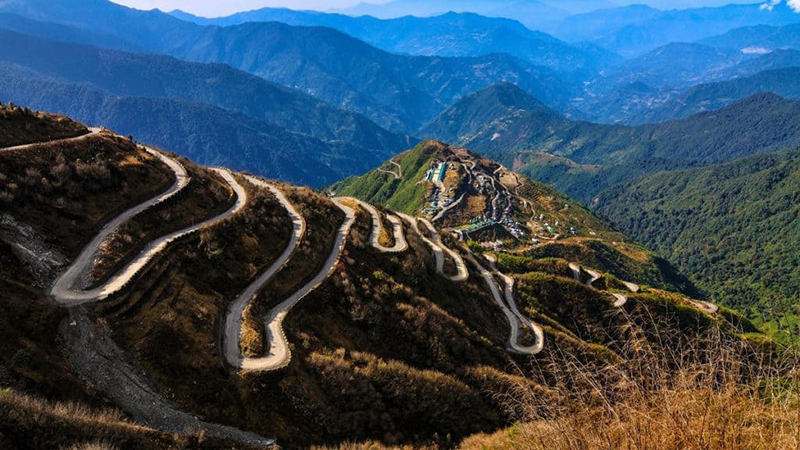
Long before the Shanghai Spirit there was a road. Buddhism took institutional form along the northern route and travelled from there into China. The modern revival is a concert of corridors: Belt and Road from the east; India’s International North–South Transport Corridor from Mumbai through Iran and the Caspian; Chabahar as the door that does not pass through Pakistan; the India–Middle East–Europe Economic Corridor looking west; the eastern branch of INSTC through Kazakhstan and Turkmenistan. Prime Minister Modi’s first meeting with Azerbaijan’s Ilham Aliyev on the Bishkek margins was a missing-link conversation about the shortest INSTC alignment. The SCO cannot build these routes. It can confer legitimacy upon a plural geography of connection.
Ten Points from New Delhi
- Coexistence before consensus. Use the SCO as a forum of coexistence and decline to measure it by alliances it was never built to resemble.
- Strategic autonomy as issue-based choice. Sign language on Iran and multipolarity while keeping faith with the Quad, IMEC and a still-complicated Washington.
- Spend the terrorism clause. The rejection of double standards must be spent in RATS lists and exercises, not framed on a wall.
- Connectivity as substitute for a land border. Chabahar, INSTC, the Ashgabat Agreement and a commercial relationship with Kazakhstan and Uzbekistan are the real dividend.
- Critical minerals have left the footnote. Uranium, chromium, copper, lithium and antimony require offtake and processing at home. The India–Central Asia Rare Earth Forum and the IREL–UKTMP titanium-slag venture are the right genre of work.
- Semiconductors and AI on sovereign terms. Plug in where standards help; keep fabrication and talent strategies sovereign.
- Nuclear security as the usable track. India is not an NPT signatory. Treat the separate nuclear-security declaration as the path for physical security, civil cooperation and small modular reactors.
- Human security remains unfinished. Narcotics, trafficking and the Afghan afterlife sit inside this geography. Machinery becomes policy only when it names the networks that move harm.
- People-to-people ties are strategy. Students, Yoga diplomacy, ITEC alumni and the Civilisation Dialogue Forum hosted in Kolkata in July 2026 keep a living constituency where a land corridor is denied.
- Chairmanship invites scrutiny. If RATS cannot speak to the groups India names after violence on its soil, the Organisation’s security claim remains incomplete.
RATS at Islamabad
The Regional Anti-Terrorist Structure in Tashkent coordinates lists, exercises and information against the three evils. On 14–15 September 2026 the forty-sixth meeting of the RATS Council closed Pakistan’s chairmanship in Islamabad. India sat at that table. The Council condemned new military strikes on Iran, approved work plans, agreed to improve information infrastructure, and scheduled for 2027 a joint information operation, a seminar on terrorist use of the internet, and a joint counter-terrorism exercise. Chairmanship passed to Russia. Solidarity-2025 was closed and Solidarity-2026 opened.
Read from New Delhi, the choreography still carries a strain the Organisation has never resolved. An institution founded to fight terrorism has just spent a year under the RATS gavel of a state that India holds responsible for cross-border militancy and for a security culture that treats deniability as doctrine. The same belt is marked by narcotics routes, human trafficking and a human-security deficit in which women, children and migrants pay the first price. When a chairmanship condemns strikes on Iran and plans internet seminars, yet cannot produce a common accounting of the outfits India names after each assault on its cities, the machinery is running and the purpose is only partly served. That is the oxymoron of the present moment. Chairmanship invites scrutiny rather than exemption. India remains at the table and will measure the 2027 exercises by whether they touch the groups that kill, traffic and radicalise.
Security Diplomacy and the New Political Economy
Rare earths, titanium slag, uranium and copper are the feedstock of semiconductors, permanent magnets, electric mobility and defence electronics. When the Prime Minister warned the BRICS table in New Delhi against the weaponisation of technology and critical minerals, he was describing the same map that Bishkek had just left unfinished. China processes; Central Asia extracts; India manufactures and consumes. Nuclear cooperation is energy and diplomacy at once. Security diplomacy means ensuring that energy, minerals and data centres do not harden into exclusive blocs. Human security means refusing to let those corridors carry precursors, trafficked labour and extremist finance as the unspoken freight of connectivity.
Culture, Education and the Medical Corridor
The Indian Council for Cultural Relations, Yoga diplomacy, Buddhist-circuit tourism and the Indian Technical and Economic Cooperation programme remain the most cost-effective instruments of presence. They work because Central Asian publics still recognise a shared memory of cinema, devotion and the old road.
Kyrgyzstan has become one of the great overseas classrooms of Indian medicine, and it is not alone. Ministry of External Affairs data for 2025 records close to sixteen thousand five hundred Indian students in Kyrgyzstan, over eleven thousand six hundred in Kazakhstan, and between sixteen and seventeen thousand in Uzbekistan, with Georgia adding a further ten to sixteen thousand. Most read for an MD equivalent to MBBS at institutions such as Osh State University, Jalal-Abad State University and Kyrgyz State Medical Academy, at Kazakhstan’s Kazakh National Medical University and Astana Medical University, and at Georgia’s Tbilisi State Medical University and Batumi Shota Rustaveli State University, listed in the World Directory of Medical Schools and watched by the National Medical Commission’s FMGL rules. Admission follows a settled path: a NEET qualification at home, a full programme costing roughly twenty to thirty thousand euros, and a return, after licensing through the FMGE or NExT examination, to practise in India. The Embassy of India in Bishkek has met the scale of this migration with care. Its advisories of April and June 2026 tell students to use only India-registered consultants, to verify laboratories and English faculty against NMC norms, to travel on student visas only, and to register on the MADAD portal upon arrival.
Chandan Kumar, a New Delhi-based career counsellor who has mentored more than twelve thousand students since 1999 and holds an MBA in International Business and Trade, has given this corridor its most patient field account. Writing in The European Times after a professional visit to Jalal-Abad, he recorded that nearly seventy per cent of his co-passengers were young Indian medical aspirants, many from states where per capita income remains below the national average, “united by a shared aspiration: to pursue medical education and return to serve India.” Enabled by fees of twenty to thirty thousand euros for a complete programme, they emerge, in his phrase, as “young cultural ambassadors,” carrying academic ambition and an ethical commitment to service. In a later essay on India–Kyrgyzstan connections he pressed the civilisational point further: “The stethoscope has become the new silk; the instrument through which India and Kyrgyzstan are weaving a relationship of mutual utility, genuine affection, and civilisational memory.” He is explicit in praise of the Indian side of the corridor—social-care advice for first-generation students, visa-file discipline, apostille of marksheets, hostel and food arrangements, and an Embassy that remains the number a parent can call when a contract sours. A republic that sends thousands of its children into another country’s teaching hospitals is already practising human security.
Sandeep Sharma, Chairperson of DoctorBano, an admission consultancy headquartered in Connaught Place, New Delhi, whose brief covers medical universities in Central Asia, the Transcaucasus and Russia, shifts the emphasis toward the hosts. The institutions that deserve Indian confidence, in his reading, are those where the host government still treats medical education as a public trust: libraries that are open, laboratories that exist on the campus tour, demonstration classes that bind theory to the ward, and a syllabus kept in conversation with international standards. Admission, he insists, should stay free of donation and capitation charges, run on NMC-approved seats alone, and end in a transparent fee receipt rather than a private understanding. International exposure is the daily fact of an Indian student taking a history in English in a Kyrgyz or Kazakh teaching hospital and sitting a practical with classmates from South Asia and the Middle East. Where host regulators enforce that standard, the SCO’s people-to-people line ceases to be ceremonial.
Achievements and the View Ahead
Bishkek moved the Charter, stood up two security bodies, brought artificial intelligence, logistics, green technology and nuclear security into the acquis, and advanced English. Kyrgyzstan used a small state’s chairmanship with unusual skill. India associated itself with a more representative multipolar order and with the condemnation of unilateral sanctions inconsistent with United Nations and World Trade Organisation frameworks. The Prime Minister urged an end to the war in Ukraine in his meeting with President Putin. The bank was not born. Ukraine was not named in the declaration. The political economy of minerals was gestured at, not governed.
The task before New Delhi is patient rather than urgent, and it carries a wider promise than statecraft alone. Keep the SCO as one circle among several: BRICS, the Quad, IMEC, INSTC and the India–Central Asia Summit each hold value the others cannot replace. Turn the Tokayev invitation into a state visit that signs minerals, transit and the EAEU trade track. Ask RATS to match the violence India actually faces. Protect the student corridor with regulation that answers to families as much as to universities. Let Buddhism’s old road and IMEC’s new one sit in the same paragraph, and let Central Asia’s own institutions, its ministries, its young doctors and its universities, help write the paragraphs still to come. Twenty-five years on, the Shanghai Cooperation Organisation asks India to use it with memory, with interest, and with the patience of a civilisational state that has always known several roads can be walked at once.
Views: 1586

Dr. Maheep
Dr. Maheep is Director, Indian Perspective on Global Affairs (IPGA), and a leading analyst of India’s foreign policy and South Asian geopolitics. He earned his PhD in Arab and Islamic Studies. With more than a decade of teaching and research experience in International Relations and Global Politics, he contributes regularly on issues shaping national and global affairs.