






India and the Netherlands Construct a Partnership for the 21st Century
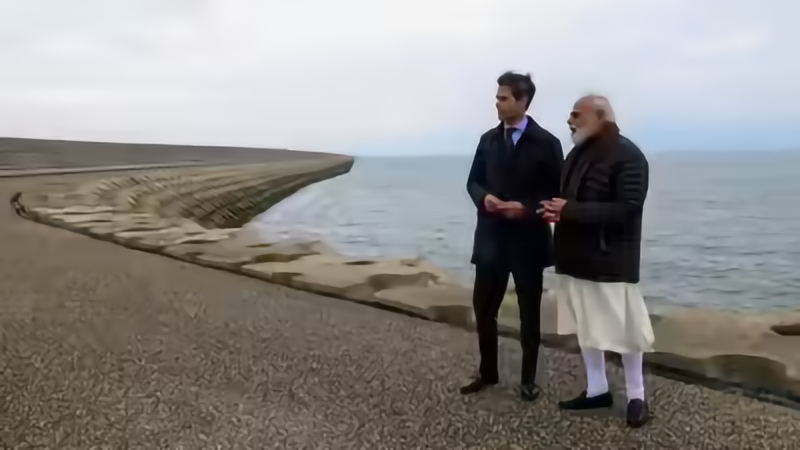
When Prime Minister Narendra Modi arrived in The Hague on 16 May 2026 for his second official visit to the Netherlands, the third destination in a consequential five-nation European tour, the bilateral agenda carried the distinctive weight of a relationship poised for qualitative transformation. The formal elevation of India–Netherlands ties to a Strategic Partnership, accompanied by an ambitious five-year Roadmap (2026–2030) and seventeen agreements spanning semiconductors, defence, green hydrogen, critical minerals, water management, maritime cooperation, artificial intelligence, and cyberspace, announced to the world a diplomatic maturity built upon centuries of maritime contact and nurtured through decades of democratic convergence. This was statecraft of the highest order: purposive, architecturally comprehensive, and historically conscious.
The visit was layered with ceremonial grace and substantive rigour in equal measure. Prime Minister Modi’s morning audience with Their Majesties King Willem-Alexander and Queen Máxima at the Royal Palace Huis ten Bosch, a luncheon of civilizational graciousness set against one of Europe’s finest baroque residences, was followed by restricted and delegation-level talks with Dutch Prime Minister Rob Jetten, culminating in the exchange of seventeen agreements across the full breadth of bilateral ambition. The Netherlands and India thus inscribed a new chapter in their bilateral narrative, one that moves decisively beyond the transactional and towards the transformative, embedding shared values of democracy, sustainability, and innovation into institutional architecture designed to endure.
Civilizational reconnection: the Chola copper plates and heritage diplomacy
Amongst the most symbolically resonant outcomes of the visit was the formal restitution of the 11th-century Anaimangalam Chola copper plates from Leiden University to India, conducted in the presence of both Prime Ministers. These exquisite bronze tablets, inscribed in Tamil and Sanskrit and documenting the administrative authority, maritime sovereignty, and intellectual patronage of the Chola empire under Rajaraja Chola I and Rajendra Chola I, had rested in Leiden’s collections for generations as silent witnesses to the deep antiquity of India’s civilizational engagement with the world beyond its shores. Their return is a statement of civilizational confidence and mutual institutional respect of an order that transcends the diplomatic communiqué.
Heritage restitution of this order carries layers of diplomatic meaning that ordinary agreements rarely achieve. The Netherlands’ gesture constitutes an act of normative leadership that strengthens the moral foundations of the bilateral partnership.
As global norms of cultural stewardship evolve from contested terrain into cooperative practice, the Netherlands’ gesture constitutes an act of normative leadership that strengthens the moral foundations of the bilateral partnership. For India, the recovery of these copper plates affirms a long-standing foreign policy conviction: that civilizational heritage is an instrument of strategic communication, a bridge of lasting people-to-people connection, and a source of soft power whose resonance endures across centuries. The Chola dynasty’s maritime reach, extending across the Bay of Bengal and into Southeast Asia, finds its contemporary echo in India’s Indo-Pacific vision, connecting ancient maritime legacy to modern strategic aspiration. This is diplomacy conducted at the level of civilizational memory, where identity itself becomes a co-constructed resource for deepening trust between nations that share more history than either commemorates.
Diaspora engagement and soft power: India’s transnational community
Prime Minister Modi’s engagement with the Indian diaspora in The Hague added a vital human dimension to the diplomatic architecture. The Indian community in the Netherlands, vibrant, professionally accomplished, economically integrated, and culturally resilient, represents a living network of bilateral connectivity that institutional agreements alone cannot replicate. Diaspora communities function as agents of norm diffusion, transferring values of entrepreneurship, innovation, pluralism, and democratic engagement across national boundaries. India’s foreign policy has systematically cultivated this transnational constituency as an instrument of soft power, recognising that the enduring strength of bilateral relations ultimately rests upon the depth of human connections that sustain them through changes of government and shifts in international circumstance.
In addressing the diaspora, Prime Minister Modi reinforced the sense of shared purpose that animates India’s outward engagement: a people’s diplomacy that extends well beyond governmental corridors into the lived experience of millions of Indians who carry the republic’s values and aspirations into the heart of Europe. This engagement simultaneously signals to Dutch society the depth of community investment in bilateral relations, fostering goodwill and societal understanding that outlasts any formal communiqué. India’s diaspora in the Netherlands constitutes, in the most meaningful sense, the biographical evidence of the partnership’s vitality: individuals whose professional achievement and cultural rootedness embody the civilizational confidence that Prime Minister Modi’s visit expressed at the level of high statecraft.
Strategic partnership architecture: roadmap 2026–2030
The formal elevation of India–Netherlands relations to a Strategic Partnership, with the adoption of the Roadmap 2026–2030 as its operational instrument, represents a landmark institutional achievement in the history of bilateral diplomacy. The Roadmap structures cooperation across political dialogue, trade and investment, defence and security, critical and emerging technologies including semiconductors, AI, quantum systems and space, science and innovation, sustainability, health, sustainable agriculture and food systems, water management, climate change and energy transition, sustainable transport, maritime development, education, culture, and people-to-people ties. This breadth of scope signals a shared ambition to build a partnership of genuine comprehensiveness, addressing the full spectrum of 21st-century challenges rather than confining itself to a narrow commercial or security perimeter.
The Joint Statement released on 17 May 2026 acknowledged the strong momentum generated by Prime Minister Modi’s G20 presidency in 2023 and the AI Impact Summit in New Delhi in February 2026, at which Dutch participation had demonstrated political investment in multilateral technology governance. The Roadmap builds upon agreements concluded in December 2025, which had advanced cooperation in defence, semiconductors, digital and cyberspace, pharmaceuticals, and maritime cultural exchange, thereby establishing a firm institutional base from which the 2026–2030 framework could be launched with substantive credibility rather than mere aspiration. The cooperation between the maritime museums of Lothal and Amsterdam, linking India’s ancient Harappan port civilisation with the Netherlands’ oceanic heritage, carries symbolic import that underscores the civilizational depth from which the strategic partnership draws its inspiration.
The strategic significance of this elevation is best understood in its global context. As the international system navigates accelerating technological competition, climate emergency, supply chain fragility, and geopolitical realignment, partnerships between democracies that combine complementary capabilities, specifically India’s demographic strength, manufacturing scale, and digital infrastructure alongside the Netherlands’ technological excellence, logistical sophistication, and regulatory expertise, acquire a structural importance that transcends the bilateral dimension. The Roadmap functions as a template of cooperative resilience: proof that rising powers and trusted European partners can construct frameworks of enduring value in a world increasingly characterised by uncertainty.
Semiconductor sovereignty: the TATA–ASML partnership
No single outcome of the visit carries greater long-term strategic weight than the landmark Memorandum of Understanding between Tata Electronics and ASML, the Dutch-headquartered global leader in advanced lithography systems and an indispensable node of the world’s semiconductor supply chain. ASML’s extreme ultraviolet and deep ultraviolet lithography machines are the critical enabling technology for the fabrication of advanced semiconductors, and its partnership with Tata Electronics positions India at the frontier of a global competition over technological sovereignty that will define the century’s geopolitical contours.
For India, access to ASML’s expertise, encompassing technology transfer, talent development, process integration, and ecosystem co-creation, constitutes a decisive acceleration of its semiconductor ambitions under the India Semiconductor Mission. Semiconductor self-sufficiency is a national security imperative in an era when advanced chips underpin artificial intelligence, quantum computing, precision defence systems, telecommunications infrastructure, and the digital economy at large. The Tata–ASML partnership embeds India into the most sophisticated layer of the global semiconductor value chain, creating reciprocal dependencies that strengthen supply chain resilience for both partners and for the wider democratic technology ecosystem simultaneously.
As the United States, the European Union, and their partners pursue coordinated strategies to de-risk critical technology supply chains, India’s emerging semiconductor capability positions New Delhi as a trusted node in a distributed architecture of technological sovereignty.
The partnership carries structural implications for the Indo-Pacific calculus. As the United States, the European Union, and their democratic partners pursue coordinated strategies to de-risk critical technology supply chains from geopolitical concentration, India’s emerging semiconductor capability, reinforced by Dutch technological partnership, positions New Delhi as a trusted node in a distributed architecture of technological sovereignty. The Netherlands’ willingness to extend ASML’s partnership to India reflects both commercial acuity and strategic judgment: that a strong and technologically capable India stabilises an interdependent but contested world order. Within the framework of the India–Netherlands Joint Statement’s commitment to enhanced cooperation in AI, quantum systems, and space, the semiconductor partnership thus becomes the foundational layer of a broader technological alliance of democratic consequence.
Green hydrogen, sustainability, and shared climate leadership
The joint launch of the India–Netherlands Roadmap on Green Hydrogen, accompanied by enhanced cooperation in renewable energy, sustainable agriculture, water management, climate finance, and the establishment of a Centre of Excellence at IIT Delhi, represents a fusion of complementary national strengths directed at the most urgent challenge confronting the international community. The Netherlands brings world-leading expertise in adaptive water management, governing below-sea-level territories through engineering ingenuity and institutional discipline, alongside deep experience in offshore wind development, precision agriculture, and sustainable port management. India brings unmatched scale in renewable energy deployment, a vast agricultural system undergoing rapid modernisation, and political commitment to clean energy transition expressed through some of the world’s most ambitious solar and green hydrogen production targets.
Green hydrogen cooperation holds particular strategic significance. As the global energy transition accelerates, hydrogen is emerging as the critical fuel for hard-to-decarbonise industrial sectors such as steel, shipping, chemicals, and aviation, and as a carrier for renewable energy at scale. India’s National Green Hydrogen Mission, which targets annual production of five million metric tonnes by 2030, creates enormous opportunity for partnerships that combine Indian production capacity with Dutch technological and financial expertise. The bilateral Roadmap on Green Hydrogen thus serves simultaneously as a climate instrument, an energy security mechanism, and a geoeconomic strategy, demonstrating that India’s commitment to clean energy is grounded in both national interest and global responsibility of the kind that defines the most consequential multilateral contributions.
Water cooperation, anchored at IIT Delhi through the dedicated Centre of Excellence, brings Dutch hydraulic engineering competence into India’s most critical resource management challenge. As climate change intensifies pressures on India’s river systems, groundwater reserves, and monsoon patterns, the institutionalisation of Dutch-Indian water expertise creates lasting infrastructure for knowledge transfer, policy innovation, and practical solutions to challenges that affect hundreds of millions of people. This collaboration exemplifies the partnership’s capacity to generate public goods of planetary significance from bilaterally negotiated frameworks, transforming the logic of national interest into an architecture of shared global stewardship.
Defence cooperation, maritime security, and the indo-pacific
The signing of a Letter of Intent on Defence Cooperation and the agreement to explore a Defence Industrial Roadmap, encompassing co-development, technology transfer, and joint venture co-production, marks a significant deepening of the security dimension of the bilateral relationship. Defence industrial cooperation between India and the Netherlands is grounded in strategic complementarity: India seeks advanced capabilities and assured supply chains for its defence modernisation; the Netherlands seeks strategic partners of sufficient scale, capability, and geopolitical weight to justify sustained investment in co-production and technology sharing. Both conditions are admirably met in the current bilateral architecture.
Of particular consequence is the decision by the Netherlands to join India’s Indo-Pacific Oceans Initiative (IPOI) and to co-lead its Capacity Building and Resource Sharing pillar alongside Germany and the European Union. The IPOI, India’s flagship framework for Indo-Pacific maritime cooperation encompassing maritime security, marine ecology, disaster risk reduction, science and technology, trade, connectivity, and people-to-people links, acquires substantially greater institutional reach through Dutch participation in its leadership structure. This signals a concrete alignment with India’s vision of a free, open, and rules-based Indo-Pacific, embedding the Netherlands, a maritime power with deep historical roots in the Indian Ocean, into a framework that India has constructed as the institutional expression of its strategic vision for the region.
The Joint Statement’s emphatic reaffirmation of the importance of freedom of navigation, respect for international law, and absence of coercion in the Indo-Pacific resonates with India’s core strategic priorities at a time of escalating maritime competition. The parallel call for freedom of navigation through the Strait of Hormuz, articulated in the context of the April 2026 ceasefire in West Asia, underscores the shared stake of both nations in open maritime trade routes upon which their economies and energy security critically depend. Annual bilateral cyber consultations, the eighth session of the online cyber school, and the enhanced collaboration on countering cyber threats further demonstrate that the security partnership operates across the full spectrum of traditional and non-traditional domains.
India–EU strategic framework: the Netherlands as Europe’s premier gateway
The bilateral partnership with the Netherlands acquires its full strategic significance when situated within the broader and rapidly evolving architecture of India–EU relations, a relationship that, as this author has argued in earlier analytical work, stands at a decisive inflection point of its own. In January 2026, the European Union and India concluded negotiations for the India–EU Free Trade Agreement, a landmark achievement that had eluded both parties for nearly two decades of intermittent negotiations, and simultaneously signed an EU–India Security and Defence Partnership institutionalising cooperation on maritime security, cyber-defence, counter-terrorism, and defence industrial collaboration. The India–EU relationship has thus transitioned from a partnership of declaratory convergence to one of structural strategic consequence.
As Dr. Maheep has argued in ‘India–EU Relations at the Crossroads of Multipolarity: Strategic Vision and a Viable Partnership Architecture,’ published in European Times, the bilateral engagement has moved decisively from transactional trade dialogue toward structural alignment across climate governance, technology standards, trade regulation, and geopolitical positioning: a transformation driven by the shared recognition that resilient supply chains, trusted technology ecosystems, and co-management of the global commons require the institutional depth that only a comprehensive strategic partnership can provide. The EU–India Security and Defence Partnership, signed on 27 January 2026 by EU High Representative Kaja Kallas and External Affairs Minister Dr. S. Jaishankar, establishes a comprehensive framework for peace, security, and defence cooperation that creates institutional scaffolding within which bilateral defence engagement between India and EU member states, including the Netherlands, can be rapidly deepened.
The Netherlands, as the host of Rotterdam, Europe’s largest port and principal maritime trade gateway, and a leader in semiconductors, water technology, and sustainable agriculture, functions as the single most consequential bilateral partner within the EU for implementing India’s European strategy.
The Netherlands occupies a uniquely pivotal position in India’s European architecture. Through the logistical genius of Rotterdam, Europe’s largest port and principal maritime trade gateway, and the financial sophistication of Amsterdam, the Netherlands serves as an essential conduit for Indian exporters seeking access to EU markets, while India’s vast consumer base, skilled talent pool, and business-friendly environment offer Dutch companies unparalleled opportunities for scale and innovation. The concurrent bilateral commitments to further deepen the India–EU Strategic Partnership and to welcome the India–EU FTA, as reaffirmed explicitly in the Joint Statement, demonstrate the Netherlands’ role as a force multiplier for India’s European engagement. Prime Minister Modi’s expression of gratitude for the Netherlands’ consistent support for India’s permanent membership of a reformed UN Security Council further underscores the depth of normative alignment on questions of global governance that distinguishes this partnership from more narrowly transactional bilateral arrangements.
The India–EU framework also generates a powerful contextual force for bilateral trade and investment flows. The leaders’ joint emphasis on connecting startup ecosystems, facilitating digital soft-landing programmes, and strengthening the India–Netherlands Joint Trade and Investment Committee reflects a shared recognition that economic partnership must operate at the level of innovation ecosystems rather than merely bilateral trade statistics. The Agreement on Mutual Administrative Assistance in Customs Matters creates essential infrastructure for legitimate trade facilitation. Cooperation in pharmaceuticals, healthcare, digital services, education, and smart cities further broadens the economic partnership beyond manufacturing and commodities into the knowledge-intensive sectors that will define competitive advantage in the decades ahead.
Multilateral convergence, global governance, and principled statecraft
The Joint Statement’s reaffirmation of shared commitment to UN Charter principles, the rules-based international order, and multilateral reform, including explicit support for expansion of both permanent and non-permanent categories of UN Security Council membership to reflect contemporary realities, demonstrates that the India–Netherlands Strategic Partnership rests upon shared normative convictions as much as convergent strategic interests. India’s aspiration for permanent membership of a reformed Security Council reflects the democratic world’s need for institutions that genuinely represent the distribution of global power and responsibility; the Netherlands’ consistent endorsement of this aspiration constitutes an act of normative solidarity of considerable political significance in a multilateral environment where such commitments carry real diplomatic weight.
Both leaders’ reaffirmation of the significance of the Pact for the Future, along with their commitment to text-based negotiations on Security Council reform within a fixed timeframe, positions the partnership as a force for institutional renewal at the global level. The parallel commitment to an open, free, secure, and accessible cyberspace, reflected in enhanced bilateral cyber consultations, the cyber school programme, and the Letter of Intent on cyberspace collaboration, demonstrates a sophisticated understanding of the new domains in which international norms must be constructed and defended. In an era when cyber operations constitute instruments of state power and economic disruption, bilateral frameworks that build capacity, facilitate knowledge exchange, and coordinate counter-threat responses provide essential infrastructure for democratic resilience in the 21st century.
The Joint Statement’s measured and balanced positions on Ukraine and West Asia, affirming commitment to dialogue, diplomacy, and UN-Charter-based peace while expressing concern over humanitarian suffering and disruptions to global trade, reflect the distinctive statecraft of principled engagement that animates India’s foreign policy: maintaining moral clarity without sacrificing strategic flexibility, contributing to international stability without reducing complex crises to ideological binaries. Prime Minister Jetten’s condemnation of the April 2025 Pahalgam terrorist attack and the joint call for zero tolerance of terrorism in all its forms and manifestations underscores the depth of the security partnership’s normative foundations, grounding cooperation in shared moral commitments as well as shared interests.
Conclusion
Prime Minister Modi’s Netherlands visit of 16–17 May 2026 stands as a model of purposive statecraft: a bilateral engagement that fuses civilizational depth with technological ambition, historical consciousness with forward-looking architecture, and people-to-people warmth with institutional rigour. The elevation of India–Netherlands relations to a Strategic Partnership, anchored in a comprehensive Roadmap and seventeen concrete agreements, translates shared values and convergent interests into a durable framework for cooperation designed to serve both nations and the international community well into the middle of the century.The partnership’s significance extends decisively beyond the bilateral dimension. It demonstrates that India and Europe, across the full breadth of their engagement from Brussels to The Hague and from the EU–India Security and Defence Partnership to the Tata–ASML semiconductor alliance, are constructing a relationship of genuine strategic consequence, driven by shared imperatives in technology, sustainability, and security governance. The Netherlands, as India’s most consequential European partner in semiconductors, water management, maritime connectivity, and green energy transition, occupies a pivotal position in India’s European architecture that this partnership formally recognises and institutionally reinforces. As the Roadmap 2026–2030 moves from aspiration to implementation, its seventeen agreements and overarching framework will generate cascading dividends across trade, technology, climate, and security, demonstrating that the India–Europe strategic relationship, long under-leveraged relative to its potential, is at last delivering outcomes commensurate with its civilizational ambition. The Chola copper plates returned from Leiden speak across a millennium of history: India has always engaged the world on terms of civilizational confidence, and the Strategic Partnership formalised in The Hague carries forward that ancient impulse into the architectures of the 21st-century global order. This is diplomacy as civilizat
Views: 421

Dr. Maheep
Dr. Maheep is Director, Indian Perspective on Global Affairs (IPGA), and a leading analyst of India’s foreign policy and South Asian geopolitics. He earned his PhD in Arab and Islamic Studies. With more than a decade of teaching and research experience in International Relations and Global Politics, he contributes regularly on issues shaping national and global affairs.