






Balochistan presents one of the most instructive puzzles in contemporary international politics. The province constitutes nearly forty-four per cent of Pakistan’s landmass, holds the country’s largest reserves of natural gas, copper, gold, and coal, commands a 770-kilometre coastline adjacent to the Strait of Hormuz, and hosts Gwadar, the deep-water port anchoring the China–Pakistan Economic Corridor (CPEC) and, through it, the maritime ambitions of the Belt and Road Initiative. Conventional theories of resource-led development would predict prosperity, integration, and strategic centrality for such a territory. Observed reality inverts every element of that prediction. Balochistan records Pakistan’s lowest human development indicators, with multidimensional poverty afflicting roughly seven in ten residents. It has experienced five insurgent cycles since 1948, the current one now in its third decade. And in 2025–2026 it produced a sequence with few precedents in Pakistan’s history: the hijacking of a passenger train in March 2025, coordinated multi-city attacks by the Baloch Liberation Army (BLA) in January 2026, the life sentencing of the province’s most prominent nonviolent rights defender in June 2026, and, in July 2026, a widely circulated declaration proclaiming an independent “Republic of Balochistan”—complete with anthem, flag, and currency—that every state and international organisation has declined to recognise.
This article explains the inversion through a single framework: the extraction–exclusion–escalation cycle. An extractive political economy transfers the province’s resource wealth outward while returning a fraction of its value; a securitised mode of governance treats Baloch political demands as an order-maintenance problem, subordinating elected institutions and criminalising even constitutionalist dissent; and each round of extraction and exclusion regenerates nationalist mobilisation in more radical, youthful, and transnational forms, inviting intensified securitisation and closing the cycle. Eight decades of evidence, traced below, converge on a stark conclusion: security-first governance has manufactured the insecurity it claims to combat, and the 2025–2026 conjuncture represents the cycle’s intensification rather than its transformation.
The Founding Dispute and Its Five Sequels
The conflict is intelligible only through its origin. The Khanate of Kalat, the political core of the Baloch world, held treaty relations with the British Crown legally distinguishable from those of British India’s princely states—a status the Khan invoked to declare independence on 15 August 1947. For 227 days Kalat functioned as a self-proclaimed state whose bicameral assemblies both voted against accession to Pakistan. The episode ended in March 1948 when the Khan signed the Instrument of Accession under circumstances that remain the conflict’s foundational controversy: Pakistani accounts emphasise voluntary signature; nationalist historiography emphasises troop movements and the assemblies’ objection, and calls the accession coerced. That seventy-eight-year-old dispute structures political argument in 2026, appearing verbatim in exile declarations addressed to the United Nations and Buckingham Palace.
Four further insurgencies followed, each linked to identifiable central decisions: the 1958–1960 rising after the One Unit scheme dissolved provincial identity; the 1963–1969 campaign that built the guerrilla infrastructure later cycles inherited; the 1973–1977 war—drawing 80,000 troops and Iranian air support—after Bhutto dismissed Balochistan’s elected government; and the fifth insurgency from 2004–2005, catalysed by the 2006 killing of Nawab Akbar Bugti. Historical institutionalism identifies the pattern: each cycle bequeathed martyrologies, exile networks, and counterinsurgency doctrines that shaped the next, and the centre’s repeated preference for coercion over negotiated settlement—1948, 1958, 1973, 2006—established a path dependency in which each application of force enlarged the constituency for the next revolt.
A Nationalism Transformed
The current movement differs from its predecessors along four documented dimensions, and much external commentary continues to miss the transformation. Leadership has migrated from hereditary sardars to educated, urban, middle-class figures—exemplified by Dr. Mahrang Baloch, a physician whose father was killed in 2011 and brother disappeared in 2017, and who built the Baloch Yakjehti Committee (BYC) into the largest civic mobilisation in provincial history before her June 2026 life sentence alongside Sebghatullah Shahji. Women have moved to the movement’s centre, leading the 2023–2024 long marches against enforced disappearances that transformed its international legibility. Diaspora networks sustain documentation platforms and UN advocacy—the Baloch National Movement alleged 1,355 disappearances and 225 killings for 2025 alone, figures treated here as advocacy claims requiring corroboration. And aspiration has bifurcated: survey and electoral evidence long indicated majority preference for autonomy within Pakistan over secession, while the armed movement is explicitly independentist—a distinction the state’s criminalisation of the BYC now risks collapsing, to its own strategic detriment.
Constructivist analysis clarifies the stakes. The state’s own practices—above all the disappearance of young men—have functioned as the most powerful identity-producing mechanism in the province: every disappeared student generates a mobilised family, every family joins a repertoire of protest, and “the missing” has become the master symbol of Baloch collective identity. The state has thus been the principal, if inadvertent, author of the nationalism it seeks to suppress.
Federalism Hollowed
Pakistan’s constitutional order formally offers substantial accommodation. The Eighteenth Amendment vested mineral and gas ownership jointly in province and federation; the seventh NFC Award raised Balochistan’s fiscal share above its population weight; federal development allocations reached a record 206 billion rupees for 2025–26. The record beneath these provisions tells a different story. Gas royalties were computed for decades at wellhead prices dramatically below those applied to Punjab and Sindh fields—the founding “Sui grievance”. Chief ministers have repeatedly acknowledged marginality in decisions on CPEC, cantonments, and counterinsurgency; elections in 2018 and 2024 drew persistent, credible allegations of managed outcomes; and since 2023 the army-backed Special Investment Facilitation Council has fast-tracked the mining approvals governing the province’s minerals. The crisis therefore stems less from constitutional text than from constitutional practice: a “de-federalisation by securitisation” in which formal competence persists while effective authority migrates to unelected bodies, draining devolution of its legitimacy-producing effect.
Human Insecurity in a Resource-Rich Land
Measured against the UNDP’s human-security domains, the province registers acute deficits in nearly all. Enforced disappearance constitutes the conflict’s signature violation, documented in Human Rights Watch’s landmark 2011 report, confirmed repeatedly by the Human Rights Commission of Pakistan, and forced into official admission by the Supreme Court’s hearings of 2012–2013—while accountability for the agencies concerned has never followed. The state’s method has evolved from extralegal disappearance toward judicial criminalisation of dissent, the Mahrang Baloch conviction being emblematic: by closing the constitutional channel through which the province’s majority preference for rights-within-Pakistan expressed itself, the verdict transfers that constituency’s grievances to the armed current whose narrative it validates. Insurgent violence has simultaneously imposed grave civilian costs—thirty-six civilians killed in the BLA’s January 2026 offensive, thirty-one dead in the Jaffar Express hijacking, and targeted killings of Punjabi labourers that violate international humanitarian law without ambiguity. A rigorous account indicts both directions of violence.
The want side is equally stark. Multidimensional poverty near 71 per cent stands almost double the national average; the World Bank’s 2025 approval of $194 million for education and water acknowledges the deficit beneath the corridor map; and Gwadar city—the corridor’s showcase—produced the Haq Do Tehreek protests over drinking water, electricity, and fisheries livelihoods: elementary human-security failures at the epicentre of multi-billion-dollar development. The finding is foundational: across every domain, the population of Pakistan’s most resource-endowed province experiences the country’s deepest insecurity, rendering the official sequence—security first, prosperity following—empirically untenable on seven decades of evidence.
The Political Economy of Extraction
Resource governance supplies the cycle’s material engine, traceable with unusual precision. Gas discovered at Sui in 1952 was piped to Punjab’s industry from 1955; Quetta received connections in the 1980s, Dera Bugti decades later still. Saindak’s Chinese-operated copper-gold extraction reproduced the pattern: overwhelming value accruing to operator and centre, modest royalty and employment locally. The configuration—capital-intensive enclave extraction, external value capture, minimal local linkage—matches Hechter’s internal colonialism precisely, and explains why every megaproject arrives freighted with accumulated distrust.
Reko Diq now constitutes the decisive test of whether the pattern can break. Among the world’s largest undeveloped copper-gold deposits, the Chagai project secured $3.5 billion in late-2025 financing from a consortium including the Asian Development Bank and the US Export-Import Bank, with first exports projected for 2029, lifetime revenue estimates of $70–100 billion, provincial equity in the ownership structure, Saudi Arabia’s Manara Minerals holding fifteen per cent, and company reporting that Baloch workers constitute over three-quarters of the current workforce. Three readings compete: the official narrative of transformative, standards-compliant investment; the nationalist reading of the largest extraction yet from a population never consulted—and the BLA has targeted the project’s enabling environment, including the March 2026 pipeline attack that severed Sui gas to Karachi; and the strategic reading situating Reko Diq within great-power minerals diplomacy, where transport architectures will determine whether Balochistan’s minerals flow westward through internationally financed corridors or northward into Chinese processing chains. The provisional judgement: Reko Diq’s equity and employment structures measurably improve on the Sui and Saindak precedents, while its legitimacy deficit—embedding within a securitised order that imprisons the province’s civic leadership—remains unaddressed, and legitimacy is the variable on which such projects historically succeed or fail.
Gwadar, China, and CPEC 2.0
Gwadar’s significance operates at three scales: locally, one of the region’s deepest natural harbours; regionally, a western port 400 kilometres from Hormuz, insulating Pakistan from the Karachi chokepoint and offering western China a theoretical Indian Ocean outlet shortening Malacca dependence; systemically, a node in the Indo-Pacific contest, read by Indian strategists within a putative Chinese access architecture and by Beijing and Islamabad as purely commercial. The operational record counsels against both triumphalist and alarmist readings: two decades on, commercial throughput remains a fraction of capacity, and the Chinese-built international airport opened in 2025 to a city still short of water and power. Momentum is nonetheless real—the completed Gwadar–Quetta highway, Saudi transfers of $2 billion in April 2026, and CPEC Phase II’s designation of Gwadar as the mineral economy’s outlet. The naval question remains the consequential unknown: Gwadar’s potential is a structural fact—deep water, Hormuz proximity, Chinese operation—whose activation awaits political decisions, and which Indian Ocean planners already price into force posture.
CPEC itself must be assessed across its arc. Phase I concentrated on energy and arterial transport, with the Planning Commission crediting over 200,000 direct jobs nationally; Phase II, inaugurated at the fourteenth Joint Cooperation Committee, pivots from state-financed infrastructure to business-to-business investment and, decisively, to minerals—the January 2026 China-Pakistan Mineral Cooperation Forum envisions Gwadar as the gateway linking the Chagai belt to global markets. The scholarly debate resolves differently along its four axes. The strong “debt-trap” thesis finds little support; the better-supported finding is that energy-payment obligations aggravated Pakistan’s external imbalances, constraining the fiscal space provincial development requires. Local participation is genuinely mixed and improving from a low base—vocational cohorts graduating at scale, Phase II’s livelihood framing. Security externalities are unambiguous: Chinese personnel and projects have become the insurgency’s priority target set, imposing a security economy of dedicated divisions, escorts, and fortification whose costs the surrounding population bears through checkpoints and surveillance. And on intent, the balanced judgement stands: CPEC serves genuine Chinese commercial objectives, genuine Pakistani developmental objectives, and latent strategic option value simultaneously.
The critical finding concerns sequencing. Beijing and Islamabad have wagered that development can precede and produce political settlement; the Baloch reading inverts the sequence—development without consent is extraction, and extraction under militarisation deepens the conflict it purports to cure. The resulting equilibrium is precise: foreign investment thickens the state’s commitment to holding Balochistan and diminishes secession’s practical prospects, while enlarging the grievance pool from which the insurgency recruits. The corridor has raised the conflict’s stakes without altering its structure.
The Third-Generation Insurgency
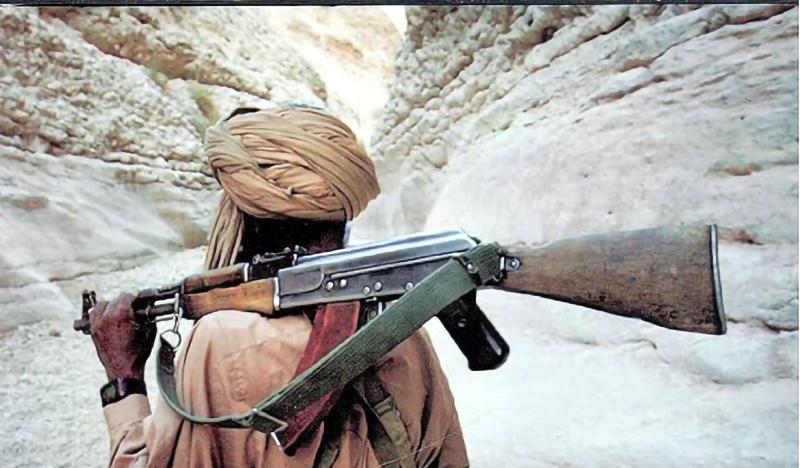
The armed conflict has passed through three operational generations: a tribal, attritional phase (2004–2012); a fragmented, partially urbanised phase (2013–2019) coinciding with the “kill and dump” period; and the present phase of re-coordination under the BRAS umbrella, suicide operations by the BLA’s Majeed Brigade—including, in a regional first, female bombers—deliberate targeting of Chinese nationals, and a demonstrated capacity leap running from the August 2024 province-wide attacks through the Jaffar Express hijacking to the January 2026 simultaneous assault on more than a dozen locations including Quetta. Claims that insurgents “control 85 per cent” of the province belong to political warfare rather than verified fact: independent reporting through July 2026 confirms continued state control of cities, garrisons, and principal infrastructure alongside genuine insurgent freedom of movement in extensive rural belts. Third-generation violence is best understood as communicative and economic—raising extraction’s cost, deterring investment, internationalising the question—functions it has performed with measurable effect on project timelines and investor sentiment.
Counterinsurgency assessment must be equally unsentimental. Measured against the doctrine’s core prescription—win the population—the state’s repertoire of kinetic operations, intelligence-led disappearance, electoral management, internet shutdowns, and now judicial criminalisation constitutes a systematic inversion: two decades of these practices have coincided with the insurgency’s growth in reach, sophistication, and social depth. Parliamentary committees, all-parties conferences, and the Supreme Court have repeatedly stated the correct diagnosis; the civil–military configuration—every civilian institution capable of pursuing settlement subordinated, in the Balochistan file, to institutions whose organisational logic is coercive—explains why diagnosis has never become policy.
The Law and the Declaration
The July 2026 declaration demands legal precision, because public confusion about it is widespread. The ICJ’s Kosovo opinion established that international law contains no prohibition on declarations of independence as such; the May 2025 and July 2026 proclamations by Mir Yar Baloch are therefore lawful acts of political expression. Statehood is another matter. Against the Montevideo criteria—permanent population, defined territory, effective government, capacity for foreign relations—the declaration fails the third and fourth decisively: independent reporting documents Pakistani cabinets meeting, forces operating, and agencies administering across the province, with no news organisation, satellite analysis, or international body verifying the claimed territorial control; every state has withheld recognition and the UN has received no application. Under the declaratory theory the entity fails for want of effectiveness; under the constitutive theory, for want of recognition—the conclusion is overdetermined.
Self-determination doctrine offers the movement two argumentative routes, each with identifiable limits. The historical route—that Kalat’s coerced accession was void ab initio—rests on genuinely contested facts and is weakened by seventy-eight years of general recognition of Pakistani sovereignty. The remedial-secession route—that a people systematically denied internal self-determination may acquire an external remedy—possesses a stronger factual predicate than commonly acknowledged, given the documented record of disappearance, exclusion, and criminalised advocacy, while the doctrine itself remains lex ferenda: state practice since Kosovo has declined to consolidate it. The rigorous conclusion cuts both ways: international law as it stands offers the Baloch movement no path to statehood absent effectiveness or recognition, and its internal-self-determination standard offers the Pakistani state no shelter for the governance record assembled above.
Read as strategy, the declaration’s design becomes visible: its anthem, flag, currency, asserted “85 per cent” control, enumerated mineral assets, and appeals to the UN, India, and Britain are calibrated point-by-point to the Montevideo criteria—an anticipatory constitution of claim addressed to future contingency. Comparative precedent explains both the strategy and its odds. Katanga and Biafra showed effective control plus limited recognition yields extinction when great powers back the parent state; Bangladesh showed the single modern success pathway—atrocity, refugee crisis, decisive intervention, recognition cascade; Somaliland shows the fourth possibility and the declaration’s implicit model, functional statehood without recognition. Measured against all four, the Baloch position in 2026 holds the weakest hand, which is precisely why the movement’s centre of gravity had shifted toward human-rights internationalisation—the strategy the BYC embodied and whose criminalisation may now redirect energies back toward the armed current.
The Great-Power Convergence
The Baloch question now operates on four diplomatic boards at once. On the India–Pakistan board, the file is tightly coupled to the rivalry: the first declaration issued in the immediate aftermath of the May 2025 crisis and appealed partly to India; Islamabad routinely alleges Indian sponsorship, which New Delhi rejects and no international body has adjudicated—while Pakistani instrumentalisation of the Indian factor to delegitimise all Baloch dissent is itself a documented practice corrosive of settlement. On the China board, corridor assets and mineral ambitions make Beijing the system’s most committed opponent of Baloch separatism—and the actor with the greatest material interest in the stabilisation only political settlement could durably provide. On the Western board, EXIM and ADB participation in Reko Diq incorporates the province into critical-minerals competition, giving Western capitals a stake in provincial security that coexists uneasily with their human-rights reporting on the same terrain. On the Gulf board, Saudi capital and Manara’s equity fold the province into Gulf diversification. The systemic consequence: Balochistan has become the ground where the Indo-Pacific contest, the minerals contest, the India–Pakistan rivalry, and international human-rights politics intersect—a convergence that raises the conflict’s global salience while hardening the external environment against secession, since every major power now holds assets premised on Pakistani sovereignty. The realistic international agenda therefore runs through conditionality: the leverage investors and lenders hold over the governance conditions under which their projects proceed.
Trajectories
Four scenarios follow from the analysis. Managed extraction, the most probable: Reko Diq reaches production by 2029, CPEC Phase II proceeds unevenly, insurgency and criminalised dissent persist—an equilibrium stable in the medium term and illusory in the long, since it reproduces the conflict’s generative conditions while raising the value of assets at risk. Political settlement: release of the civic leadership, royalty and consent regimes benchmarked to the Reko Diq equity model, implementation of the parliamentary recommendations accumulated since 2009—improbable absent civil–military rebalancing, yet fully specified in Pakistan’s own institutional record, and the only trajectory converting mineral endowment into durable stability. Escalatory spiral: a mass-casualty attack on Chinese personnel or Reko Diq triggers project suspension or direct Chinese security involvement amid broadening repression—elements already observable in the January–March 2026 sequence. Geopolitical rupture: a systemic shock alters the recognition environment; low annual probability attaches to it, and the declarations are best read as investments positioning the movement for exactly such a contingency.
Conclusion
The findings admit concise statement. Balochistan’s conflict originates in a contested 1948 accession and has been reproduced across five insurgent cycles by a stable structure: extractive resource governance that exports value and imports security forces; formal federal accommodation hollowed by securitised practice; and a nationalism that each round of coercion renews in younger, broader, more transnational form. In law, the Republic of Balochistan proclaimed in July 2026 is a lawful declaration and an unrealised state—failing Montevideo on the verified facts and commanding recognition from no quarter—while remaining a consequential act of internationalisation whose audience is the future. In strategy, the province is now the ground on which CPEC 2.0, Western minerals diplomacy, Gulf capital, and the India–Pakistan rivalry converge, a convergence entrenching Pakistani sovereignty externally while leaving its internal legitimacy crisis untouched.
The deepest finding is the simplest. Seven decades of evidence converge on the proposition that security-first governance has manufactured the insecurity it claims to combat, and that the province’s extraordinary endowment will yield stability only when the population inhabiting it becomes the acknowledged author, rather than the object, of its development. Islamabad holds the settlement blueprint in its own parliamentary and judicial record; Beijing holds the leverage to encourage its use; Washington and the multilateral lenders hold performance standards their financing can enforce; New Delhi’s evidence-based interest lies in multilateral human-rights internationalisation rather than recognition politics that law and power foreclose. Every actor now invested in Balochistan’s minerals and coastline holds a stake in whether that proposition is finally acted upon—and the province’s next decade will record the answer.
Views: 934

Dr. Maheep
Dr. Maheep is Director, Indian Perspective on Global Affairs (IPGA), and a leading analyst of India’s foreign policy and South Asian geopolitics. He earned his PhD in Arab and Islamic Studies. With more than a decade of teaching and research experience in International Relations and Global Politics, he contributes regularly on issues shaping national and global affairs.