






Guns for the Powerful, Hunger for the People: Pakistan’s Militarised State and the Crisis of Human Security
In October 2026, the World Bank published a sentence that deserves to stand as the epitaph of a governing model. In its Middle East, North Africa, Afghanistan and Pakistan Economic Update, the Bank observed that Pakistan accounts for nearly half of the region’s extreme poor: roughly 48 per cent of all people in the grouping who live below the international line of $3 a day. Afghanistan, Syria and Yemen, three societies hollowed out by war, collapse and siege, together account for another 47 per cent. A nuclear-armed state with one of the largest standing armies on earth, a sophisticated intelligence apparatus and a political class that speaks constantly of national honour now finds itself measured in the same statistical company as countries shattered by civil war.
That comparison carries a precise analytical meaning. Pakistan’s share of the regional total reflects, in part, the sheer weight of its population after the World Bank’s 2025 administrative regrouping of countries. The deeper indictment lies elsewhere. The same report records that Pakistan’s poverty rate at the $3-a-day line, measured in 2021 purchasing-power-parity terms, rose by 6.4 percentage points between 2018–19 and 2024–25, and by 3.2 points at the $4.20 line. Pakistan’s own Economic Survey 2025–26 confirms the collapse in national terms: poverty climbed from 21.9 per cent to 28.9 per cent, adding some 27 million people to the ranks of the poor and lifting the total to around 70 million. A decade of hard-won progress has been erased in six years.
This article advances an uncompromising thesis. Pakistan’s poverty reversal is the predictable output of a state built to serve its rulers. For three quarters of a century, a fused establishment of generals, intelligence chiefs, landed magnates, politically protected industrialists and pliant civilian politicians has organised the country’s resources around regime security, institutional privilege and strategic adventurism. The common citizen has paid for every one of those choices: in inflation, in hunger, in unschooled children, in flood-ravaged villages and in a future mortgaged to creditors. The crisis of human security in Pakistan is a crisis manufactured by those who govern it.
The Statistics of Regression
The numbers trace a geography of neglect. According to the Economic Survey, rural poverty rose from 28.2 per cent to 36.2 per cent, and urban poverty from 11 per cent to 17.4 per cent. Balochistan, the province richest in minerals and most heavily garrisoned, records poverty of 47 per cent, up from 41.8 per cent. Khyber Pakhtunkhwa stands at 35.3 per cent, Sindh at 32.6 per cent and Punjab, the political and military heartland, at 23.3 per cent. Inequality has deepened alongside deprivation: the national Gini coefficient rose from 28.4 to 32.7, with Sindh registering 35.9. The official poverty line itself more than doubled, from about Rs 3,758 to Rs 8,484 per adult equivalent each month, a stark measure of how inflation devoured household purchasing power.
The World Bank’s regional comparison sharpens the picture. Across the grouping, 14.3 per cent of people lived below $3 a day in 2024, against a global rate of 10.4 per cent. The Bank describes this region as the only one in which poverty remains above pre-pandemic levels and continues to rise, and it identifies Pakistan’s deterioration as a principal driver. The Bank’s own list of causes reads like a charge sheet against economic management: the pandemic, the 2022 floods, high inflation, currency depreciation and a prolonged adjustment that eroded incomes and jobs.
Islamabad has responded with statistical defensiveness. In a September 2025 statement, its Press Information Department insisted that higher international figures reflected a technical recalibration of global methodology and that the national poverty line remained the most relevant benchmark for policy. The argument contains a valid technical point about thresholds and regional groupings. It collapses entirely before the government’s own data. The 28.9 per cent figure comes from Pakistan’s Household Integrated Economic Survey and Pakistan’s own Economic Survey. No reclassification in Washington explains why 27 million more Pakistanis became poor at home.
Poverty as Policy: Shocks and Self-Inflicted Wounds
Every developing country faced the pandemic, and many faced climate disasters and commodity shocks after 2020. The decisive question concerns resilience: why did Pakistan’s households absorb these shocks so poorly while its ruling institutions emerged with their privileges intact? The answer lies in the distinction between unavoidable external shocks and avoidable institutional failures that magnify their social consequences.
Pakistan entered the crisis decade with structural weaknesses its rulers had chosen to tolerate. Tax revenue hovered around one tenth of GDP, among the lowest ratios in Asia, because agriculture, real estate and retail, the domains of landlords, developers and politically connected traders, remained lightly taxed. Exports stagnated because policy rewarded rent-seeking over productivity. Public investment in human capital remained among the lowest in the region. When inflation peaked near 38 per cent in May 2023 and the rupee breached 300 to the dollar later that year, the burden fell on the wage earner, the smallholder and the daily labourer, whose consumption baskets are dominated by food and fuel. The World Bank notes that petrol and diesel prices have risen by more than 40 per cent since the onset of the Gulf conflict in 2026, while inflation climbed to about 11 per cent by mid-2026. Households with no savings, no social insurance and no political voice have nowhere to hide.
Political instability compounded economic fragility. The ouster of an elected prime minister in April 2022, the disputed election of February 2024, the trial of civilians in military courts after the unrest of May 2023 and successive constitutional amendments expanding the reach of the security establishment produced a climate of uncertainty that deters investment and shortens every policy horizon. Poverty in Pakistan is therefore a political product. Its causes lie in who holds power, how that power is used and whom it is used to protect.
The Garrison and the Granary: The Political Economy of Military Capitalism
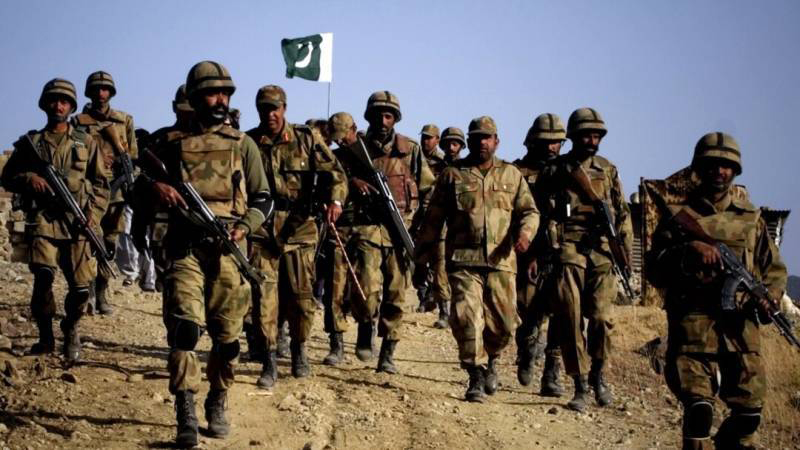
No account of Pakistan’s impoverishment can avoid the institution that has ruled the country directly for more than three decades and indirectly for the remainder. Through the coups of 1958, 1977 and 1999, through the engineering of civilian governments and through its control of foreign, security and nuclear policy, the army has fashioned itself as the permanent government of Pakistan. Elected leaders come and go; the General Headquarters endures.
Ayesha Siddiqa’s landmark study, Military Inc.: Inside Pakistan’s Military Economy, gave this phenomenon its enduring name: “Milbus”, military capital used for the personal benefit of the officer fraternity and kept outside normal public accountability. Siddiqa documented a vast commercial empire spanning manufacturing, banking, fertiliser, cement, cereals, transport, insurance and, above all, land. The Fauji Foundation, established as a welfare trust for ex-servicemen, has grown into one of the country’s largest industrial conglomerates. The Army Welfare Trust, the Navy’s Bahria Foundation and the Air Force’s Shaheen Foundation operate across real estate, aviation services, banking and commerce. The Defence Housing Authorities, constituted under their own statutes, have transformed state land into the most valuable residential estates in Karachi, Lahore, Islamabad and beyond. These institutions differ in legal form, and some genuinely fund pensions and welfare for service personnel. Their cumulative effect, however, has been to create an insulated corporate elite enjoying privileged access to land, contracts, credit and tax treatment, shielded from audit by the mystique of national security.
The UNDP’s Pakistan National Human Development Report on Inequality quantified part of this privilege. It estimated that the military received some $1.7 billion a year in economic privileges, chiefly through preferential access to land, capital and infrastructure together with tax exemptions, and it described the military as the largest conglomerate of business entities in the country. UNDP’s regional director called this overlap of roles a “double privilege”, since the same institution that shapes policy also profits from it.
The past three years have expanded this empire into new frontiers. The Special Investment Facilitation Council, created in 2023 with the army chief as a formal member of its apex committee, institutionalised the military’s role in economic decision-making. Under its umbrella, the Green Pakistan Initiative transferred vast tracts of state land to corporate agriculture managed by army-linked entities. In Sindh alone, a caretaker government leased 52,713 acres for twenty years to Green Corporate Initiative (Private) Limited, described in an official press release as a company under the umbrella of the Pakistan Army, while the council identified some 4.8 million acres of state land nationwide for corporate farming. In a country where the UNDP found that 1.1 per cent of the population owns 22 per cent of arable land, the transfer of public land to the garrison deepens agrarian inequality at the very moment rural poverty is surging.
The constitutional settlement now crowns this economic power with legal impunity. In May 2025, General Asim Munir was elevated to the rank of field marshal. In November 2025, the Twenty-Seventh Amendment created the office of Chief of Defence Forces and extended lifetime legal immunity to the holder of the field marshal’s rank. A state that grants permanent immunity to its most powerful officer while seventy million citizens live below the poverty line has declared, in its supreme law, whose security matters.
The Invisible Hand of the Agencies: The ISI and the Price of Unaccountable Power
The Inter-Services Intelligence directorate occupies the shadowed core of this order. Its political role rests on documented judicial findings. In the Asghar Khan case of 2012, Pakistan’s Supreme Court held that funds channelled through the ISI had been distributed to politicians to influence the 1990 general election and directed action against the officers involved. In the Faizabad sit-in judgment of 2019, the Supreme Court admonished intelligence agencies to remain within their legal mandate. In March 2024, six judges of the Islamabad High Court wrote to the Supreme Judicial Council alleging interference and intimidation by intelligence operatives in judicial affairs. When judges of a superior court must petition for protection from their own state’s intelligence service, the rule of law has been reduced to an instrument of power.
The agency’s external record carries equally grave economic consequences. For decades, Pakistan’s security establishment cultivated militant proxies as instruments of strategic policy in Afghanistan and against India. The discovery of Osama bin Laden in Abbottabad in 2011, a short distance from the country’s premier military academy, and Pakistan’s placement on the Financial Action Task Force grey list from 2018 to 2022 for deficiencies in combating terrorist financing exposed the costs of this doctrine to the world. Pakistan’s own economic surveys have repeatedly claimed losses exceeding $120 billion from terrorism since 2001. That figure, offered by Islamabad as evidence of victimhood, stands equally as the bill for a strategic culture that nurtured the very forces that later turned inward.
Analytical discipline requires precision. No credible public evidence establishes that the ISI directly embezzled welfare funds or authored specific budgetary decisions, and this article attributes no such conduct to it. The causal mechanism operates at a deeper level. An intelligence apparatus that engineers political outcomes, intimidates courts and journalists and sustains militant ecosystems destroys the predictability, institutional independence and investor confidence on which growth depends. It also guarantees that the national security establishment escapes the scrutiny every democratic society applies to its spending. The contradiction is stark: an expansive machinery of national security coexists with the profound everyday insecurity of citizens who cannot secure food, schooling or justice.
Guns, Budgets and Children
The federal budget for 2025–26 exposes the hierarchy of the Pakistani state with brutal clarity. While the total federal outlay fell by about 7 per cent to Rs 17.57 trillion, the defence allocation rose by roughly 20 per cent, from Rs 2.12 trillion to Rs 2.55 trillion. Military pensions, carried outside the defence head, add several hundred billion rupees more. Interest payments consumed Rs 8.21 trillion, nearly half the budget, the accumulated price of decades of borrowing to finance a state that refuses to tax its elites. The entire federal development programme received Rs 1 trillion. The Benazir Income Support Programme, the country’s principal lifeline for the poorest, received a record Rs 716 billion, still less than a third of the defence allocation.
The social ledger is bleaker still. The Economic Survey records combined federal and provincial education spending of about 0.8 per cent of GDP in FY2025, with health spending near 0.9 per cent. Education and health are largely provincial responsibilities under the Eighteenth Amendment, while defence is a federal charge, and a fair comparison must respect that division. Yet the aggregate national choice remains unmistakable: Pakistan devotes around 2.2 per cent of GDP to its defence budget alone, more than its federal and provincial governments together spend on schooling. Between 25 and 26 million children remain out of school, according to a 2026 policy review by Pakistan’s Civil Services Academy, with out-of-school rates near 45 per cent in Balochistan and in districts such as Rajanpur and Muzaffargarh. Some 40 per cent of children under five are stunted, a figure Pakistan’s own former climate minister has acknowledged publicly.
The central question therefore poses itself with unavoidable force. How can a state sustain one of the world’s largest militaries and an expanding nuclear arsenal while tens of millions of its children grow up hungry, stunted and unschooled? The answer reveals the logic of the establishment. A stunted child poses no threat to the garrison; an unfunded school disturbs no general’s balance sheet. Human development has been treated as a residual claim, financed only after the demands of power have been met.
The Republic of Exemptions: Elite Capture and Institutional Extraction
The UNDP report, organised around the three dimensions of power, people and policy, placed a figure on the scale of privilege across Pakistan’s elite: about Rs 2,660 billion, or $17.4 billion, which its lead author, the former finance minister Hafiz Pasha, equated to some 8 per cent of GDP in the report’s reference period. The corporate sector emerged as the largest beneficiary, at about $4.7 billion, followed by the richest one per cent and the feudal landowning class, with the military at $1.7 billion. These estimates date from the report’s historical baseline, and they should be read as a structural portrait. Nothing in the subsequent record suggests that portrait has softened.
The mechanisms of capture are visible across the fiscal system. Tax expenditures, the revenue the state forgoes through exemptions and concessions, run into trillions of rupees each year in the Federal Board of Revenue’s own estimates. Agricultural income, the wealth of the landed aristocracy that dominates provincial assemblies, remains effectively untaxed in practice. Real estate serves as the preferred store of undeclared wealth. Indirect taxes on fuel, electricity and consumption, which fall hardest on the poor, carry the burden that direct taxes on the powerful should bear. The petroleum levy alone was budgeted at Rs 1.47 trillion for 2025–26, collected at every pump from motorcycle riders and rickshaw drivers.
The concepts of political economy describe this system precisely. Elite capture denotes the appropriation of public resources by powerful groups. Rent-seeking describes the pursuit of income through privilege rather than production. Patron-client networks bind politicians, bureaucrats and business interests in reciprocal protection. State capture names the condition in which the rules themselves are written by those who benefit from them. Pakistan exhibits all four simultaneously, anchored by a military establishment that acts as the ultimate guarantor of the bargain.
Floods and the Betrayal of Relief
The 2022 floods affected some 33 million people and inundated a third of the country. The World Bank-led Post-Disaster Needs Assessment estimated damages and economic losses above $30 billion and reconstruction needs above $16 billion. The international community responded at the Geneva conference of January 2023 with pledges exceeding $9 billion, much of it in the form of project loans. The disaster was natural; the scale of suffering owed much to decades of neglected floodplain management, unregulated construction, decaying embankments and weak early warning.
Relief itself became a site of predation. In September 2022, Pakistani authorities registered 48 cases in Sindh concerning unlawful deductions from Benazir Income Support Programme flood payments, cash meant for families who had lost everything, with arrests and recoveries reported. In Upper Dir, The Express Tribune reported in July 2023 that some Rs 480 million in flood funds had allegedly been embezzled, with forty government-approved steel bridges impossible to locate and an inquiry committee recommending the recovery of Rs 360 million. Analytical fairness requires distinguishing verified theft from irregularity, delay and unproven allegation, and acknowledging that the cash-transfer system did reach millions of households while housing reconstruction programmes have rebuilt homes in Sindh. Yet the moral principle stands absolute: assistance intended for the most vulnerable carries an exceptional obligation of transparency and lawful expenditure. A governing class that permits relief for drowned villages to be skimmed has forfeited its claim to speak for the nation.
Debt, the IMF and the Mortgaging of Sovereignty
Pakistan has entered IMF programmes more than twenty times, a record that testifies to the permanence of crisis under its present model of governance. The current 37-month Extended Fund Facility reached its third review in March 2026, with total disbursements of about $4.5 billion across the facility and its climate-resilience companion. The programme demands a primary surplus, cost-recovering energy tariffs and an end to regressive energy subsidies, while calling for expanded health and education spending and inflation-adjusted cash transfers through the Benazir programme.
Adjustment has imposed real hardship. Higher electricity tariffs, petroleum levies and indirect taxes have fallen heavily on households already in distress, and electricity bills triggered street protests across the country in August 2023. Responsibility for this pain, however, rests squarely in Islamabad and Rawalpindi. The IMF did not create a revenue system that spares landlords and developers, a power sector burdened by circular debt of Rs 2.38 trillion, or a defence budget that rises while development shrinks. Creditors have demanded fiscal arithmetic; the establishment has chosen to make the poor pay it. Stabilisation averted outright default, and that achievement deserves recognition. Stabilisation without structural reform of elite privilege, however, merely resets the clock to the next crisis.
The China–Pakistan Economic Corridor illustrates the same pattern on a strategic scale. Announced with promises of industrial transformation, the corridor’s centrepiece became a fleet of imported-fuel power plants built on guaranteed returns and capacity payments that Pakistan’s consumers now finance through some of the region’s highest electricity tariffs. Dues to Chinese power producers have accumulated repeatedly, Gwadar’s residents have protested for basic water and electricity amid a showcase port, and attacks on Chinese nationals have forced the creation of dedicated military security divisions. The corridor has deepened Pakistan’s strategic dependence on Beijing and enlarged the military’s security role, while its promised dividends for ordinary citizens remain conspicuously scarce.
The Praetorian Poverty Trap: An Analytical Framework
The evidence assembled here supports an original synthesis, which this article terms the Praetorian Poverty Trap. It describes a self-reinforcing cycle operating through five mechanisms.
The first is securitised allocation: the security establishment claims first call on public resources in the name of existential threat, leaving human development to absorb the residual. The second is privileged accumulation: military-linked enterprises, landed elites and protected industrialists convert political proximity into land, contracts and exemptions. The third is fiscal displacement: because the powerful escape direct taxation, the state finances itself through borrowing and regressive indirect taxes, transferring the burden to the poor. The fourth is accountability erosion: intelligence interference in politics and justice, constitutional immunities and the mystique of national security shield decision-makers from scrutiny. The fifth is shock amplification: a population left without savings, schooling, health care or social insurance converts every external shock, pandemic, flood or oil spike, into mass impoverishment.
Each mechanism feeds the next. Poverty weakens civic capacity, which entrenches the establishment, which reinforces the allocation of resources to itself. The trap is political, and only a political rupture can break it.
Findings and a Bleak Horizon
Five findings emerge from this analysis. First, Pakistan’s poverty reversal is real, domestic and severe; regional reclassification explains its share of the World Bank’s regional total, and its own surveys confirm the deterioration. Second, the military establishment functions simultaneously as political sovereign, economic conglomerate and constitutional exception, and its privileges have expanded even as citizens have grown poorer. Third, documented intelligence interference in elections and the judiciary has corroded the institutional predictability on which development depends. Fourth, Pakistan’s fiscal priorities, rising defence, crushing interest and starved education, express a deliberate hierarchy of value. Fifth, elite capture across military, landed, corporate and political classes has converted external shocks into a humanitarian emergency.
Pakistan’s defenders will argue that genuine security threats justify military spending, that the IMF programme has stabilised the economy, and that the Benazir programme represents a serious social commitment. Each claim contains a fragment of truth. None explains why the establishment’s privileges have grown through the decade in which the people’s welfare collapsed.
The outlook is grim. The World Bank projects growth below 4 per cent, barely above population growth, while warning of El Niño-driven food price pressures and exposure to Gulf conflict through fuel costs and remittances. Constitutional power is now more concentrated in the military than at any time since the last formal coup. A generation of stunted, unschooled children is entering adulthood in a labour market with too few jobs. Pakistan’s rulers have built a state that excels at commanding, coercing and extracting, and fails at the elementary duty of feeding, educating and protecting its people. Unless the citizens of Pakistan wrest their state back from the garrison and its partners, the guns will continue to belong to the powerful, and the hunger will continue to belong to the people.
Views: 1090

Dr. Maheep
Dr. Maheep is Director, Indian Perspective on Global Affairs (IPGA), and a leading analyst of India’s foreign policy and South Asian geopolitics. He earned his PhD in Arab and Islamic Studies. With more than a decade of teaching and research experience in International Relations and Global Politics, he contributes regularly on issues shaping national and global affairs.