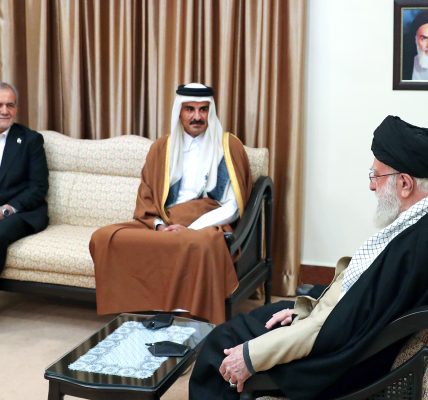




On 28 February 2026, an AI – enabled strike eliminated Iran’s Supreme Leader Ayatollah Ali Khamenei and senior command officials in a Tehran compound. Artificial intelligence fused satellite intelligence, pattern recognition, and targeting algorithms to deliver speed and accuracy no human team could match in real time. The operation achieved what appeared as flawless tactical execution. It also exposed the central tension of the conflict.
Under President Donald Trump, the administration leaned heavily on these AI-generated assessments for strategic direction. Experienced analysts on the Middle East, diplomats, and regional specialists had advised caution. They pointed to Iran’s doctrinal evolution, institutional resilience, and the dangers of multi-front escalation. Their insights rested on decades of historical, cultural, and operational knowledge. Decision-making, however, privileged the velocity and apparent objectivity of algorithmic outputs. This choice accelerated action while limiting deeper understanding of the adversary’s adaptive capacity.
This research article examines that divergence. It shows how the 2026 conflict arose from a strategic preference for computational certainty over layered human expertise. The war remains active. Its human, economic, and geopolitical costs continue to mount, underscoring the limits of technology-led strategy.
Decapitation without Collapse: A Different Strategic Reality
Earlier interventions in Iraq and Libya created an expectation. Removing central authority would trigger institutional fragmentation, followed by opportunities for external influence framed as liberation. That template informed 2026 planning assumptions.
Iran operated on a fundamentally different foundation. Its mosaic defence doctrine distributed operational authority across 31 semi-autonomous IRGC provincial commands. Each unit held pre-loaded protocols, independent decision power, and local sustainment capabilities. Central leadership provided direction, yet the system relied on layered redundancy rather than singular dependence.
The assassination activated this architecture. Succession passed smoothly to Mojtaba Khamenei through established protocols. Provincial commands sustained momentum without interruption. The state absorbed the shock, reorganised, and responded as a networked, resilient entity. It did not fracture into competing pieces or open the door to external resource management. This outcome diverged sharply from earlier cases. Strategic modelling that projected collapse encountered a system engineered for continuity under pressure.
The AI Advantage and Its Boundaries
Artificial intelligence delivered clear operational strengths. It processed vast datasets rapidly. It generated targeting matrices and compressed decision cycles dramatically. Yet every model reflected the inputs and assumptions fed into it. Training corpora emphasised certain intelligence streams. Integration of Persian-language doctrinal materials, long-term Iranian military adaptations, and regional strategic culture remained limited in depth. The resulting outputs conveyed high confidence. They also narrowed the range of anticipated responses.
Human experts had long cautioned that Iran could extend its missile ranges beyond the declared 2,000-kilometre ceiling particularly through lighter payloads or modifications to platforms like the Khorramshahr family.
The March 2026 attempted strikes toward Diego Garcia, roughly 4,000 kilometres distant, later confirmed this latent capability. Experts had also highlighted decentralised naval infrastructure and coordinated regional networks. They mapped clear pathways for sustained, multi-front retaliation. Policy direction, however, aligned more closely with algorithmic conclusions that rested on the more conservative assessments. Execution gained precision. Interpretive breadth contracted. Clarity of action coincided with constraint in understanding.
This dynamic reveals a core tension. Technology excels at pattern recognition and speed. Strategic foresight requires interpretation grounded in context, history, and lived regional realities. The February 2026 decision to favour more operationally flexible AI systems over stricter ethical guardrails underscored this preference for deployability.
Expansion into Systemic Conflict: Retaliation across the Gulf
Iran’s response transformed a targeted strike into a distributed campaign. Missile and drone operations reached US-linked bases and installations across the Arab Gulf states. Facilities in Saudi Arabia, the UAE, Qatar, Kuwait, and beyond faced sustained pressure.
By late March 2026, preliminary figures indicated roughly 1,900–2,100 deaths in Iran from the initial strikes and subsequent exchanges, including civilians in urban areas and incidents such as the Minab school strike. Israel reported around 19–24 civilian and military deaths with thousands injured. The United States confirmed 13–15 service members killed and several hundred wounded, mainly at regional bases. Arab Gulf states recorded approximately 25–35 deaths combined, with additional injuries from strikes and interceptions.
Attacks extended to vital infrastructure. Iranian strikes damaged Qatar’s Ras Laffan LNG complex, the world’s largest, reducing its export capacity by about 17 per cent, with repairs potentially taking three to five years. Desalination plants, which supply 90 per cent or more of drinking water in several Gulf States, sustained direct or indirect damage, threatening daily civilian needs. Gas fields, refineries such as Ras Tanura in Saudi Arabia, airports, and commercial facilities absorbed impacts that disrupted operations in societies built on energy exports, international business, and cosmopolitan connectivity.
The Strait of Hormuz and Bab el-Mandeb became pivotal chokepoints. Iranian forces asserted operational control, implementing selective vetting and creating uncertainty for shipping. The waterway, carrying roughly 20 per cent of global oil supply, saw commercial traffic drop sharply. Oil production across key Gulf producers fell by millions of barrels per day at peak. Insurance premiums surged. Supply chains adjusted under elevated risk. Export-dependent economies slowed. Import-reliant regions worldwide faced price volatility, with Brent crude moving into triple-digit territory.
Arab Gulf states rely on security, stability, and sustained confidence for their tourism sectors, financial hubs, real estate markets, and global corporate presence. Prolonged uncertainty affects business planning, investment flows, stock markets, and the appeal of these locations as stable international nodes. Energy and water security form foundational elements of regional order. Disruptions ripple outward, touching food systems, trade routes, and broader economic activity. Business communities require predictable environments of safety and continuity. When these erode, the cosmopolitan vitality of places like Dubai, Doha, and Riyadh faces measurable strain across sectors. The conflict thus translated regional escalation into systemic vulnerability.
Alignments, Energy Security, and the Globalisation of Strategic Vulnerability
The conflict clarified broader geopolitical patterns. Russia and China extended logistical and intelligence support to Iran in calibrated forms, including satellite imagery that aided operational continuity. This engagement reflected reciprocity in great-power competition. The parallel with sustained Western assistance to Ukraine remained evident in diplomatic discourse.
Requests for expanded basing or operational access from European partners, Spain, and Sri Lanka encountered hesitation or refusal. Nations weighed energy exposure, domestic priorities, and strategic autonomy. The war evolved into a layered contest. Participation varied by actor. Commitments reflected differentiated calculations rather than uniform alignment. This pattern reflects a transition from bloc politics to situational alignment.
These geopolitical shifts unfolded alongside immediate structural pressures on the global economy. Disruptions at Hormuz and Bab el-Mandeb translated into direct market effects. Spare capacity faced constraints. Export volumes adjusted. Global energy flows encountered volatility extending far beyond the region. Impacts reached food security, shipping costs, and investment environments. Civilian infrastructure and commercial ecosystems absorbed sustained pressure.
Energy security thus emerges not as a sectoral concern but as a determinant of systemic stability. Long-term effects on tourism, trade networks, and regional economic vitality underscore the broader human and material stakes. Regional conflict, in this context, translates directly into global vulnerability.
Governance, Strategic Decision, and the Evolving Trajectory of War
Leadership decisions shaped the path taken. Emphasis on AI-driven assessments offered velocity and apparent objectivity. Cumulative insights from analysts and diplomats provided nuance grounded in historical patterns, doctrinal evolution, and cultural context. The integration of advanced technologies with human judgment remains a defining governance question.
Artificial intelligence organises information and accelerates processes. Enduring strategic responsibility rests on interpretation, accountability, and alignment with long-term outcomes. Analytical frameworks, including those highlighted by Chatham House, indicate that AI-supported targeting in live operational environments introduces structural risks when speed outpaces contextual understanding.
The conflict continues to evolve across military, economic, and political dimensions. Iranian distributed operations maintain sustained presence. Economic pressures persist. Regional theatres remain active. Strategic recalibrations unfold across multiple capitals, producing a condition of extended contestation. Public discourse within the United States and other affected societies increasingly engages the costs of prolonged conflict. Democratic expression becomes part of the strategic environment within which policy decisions are shaped. Pathways forward centre on coordinated approaches to maritime security, energy flows, and civilian protection. Stability, in this context, emerges from the integration of diplomatic, economic, and strategic instruments beyond immediate kinetic considerations.
Conclusion
The 2026 West Asian war highlights the expanding reach of artificial intelligence in modern operations while affirming the resilience of decentralised state architectures capable of absorbing decapitation strikes and sustaining coherence. It reveals how regional military actions cascade into global consequences viz.; energy disruption, food insecurity, and economic volatility, binding local conflict to systemic instability. At the same time, it exposes a deeper structural absence. The absence of statesmanship capable of translating military action into a coherent political outcome.
The war advances without a clearly defined endgame, even as its effects widen across regions and systems. Multiple actors are drawn into its trajectory, yet no framework for resolution acquires strategic clarity. In such a setting, escalation gains momentum, and operational success remains detached from durable political outcomes.
At its core, the conflict clarifies a foundational principle: technology multiplies capability; judgment determines direction and sustainability. A forward-looking strategic posture integrates data with interpretive depth, balances speed with contextual understanding, and aligns power with responsibility towards enduring stability.
A strategy that privileges the confidence of algorithms over the wisdom of experienced human judgment risks not only tactical miscalculation but a broader strategic failure whose costs are borne disproportionately by civilian populations and interconnected economies.
Grounded in full-spectrum analysis, prudence remains the most reliable guide to strategic judgment. The trajectory of this war underscores a deeper truth. Conflict redistributes instability rather than resolving it. War is not a solution. The path ahead remains open, and its direction will depend on choices that place strategic imagination above algorithmic certainty.
Views: 1290

Dr. Maheep
Dr. Maheep is Director, Indian Perspective on Global Affairs (IPGA), and a leading analyst of India’s foreign policy and South Asian geopolitics. He earned his PhD in Arab and Islamic Studies. With more than a decade of teaching and research experience in International Relations and Global Politics, he contributes regularly on issues shaping national and global affairs.