







Blood on Quetta’s tracks: Baloch resistance and the collapse of human security in Pakistan
Dawn had barely broken over Quetta on Sunday, 24 May 2026, when an explosives-laden vehicle detonated with cataclysmic force near the Chaman Phatak railway crossing, barely a kilometre from the fortified perimeter of Quetta Cantonment. The blast, estimated at approximately thirty-nine kilograms of high-grade explosive according to early forensic assessments, struck a military shuttle train that had departed the cantonment moments earlier, carrying Pakistan Army soldiers, Frontier Corps personnel, and their families, bound for the long-distance Jaffar Express toward Peshawar. They were travelling home for Eid. They never arrived.
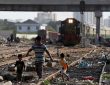
The explosion was horrifying in both its precision and totality. Multiple coaches derailed and overturned. Steel buckled like paper. Compartments carrying uniformed men, their wives, and their children erupted in columns of orange flame and billowing black smoke visible across the cantonment skyline. Railway tracks were ripped from their sleepers and twisted into grotesque sculptures of wreckage. Luggage, the careful packing of families anticipating reunion, lay scattered across blood-soaked earth. Emergency services worked for hours through smoke and fire, overwhelmed by the scale of destruction. Pakistani state media and international wire services confirmed the toll at between fourteen and twenty-four killed and fifty to more than a hundred injured, figures that fluctuated across sources as rescue operations continued into the afternoon: a grim arithmetic of the living and the dead that has become all too familiar in Balochistan.
Reuters reported the attack on the afternoon of 24 May 2026 under the headline “At least 24 killed in Pakistan train blast claimed by separatist militants,” confirming that the Baloch Liberation Army had formally claimed responsibility. CNN’s South Asia correspondents described it as a suicide bombing in Pakistan’s “most embattled province.” France 24, Al Jazeera, and CBS News carried comprehensive coverage within hours, each situating the attack within the escalating trajectory of Baloch insurgent activity. Dawn published contemporaneous reports under the headline “At least 14 killed in Quetta shuttle train blast,” while The Express Tribune cited “over 16 martyred.” Pakistan’s Inter-Services Public Relations issued a condemnation, pledging retribution against “anti-state elements.”
The BLA’s statement, issued through its spokesperson Jeeyand Baloch and the Majeed Brigade’s dedicated communiqué channel, identified the attacker as Bilal Shahwani, twenty-five years of age, from the Saryab area of Quetta, who had joined the BLA in 2020 and been inducted into the Majeed Brigade in 2022. The Brigade described the operation as a “highly organised fidayee (self-sacrificing) strike” executed after weeks of intelligence gathering and surveillance of predictable military movement patterns. The BLA claimed significantly higher casualties than official Pakistani figures, a discrepancy consistent with the Pakistani state’s longstanding institutional tendency to minimise insurgent successes, a pattern well documented by independent monitors. What remains beyond dispute is the carnage, the symbolism, and the deliberate targeting of a military transit corridor at its most vulnerable moment: Eid leave.
Balochistan is a province where violence has become the grammar of political communication, not because Baloch people are inherently violent, but because every other grammar of political engagement has been systematically destroyed.
— Frederic Grare, Balochistan: The State versus the Nation, Carnegie Endowment for International Peace, 2013
Anatomy of resistance: BLA, the Majeed brigade, and the logic of asymmetric war
The Baloch Liberation Army is not an organisation that emerged from a vacuum of ideological abstraction or theological extremism. It is, in the most precise analytical sense, the armed expression of a deeply rooted ethno-nationalist movement whose political origins trace back to the contested accession of the Khanate of Kalat to Pakistan in 1948, an accession that a substantial body of Baloch nationalist scholarship continues to regard as coerced, illegitimate, and fundamentally violative of the self-determination principles that were supposed to govern the dissolution of British India. As the historian Selig Harrison documented with prescient clarity in In Afghanistan’s Shadow: Baluch Nationalism and Soviet Temptations (1981), the unresolved question of Baloch political identity would become one of Pakistan’s most enduring internal wounds. Successive rounds of insurgency, in 1948, 1958, 1963, and most significantly 1973–77, revealed the same structural pathology: a highly centralised Pakistani state, dominated by a Punjabi-military complex, administering a resource-rich periphery through coercion rather than consent.
The contemporary BLA emerged formally around the turn of the millennium, drawing genealogically upon the networks and ideology of the 1970s insurgency while operating within a qualitatively different context: the post-9/11 securitisation of South Asian politics, the intensification of resource extraction under Chinese investment frameworks, and the systematic erosion of Baloch civil and political rights under successive Pakistani governments. By 2006, the Pakistani state had proscribed the BLA following repeated attacks on security forces and infrastructure. The assassination that year of the tribal patriarch Nawab Akbar Bugti, ordered in a military operation under Pervez Musharraf, served as a radicalising watershed. As analyst Anatol Lieven observed in Pakistan: A Hard Country (2011), the event converted numerous educated, middle-class Baloch youth from cautious nationalism into full-throated armed resistance.
The Majeed Brigade, the BLA’s elite fedayeen or self-sacrificing unit founded in 2011 by Aslam Baloch and named in honour of the Majeed Langove brothers who attempted to assassinate Zulfikar Ali Bhutto in 1974, represents the tactical evolution of this resistance into the domain of high-impact asymmetric warfare. After a dormancy period from 2012 to 2017, the Brigade was revived and rapidly escalated its operational tempo after 2018. Its founding tactical principle is elegant in its brutal logic: where conventional military superiority renders guerrilla attrition insufficient, suicide and vehicle-borne operations directed at fortified symbolic targets achieve simultaneous physical damage, psychological shock, and global media amplification. From the 2018 attack on a bus carrying Chinese engineers in Dalbandin, marking a decisive anti-CPEC turn, through the assault on the Chinese Consulate in Karachi in November 2018, the Pearl Continental Hotel in Gwadar in May 2019, the Pakistan Stock Exchange in Karachi in June 2020, and the historically unprecedented deployment of female suicide bombers beginning with Shari Baloch’s attack on the Confucius Institute at Karachi University in April 2022, the Majeed Brigade has demonstrated a capacity for tactical innovation that has fundamentally altered the character of the Baloch insurgency.
Pakistani military and Frontier Corps personnel are not chosen as targets randomly or out of undifferentiated hatred. Within the BLA’s ideological framework, and within the broader architecture of Baloch nationalist thought, the army and paramilitary forces are perceived as the enforcers of occupation: the instruments through which demographic engineering is executed, enforced disappearances are perpetrated, and the fundamental political aspirations of the Baloch people are suppressed at gunpoint. The International Crisis Group, in its 2020 report Pakistan: Mounting Militancy in Balochistan, documented with meticulous care how the military’s counter-insurgency strategy, characterised by enforced disappearances, extrajudicial killings, the deployment of pro-state death squads, and the systematic targeting of civil society, has generated precisely the cycle of grievance and radicalisation it purports to address. Human Rights Watch and Amnesty International have similarly catalogued patterns of state behaviour that, under any objective legal framework, constitute systematic violations of human rights and crimes against the civilian population.
The enforced disappearance of thousands of Baloch, among them students, journalists, political activists, and lawyers, represents a systematic campaign of terror by the Pakistani state against its own citizens. It is not counter-terrorism; it is state terrorism.
— Human Rights Watch, World Report 2024: Pakistan
The May 2026 Quetta train blast was identified within BLA communiqués as part of the broader operational framework designated “Operation Herof 2,” a large-scale, coordinated insurgency sequence that had already produced simultaneous attacks across nine to fourteen districts of Balochistan in January and February 2026. Analysts at the Jamestown Foundation characterised this sequence as the most tactically sophisticated Baloch insurgent campaign in the movement’s history. The timing of the Quetta attack during the Eid travel period, when security personnel occupy a liminal space between duty and domesticity and the emotional resonance of casualties is heightened, was not accidental. It reflected the Majeed Brigade’s intelligence-driven planning methodology and operational sophistication, qualities that have led analysts at the Combating Terrorism Center at West Point to describe the BLA as among the most technically capable insurgent organisations currently operating in South Asia.
Sociology of sacrifice: why young baloch choose the fidayeen path
Perhaps the most analytically urgent and humanistically demanding question surrounding the Quetta blast, and the operations of the Majeed Brigade more broadly, is not the tactical question of how, but the existential question of why. Why does a twenty-five-year-old man from Saryab, Quetta, who joined the liberation movement at twenty and its suicide wing at twenty-two, choose to die in the burning chassis of an explosives-laden vehicle rather than pursue the life trajectories that any young man might reasonably desire? For those willing to engage the question with intellectual seriousness rather than the reflexive dismissal of Pakistani state propaganda, the answer lies not in pathology but in structure.
Balochistan remains, by every measurable indicator of human development, the most deprived province in Pakistan. The United Nations Development Programme’s 2023 Pakistan National Human Development Report documented Balochistan’s Human Development Index as the country’s lowest: literacy rates substantially below the national average, infant and maternal mortality rates among the highest in South Asia, unemployment, particularly among educated youth, at structurally catastrophic levels, and access to healthcare, clean water, and functional public education confined principally to provincial capitals. This is not underdevelopment in the conventional sense. It is what Achille Mbembe, in his seminal essay Necropolitics (2003), would recognise as the organised abandonment of a population by a sovereign power that has effectively decided their lives are neither politically nor economically worth sustaining. It is what Johan Galtung theorised as structural violence: the slow, systemic destruction of life chances, dignity, and the possibility of a future.
Into this landscape of structural devastation, the Pakistani state has inserted not development but the gun. The enforced disappearances documented by the Voice for Baloch Missing Persons, whose founder Mama Qadeer Baloch walked from Quetta to Islamabad in 2014 in one of South Asia’s most moving acts of non-violent witness, run into many thousands. The precise figure remains contested, but Human Rights Watch, Amnesty International, and the Baloch Human Rights Council have consistently documented a pattern in which young men, among them students, teachers, engineers, lawyers, and shopkeepers, are picked up by plainclothes intelligence operatives, held without charge, subjected to systematic torture, and frequently found dead in circumstances bearing the hallmarks of extrajudicial execution. Families are threatened into silence. Cases are never adjudicated. The result is not deterrence but the intimate terror of collective punishment, the signature instrument of a state that has surrendered any pretension to the rule of law in the territory it claims to govern.
Frantz Fanon, writing in The Wretched of the Earth (1961), argued that violence by the colonised against the coloniser is not merely instrumental; it is profoundly psychological, an act through which the subjugated reclaim agency, dignity, and subjectivity from a system that has denied them all three. While one need not endorse this analysis as a universal prescription, its descriptive power in the Baloch context is difficult to dismiss. The Majeed Brigade’s martyrdom narratives, with their detailed biographies, emphasis on education, cultural rootedness, and deliberate choice, are not merely cynical recruitment propaganda. They are acts of counter-memorialisation: insistent affirmations that these young men and women existed, mattered, and chose, in conditions where the Pakistani state has systematically worked to render Baloch lives politically invisible.
Mahmood Mamdani’s framework of politicised identity, developed in When Victims Become Killers (2001), offers a complementary analytical lens. When an ethnic group’s political identity is systematically denied institutional expression, when its leaders are disappeared or eliminated, and when its cultural and linguistic distinctiveness is treated as a threat to national unity, the militarisation of that identity becomes less a mystery than a structural inevitability. The Pakistani state has consistently refused to address the political and economic dimensions of Baloch alienation, instead reframing every expression of nationalist sentiment as externally sponsored terrorism, allegations directed at India, Afghanistan, and Western intelligence agencies. In doing so, the state has avoided accountability while simultaneously denying the Baloch people the basic dignity of having their grievances recognised as historically rooted and authentically their own.
Humanity of all victims: structural violence devours its own
Any scholarly analysis that aspires to moral seriousness must acknowledge what even the most critically empathetic framework of Baloch nationalism risks obscuring: that among the dead and wounded at Chaman Phatak were human beings, soldiers, young recruits barely out of their teens, women and children travelling for Eid family reunions, whose deaths constitute irreducible human tragedies independent of the political and structural forces that produced them. The Pakistani soldier killed in that inferno did not personally order the enforced disappearance of Baloch activists. The family member accompanying him did not negotiate the terms of CPEC. They were, in the most painful sense, the consumed fuel of a system they neither fully understood nor, as individuals, chose.
This recognition does not concede ground to Pakistani state narratives of victimhood, narratives strategically deployed to evade political accountability while perpetuating the very structural violence that sustains insurgency. Rather, it illuminates a deeper truth: militarised governance ultimately devours those it deploys as instruments no less ruthlessly than it crushes those it designates as enemies. The families of soldiers killed in Balochistan are overwhelmingly drawn from the same marginalised classes, the Punjabi rural poor, Pashtun smallholders, and lower-middle-class urban households, recruited with promises of stability, pensions, and social status. They are not the architects of the prevailing order; they are its expendable labour. As the Pakistani scholar and journalist Ayesha Siddiqa meticulously documented in Military Inc.: Inside Pakistan’s Military Economy (2007), the rentier political economy of Pakistan’s military establishment, comprising its generals, corps commanders, and ISI directorate, enriches itself through land grants, commercial ventures, and control over foreign investment flows, while consigning the sons of the poor to defend an architecture that primarily serves elite interests. In this unforgiving structure, the soldier on the Quetta shuttle train and the young man who drove the explosives-laden vehicle into its path were, in a profoundly uncomfortable sense, casualties of the same system.
The moral complexity this recognition demands, the refusal of simplistic binaries and the insistence on holding the humanity of all victims in view without erasing the profound asymmetries of power and responsibility, remains conspicuously absent from Pakistan’s dominant political discourse. The ritual vocabulary of “martyrdom” for state forces and “terrorism” for insurgents performs a powerful ideological function: it forecloses the essential question of causation. It prevents the nation from confronting the structural conditions that drive young men to such acts of desperation, and from accepting the responsibilities that flow from honest answers to that question.
Cpec and the architecture of dispossession
No analysis of the Quetta train blast, or of the Baloch insurgency in its contemporary form, can proceed without sustained engagement with the China-Pakistan Economic Corridor (CPEC). This sixty-plus-billion-dollar infrastructure and energy framework is presented by the Pakistani state and the Chinese government as a transformative development project, yet a substantial body of Baloch nationalist opinion regards it as an updated cartography of colonial extraction. The distinction is not merely rhetorical; it determines whether CPEC constitutes a solution to Balochistan’s underdevelopment or one of its deepest structural causes.
Gwadar, the deep-sea port at the western terminus of CPEC and the commercial centrepiece of its strategic architecture, lies in a district where the majority of the population is Baloch. Here, development indicators have deteriorated even as construction activity has intensified. As The Economist observed in 2021, local fishermen, whose livelihoods depended on coastal waters now securitised and increasingly allocated to Chinese commercial interests, have been systematically displaced in the name of a development project from which they derive little benefit. Chatham House analysts have highlighted the fundamental asymmetry of the arrangement: China gains strategic port access, transit routes, and mineral extraction rights, while local communities receive neither meaningful employment nor commensurate royalties from the resources extracted from beneath their ancestral lands.
The Carnegie Endowment for International Peace, particularly through the foundational work of Frederic Grare, has long situated CPEC within the broader history of resource exploitation in Balochistan. Natural gas discovered in the Sui fields in 1952 powered Karachi’s industrial growth for decades while Balochistan received negligible royalties and minimal infrastructure investment in return. In the Baloch nationalist reading, CPEC replicates this extractive logic at a vastly greater scale, now with an external power acting as co-beneficiary. As Brookings Institution analyses of Belt and Road security challenges have consistently noted, large-scale infrastructure projects that bypass local communities, generate limited local employment, and rely upon heavy military protection tend to produce not gratitude but radicalisation.
The demographic anxieties CPEC provokes among Baloch communities are visceral and immediate. The construction of worker compounds housing thousands of Chinese nationals in Gwadar, the planned special economic zones designed around Chinese operations, and the broader patterns of migration linked to the project have fuelled fears of becoming a minority within their own homeland, the very demographic engineering that the BLA explicitly cites as justification for resistance. Pakistan’s deployment of a Special Security Division numbering nearly twenty thousand personnel, dedicated exclusively to protecting Chinese nationals and CPEC assets at enormous financial and institutional cost, while Baloch citizens continue to face disappearances, torture, and the denial of basic services, sends a stark message: foreign investment holds greater value to the Pakistani state than Baloch lives. This perception, grounded in lived experience and structural reality, has had profound and documented consequences for insurgent recruitment and the intensification of attacks targeting Chinese nationals. Since 2018, such violence has claimed dozens of Chinese lives and emerged as one of the most significant complications confronting China’s broader South Asian strategy.
CPEC is not development for Balochistan. It is development over Balochistan. The Baloch people are not the beneficiaries of this corridor; they are the obstacle it is designed to bypass, suppress, and ultimately displace.
— Baloch National Movement, official statement, 2022
Narrative warfare: terrorism, liberation, and the politics of meaning
The Quetta train blast did not occur merely as a physical event. It was instantly absorbed into competing architectures of meaning that reveal as much about the political pathologies of the actors involved as they do about the incident itself. The Pakistani state’s response, articulated through the ISPR, Prime Minister Shehbaz Sharif’s condemnation, and the ritual deployment of the term “shaheed” for fallen security personnel, followed a well-rehearsed securitisation narrative: the attack was framed as evidence of external conspiracy, justification for intensified military operations, and an occasion for national solidarity that pre-empted rather than enabled genuine political reckoning.
Pakistani liberal commentators, writing in the constrained editorial spaces of Dawn, The News International, and The Express Tribune, have periodically sought to articulate the structural argument that military solutions imposed upon fundamentally political problems only reproduce deeper political crises. The journalist and analyst Raza Rumi, writing in The Friday Times and international platforms such as Foreign Policy, has consistently warned that the state’s failure to address Baloch grievances through institutional channels has entrenched a self-reinforcing cycle of radicalisation and repression, a dynamic that ultimately serves the institutional interests of the security establishment by perpetuating its political indispensability. Similarly, former senator and scholar Afrasiab Khattak has documented in parliamentary records and public commentary how repeated military operations in Balochistan have generated the very outcomes they purported to prevent.
International media coverage has been more measured but predictably bifurcated. Reuters, BBC, and Agence France-Presse reported the facts with professional restraint, situating the attack within the longer history of the Baloch insurgency without fully endorsing either the state’s terrorism narrative or the BLA’s liberation framing. Al Jazeera English video reporting, including on-the-ground interviews and historical context, offered international audiences a degree of structural understanding often missing from wire-service dispatches. France 24 explicitly highlighted the CPEC dimension, while CBS News linked the incident to the March 2025 Jaffar Express hijacking, signalling a worrying pattern of escalation that international security analysts are tracking with growing concern.
In the digital sphere, Baloch activist networks on X, formerly Twitter, sustained by a resilient transnational diaspora in Europe, North America, and the Gulf, rapidly contested the dominant securitised narrative. Organisations such as the Free Balochistan Movement, the Baloch Human Rights Council, and the European Baloch Human Rights Organisation circulated evidence of enforced disappearances alongside coverage of the blast, constructing a counter-narrative in which the violence at Chaman Phatak becomes intelligible only against the backdrop of systematic state violence. Pakistan’s information management, including restrictions on independent journalism in Balochistan, the blocking of insurgent websites, and pressure on human rights organisations, has not silenced this counter-narrative. In the age of digital activism, such efforts have paradoxically amplified it.
Geopolitical stakes: a wounded province, a fragile state
The consequences of the Quetta train blast extend far beyond Balochistan’s provincial boundaries. They carry profound implications for Pakistan’s internal stability, the viability of CPEC as a flagship strategic project, China’s broader ambitions in South Asia, and the wider regional security architecture involving India, Afghanistan, Iran, and the Gulf states. International Crisis Group assessments have consistently identified Balochistan as the single most consequential locus of political-military risk to Pakistani state coherence, not because the BLA poses an immediate existential threat to territorial integrity, but because the sustained failure to address the political economy of Baloch alienation steadily consumes scarce resources, institutional attention, and legitimacy that a structurally fragile Pakistani state can ill afford to expend.
China’s response to the Quetta attack, and to the wider pattern of strikes on Chinese nationals and CPEC assets, has been publicly restrained yet privately alarmed. Beijing has repeatedly pressed Islamabad, through diplomatic channels and high-level communications, for “visible and verifiable” improvements in the protection of Chinese personnel and projects. Partial suspensions of worker deployments following earlier incidents, including the March 2024 Shangla attack that killed five Chinese engineers, along with rising insurance premiums and financing difficulties, have begun to impose tangible economic costs on the corridor’s strategic viability. As Nikkei Asia noted, such attacks are steadily eroding investor confidence in CPEC’s long-term prospects.
For India, which Pakistan routinely accuses of sponsoring the Baloch insurgency, allegations consistently denied by New Delhi and unsupported by credible independent evidence, the strategic calculus remains complex. India has a genuine interest in a stable Pakistan, because state collapse would trigger refugee flows, nuclear risks, and regional instability on a scale that would far outweigh any short-term strategic advantage. The notion that India is the primary driver of Baloch nationalism is analytically untenable. The BLA’s grievances predate Pakistan’s independence, its recruitment is rooted in domestic conditions of underdevelopment and repression, and its operations rely primarily on local networks. The Pakistan Army’s persistent emphasis on the Indian conspiracy narrative serves a clear institutional purpose: it deflects political accountability, justifies elevated military budgets, and forecloses the domestic reforms that are essential to resolving the crisis.
Ultimately, the crisis in Balochistan is no longer merely a provincial insurgency. It has evolved into a profound test of the Pakistani state’s capacity to reconcile security with legitimacy, federal authority with ethnic dignity, and geopolitical ambition with democratic inclusion. It is, in the most precise analytical sense, a test that Pakistan, in its present institutional configuration, is failing.
Conclusion
The inferno that engulfed the railway coaches near Chaman Phatak on the morning of 24 May 2026 was not, in any intellectually serious or historically defensible sense, merely a terrorist attack. It was the violent eruption of a crisis that the Pakistani state has spent decades attempting to suppress through coercion while refusing to confront politically, morally, and constitutionally. The deaths were tragic, indiscriminate, and morally indefensible in their immediate human consequences, particularly for the ordinary soldiers and family members who neither designed nor directed the structures of domination within which they ultimately became expendable casualties. Yet the explosion cannot be divorced from the deeper historical architecture of repression, dispossession, militarisation, and political exclusion that has defined the Baloch experience since the incorporation of Balochistan into Pakistan in 1948.
What exploded in Quetta was not simply an explosives-laden vehicle. It was seventy-five years of accumulated humiliation and unheard suffering, the combustion of broken promises layered across generations: royalties systematically denied, elected governments dismissed, political leaders disappeared, students tortured, journalists silenced, villages militarised, and entire communities displaced in the name of development projects from which they themselves remained excluded. Successive Pakistani governments, military and civilian alike, have responded to Baloch grievances not with democratic accommodation or constitutional imagination, but with the blunt instruments of force, surveillance, and pervasive fear. Balochistan has been governed less as a constituent unit of a federation than as a securitised frontier, its population viewed with perpetual suspicion and its resources treated as assets to be extracted rather than rights to be shared.
The Pakistani state’s deepest failure in Balochistan is therefore not operational but conceptual. Islamabad has persistently interpreted every articulation of Baloch political consciousness through the narrow and self-serving vocabulary of terrorism, sedition, foreign conspiracy, and anti-state subversion, thereby systematically denying the legitimacy of the underlying political question itself. A crisis rooted in history, identity, federal imbalance, economic exclusion, and state violence has been reduced to a counter-terrorism problem to be managed through military operations. Yet insurgencies are not defeated merely by killing insurgents. They endure where humiliation outlives repression, where grief reproduces anger faster than force can suppress it, and where successive generations of young Baloch conclude that dignity, justice, and meaningful citizenship remain structurally inaccessible within the existing order. Thousands of enforced disappearances, widespread allegations of extrajudicial killings, systematic restrictions on dissent, and the militarisation of everyday civilian life have created an environment in which constitutional politics increasingly appears futile. The tragedy is that the Pakistani security establishment continues to mistake silence for stability and militarised control for national integration, even as the foundations of political trust steadily erode beneath it.
This crisis has been profoundly intensified by the extractive logic of the China-Pakistan Economic Corridor. Internationally marketed as a transformative development initiative, CPEC has been experienced by many Baloch as an architecture of exclusion, one in which strategic infrastructure, ports, mineral wealth, and geopolitical access are prioritised over the welfare and participation of local communities. Gwadar stands as the most visible symbol of this contradiction: while ports expanded and security perimeters hardened, surrounding populations remained deprived of clean water, hospitals, schools, employment, and meaningful political voice. Development imposed without justice does not generate peace. It produces resentment secured behind military checkpoints.
Pakistan now stands at a historic crossroads. It may continue to govern Balochistan through enforced disappearances, intelligence operations, media suppression, militarised extraction, and perpetual securitisation, a path that may deliver temporary tactical control but will deepen strategic fragmentation and accelerate the moral corrosion of the state itself. No country can sustain national cohesion indefinitely when large sections of its population experience citizenship not as belonging but as occupation. The alternative demands enduring peace rooted in a fundamental reimagining of the relationship between state and people: constitutional federalism, economic justice, historical acknowledgement, the immediate cessation of enforced disappearances, equitable resource sharing, meaningful provincial autonomy, and the release of political prisoners. These are not utopian demands. They are the minimum conditions for the restoration of legitimate political order in any constitutionally serious state.
The explosions in Quetta were not simply the sounds of militancy. They were the echoes of accumulated anguish reverberating across generations of denial, history speaking through ruins created by a state that has too long governed through fear while mistaking coercion for unity. Every disappeared student, every grieving mother, every silenced journalist, every displaced fishing community, every young life radicalised by humiliation forms part of the political landscape from which such violence emerges. Until Pakistan develops the moral wisdom and political maturity to replace repression with reconciliation, extraction with inclusion, and militarised nationalism with democratic humanity, the cycle of violence will persist. And the ultimate tragedy will not belong to Balochistan alone. It will belong to Pakistan itself, a state increasingly threatened not by external enemies but by its own enduring refusal to reconcile power with justice, security with dignity, and national unity with the full humanity of its own people.
Views: 3299

Dr. Maheep
Dr. Maheep is Director, Indian Perspective on Global Affairs (IPGA), and a leading analyst of India’s foreign policy and South Asian geopolitics. He earned his PhD in Arab and Islamic Studies. With more than a decade of teaching and research experience in International Relations and Global Politics, he contributes regularly on issues shaping national and global affairs.


