






India, the UN Security Council: From Contribution to Constitutional Representation
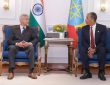
A single fortnight in the middle of 2026 traced the circumference of the argument this article advances. In early July, India’s External Affairs Minister moved through Doha, Manama, Kuwait City and Muscat, capitals whose energy security, maritime stability and diaspora welfare have become inseparable from New Delhi’s own, at a moment when a ceasefire had only just quieted the aftershocks of the Iran-Israel war and the Gulf’s foreign ministries were recalculating the region’s balance in real time. From the Gulf the itinerary carried directly to United Nations Headquarters in New York, where on 13 July the minister launched India’s candidacy for a further term on the Security Council and, in the same address, set out the SHANTI vision, an argument that holistic advancement, security and equity are inseparable objectives and that their pursuit depends on an international order whose rules command genuine respect. Within forty-eight hours the same minister was in Brussels, closing a Trade and Technology Council session meant to give practical texture to a newly concluded free trade agreement with the European Union.
That single arc, Gulf capitals to the UN horseshoe table to Brussels, sat inside a wider pattern rather than apart from it. Two months earlier, New Delhi had chaired the BRICS Foreign Ministers’ Meeting at Bharat Mandapam, convening an eleven-member bloc together with partner states from Belarus to Uganda under a chairship theme built explicitly around resilience and reformed governance, and describing the present international condition, in the chairing minister’s own words, as increasingly complicated and uncertain. The previous autumn had brought a High-Level Meeting of Global South states convened on the margins of the UN General Assembly, its purpose to strengthen consultation among developing countries and to press a shared reform agenda across the UN system, the IMF, the World Bank and the WTO simultaneously. Earlier still, a G20 Foreign Ministers’ session had carried the same argument about global governance reform into a forum comprising the world’s largest economies. Read together, these engagements do not read as a diplomatic itinerary so much as a single, sustained proposition, repeated in Arab capitals, at the United Nations, in Brussels, in New Delhi and at the G20 table alike: that the architecture of collective security built in 1945 has fallen out of alignment with the world it now governs, and that the case for its renewal no longer needs to be argued in the abstract, because it is being made, capital by capital, through the accumulating record of who actually keeps the peace.
Consider a subtraction. Remove India from the ledger of United Nations peace operations, and the twentieth century’s record of collective security thins considerably. The Custodian Force India that administered prisoners of war in Korea in 1953 under Lieutenant General K. S. Thimayya disappears from that settlement. The Indian contingent that gave Dag Hammarskjöld’s improvised invention of peacekeeping its operational substance in Sinai in 1956 vanishes from the Suez denouement. Captain Gurbachan Singh Salaria’s posthumous Param Vir Chakra, the only such decoration ever awarded for service under the United Nations flag, disappears with the Congo mission of 1960–64. Lieutenant General Satish Nambiar ceases to command the first United Nations Protection Force in the former Yugoslavia. The first all-women Formed Police Unit in UN history, deployed to Liberia in 2007 and credited by the Organisation itself with tripling female recruitment into Liberia’s security services, is erased from the record of gender parity in peace operations.
The arithmetic that survives this subtraction is stark. India has contributed close to 300,000 personnel to more than fifty UN peace operations since 1950, a cumulative total unmatched by any other member state. One hundred and seventy-nine Indian peacekeepers have died under the blue flag, again the highest figure of any contributing nation. Sixty per cent of the Security Council’s substantive agenda concerns Africa, and the soldiers who implement the Council’s African mandates come overwhelmingly from Asia and Africa, while the states that draft those mandates sit in a chamber configured in 1945.
This asymmetry supplies the article’s central analytical concept: the contribution–representation asymmetry, the measurable distance between what a state supplies to the collective security system and the constitutional standing it holds within that system. India bears the operational burden of a permanent member, absorbs the human cost of a permanent member, finances a growing share of assessed and voluntary budgets, and exercises the formal authority of an ordinary member of the General Assembly. Constructivist theory clarifies why such a gap corrodes institutional authority over time. Legitimacy in international organisation rests upon shared beliefs about the rightfulness of an arrangement, and those beliefs erode when the distribution of burdens and the distribution of rights diverge visibly and persistently.
The Council’s condition in 2026 demonstrates the point. Seven draft resolutions fell to the veto in 2024, the highest annual figure since 1986. The Council adopted only forty-four resolutions in 2025, its smallest annual output since 1991. The General Assembly’s veto-initiative debates, seventeen of them since April 2022, register genuine normative interest and modest material consequence. Gaza, Sudan, Myanmar, Ukraine and an inconclusive Venezuela session in January 2026 each display the same pattern: procedural motion, substantive stasis. Meanwhile the Organisation confronts a liquidity crisis, a Secretariat budget reduced by more than nine per cent under the UN80 Initiative, and the imminent selection of a successor to Secretary-General António Guterres.
The paradox merits precise statement. The United Nations remains indispensable, and its principal security organ carries an expanding legitimacy deficit. These two facts reinforce each other. Because no substitute for the Charter system exists, the Council’s paralysis matters gravely. Because states continue to seek Council authorisation for the use of force, its representational architecture draws sustained scrutiny. Inis Claude identified collective legitimisation as the United Nations’ most consequential political function six decades ago; that function depends upon a reservoir of belief that is finite, depletable, and renewable only through deliberate institutional action.
The Council resembles a constitutional order frozen at its founding while governing a transformed world. In 1945 the Organisation held fifty-one members and eleven Council seats, a ratio of one seat for every 4.6 states. Today it holds 193 members and fifteen seats, a ratio of one for every 12.9. Decolonisation added more than eighty sovereign states to the international system. Demographic and economic weight shifted decisively towards Asia and Africa. Cyberspace, outer space and artificial intelligence created domains of conflict the drafters at San Francisco could scarcely have imagined. Through it all the permanent membership has stood fixed, and the single expansion of 1965 remains the sole structural amendment to the Council’s composition in eight decades.
The research question follows directly: has India earned permanent membership of a reformed Security Council, and what comprehensive reforms would restore that Council’s legitimacy, representativeness and effectiveness? The first enquiry concerns normative desirability, answered through evidence of contribution, capability and role conception. The second concerns institutional design and political feasibility, answered through the amendment rule of Article 108, the configuration of veto players, and the bargaining space among reform coalitions. A strong normative case has coexisted with structural blockage for three decades; any credible blueprint must explain how the second yields to the first.
A Frozen Constitution: Genealogy Of The Council
The Security Council was designed before it was negotiated. The Dumbarton Oaks Proposals of 1944, produced by the United States, Britain, the Soviet Union and China, allocated primary responsibility for peace and security to a Council of eleven, five of them permanent, invested with enforcement powers the League Council had lacked. Franklin Roosevelt’s conception of Four Policemen held that collective security requires an executive capable of decisive action, resting on the concentrated capability of the principal victors.
Historical institutionalism supplies the interpretive frame. Institutions created at moments of concentrated power encode their founders’ preferences and then acquire an existence independent of the conditions that produced them. Early institutional choices generate constituencies and sunk investments that raise the cost of later alteration, so that arrangements adopted for contingent reasons come to appear necessary. The Council’s founding coincided with the apogee of Allied military supremacy and the final phase of European empire, and its early architecture bore the imprint of assumptions about which peoples were prepared for self-government and which powers would supervise the international order.
The voting formula, settled at Yalta and published in March 1945, required seven affirmative votes for procedural matters and seven including the concurring votes of all permanent members for everything else. This unanimity requirement, universally known as the veto, entered the Charter as the price of great-power participation. The framers believed the League had failed partly because it bound great powers to obligations they would repudiate under pressure; a Council able to order enforcement against a permanent member would fracture or precipitate the general war it existed to prevent. Edward Luck’s formulation captures the exchange precisely: universality of membership was purchased through inequality of rights.
At San Francisco, the smaller and middle powers, led with particular force by Herbert Vere Evatt of Australia, contested the Yalta formula and lost decisively; the great powers made clear that the Charter would contain the unanimity rule or there would be no Charter. In compensation, the conference wrote Article 108 and Article 109 into the Charter, governing amendment and review. India signed the Charter on 26 June 1945 while still a British colony, a founding member and a subject territory simultaneously, a duality that shaped its abiding conviction that the Charter’s promise of sovereign equality carried an unfinished agenda. Within months of independence, Indian diplomats were challenging racial discrimination in South Africa at the General Assembly, and Hansa Mehta’s insistence on replacing “all men are born free and equal” with “all human beings” in the Universal Declaration stands as an early instance of Indian norm entrepreneurship.
Article 108 deserves close reading, because it governs everything that follows. Amendments enter into force when adopted by two-thirds of the General Assembly and ratified by two-thirds of members, including all five permanent members of the Security Council. Article 109 provides for a General Conference to review the Charter on the same double-lock terms. Reform therefore requires a supermajority of the whole membership and the unanimous consent of the five states whose relative position reform would dilute. The review conference contemplated for 1955 was assigned to a committee that met, adjourned and lapsed without ever convening; the safety valve the smaller powers extracted at San Francisco has lain dormant for seven decades.
The Cold War rendered the Council largely inert. Between 1946 and 1990, permanent members cast 279 vetoes, and the General Assembly’s Uniting for Peace procedure of 1950 supplied a partial substitute. Decolonisation, meanwhile, transformed the membership from fifty-one states in 1945 to over 150 by 1980, and the Non-Aligned Movement and the Group of 77 pressed for a Council reflecting the enlarged community. Their campaign produced the Council’s sole structural amendment: Resolution 1991 A (XVIII) of December 1963 enlarged the Council to fifteen members by adding four elected seats, ratified in 1965 despite initial reluctance from Moscow and Paris. The episode carries three durable lessons. Article 108 can be surmounted when demandeurs are numerous and organised. Permanent members will ratify enlargement that leaves their own prerogatives untouched. Expansion confined to the elected category alters composition without altering decision structure, precisely the objection India presses today against partial reform.
The post-Cold War period revived the question with new force. Germany and Japan, the second and third largest financial contributors, advanced claims grounded in capability; India, Brazil and the African states advanced claims grounded in representation and historical justice. The Open-Ended Working Group, established in 1993, met for fifteen years and produced no agreed text, earning the sobriquet of the Never-Ending Working Group. Ambassador Razali Ismail’s 1997 framework, proposing five new permanent seats without veto, foundered on Uniting for Consensus resistance and P5 reticence. Kofi Annan’s 2004 High-Level Panel offered two rival models, six new permanent seats without veto or eight renewable four-year seats, and declined to choose between them, a studied neutrality that became a template for subsequent Secretariat practice.
Contemporary Legitimacy Crisis
The Intergovernmental Negotiations, launched in 2009 as the successor to the Working Group, have met for over fifteen years within an unwritten procedural framework that produces no negotiating text, a design many members regard as deliberately self-defeating. The Ezulwini Consensus, the African Union’s common position formulated in 2005, insists on no fewer than two permanent seats and five non-permanent seats for Africa, with full veto rights for new permanent members if the veto survives at all, a maximalist position that has proved difficult to reconcile with G4 flexibility. The G4 itself, comprising Brazil, Germany, India and Japan, has offered successive concessions, most recently in 2025 a fifteen-year deferral of veto rights for new permanent members, subject to review. The Uniting for Consensus coalition, anchored by Italy, Pakistan, Mexico, Argentina and South Korea, continues to argue for expansion solely in the elected category, opposing new permanent seats of any kind on the ground that they would entrench rather than democratise privilege.
Among the P5, the pattern is asymmetric and increasingly well documented. The United States, the United Kingdom, France and Russia have each placed explicit support for Indian permanent membership on the record at the General Assembly. China alone withholds endorsement. Chinese officials have moved, across successive years, from outright silence to formulations acknowledging India’s “increased role” or expressing that Beijing “understands and respects” India’s aspiration, without ever committing to support permanent membership itself. Chinese commentary has characterised the broader G4 project as a geopolitical alignment directed against Beijing and Moscow rather than a genuine institutional reform. The pattern is consistent with a strategic calculation rather than a principled objection: China remains the sole Asian permanent member and stands to lose that distinctiveness from any enlargement admitting India. This calculation, rather than any deficiency in India’s qualifications, constitutes the single most consequential obstacle within the P5 to comprehensive reform.
The result is an institution that continues to lose the confidence of the majority it claims to serve while retaining the formal veneer of universal authority. English School reasoning is instructive here: international society persists through shared institutions and norms even amid the absence of central government, but those institutions require continuous reaffirmation through practice. When practice diverges too visibly from the professed principle of sovereign equality, the institution’s claim to embody international society weakens. Status-seeking scholarship adds a complementary insight: states pursue institutional recognition not merely for instrumental gain but because standing itself confers ontological security, and prolonged denial of status commensurate with demonstrated capability generates a distinct and durable grievance, visible in India’s diplomacy since at least the 1990s and increasingly explicit in the language its leadership now employs.
Competing Visions: G4, The African Union, Uniting For Consensus, And The Permanent Five
Four coalitions structure the reform debate, and their positions have proved remarkably stable across three decades even as tactical concessions have shifted at the margins. The G4 proposes an enlarged Council of around twenty-five members, adding six permanent seats, two each for Africa and Asia and one each for the Western European and Latin American groups, alongside four or five new non-permanent seats, with veto rights for new permanent members deferred for a review period rather than abandoned outright. The African Union’s Ezulwini Consensus insists on two permanent seats for Africa specifically, selected by African states themselves, with full veto rights attached from the outset, a position grounded in the historical grievance that Africa is the only continent without a permanent voice despite supplying the overwhelming majority of the Council’s peacekeeping caseload. Uniting for Consensus rejects new permanent seats altogether, proposing instead an expanded category of longer-term, renewable elected seats, a position that protects existing regional rivals, chiefly Pakistan against India, Italy against Germany, and Argentina and Mexico against Brazil, from being permanently outranked by their neighbours. The Permanent Five, for their part, share an institutional interest in preserving the veto and have historically preferred incremental, Assembly-driven discussion over any binding negotiating text that might compress their room for manoeuvre.
The persistence of this four-cornered deadlock for thirty years demonstrates a structural truth: the normative case for reform commands near-universal assent, while the distributive question, who specifically gains a seat and what rights attach to it, remains unresolved because every plausible settlement disadvantages some existing claimant. Comprehensive reform, if it comes, will require simultaneous accommodation of the G4’s aspirations, the African Union’s demand for continental parity of treatment, and enough of the Uniting for Consensus coalition’s concerns to prevent a blocking minority in the General Assembly. India’s diplomacy has increasingly recognised this arithmetic, framing its own candidacy explicitly within a comprehensive settlement rather than as an isolated national claim.
India As A Responsible Stakeholder In Global Governance
India’s case for permanent membership rests on a convergence of criteria rather than any single qualification. Demographically, India is the most populous state on earth and its largest democracy, a combination that addresses the Council’s most conspicuous representational deficit: the near-total absence of South Asian and Global South voice among the permanent members. Economically, India ranks among the five largest economies by nominal output and sustains growth rates that few major economies match, translating into an expanding capacity to underwrite the Organisation’s operations and an expanding stake in the stability that Council decisions are meant to secure.
The peacekeeping record, detailed at the outset, supplies the most concrete evidentiary pillar: sustained troop and police contributions across seven decades, command of major missions from Cyprus to the former Yugoslavia to Sierra Leone, and pioneering contributions to gender parity in field operations. India’s diplomatic engagement extends across counter-terrorism, where it has long argued for a comprehensive international convention and has suffered the human costs of cross-border terrorism directly; maritime security, where its naval assets increasingly underwrite freedom of navigation and anti-piracy operations across the Indian Ocean; digital public infrastructure, where India’s own experience with biometric identification and real-time payments systems has become a template offered to other developing states; development partnerships, sustained through lines of credit and capacity-building across Africa, Asia and Latin America; and climate leadership, expressed through the International Solar Alliance and the Coalition for Disaster Resilient Infrastructure, both Indian-originated multilateral initiatives operating independently of Western-led frameworks.
None of these contributions individually would compel a rewriting of the Charter. Their cumulative weight, set against India’s absence from the chamber where decisions affecting all of them are made, is what generates the contribution–representation asymmetry as an institutional rather than a merely rhetorical problem. India’s own framing has shifted accordingly, away from an entitlement narrative rooted in civilisational scale and toward a stakeholder narrative rooted in demonstrated responsibility, a shift most visible in the language Dr S. Jaishankar has employed with increasing precision since 2022.
Reformed Multilateralism: Jaishankar’s Doctrine And The Shanti Framework
Dr S. Jaishankar has, since chairing the Security Council’s December 2022 open debate on a “New Orientation for Reformed Multilateralism,” constructed a coherent diplomatic doctrine around that phrase. Its core proposition holds that the postwar multilateral architecture, however indispensable, was built for a world of fifty states and cannot legitimately arbitrate a world of nearly two hundred without structural renovation. Successive General Assembly addresses, at the seventy-ninth session in September 2024 and the eightieth in September 2025, have sharpened this argument into a direct critique of Council “gridlock,” paired with the claim that expansion is required in both permanent and non-permanent categories simultaneously, since partial reform of the kind achieved in 1965 alters composition without altering the distribution of authority.
On 13 July 2026, at United Nations Headquarters, Jaishankar formally launched India’s campaign for the non-permanent seat reserved for the Asia-Pacific group for the 2028–29 term, the ninth such term India would occupy since 1950, contesting the seat against Tajikistan in balloting scheduled for June 2027. The launch was notable less for the immediate contest than for the framework Jaishankar unveiled alongside it: SHANTI, an acronym for Securing Holistic Advancement through Norms, Trust and Integrity. Jaishankar described the contemporary international condition as a “profound paradox,” in which humanity possesses unprecedented capacity to advance collective welfare while its principal security institution remains disabled by structural gridlock. He argued that holistic advancement, his term for development, security and equity treated as inseparable objectives, becomes possible only when the international order is valued and its rules are respected, which places a premium on norms, trust and integrity as the operative currency of institutional legitimacy. The address explicitly linked SHANTI to strengthening the voice of the Global South, to India’s demonstrated peacekeeping record, and to India’s practice of Vasudhaiva Kutumbakam, “the world is one family,” as a lived diplomatic commitment expressed through maritime security cooperation, disaster relief, health security assistance and development partnerships rather than as rhetorical ornament alone.
SHANTI functions, in effect, as the operational vocabulary through which India’s older claim to permanent membership is now packaged for a General Assembly audience whose immediate concern is a two-year elected term rather than Charter amendment. The doctrine’s significance lies in its sequencing logic: India presents the non-permanent candidacy as evidence in support of the permanent claim, allowing each successive Council term to function as an accumulating dossier of demonstrated responsibility rather than a substitute for structural reform. This sequencing addresses, at least partially, the Uniting for Consensus objection that expansion should occur only through renewable elected seats, by demonstrating that India treats such seats as complementary to, rather than in place of, permanent standing.
The Veto: Historical Logic, Contemporary Dysfunction, Reform Options
The veto’s original rationale, binding the great powers inside the Organisation rather than driving them from it, retains a measure of validity even as its exercise has grown steadily more consequential to the Council’s paralysis. Russia and the Soviet Union together account for the largest cumulative total of vetoes cast since 1946, with the United States following, and China’s own use, though numerically smaller, has intensified markedly since 2011 around Syria and subsequently Ukraine-related resolutions. The double veto, established by the 1945 Four-Power Statement, permits a permanent member to block even the procedural determination of whether a matter is procedural, extending the reach of the veto well beyond its textual scope in Article 27.
Reform proposals cluster around three approaches. The French-Mexican initiative, endorsed by more than one hundred states, calls for voluntary restraint from veto use in situations of mass atrocity, genocide, crimes against humanity and war crimes, a code of conduct rather than a Charter amendment, and one the existing permanent members have observed only selectively. The Accountability, Coherence and Transparency group’s Code of Conduct, launched in 2015, asks Council members, permanent and elected alike, to commit to supporting credible action in atrocity situations and to explain publicly any veto cast against such action; it commands broad non-permanent membership but no binding force. The General Assembly’s own veto-initiative resolution of April 2022 mandates an Assembly debate within ten working days of any veto’s exercise, converting the veto from a silent act into a scrutinised one, though scrutiny alone has not yet altered the underlying calculus of the states that cast it.
India’s own position on veto reform for new permanent members has evolved pragmatically. Its formal endorsement, alongside G4 partners, of a fifteen-year deferral period for veto rights attached to new permanent seats, subject to review, represents a substantial concession from the position that permanent membership without full and immediate veto parity constitutes a discriminatory second tier. India has, simultaneously, continued to reject any settlement that would create such a tier permanently rather than as a negotiated transitional arrangement, a distinction it regards as decisive and that the Ezulwini Consensus, by contrast, does not accept for the African seats it seeks.
Political Constraints On Reform
Three obstacles operate simultaneously and reinforce one another. The procedural obstacle is Article 108 itself: any amendment requires ratification by two-thirds of the entire UN membership and by every sitting permanent member, giving each of the five an absolute veto over any change to their own collective privilege. The coalition obstacle is the four-cornered deadlock among the G4, the African Union, Uniting for Consensus and the P5’s own preference for the status quo, none of whose maximal positions is currently compatible with the others. The bilateral obstacle, most consequential for India specifically, is China’s calculated withholding of support, a position that costs Beijing little diplomatically while denying India the unanimous P5 backing that would otherwise exist, and one unlikely to shift absent a broader recalibration of the India-China relationship or a change in the strategic calculus underlying Beijing’s preference to remain Asia’s sole permanent voice. Pakistan’s opposition, exercised principally through the Uniting for Consensus coalition, supplies a further regional check, though one of considerably lesser structural weight than China’s P5 veto.
These obstacles interact rather than merely accumulate. Even were China to withdraw its objection, the G4-Ezulwini gap over veto rights for new African seats would remain unresolved; even were that gap closed, Uniting for Consensus would still contest the creation of any new permanent seats at all. The three-decade persistence of this configuration suggests that reform, when it eventually occurs, is more likely to arrive through a negotiated package addressing all three obstacles simultaneously than through the resolution of any single one in isolation.
Comparative Institutional Lessons
Other international organisations offer instructive, if imperfect, analogies. The International Monetary Fund’s 2010 quota and governance reform, which took until 2016 to enter into force, demonstrates that redistributing formal voting power among an institution’s most powerful members is achievable but requires a decade-long process of incremental concession, sequenced ratification and periodic review, precisely the kind of graduated mechanism the Security Council has never employed. The European Union’s own institutional evolution, particularly its expansion of qualified-majority voting at the expense of unanimity across successive treaties, shows that even highly sovereignty-sensitive decision rules can be renegotiated when member states judge the cost of paralysis to exceed the cost of diluted individual authority, a judgement the UN’s permanent members have not yet reached collectively. The World Trade Organization’s consensus-based decision-making, which has produced its own well-documented paralysis on major negotiating rounds since Doha, illustrates the opposite lesson: unanimity rules, once entrenched, prove exceptionally resistant to reform even when their dysfunction is widely acknowledged, a caution against assuming that Security Council paralysis will, by itself, generate sufficient pressure for change.
The common thread across these comparisons is that institutional reform of entrenched voting privilege has historically required either a genuine external shock, comparable in magnitude to the Second World War that produced the Charter itself, or an unusually patient, sequenced diplomatic process sustained over a decade or more. The Security Council has experienced ample rhetorical pressure for reform without either condition yet being satisfied.
Alternative Futures For The United Nations
Four scenarios frame the Council’s plausible trajectories. Continued paralysis, the default outcome absent deliberate intervention, sees the Council persist as a diminished but not abandoned forum, its authorising function increasingly bypassed through coalitions of the willing and regional arrangements that erode its centrality without formally displacing it. Incremental working-methods reform, the most politically feasible near-term outcome, would expand transparency, restrain veto use through voluntary codes, and improve elected-member participation without touching Article 108 at all, leaving the representational deficit unaddressed while marginally improving the Council’s functioning. Comprehensive Charter reform, the outcome India and the G4 seek, would require the near-simultaneous resolution of the procedural, coalition and bilateral obstacles described above, a conjunction that has not occurred in eighty years and shows no imminent sign of occurring, though the cumulative pressure of contribution–representation asymmetry makes it more rather than less likely over a longer horizon. Institutional displacement, the most disruptive scenario, would see states increasingly conduct collective security business outside the UN framework altogether, through regional security architectures or ad hoc coalitions, a trajectory partially visible already in responses to Ukraine, Sudan and West Asia, and one that would diminish the Council’s relevance regardless of whether its composition ever changes.
India’s diplomacy, and the SHANTI framework specifically, positions New Delhi to benefit from any of the latter three scenarios while working actively to avert the first: continued non-permanent participation builds the dossier for comprehensive reform should the coalition and bilateral obstacles eventually loosen, while India’s own network of parallel institutions, from the International Solar Alliance to its bilateral development partnerships, provides a hedge should institutional displacement accelerate regardless.
The Charter Renewal Compact: A Blueprint For Twenty-First-Century Multilateralism
A durable settlement requires five interlocking pillars, each addressing a distinct obstacle identified above.
The first pillar establishes graduated permanence: new permanent seats, allocated to India, Brazil, Germany and Japan together with two African states selected through the African Union’s own process, would carry full standing in Council deliberation and mandate-setting from the outset, with veto rights attached on a fifteen-year deferred schedule subject to a single confirmatory review, resolving the G4’s own proposed compromise into binding Charter language rather than a negotiating position.
The second pillar installs a calibrated veto architecture, converting the French-Mexican restraint initiative and the ACT Code of Conduct from voluntary practice into a binding Charter protocol: no veto, old or new, may be exercised to block Council action determined by a two-thirds Council vote to address ongoing genocide, crimes against humanity or systematic war crimes, restoring a narrow but consequential category of situations in which paralysis becomes structurally impossible.
The third pillar delivers comprehensive regional balance, extending two permanent seats to Africa on terms the African Union itself determines, one additional permanent seat to Latin America and the Caribbean, and an expansion of the elected category by four to five seats distributed to preserve Uniting for Consensus states’ access to Council rotation, addressing the representational claims of every coalition simultaneously rather than sequentially.
The fourth pillar activates mandatory periodic review, operationalising the dormant Article 109 machinery through a standing requirement that the General Assembly convene a Charter review conference every fifteen years, ensuring that whatever settlement is reached in the near term does not freeze again into an immovable status quo as the 1965 expansion did for six decades.
The fifth pillar mandates enhanced working methods and transparency, codifying penholder rotation among elected members, mandatory public justification for any veto cast, and expanded consultation with troop- and police-contributing countries in the design of mandates their personnel are asked to implement, a provision of particular consequence for India given its sustained contribution to missions it has had no formal voice in authorising.
Together these five pillars convert the normative consensus on reform, near-universal but inert, into an institutional design that accommodates the G4’s aspiration, the African Union’s demand for parity of treatment, enough of Uniting for Consensus’s concern to avoid a blocking Assembly minority, and a narrow but meaningful constraint on the veto’s most corrosive application, while building in the periodic renewal mechanism the Charter’s original architecture conspicuously lacked.
Conclusion
The case for India’s permanent membership, examined through the evidence assembled here, rests most persuasively on institutional legitimacy rather than national entitlement. A Council that depends for its authority on the collective security contributions of states it declines to seat as full constitutional participants operates on a form of capital that depreciates with each passing year of visible mismatch between burden and standing. India’s peacekeeping record, economic weight, democratic credentials and diplomatic investment in the language and machinery of reformed multilateralism, most recently through the SHANTI framework, constitute together a case that four of the five permanent members now accept explicitly and the fifth declines to contest on the merits while withholding endorsement for reasons of regional strategic calculation.
The deeper argument, however, concerns the Charter system as a whole rather than any single state’s claim upon it. A constitutional order that cannot renew itself risks the same fate that overtook the League of Nations: not sudden collapse, but a gradual transfer of relevance to arrangements outside its own architecture, conducted by states no longer willing to wait upon a reform process that has proved incapable, across three decades, of translating consensus into amendment. The Charter Renewal Compact proposed here offers no guarantee of adoption; Article 108 remains what it has always been, a lock requiring five keys held by the very states whose relative position any turn of that lock would alter. It offers, instead, a demonstration that the elements of a comprehensive settlement, graduated permanence, a calibrated veto, regional balance, periodic review and enhanced transparency, are neither mutually exclusive nor individually insufficient, but jointly sufficient, could the requisite five keys ever be turned together.
India’s candidacy, in this light, is best understood as a test of whether the international order retains the capacity for constitutional self-renewal that its founders wrote into the Charter and then allowed to lie dormant for seven decades. The answer to that test will determine considerably more than the composition of fifteen seats around a horseshoe table in New York.
Views: 293

Dr. Maheep
Dr. Maheep is Director, Indian Perspective on Global Affairs (IPGA), and a leading analyst of India’s foreign policy and South Asian geopolitics. He earned his PhD in Arab and Islamic Studies. With more than a decade of teaching and research experience in International Relations and Global Politics, he contributes regularly on issues shaping national and global affairs.


