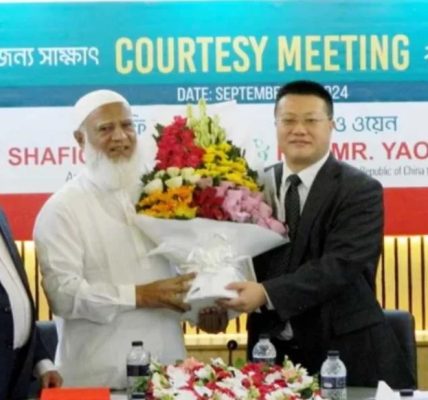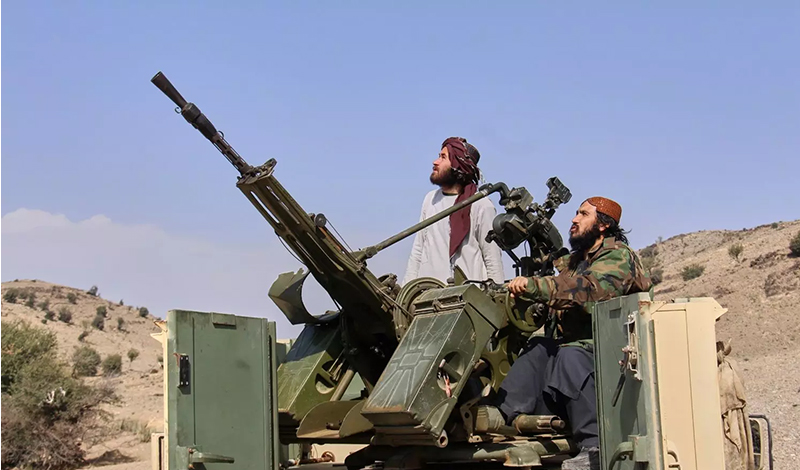







On 30 September 2026, Noorullah Noori, acting Minister of Borders, Tribes and Tribal Affairs in Afghanistan’s Taliban-led administration, offered a sentence that travelled across the Hindu Kush like a thunderclap. Should the Islamic Emirate so decide, he declared, the Afghan flag could be raised in Peshawar within two days. He paired the boast with a warning to Pakistan’s military and intelligence establishment to stop testing the patience of the Afghan people. The words came nine days after Pakistani aircraft struck the Afghan borderlands once more, and at the close of a year in which the two neighbours exchanged airstrikes, artillery fire and ultimatums along the full length of the Durand Line.
The statement is rhetoric, and it deserves to be read as rhetoric. Its power lies in what it reveals. For four decades Pakistan’s security establishment cultivated Afghan armed movements as instruments of a grand design called strategic depth. Peshawar was the operational capital of that design: the city where the seven mujahideen parties kept their headquarters in the 1980s, where the Inter-Services Intelligence directorate distributed weapons and patronage, and through which the first Taliban emirate drew its recruits, clerics and supplies in the 1990s. Today a minister of the movement Pakistan nurtured names that very city as a prize within reach. Noori himself personifies the journey. A governor under the first emirate, he was detained after its fall in 2001, spent more than twelve years at Guantanamo Bay, walked free in the prisoner exchange of 2014, and now speaks for a government that regards Pakistan as its principal adversary.
The rhetoric of revenge in Kabul answers a chain of Pakistani provocations: airstrikes on Kabul, Kandahar and Paktia, a Defence Minister’s declaration of open war, and the expulsion of millions of Afghans who had lived in Pakistan for decades. It is the predictable harvest of a policy that Pakistan constructed, financed and sanctified across half a century. Pakistan sought strategic depth in Afghanistan and manufactured strategic vulnerability at home. It sought leverage over Kabul and produced an autonomous, hostile neighbour. It armed proxies for geopolitical gain, and it now confronts proxies with strategies of their own.
The Rogue Patron
The phrase rogue state carries a contested history. Washington popularised it in the 1990s for adversaries it associated with terrorism and proliferation, and critics rightly observed that the label served politics as much as analysis. Pakistan’s predicament calls for a sharper instrument. I propose the concept of the rogue patron: a state that cultivates armed non-state actors for strategic ends, supplies them sanctuary, money and political protection, assumes that ideological kinship and dependence will guarantee obedience, and then discovers that successful proxies acquire resources, legitimacy and interests of their own. Over time the patron loses control, and the coercive ecosystem it built returns to injure it.
Principal-agent theory explains the mechanism. A patron delegates violence to an agent whose interests only partly overlap with its own. The agent knows its terrain better than the patron does, and every success makes the agent harder to discipline. Chalmers Johnson called the result blowback: the unintended consequences of covert policies, borne by citizens who never learned of the policies that produced them.
Pakistan presents the paradigmatic case. The A. Q. Khan network sold nuclear centrifuge technology to Iran, Libya and North Korea. Osama bin Laden lived for years in Abbottabad, a cantonment town that hosts Pakistan’s premier military academy, until American forces killed him in May 2011. Admiral Mike Mullen, then Chairman of the US Joint Chiefs of Staff, told the Senate in September 2011 that the Haqqani network acted as a veritable arm of the ISI. The Financial Action Task Force kept Pakistan on its grey list from 2018 to 2022 for failures in countering terrorist financing. Together these episodes describe a statecraft in which armed non-state actors function as extensions of state power.
The domestic foundation of the rogue patron is the garrison state that Harold Lasswell foresaw in 1941, a polity governed by specialists in violence. Generals seized power in Pakistan in 1958, 1969, 1977 and 1999, and ruled directly for more than three decades. Ayesha Siddiqa has documented a military economic empire spanning real estate, fertiliser, cement, banking and logistics, largely shielded from parliamentary audit. Christine Fair has shown that the army’s strategic culture treats the acceptance of defeat as more dangerous than the continuation of risk, which explains its persistence with proxies long after their costs became visible. The constitutional amendment of November 2025, which created the office of Chief of Defence Forces and extended broad legal protection to the Field Marshal, wrote praetorian supremacy into the constitutional order itself.
Thomas Hobbes justified the Leviathan as the sovereign that rescues its subjects from the war of all against all. Its legitimacy rests on protection. Pakistan’s praetorian Leviathan claims sweeping authority in the name of security and presides over chronic insecurity: insurgency in Khyber Pakhtunkhwa, rebellion in Balochistan, sectarian violence and a western frontier in open conflict. A Leviathan that extracts obedience without delivering protection erodes the very contract on which its authority rests.
This garrison state also lives by the logic of rentier security. It monetises its geography and its military manpower, leasing security services to external patrons in exchange for financial rents, while domestic productive capacity languishes. The rentier security state and the rogue patron form a single political economy: one sells security abroad, the other manufactures insecurity next door.
How Strategic Depth Was Built
The story begins in 1893, when Amir Abdur Rahman Khan and the British diplomat Sir Mortimer Durand drew a line across the Pashtun homeland. Pakistan inherited the line in 1947 and treated it as an international border. Kabul refused, cast the only vote against Pakistan’s admission to the United Nations, and under Mohammad Daoud Khan championed the cause of Pashtunistan, a quarrel that ruptured diplomatic relations between 1961 and 1963. Facing an irredentist neighbour to the west and a larger rival to the east, Pakistan’s security establishment concluded that the Afghan problem required control over Kabul’s political orientation.
Zulfikar Ali Bhutto began the project in the mid-1970s by sheltering Afghan Islamists such as Gulbuddin Hekmatyar and Burhanuddin Rabbani. The Soviet intervention of December 1979 turned that modest enterprise into an industry. General Zia-ul-Haq’s ISI became the principal conduit for American and Saudi weapons and money, and it channelled the largest share to the most radical factions, Hekmatyar above all. The jihad brought Pakistan dollars, American protection, cover for its nuclear programme and a cadre of armed clients. It also gave the ISI institutional interests tied to the continuation of the Afghan enterprise. Tactical success created an institution whose survival depended on the policy that produced it.
Generals Mirza Aslam Beg and Hamid Gul named the doctrine. Strategic depth envisaged a pliant Afghanistan that would offer refuge in war, recruits for armed struggle in Kashmir, and a final burial of the Pashtunistan question. When the mujahideen reduced Kabul to rubble in the early 1990s, Interior Minister Naseerullah Babar and the ISI adopted a new instrument: the Taliban, students from the seminaries of Khyber Pakhtunkhwa and Balochistan. Ahmed Rashid has documented the Pakistani fuel, weapons, advisers and volunteers that carried the movement to Kabul in 1996. In 1997 Pakistan became one of only three states to recognise the emirate. Even then, the Taliban refused to recognise the Durand Line and sheltered Pakistani sectarian militants. The agent’s autonomy was visible from the start; the patron chose to discount it.
After September 2001, General Pervez Musharraf joined the American campaign, collected Coalition Support Funds and handed over al-Qaeda suspects, while the Afghan Taliban leadership regrouped on Pakistani soil under a council named after Quetta. This double game sustained an insurgency that cost tens of thousands of Afghan, Pakistani and allied lives. In August 2021 it appeared to triumph. Prime Minister Imran Khan praised the Afghans for breaking the shackles of slavery, and the ISI chief, Lieutenant General Faiz Hameed, was photographed with a cup of tea in Kabul’s Serena Hotel, assuring reporters that all would be well. That photograph endures as an emblem of strategic hubris. The victory Pakistan celebrated in 2021 carried the seeds of the war it fights in 2026.
The Durand Fault Line and the Meaning of Peshawar
Every Afghan government since 1947, monarchist, republican, communist, mujahideen, Islamic Republic and Taliban alike, has withheld recognition of the Durand Line as an international boundary. That continuity across regimes of radically different ideology shows that the question belongs to Afghan nationhood itself. Pakistan’s planners assumed that a grateful and dependent Taliban would concede what its predecessors refused. They misjudged the foundations of Taliban legitimacy, which rest on Pashtun identity and the claim to have expelled foreign occupation. A Taliban leader who signed away the Durand question at Islamabad’s request would surrender that legitimacy with a stroke of the pen.
Pakistan answered with fences. The fencing programme begun in 2017 sought to seal a border that tribes, families and traders had crossed for generations. Taliban forces tore down sections in late 2021 and early 2022, and the crossings at Torkham and Chaman became theatres of recurrent confrontation. The fence divides kin, severs markets and makes the state’s coercive presence visible to Pashtuns on both sides. An instrument of security has deepened the very grievance it was built to contain.
Peshawar condenses this geography of memory. It was the winter capital of the Durrani Empire founded by Ahmad Shah Durrani in 1747, the political ancestor of modern Afghanistan, until the Sikh conquest of 1834. For Pashtuns it is a cultural metropolis whose language, poetry and commerce span the line. For Afghan nationalists, the lands between the Khyber Pass and the Indus evoke a lost patrimony, and Noori himself invoked that territorial continuity in remarks reported in November 2025. For Pakistan’s security establishment, Peshawar carries both the memory of the jihad it directed and the trauma of the Army Public School massacre of 2014. When a Taliban minister names Peshawar, he speaks to Afghan memory, to Pashtun sentiment and to Pakistan’s officer corps in a single breath. To read that symbolism is to measure the hostility Pakistan’s policies have cultivated, and in no way to endorse any resort to force against Pakistan’s territory.
The TTP Paradox
The Tehrik-i-Taliban Pakistan, founded in December 2007 under Baitullah Mehsud, is a distinct organisation from the Afghan Taliban, with its own leadership, its own recruitment base and an objective centred on overthrowing Pakistan’s constitutional order. The two movements share a Deobandi genealogy rooted in the same seminary networks, overlapping Pashtun tribal and kinship ties, two decades of reciprocal sanctuary and combat against common enemies. The TTP’s leadership has historically pledged allegiance to the Afghan Taliban’s emir, a bond of fraternity that Kabul cannot repudiate without cost.
Pakistan’s grievance is real and deserves full acknowledgement. TTP violence has killed thousands of Pakistani civilians, police officers and soldiers. The Army Public School massacre in Peshawar killed around 150 people, most of them children. Since 2021, attacks have surged across Bannu, Kohat, Dera Ismail Khan, Bajaur and the tribal districts, and in November 2025 a suicide bomber struck outside a district court in Islamabad. A UN Security Council monitoring report covering December 2025 to June 2026 found that continued Afghan Taliban support for the TTP had contributed to the rising frequency and lethality of attacks in Pakistan. Islamabad rightly insists that Afghan territory must never serve as a base for violence against a neighbour.
The paradox lies in what Pakistan expected. Islamabad assumed that the victorious Afghan Taliban would crush their ideological brothers on its behalf. That assumption exposes the central fallacy of strategic depth. Patronage purchases cooperation where interests converge; it cannot purchase a movement’s betrayal of its own identity. A Taliban campaign against the TTP would invite defections to the Islamic State’s Khorasan Province, fracture Taliban ranks and violate the code of loyalty that carried the movement through twenty years of war. Kabul has therefore offered mediation, relocation proposals and denials, while the TTP has widened its operations. Pakistan now demands from Afghanistan a doctrine of non-interference that its own Afghan policy violated for four decades. The families of Bannu and Peshawar pay for decisions taken in Rawalpindi in 1980, 1994 and 2021.
From Provocation to Open War
The deterioration followed a classic action-reaction spiral. The Armed Conflict Location and Event Data project recorded border clashes between the two states rising from 39 in 2024 to 81 in 2025. On 9 October 2025 explosions struck Kabul in what was widely reported as a Pakistani strike aimed at the TTP chief, Noor Wali Mehsud. Taliban forces retaliated against Pakistani border posts. A ceasefire brokered in Doha later that month by Qatar and Türkiye held only briefly, and talks in Istanbul in November collapsed. The main crossings stayed closed from October 2025, strangling trade and stranding civilians.
In February 2026 the spiral became open war. Pakistan struck Nangarhar and Paktika on 22 February. Afghan forces attacked Pakistani posts, and on the night of 26 February Pakistan launched Operation Ghazab lil Haq, with strikes on Kabul, Kandahar and Paktia. Defence Minister Khawaja Asif announced that Pakistan’s patience had reached its limit. Afghan authorities reported thirteen civilians, including women and children, killed near a refugee camp at Torkham. Both governments issued casualty claims for the other side’s soldiers that no independent observer could verify. A China-hosted dialogue in April yielded an agreement to end hostilities, which failed to prevent fresh fighting in June, when Pakistan’s military reported 23 of its soldiers killed and Pakistani and Taliban sources described airstrikes on Kabul that Islamabad never officially acknowledged. On 21 September Pakistan struck the border region again. Kabul warned of a crushing response, and Noori’s Peshawar statement followed.
Three judgements emerge. Deterrence has failed in both directions: Pakistani airpower has not compelled Kabul to act decisively against the TTP, and Taliban retaliation has not halted Pakistani strikes. Coercive signalling has displaced diplomacy, and each round of violence hardens nationalist sentiment on both sides. Above all, Pakistan’s policy contains a self-defeating contradiction. Islamabad insists that Kabul exercise sovereign control over Afghan territory while violating that sovereignty with strikes on Afghan cities. Coercion designed to compel cooperation has handed the Taliban the nationalist legitimacy that makes cooperation politically impossible. This is the provocation to which the rhetoric of revenge responds.
Refugees as Bargaining Chips
Pakistan’s most consequential instrument of pressure has been the expulsion of Afghans who had built their lives on its soil. In October 2023 Islamabad launched its Illegal Foreigners Repatriation Plan against undocumented Afghans, then extended it to holders of Afghan Citizen Cards, and finally to registered refugees holding Proof of Registration cards, while suspending visas for Afghan nationals. On World Refugee Day 2026, Prime Minister Shehbaz Sharif himself stated that 2.4 million Afghans had returned from Pakistan between September 2023 and June 2026. UNHCR counts some 5.4 million returns from Pakistan and Iran combined since October 2023, and a further 694,600 from Pakistan between January and late August 2026. Around 1.6 million Afghans of various legal status remain in Pakistan, waiting for the next deadline.
Many of those expelled had lived in Pakistan for forty years. Hundreds of thousands were born there and had never seen Afghanistan. Human rights organisations and UN agencies documented arrests, detentions, extortion, demolished homes, lost livelihoods and separated families. UNHCR surveys found that more than ninety per cent of returnees subsist on less than five dollars a day, and many crossed the border in winter without civil documents, into a country whose humanitarian funding is shrinking.
Every state has the right to regulate migration, and Pakistan’s four decades of hospitality to Afghans deserve recognition. The method and timing of these expulsions, however, reveal coercive intent. The campaign intensified each time relations with Kabul soured, and officials publicly linked Afghans as a group to militancy and crime. Political scientist Kelly Greenhill has described how states turn population movements into instruments of pressure; Pakistan offers a textbook illustration. The forced return of registered refugees to a country where many face real danger sits uneasily with the principle of non-refoulement. It has also proved strategically self-defeating. Every family pushed across Torkham carries a memory of humiliation into Afghan society. Pakistan has squandered the goodwill that decades of hospitality had earned among ordinary Afghans, the one asset that might have outlasted any government in Kabul.
Guns over Bread
The western conflict unfolds within an economy sustained by external financing. Pakistan narrowly escaped sovereign default in 2023 and now depends on a seven billion dollar IMF programme, the latest in more than twenty Fund arrangements since 1958. The pattern repeats with grim regularity: balance-of-payments crisis, rescue finance from the IMF, China and the Gulf, a brief respite, and the next crisis.
Within that straitjacket, fiscal choices consistently favour the barracks. The budget presented in June 2026 raised defence spending while compressing development expenditure, after the provinces agreed to pool fiscal space for security. IMF staff estimated defence expenditure for 2026-27 at Rs 2.665 trillion. Meanwhile the World Bank found poverty had climbed to 25.3 per cent, its highest level in eight years, and Pakistan’s own authorities acknowledge that around forty per cent of the population remains economically vulnerable. Millions of children remain out of school, and public spending on health and education remains among the lowest in the region.
Elite capture explains why. Fiscal benefits flow to a coalition of military enterprises, landed families and protected industries. The tax base stays narrow, agricultural income stays lightly taxed, and military-linked businesses enjoy privileges unavailable to private competitors. Pakistan scored 27 out of 100 on Transparency International’s 2024 Corruption Perceptions Index, ranking 135th of 180 countries. Millions of Pakistani workers in the Gulf sustain their families and the national balance of payments through their remittances, a testament to their own enterprise. Their departure also measures the failure of a security-centred economy to create work at home for a young nation.
The Garrison State and Its Peripheries
The rogue patron’s conduct abroad mirrors its conduct at home. Militarised state formation narrows civilian space, hardens the centre’s grip on the peripheries, breeds alienation and ends in overstretch.
The ideological state narrowed citizenship before it exported jihad. The constitutional amendment of 1974 declared Ahmadis non-Muslim, and Ordinance XX of 1984 criminalised their practice of faith. Blasphemy laws introduced under Zia-ul-Haq have become weapons of mob violence and private vendetta: Governor Salmaan Taseer was murdered by his own bodyguard in 2011 for defending a Christian woman accused under them, and mobs burned churches and homes in Jaranwala in August 2023. Rights groups document forced conversions of Hindu and Christian girls in Sindh and Punjab. The World Economic Forum’s Global Gender Gap Report 2025 ranked Pakistan last of 148 countries. The Zia-era fusion of faith and power that persecuted minorities at home supplied the ideological infrastructure of the Afghan jihad, and its harshest expression now lies across the border, where the Taliban Pakistan nurtured enforce the world’s most severe restrictions on women’s education and public life.
East Pakistan offers the starkest precedent. The military campaign launched in March 1971 as Operation Searchlight unleashed mass killing and sexual violence against Bengalis, with Bengali Hindus singled out with particular ferocity, and ended in the birth of Bangladesh. The garrison state answered a democratic mandate with force and lost half the country.
Balochistan reproduces the pattern. Baloch nationalists contest the province’s accession through the Khanate of Kalat in 1948, and the province has endured five insurgencies, the latest ignited by the killing of Nawab Akbar Bugti in 2006. Armed groups such as the Balochistan Liberation Army have carried out lethal attacks, including the hijacking of the Jaffar Express in March 2025. Peaceful movements, notably the Baloch Yakjehti Committee led by Mahrang Baloch, protest against enforced disappearances and have met arrest and repression. The China-Pakistan Economic Corridor has deepened grievances over land and coastline in a province whose people lack water, electricity and jobs. The non-violent Pashtun Tahafuz Movement, demanding accountability for extrajudicial killings, has faced bans and arrests. A state that treats peaceful dissent as insurgency enlarges the insurgency’s recruiting pool.
The Afghan conflict now runs through these very peripheries; Pakistan itself reported Afghan attacks on its positions in Balochistan’s Chaman, Qilla Saifullah and Nushki districts in March 2026. A state confronting a hostile western neighbour, a Baloch insurgency, Pashtun alienation, discontent in Pakistan-administered Kashmir and Gilgit-Baltistan, and a fiscal crisis that limits its capacity to buy consent faces genuine strategic overstretch. The lesson of 1971 hangs heavy over this landscape.
Transactional Alignment, Scarce Trust
Pakistan’s diplomacy displays undeniable agility. In August 2026 it concluded the Makkah Joint Defence Agreement with Saudi Arabia and Türkiye. It presents itself as a mediator in the Iran crisis, courts Washington, leans ever harder on Beijing and offers the Gulf monarchies its soldiers. The access is real. Trust is scarcer. China has voiced repeated concern over attacks on its nationals and the pace of CPEC. Washington remembers two decades of double dealing. Iran and Pakistan exchanged missile strikes in January 2024. Afghanistan, the neighbour Pakistan sought to own, has become its adversary. Even Pakistani analysts describe the Makkah accord as a framework of leverage and stop short of calling it a guarantee. A state gathers partnerships through usefulness and earns strategic confidence through reliability. Pakistan has mastered the first and squandered the second.
Afghan Agency
Pakistani strategists long treated Afghanistan as a space to be filled and a government to be installed. Afghans have answered with a consistent refusal of tutelage. The romantic claim that nobody ever conquered Afghanistan misreads history: Alexander, the Mauryas, the Mongols, the Timurids, the Mughals and the Safavids all held Afghan lands. The sounder lesson is that durable external control over Afghanistan has repeatedly proved ruinously expensive, as Britain, the Soviet Union and the United States each discovered.
Ideological kinship with Pakistan’s generals never erased Afghan nationalism, Pashtun identity or the Durand dispute. Since 2021 the Emirate has diversified its relations: Russia extended formal recognition in July 2025, and Kabul has deepened ties with China, Central Asia, Iran and the Gulf while opening trade routes that reduce its dependence on Pakistani ports. The Taliban’s repression of Afghan women and girls remains indefensible. On the question of sovereignty against Pakistani coercion, however, Kabul speaks for a sentiment that unites Afghans across every political divide.
Defenders of Pakistan’s policy raise serious objections. Pakistan faces a genuine terrorist threat from groups operating in Afghanistan. The TTP has its own roots and agency. Pakistan hosted millions of refugees for decades. American strategy after 2001 created perverse incentives of its own. Each point carries weight, and each refines the argument while leaving its core intact. The TTP’s agency is precisely what the rogue patron framework predicts proxies acquire. Decades of hospitality make the manner of the recent expulsions more costly. Shared responsibility for the Afghan war leaves Pakistan’s own choices as the decisive variable in its relationship with Kabul. A state that builds its regional strategy on armed proxies eventually meets proxies with strategies of their own.
The Reckoning
Strategic depth promised Pakistan a secure western frontier, a pliant Kabul and a final settlement of the Pashtunistan question. Half a century later it has delivered the opposite on every count. The western frontier is Pakistan’s most violent theatre. Kabul is hostile, autonomous and diversifying its partnerships. The Durand Line remains unrecognised, and a Taliban minister speaks of raising the Afghan flag over Peshawar. The proxy has turned on its patron, the ideology Pakistan exported has returned through the TTP, and the refugees Pakistan expelled have carried their resentment home.
Responsibility rests with the military and intelligence establishment that designed, financed and protected this policy across successive governments, and with a garrison state that preferred proxies to politics and coercion to diplomacy. The way out follows from the diagnosis. Pakistan must halt cross-border strikes and build an institutional mechanism, with regional guarantors, for counterterrorism cooperation and border management. It must suspend forced returns, restore protection to registered refugees and long-term residents, and coordinate any repatriation with UNHCR. It must reopen trade and transit, giving both sides a material stake in restraint. It must seek political settlement with its Baloch and Pashtun peripheries, beginning with accountability for enforced disappearances, and restore civilian authority over security policy. Kabul, for its part, owes its neighbour the assurance that Afghan soil will host no attacks on Pakistan, and its talk of conquest serves neither Afghan security nor Afghan dignity. Europe and Pakistan’s other creditors and partners hold real leverage, and they should tie their support to civilian oversight and accountability for documented abuses.
Pakistan’s generals once believed they held the keys to Kabul. The events of 2026 have shown that those keys turn in both directions. The door they opened in 1979, and again in 1994, now swings back towards Peshawar.
Views: 750

Dr. Maheep
Dr. Maheep is Director, Indian Perspective on Global Affairs (IPGA), and a leading analyst of India’s foreign policy and South Asian geopolitics. He earned his PhD in Arab and Islamic Studies. With more than a decade of teaching and research experience in International Relations and Global Politics, he contributes regularly on issues shaping national and global affairs.