






Bangladesh’s Strategic Recalibration: The Strategic Logic of Tarique Rahman’s First Foreign Visits
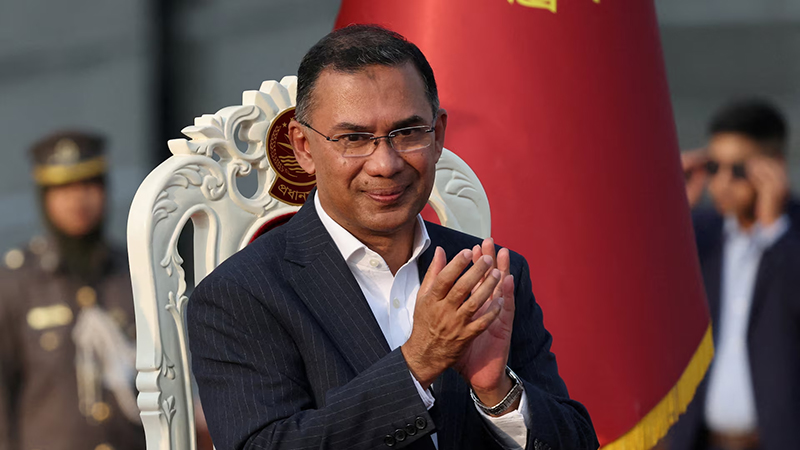
On 21 June 2026, four months after his Bangladesh Nationalist Party secured a commanding two-thirds parliamentary majority, Prime Minister Tarique Rahman embarked on his first major foreign tour. He began in Kuala Lumpur. Beijing followed within days, and the Chinese leg stretched across five days through Dalian and the capital. The itinerary bypassed New Delhi entirely, a fact that generated a volume of Indian commentary disproportionate to the tour’s declared commercial content, and the omission carried particular weight set against recent courtesies.
External Affairs Minister Dr. S. Jaishankar’s visited Dhaka in December 2025 to mourn Begum Khaleda Zia, and for the reopening, through the Colombo Security Conclave in November 2025, of a security channel dormant since Sheikh Hasina’s fall. This sequencing constitutes a deliberate statement of Bangladesh’s sovereign agency at a moment of profound domestic and regional transition. Rahman’s itinerary reflects a calibrated strategy of multi-alignment, the classic manoeuvre through which middle powers diversify their partnerships, attract capital, and preserve decisional autonomy amid great-power competition, and it carries strategic weight extending well beyond its symbolism.
Malaysia offered immediate gains in labour mobility, trade integration, technology cooperation, and Muslim-majority diplomacy; China supplied capital, infrastructure, industrial investment, and political engagement on a scale capable of reshaping Bangladesh’s long-term strategic environment; together the two visits reveal a government determined to expand its diplomatic options, diversify its economic partnerships, and advance the doctrine of “Bangladesh First” while sustaining constructive engagement with India in parallel.
Bangladesh enters this period amid its graduation from Least Developed Country status, mounting pressure to sustain export competitiveness, persistent energy and infrastructure requirements, and an increasingly plural domestic political landscape, and these structural realities favour diversification as the rational strategy for a trade-dependent state navigating an era of intensifying great-power competition.
This article examines the deeper logic behind Dhaka’s recalibration, tracing how civilisational memory, economic necessity, and strategic prudence together shape Bangladesh’s foreign policy under its new government. It gives full weight to Bangladesh’s own agency throughout.
It also assesses with equal seriousness the strategic implications of the instruments concluded in Beijing, including port infrastructure on the Bay of Bengal, a feasibility study on a river that irrigates Indian territory, and an unprecedented party-to-party protocol between Bangladesh’s ruling formation and the Chinese Communist Party, while examining the genuine incentives that India’s own conduct since August 2024 provided for Dhaka to diversify its external partnerships.
The relationship’s civilisational depth is beyond dispute. India’s contribution to Bangladesh’s birth in 1971, through training and equipping the Mukti Bahini, providing refuge to nearly ten million displaced people, and committing its own armed forces to the decisive fourteen-day war, remains without real equivalent in post-colonial state formation. The generations that followed inherited what constructivist scholarship describes as a thick collective identity: a shared Bengali patrimony, a common memory of anti-colonial struggle, and a syncretic, Sufi-inflected religious culture distinct from the more doctrinal traditions that emerged farther west.
Alexander Wendt’s insight that international structures rest as much on shared ideas as on material power finds a natural illustration here. Norms and historical memory, alongside strategic calculation, have long underpinned the resilience of India-Bangladesh relations.
The Bangladesh Nationalist Party, however, occupies a distinctive place within this historical inheritance. Ziaur Rahman’s visits to Beijing in 1977 and 1980, followed by seven further visits by his widow, Khaleda Zia, established a longstanding party tradition that evolved alongside, and at times in contrast to, the Awami League’s orientation towards India. Tarique Rahman’s invocation of this lineage during his Beijing banquet therefore drew upon four decades of accumulated institutional memory rather than representing a sudden departure in foreign policy.
Fifteen years of uninterrupted Awami League rule deepened Dhaka’s partnership with New Delhi to an extent that many independent Bangladeshi observers regarded as an excessive personalisation of an inter-state relationship around a single leader and one political party. The July Uprising of 2024, which brought Sheikh Hasina’s government to an end amid a crackdown that reportedly claimed around 1,400 lives, removed the principal institutional anchor on which India’s Bangladesh policy had rested for more than a decade.
New Delhi subsequently navigated an eighteen-month interim administration under Muhammad Yunus before the Bangladesh Nationalist Party’s decisive electoral victory in February 2026 presented India with a new, although understandably cautious, political interlocutor.
No honest account of Dhaka’s foreign policy can bypass the transformed domestic arithmetic constraining Rahman’s choices. Bangladesh Jamaat-e-Islami, banned and its leadership executed for 1971 war crimes under Hasina’s tribunal process, had its registration restored within weeks of her departure and confirmed by the Supreme Court in June 2025; in the February 2026 election a party that had never crossed twelve percent of the national vote captured nearly thirty, translating into sixty-eight seats outright and seventy-seven through alliance enough to make it, for the first time, the principal opposition.
Robert Putnam’s two-level game, in which a leader must simultaneously satisfy a domestic constituency and a foreign counterpart, supplies the apt lens: Rahman governs with a commanding majority, yet in the shadow of an Islamist opposition whose support is concentrated in India-bordering districts and whose momentum fed on ninety-seven documented attacks against Sufi shrines during the Yunus interregnum.
His Nayapaltan declaration that Bangladesh answers to “not Dilli, not Pindi” but to itself, formalised as the governing doctrine of “Bangladesh First,” reads as pre-emptive domestic positioning as much as an assertion of external independence — a doctrine that lets him signal sovereign self-respect to an electorate wary of India-centric governance while leaving him ample room for continued cooperation with New Delhi in practice. The electorate’s evident preference for the more centrist BNP over the more doctrinaire Jamaat-NCP alliance suggests real civil-society resistance to religious politics, a resistance that should temper alarmist projections even as it does not eliminate the case for vigilance.
Any interpretation reading Dhaka’s outreach chiefly through New Delhi’s anxieties misreads the country it claims to analyse. Bangladesh in 2026 confronts structural pressures that would drive diversification regardless of who governs in India. The most consequential is its scheduled graduation from Least Developed Country status, recommended by the UN Committee for Development Policy in 2021 and taking effect this year.
Ready-made garments account for more than eighty-five percent of merchandise exports, and over seventy percent of total exports currently benefit from LDC-specific preferences; the European Union, source of more than sixty percent of Bangladesh’s clothing earnings, extends its Everything But Arms preferences only until November 2029, after which exporters face standard tariffs of roughly nine to twelve percent unless Dhaka secures the more demanding GSP+ arrangement.
The WTO has estimated the potential loss at up to eight billion dollars annually, some fourteen percent of total exports, with the sharpest immediate impact falling on markets — India, Canada, Japan, Turkiye — that offer no LDC-linked cushion at all. Energy import dependence, a foreign-exchange squeeze that forces successive governments to ration reserves between fuel and debt service, a Chattogram Port requiring modernisation beyond domestic capital markets’ reach, a chronically underused Mongla, and a demographic profile adding roughly two million labour-market entrants each year together make industrial job creation not a policy preference but an existential requirement — precisely the pressure that fed the 2024 uprising in the first place.
Seen against this ledger, the pursuit of Chinese investment, Malaysian labour markets, and ASEAN access reads less as strategic drift than as the ordinary arithmetic of a trade-dependent economy approaching a cliff-edge in its preferential access, and any China policy — or India policy — that ignores this arithmetic will misjudge Dhaka’s motives from the outset.
Malaysia deserves treatment as more than a ceremonial prelude to Beijing, and its logic runs on at least four tracks. Labour and remittances remain foundational: Malaysia hosts roughly eight hundred thousand Bangladeshi workers, and the Putrajaya joint statement of 22 June devoted substantial text to reopening that market, with Prime Minister Anwar Ibrahim assuring eight thousand fresh work permits and both sides pledging recruitment that is transparent, fair, and affordable.
Trade and institutional integration form a second track: the two governments agreed to accelerate a bilateral Free Trade Agreement targeted for 2027, and Malaysia extended explicit backing for Bangladesh’s accession to the Regional Comprehensive Economic Partnership and to ASEAN Sectoral Dialogue Partner status — an ambition Dhaka had pursued unsuccessfully for over a decade, and one that would embed it within a regional architecture neither New Delhi’s Neighbourhood First framework nor Beijing’s bilateral Belt and Road engagement can replicate.
A third track opened cooperation in semiconductors, the digital economy, and artificial intelligence, sectors in which Malaysia has built genuine capacity over four decades and Bangladesh has essentially none, signalling an ambition to diversify beyond garments that the traditional “labour export” framing of this relationship obscures. A fourth track — halal economy cooperation, Islamic finance, and joint advocacy for Rohingya repatriation through the OIC — supplied a vocabulary of Muslim-majority fraternity calibrated for precisely the domestic constituency whose electoral weight the February election had just revealed.
Joseph Nye’s account of “smart power” as the deliberate blending of hard and soft instruments captures the sequencing well: Kuala Lumpur offered low-risk, high-visibility dividends across several fronts before the harder-edged engagement with Beijing that followed four days later.
Beijing’s outcomes belonged to a different order of magnitude. The joint communiqué elevated bilateral relations toward a “community with a shared future,” language China reserves for governments prepared to align closely with its normative preferences; Xi Jinping’s pledge of enduring friendship was matched by Rahman’s description of Chinese modernisation as “an example for Bangladesh to learn from” and his explicit reaffirmation of the one-China principle — formulations moving measurably beyond commercial diplomacy into normative alignment.
The instruments concluded, numbering between thirteen and seventeen, spanned the modernisation of Mongla Port, acceleration of the Chinese Economic and Industrial Zone at Anwara, cooperation on the Teesta Master Plan covering dredging and flood mitigation, zero-tariff treatment across the entirety of Bangladesh’s tariff lines, an estimated 9.21 billion dollars in investment proposals from a dozen Chinese enterprises, and roughly 300 million dollars in grant assistance.
One instrument deserves particular emphasis: a memorandum concluded not between the two governments but between the ruling BNP and the Communist Party of China, an inter-party channel without precedent in Bangladesh’s relations with India. China’s Water Resources Minister’s presence among the delegation, and Beijing’s public insistence that river-management cooperation with Dhaka proceed “free from third-party influence,” signal an intention to insert itself into a hydrological relationship India and Bangladesh have historically negotiated bilaterally, at the precise moment the wider Ganges basin regime approaches renegotiation ahead of the existing treaty’s December 2026 expiry.
A critique of Chinese engagement that cannot explain why developing states keep choosing Beijing will persuade no one who has actually managed a finance ministry. Chinese state banks and conglomerates move from framework agreement to groundbreaking far faster than multilateral lenders whose safeguards, however justified, add years a government facing an employment crisis cannot always spare; Chinese financing generally arrives with fewer explicit political conditionalities than IMF or World Bank lending; China’s manufacturing and construction ecosystem operates at a scale no single competitor matches, mobilising equipment and skilled labour at a pace fragmented Western consortia rarely replicate; and Chinese firms increasingly bundle technology transfer and export integration into financing packages, offering vertical integration that plays directly to Dhaka’s ambition of diversifying beyond garments.
None of this is cost-free — speed and low conditionality correlate closely with weaker environmental and labour safeguards — but any credible critique must reckon honestly with why this capital is chosen before condemning the terms on which it arrives. India and its Western partners will not out-compete Beijing by lamenting these efficiencies; they will do so, if at all, only by matching its speed of disbursement while retaining the governance safeguards that distinguish durable development from short-term political relief.
Three interpretive schools have emerged around Rahman’s tour, and a rigorous analysis owes an explicit judgment among them. One reads the visits as a strategic pivot — a considered civilisational and geopolitical realignment away from India, evidenced by the normative depth of the Beijing communiqué and the BNP-CPC protocol. A second reads them as pure pragmatism — a cash-strapped government courting whichever capital offers the fastest financing, with no durable realignment implied, noting that Dhaka has long pursued Chinese, Indian, Japanese, and multilateral financing simultaneously.
The interpretation this analysis finds best supported is strategic hedging: a deliberate diversification that neither commits Dhaka irreversibly to Beijing nor treats the China relationship as merely transactional, using the credible possibility of deeper Chinese engagement to extract better terms and greater attention from India and other partners alike. Hedging explains what the other schools cannot hold together — why Rahman’s government pursued renewed security dialogue with India through the Colombo Security Conclave in the very window it deepened ties with Beijing, and why it sought RCEP and ASEAN access through Malaysia rather than relying on China alone.
Kai He’s institutional-balancing framework and Evelyn Goh’s account of Southeast Asian hedging both anticipate precisely this pattern of under-commitment to any single great power while extracting maximum benefit from the competition among them.
China’s Belt and Road Initiative remains the subject of a decade-long debate over whether its financing constitutes developmental partnership or predatory statecraft, and the honest answer is neither uniformly nor exclusively either. Brahma Chellaney’s 2017 coinage of “debt-trap diplomacy,” drawn from Sri Lanka’s ninety-nine-year lease of Hambantota Port after Colombo’s default, remains the most cited framework, even as subsequent research from AidData and from IMF and World Bank analysts shows debt distress typically results from a confluence of weak governance, opaque contracting, and adverse external shocks rather than a uniform Chinese design.
The Initiative is better understood as economic statecraft, pursuing commercial return, market access, and long-horizon strategic positioning simultaneously, in a mix that varies by recipient. Bangladesh’s own bilateral debt to China stood near 6.2 billion dollars before the June 2026 visit, a manageable sum poised to grow substantially as the newly pledged 9.21 billion dollars moves from memorandum to disbursement; the determining variable for Bangladesh’s sovereignty will be the transparency of contracting terms and Dhaka’s negotiating leverage as projects mature, precisely what separated earlier recipients who benefited developmentally from those who slid into distress.
China’s cultivated image of solidarity with the Muslim-majority world sits uneasily against its documented conduct toward its own Muslim population. Xi Jinping’s 2016 policy of “Sinicisation of religion” underwrote a campaign the United States determined in 2021 to constitute genocide and the UN Human Rights Office concluded in 2022 may amount to crimes against humanity; detention peaked at over one million Uyghur and other Turkic Muslims between 2017 and roughly 2021, with independent researchers still placing hundreds of thousands in prisons or extrajudicial detention, mosque demolition documented at scale, and congregational Eid prayer banned across substantial areas in 2023.
Beijing’s own account describes voluntary vocational centres aimed at counter-extremism and denies systematic coercion, but the region’s closed, securitised character prevents independent verification, obliging the disinterested observer to weight the CFR, UN, and ASPI evidence base considerably more heavily than Beijing’s uncorroborated assurances. A government engaged in the sustained suppression of Islamic practice at home projects toward Bangladesh’s electorate an image of civilisational partnership its own record renders difficult to sustain, a contradiction Bangladeshi political actors invoking Ummah fraternity with Beijing would do well to confront candidly.
Bangladesh’s diversification gains sharper meaning set beside comparable episodes elsewhere in South Asia. Sri Lanka’s Hambantota remains the reference case for debt-driven strategic loss, even if subsequent scholarship complicates any simple debt-trap reading. The Maldives supplies the more instructive recent parallel: President Muizzu campaigned on an explicit “India Out” platform and made Beijing his first destination in January 2024, yet when a genuine fiscal crisis arrived Chinese support proved conspicuously slow while India extended a 400 million dollar currency swap and, after Modi’s 2025 visit, a further 565 million dollar credit line — after which Muizzu himself called India “one of the closest allies.”
Nepal offers a third variant: it joined the Belt and Road in 2017 with thirty-five listed projects, a number that fell to nine within two years and to essentially zero completions by 2024, prompting Nepali civil society to warn against “another Hambantota.” The consistent lesson is that Chinese capital arrives quickly and yields genuine short-term political dividends, but rarely proves as reliable in crisis as India’s slower, more consultative engagement — a lesson Bangladesh, with a considerably larger economy than Malé or Kathmandu, is better placed to absorb without repeating, provided it insists on the same discipline those cases eventually forced upon their own governments.
Strategic competition in Bangladesh will be decided as much at sea and in the digital domain as along any land frontier. Port modernisation at Mongla and industrial development at Anwara sit along a maritime corridor central to India’s own naval posture and to the Indo-Pacific architecture New Delhi has cultivated through the Quad, its Security and Growth for All in the Region doctrine, and BIMSTEC; the cumulative pattern across Hambantota, Gwadar, Kyaukpyu, and now potentially Mongla discloses a recognisable logic of maritime access-building that Indian naval planners must monitor without succumbing to the encirclement rhetoric that followed the June 2026 visit in parts of the Indian press.
A second, less examined front runs through digital infrastructure: both Malaysia and China offered cooperation in semiconductors, AI, and the digital economy in areas where Bangladesh has essentially no domestic capacity, and whichever partner embeds itself first will shape the country’s technology standards and data-governance norms for a generation.
Huawei-linked telecommunications infrastructure already commands a substantial South Asian footprint bundled with financing that Indian and Western competitors have been slower to match; India’s own digital-public-infrastructure model, exported with some success to Sri Lanka and the Philippines, offers Bangladesh an alternative pathway aligned with democratic data-governance norms, provided New Delhi packages it with comparable speed and commercial aggressiveness.
Scholarly candour requires an unflinching audit of India’s own conduct, since a foreign-policy establishment unwilling to examine its contribution to a neighbour’s diversification forfeits the credibility to prescribe correction. New Delhi allowed a domestic political veto — West Bengal’s sustained opposition, which blocked an interim Teesta accord as far back as 2011 — to override the strategic imperative of resolution, furnishing Beijing precisely the opening it exploited in June 2026; India’s federal structure genuinely constrains such agreements, but that explains the difficulty without excusing fifteen years of stalemate.
Visa policy tightened substantially after 2024, imposing hardship on ordinary Bangladeshi citizens and eroding the people-to-people goodwill on which this relationship’s constructivist ballast depends, with the partial easing announced in April 2026 arriving later than the strategic moment required. Fifteen years of engagement concentrated around Sheikh Hasina and the Awami League left New Delhi without an established channel to the opposition formations that eventually inherited power, an overinvestment in a single node of a more plural political system; and India’s strategic communication toward the Bangladeshi public, as distinct from the Bangladeshi state, remained underdeveloped, ceding narrative space to actors prepared to frame the relationship as dependency rather than partnership.
An honest ledger records more than failure, however. India’s contribution to Bangladesh’s development across five decades has no equivalent among Dhaka’s newer partners: credit lines exceeding eight billion dollars, cross-border power exports supplying a material share of the national grid, diesel and fertiliser delivered through the Bangladesh-India Friendship Pipeline, and a security channel reopened through the Colombo Security Conclave even through post-2024 strain.
Modi’s swift congratulatory message to the BNP after its February 2026 victory and Jaishankar’s personal gesture at Khaleda Zia’s funeral indicate an establishment attempting, with genuine if imperfect effort, to rebuild trust with a party that had spent much of the preceding decade in adversarial relation to India. Geography guarantees an interdependence no external capital can supersede, and India’s own Northeast deserves reconception here as an economic gateway rather than merely a security liability.
Bangladesh’s transit corridors and riverine network run through Indian territory that, properly developed, could position the Northeast as a regional trade hub rather than a frontier defined chiefly by the vulnerabilities of the Siliguri Corridor — that narrow strip, scarcely twenty kilometres wide at its most constricted point, linking the Indian mainland to its northeastern states, where Chinese-linked infrastructure to the south does not yet constitute a kinetic threat but where commercial logistics assets are known to accrue strategic utility gradually and irreversibly over time.
The corrective agenda follows from a single premise: India’s advantages of geography, history, and cultural affinity remain formidable, but formidable advantages atrophy when policy fails to convert them into delivered outcomes. A resolution of the Teesta dispute, through a modernised interim formula that finally delivers the certainty Dhaka has sought since 2011 while accommodating West Bengal’s legitimate concerns, would remove at a stroke the grievance Beijing has most consequentially exploited; complementary progress on the wider Ganges basin renegotiation ahead of December 2026 would signal that India intends to lead on water diplomacy rather than concede the field.
A sustained visa-facilitation regime, competitive and rapidly disbursing Indian financing matched in speed against realistic Chinese benchmarks, deliberate cultivation of relationships across Bangladesh’s plural political landscape beyond the channel the Awami League once monopolised, and a revitalised BIMSTEC integrating maritime security, energy, and digital-infrastructure cooperation would together supply an institutional counterweight to Beijing’s bilateral pull while reframing India’s Northeast as connective infrastructure rather than a frontier to be defended. Quiet, professionally conducted communication of India’s core concerns regarding infrastructure proximate to the Siliguri Corridor — through established channels rather than public alarm — would preserve strategic red lines without inviting the nationalist backlash that public remonstration reliably generates in Dhaka.
Bangladesh, for its part, retains every incentive to insist on transparency in its Chinese contracting, diversify its creditor base, and recognise that long-term prosperity depends on stable relationships with both principal partners rather than zero-sum framing; China can supply capital and speed that India currently struggles to match, but it cannot supply the historical solidarity, riverine interdependence, or land connectivity that geography has permanently bound to India.
Tarique Rahman’s decision to visit Kuala Lumpur and Beijing before New Delhi discloses a government exercising the ordinary sovereign prerogative of a trade-dependent state hedging between larger powers under genuine economic pressure and a transformed domestic landscape in which religious conservatism commands unprecedented electoral weight.
The substance concluded in Beijing carries strategic implications India cannot responsibly minimise, even as the comparative experience of Sri Lanka, the Maldives, and Nepal counsels against assuming that Chinese engagement automatically translates into strategic capture. China’s cultivation of civilisational partnership with the Muslim-majority world, set against its documented suppression of Islamic practice at home, exposes a contradiction Bangladeshi political actors would do well to confront, while India’s own record since August 2024 disclosed genuine failures of water diplomacy, visa policy, and political outreach that created space for exactly the diversification New Delhi now regards with concern.
None of this alters the structural fact that geography assigns India and Bangladesh: an eternal proximity, a shared river system, a historical debt inscribed in the very act of national creation, and an economic interdependence no volume of external capital can supersede. India cannot relocate its subcontinental geography, and Bangladesh cannot escape it either; the durable task before both capitals is the patient work of converting that permanent proximity into a partnership that delivers, consistently and credibly, more for Bangladesh’s citizens than any alternative currently on offer.
Views: 1287

Dr. Maheep
Dr. Maheep is Director, Indian Perspective on Global Affairs (IPGA), and a leading analyst of India’s foreign policy and South Asian geopolitics. He earned his PhD in Arab and Islamic Studies. With more than a decade of teaching and research experience in International Relations and Global Politics, he contributes regularly on issues shaping national and global affairs.