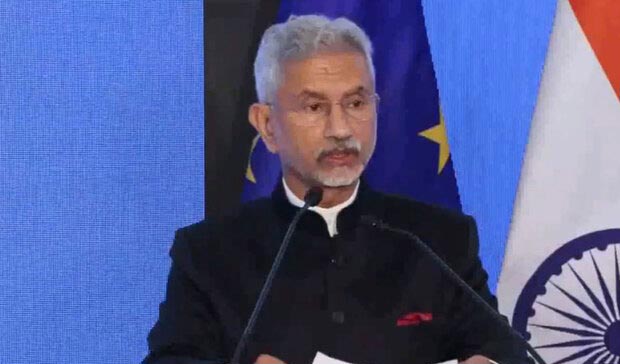







NEW DELHI: On February 18, 2026, the European Union and India jointly inaugurated the European Legal Gateway Office (LGO) amid the diplomatic corridors of New Delhi. The launch was attended by India’s External Affairs Minister Dr. S. Jaishankar and EU Executive Vice-President Henna Virkkunen. It reflected the maturation of an Indo-European partnership increasingly centered on strategic convergence, regulatory trust, and shared economic futures.
The LGO represents a carefully designed bridge between India’s youthful demographic strength and Europe’s innovation-driven economies confronting demographic contraction. It connects skills with structured opportunity, labor mobility with institutional predictability, and professional advancement with national development. As Dr. Jaishankar eloquently stated during the launch, “The European Legal Gateway Office is not just a facilitation for entry into Europe. It is a bridge between our societies, an expression of our trust, and an investment in a shared global workforce that is skilled, mobile, and resilient.”
Its emergence follows closely on the formal conclusion of the India–EU Free Trade Agreement on January 27, 2026—a landmark accord described by both Prime Minister Narendra Modi and European Commission President Ursula von der Leyen as the “mother of all deals” for its scale, depth, and transformative reach. Modi remarked, “People around the world are calling this the mother of all deals. This agreement will bring major opportunities for the 1.4 billion people of India and the millions of people in Europe.” Within this new trade architecture, the LGO functions as the human capital backbone of economic integration, embedding talent flows within expanding market access for goods and services, harmonized regulatory regimes, and innovation ecosystems that extend far beyond traditional trade liberalization. In a global environment marked by supply-chain realignment, technological disruption, and demographic divergence, the office institutionalizes a model of collaborative globalization rooted in transparency, responsibility, and reciprocal empowerment.
Historical Evolution: From Diplomatic Dialogues to Operational Realities
The genesis of the LGO lies in the steady evolution of Indo-EU engagement from political dialogue toward structural partnership. The 2004 Strategic Partnership Agreement established normative alignment, while the 2016 Joint Declaration on Migration and Mobility recognized the need for legal, skill-oriented pathways in an era of rising irregular migration pressures.
Momentum accelerated after the revival of FTA negotiations in 2022, following nearly a decade of regulatory divergence and tariff disputes. The creation of the EU-India Trade and Technology Council in 2023 further elevated mobility into the strategic core of digital cooperation, industrial resilience, and technological governance, synchronizing closely with India’s Digital India and Skill India initiatives.
The formal announcement of the LGO at the 16th India-EU Summit in January 2026—under the Joint Comprehensive Strategic Agenda and the EU’s Union of Skills framework—signaled Europe’s recognition of India as a long-term solution to its labor shortages and innovation demands. With over 65 percent of India’s population below the age of 35 and Europe’s working-age population projected to contract steadily, mobility ceased to be a peripheral social issue and emerged as a central economic variable. Dr. Jaishankar reflected on this shift: “We are living through a period of profound transformation in the global economy. De-risking is a growing priority. Supply chains are being reconfigured. Technology is reshaping work. Demographics are diverging sharply across geographies. The concept of a global workforce is an emerging reality.”
This evolution represents a structural transition from aid-linked engagement to equal partnership, from workforce export to global talent leadership, and from peripheral economic player to strategic anchor in Europe’s long-term competitiveness. As Modi contrasted in a broader reflection on India’s international strides: “Today, ‘deals’ mean the India–US trade deal and the India–EU trade deal. But there was a time when ‘deals’ meant scams like Bofors.”
Aims and Objectives: Institutionalizing Predictable Mobility
The LGO operates as a centralized interface providing authoritative guidance on visa procedures, qualification recognition, sector-specific skill demand, labor standards, and employment frameworks across EU member states. Beginning with the ICT sector, it is designed for progressive expansion into healthcare, green technologies, engineering, advanced manufacturing, research, and education.
Its core philosophy rests on transforming mobility into a regulated, transparent, and development-oriented process. By reducing informational asymmetries, combating visa fraud, harmonizing professional standards, and encouraging circular migration, the office seeks to ensure that movement of people strengthens both host and home economies. Jaishankar articulated this vision: “We believe in mobility with a purpose—mobility that is legal and regular, mobility that empowers individuals, strengthens partner economies, and contributes to development at home.”
The benefits extend beyond overseas employment. Enhanced global exposure accelerates skill formation, drives innovation diffusion, strengthens remittance-led financial resilience (with inflows reaching $135 billion in FY25), and deepens diaspora protection mechanisms. For Europe, structured mobility ensures labor inflows that are skilled, legally regulated, socially protected, and economically productive. This aligns with Modi’s emphasis on ethical global integration: “AI should not remain limited to a few nations or companies but should benefit everyone, especially developing countries”—a principle extensible to talent mobility as a tool for inclusive progress.
Strategic Significance: Human Capital as Geoeconomic Power
The deeper significance of the LGO lies in its elevation of talent as a strategic resource within contemporary economic diplomacy. It validates India’s emergence as a central contributor to global knowledge networks while reinforcing Europe’s capacity to remain technologically competitive amid demographic decline.
By replacing historically asymmetric labor flows with partnership-based human capital integration, the initiative reconfigures North-South mobility relations into a model of mutual strategic value. It also enhances geopolitical leverage, positioning the partnership as a bulwark for strategic autonomy in a multipolar, fractured world order.
This convergence is reinforced by parallel technological cooperation witnessed during the India AI Impact Summit 2026, where leaders such as French President Emmanuel Macron, Swedish Deputy Prime Minister Ebba Busch, and Spanish President Pedro Sanchez highlighted India’s digital public infrastructure, inclusive technology governance, and ethical innovation frameworks. Macron praised: “India built something that no other country in the world has built… A digital identity for 1.4 billion people. A payment system that now processes 20 billion transactions every month,” advocating for “sovereign and responsible AI.” Busch noted: “It’s not a coincidence that India is now chairing and hosting this global AI summit for the first time in the Global South,” while Sanchez added: “The AI Impact Summit could emerge as a turning point in shaping a global framework for AI.” Their engagement underscored strategic confidence in collaborative endeavors that foster a bright future through shared innovation and resilience.
Sectoral Impacts: From Digital Innovation to Green Transformation
The ICT sector stands as the immediate beneficiary, addressing Europe’s extensive digital skill shortages—estimated at over 800,000 vacancies—while enabling professionals to integrate into advanced research and innovation ecosystems, potentially mobilizing 100,000+ annually. Education and research collaborations expand through greater academic mobility, joint innovation programs, and cross-border institutional partnerships that enhance knowledge production, empowering students who already form the largest cohort in EU higher education.
Healthcare and life sciences gain through exchanges in geriatric care, biotechnology, telemedicine, and pharmaceutical research—areas of growing demand and expertise. Equally significant is the prospective impact on green technologies: as Europe accelerates decarbonization and India scales renewable innovation, structured mobility will support climate engineering, electric mobility, sustainable infrastructure, and clean-energy research.
Beyond sectoral effects, mobility networks stimulate trade volumes (projected to rise from $120-136 billion to $200 billion by 2030), foreign direct investment, startup ecosystems, and remittance-driven economic stability, embedding people as dynamic drivers of Indo-EU economic integration. Jaishankar observed: “By doing so, it reduces uncertainty and enhances confidence, particularly among young Indians seeking to engage Europe’s diverse education and innovation ecosystems.”
Transformative Potential: Embedding Mobility within the FTA Architecture
What renders the LGO genuinely transformative is its integration into the operational logic of the India-EU Free Trade Agreement. By addressing non-tariff barriers such as professional accreditation, regulatory fragmentation, and labor mobility restrictions, it completes the economic architecture of the FTA.
Trade liberalization gains durability when supported by mobile skills, innovation exchange, and institutional trust. Talent circulation strengthens resilient supply chains, expands services exports, accelerates technology transfer, and enhances productivity across sectors. Mobility thus becomes not a peripheral adjunct to trade but a central infrastructure of twenty-first-century economic diplomacy. Busch reinforced this at the summit: “It’s about building value-based relations that can last for generations.”
The Human Core of the “Mother of All Deals”
The India-EU FTA encompasses market access, sustainability commitments, digital governance, investment protection, and regulatory cooperation. The LGO ensures that its dividends extend beyond corporate balance sheets to individuals, professionals, students, innovators, and societies.
By institutionalizing workforce integration, the agreement evolves from a commercial treaty into a comprehensive partnership of shared prosperity, embedding trust and long-term interdependence into the economic relationship. Jaishankar highlighted: “The adoption of the ‘Towards 2030: a Joint India–European Union Comprehensive Strategic Agenda’ at the Summit really opens up a new chapter in our ties—a chapter towards mutual prosperity, security, and sustainability, and in that, we recognize the key role of talent, skills, and knowledge.”
Critical Reflections and Strategic Safeguards
Despite its visionary scope, the LGO faces structural challenges. Bureaucratic coordination across diverse EU jurisdictions, domestic political sensitivities surrounding migration, risks of sectoral concentration, and potential brain drain require sustained policy calibration.
Long-term success will depend on ensuring social-security portability, labor-rights protection, expansion across sectors, and institutionalized circular mobility that converts outward movement into national capability enhancement. Strategic vigilance is equally necessary to preserve autonomy as global geopolitical alignments evolve. Dr. Jaishankar underscored this philosophical alignment at the AI Summit: “Our core philosophy is encapsulated in ‘AI for All’ that is grounded in ethical, human-centric advancement, and driven by the principle of ‘Sabka Saath, Sabka Vikas’—‘Together with all, development for all’.” Macron complemented: “An AI future that advances innovation, strengthens inclusion, and moves forward by incorporating human values.”
Conclusion
The European Legal Gateway Office represents one of the most sophisticated mobility frameworks of the contemporary era. It fuses trade liberalization with demographic complementarity, innovation ecosystems with regulatory trust, and national development with global cooperation.
It offers a sustainable response to demographic decline and innovation competition while paving the way for collaborative endeavors that emphasize a bright future. For the wider international system, it presents a replicable model of ethical, structured, and mutually beneficial global mobility in a multipolar, fractured world order.
In a world increasingly fragmented by protectionism and geopolitical rivalry, the LGO stands as a compelling vision of strategic interdependence—one where partnership replaces isolation, integration supersedes exclusion, and human capital becomes the bridge between continents. As Dr. Jaishankar concluded: “India’s recent international engagements reflect a consistent belief that global challenges require connected societies and cooperative solutions. Talent mobility, when responsibly promoted, is part of that solution.” The AI Summit’s values of welfare for all, happiness for all, under People, Planet, and Progress—championed by leaders like Macron, Busch, and Sanchez—further illuminate this shared horizon, where ethical innovation and inclusive mobility propel a resilient global future.
Views: 1170

Dr. Maheep
Dr. Maheep is Director, Indian Perspective on Global Affairs (IPGA), and a leading analyst of India’s foreign policy and South Asian geopolitics. He earned his PhD in Arab and Islamic Studies. With more than a decade of teaching and research experience in International Relations and Global Politics, he contributes regularly on issues shaping national and global affairs.