


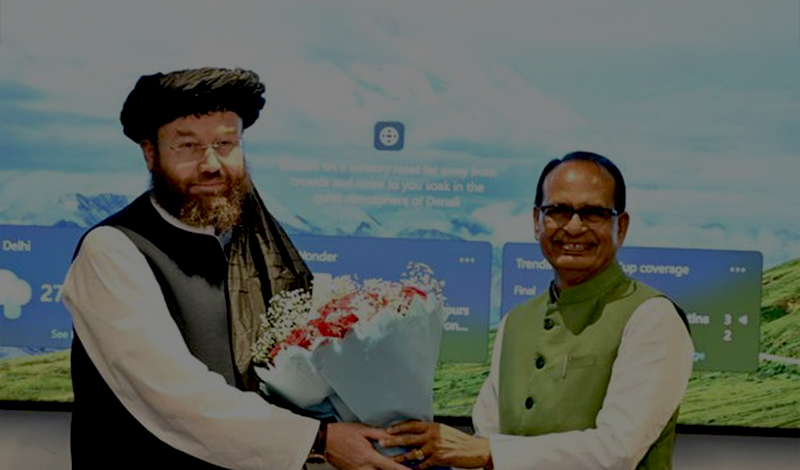







Seeds, Sovereignty and Statecraft: Agricultural Diplomacy and the Burgeoning India – Afghanistan Partnership
Diplomatic history reserves its deepest transformations for moments that arrive quietly. The official visit of H.E. Mawlawi Ataullah Omari, Minister of Agriculture, Irrigation and Livestock of the Islamic Emirate of Afghanistan, to India from 7 to 12 July 2026 belongs precisely to this category of consequential understatement. On the surface, a six-day ministerial engagement devoted to seeds, irrigation, livestock and agri-trade appears technical, even prosaic. Beneath that surface, the visit crystallises one of the most sophisticated experiments in contemporary statecraft: the deliberate conversion of agricultural cooperation into an instrument of regional stability, humanitarian purpose, national security and strategic influence. This article reads the Omari visit through the analytical lens of what may be termed **agricultural diplomacy as developmental statecraft** — the proposition, developed and sustained across every section that follows, that in post-conflict and climate-stressed geographies, the state that shares seeds, water technology and agronomic knowledge accumulates a form of power more durable, more legitimate and more transformative than any coercive instrument known to classical realism. Kautilya’s *Arthashastra* grasped this truth two millennia ago in its insistence that the prosperity of the countryside constitutes the true treasury of the state; Joseph Nye’s *Soft Power: The Means to Success in World Politics* restated it for the modern age by locating influence in attraction and co-optation. The Omari visit fuses both insights into practice.
Three decades of sustained scholarly immersion in South Asian and Central Asian affairs teach a cardinal lesson: the India–Afghanistan relationship has always been decided in fields, orchards and river valleys as much as in chancelleries. Afghanistan is an agrarian civilisation in which roughly eighty per cent of the population depends on agriculture and livestock for survival; India is the world’s most consequential agricultural transformation story, a nation that moved within one generation from ship-to-mouth dependence to becoming a granary and knowledge-hub for the Global South. When these two realities met in New Delhi in July 2026 — the fourth ministerial-level Afghan visit since October 2025 — they produced far more than a memorandum of goodwill. They produced a template for how a rising power rebuilds a war-scarred neighbour through the patient grammar of development, and how a sovereignty-conscious Kabul diversifies its partnerships on its own terms.
The Civilisational Continuum: From the Silk Route to the Salma Dam
The intellectual honesty of any analysis of India–Afghanistan relations begins with the recognition of extraordinary historical depth. The Hindu Kush corridor served for two millennia as the great artery of the Silk Route, along which Gandharan art, Buddhist philosophy, Sanskrit learning, dried fruits, horses, indigo and grain moved in both directions. Balkh and Kabul functioned as entrepôts of a shared economic world; the pomegranates of Kandahar and the grapes of the Shomali plain travelled to Indian courts as tokens of an organic, pre-Westphalian intimacy. Rabindranath Tagore’s *Kabuliwala* immortalised this bond in literature, giving the Afghan trader a permanent, affectionate place in the Indian imagination. Minister Omari’s own words at PHDCCI — “It feels as if I am among my own people… our DNA is one,” and his observation that India feels like anything except an *ajnabi* (stranger’s) land — belong to this civilisational register. His remarks constitute lived testimony to what constructivist international relations theory calls collective identity: the sense that shared history generates shared destiny, and that diplomacy between such peoples is fundamentally an act of recovery.
Modern statecraft has honoured this inheritance with remarkable consistency. The 1950 Treaty of Friendship, India’s steadfast support for Afghan development through the monarchical, republican and post-2001 eras, and the transformation of New Delhi into the largest regional donor to Afghan reconstruction all express a single strategic conviction: a stable, sovereign, prosperous Afghanistan anchors the peace of the entire arc from the Himalayas to Central Asia. As Dr. Maheep observes in *The European Times*, “India’s role in Afghanistan has never been transactional, it is civilisational and developmental” — a formulation this article adopts as both empirical description and theoretical premise.
Building Trust through Development: India’s Enduring Commitment in Afghanistan
The material record of India’s engagement supplies the empirical foundation upon which the Omari visit was able to build. Over the past quarter-century, India has invested more than US $3 billion across upwards of five hundred development projects spanning every one of Afghanistan’s thirty-four provinces — a portfolio of gifts and partnerships unmatched by any regional power in its breadth, its visibility and its emotional resonance among ordinary Afghans. The Salma Dam in Herat, formally the India–Afghanistan Friendship Dam, irrigates tens of thousands of hectares and generates power for a historically water-stressed region — a monument to the proposition that irrigation itself is diplomacy. The 218-kilometre Zaranj–Delaram Highway stitched Afghanistan’s ring road to the Iranian border and, through it, to the Chabahar Port, giving a landlocked nation sovereign access to the sea. The Afghan Parliament building in Kabul, inaugurated in 2015, gifted the physical architecture of deliberative governance. The Indira Gandhi Institute of Child Health has treated generations of Afghan children; the restoration of the Stor Palace revived a jewel of Kabul’s diplomatic quarter; the Pul-e-Khumri transmission line brought electricity to the capital; hundreds of small development projects delivered schools, clinics, wells and cold-storage facilities directly into Afghan communities.
Equally consequential has been the human infrastructure. Some 1,000 scholarships annually under the Indian Council for Cultural Relations, thousands of Afghan officers, doctors, agronomists and administrators trained under the Indian Technical and Economic Cooperation programme, and the e-Vidya Bharati and e-Arogya Bharati tele-education and tele-medicine network — which has enabled Afghan students, including young women, to pursue Indian university degrees remotely — together constitute what Amartya Sen’s *Development as Freedom* would recognise as capability-building on a national scale. Education here functions as the most patient and most powerful form of soft-power diplomacy: every Afghan graduate of an Indian institution becomes a lifelong ambassador of the relationship, and every digital classroom extends India’s pedagogical presence across geography and political circumstance alike. Even after the political transition of August 2021, India sustained this humanitarian architecture, dispatching some 50,000 tonnes of wheat, over 300 tonnes of medicines and vaccines, winter clothing and earthquake relief — assistance delivered, as Chatham House and Carnegie analysts have noted, to the Afghan people directly and in continuity with a legacy of principled generosity.
From Muttaqi to Omari: The Momentum of Re-engagement
The Omari visit acquires its full meaning within the diplomatic sequence inaugurated by Foreign Minister Amir Khan Muttaqi’s landmark journey to New Delhi on 9–12 October 2025 — the first high-level engagement between the Islamic Emirate and India, and the moment, as Dr. Maheep argued in “Muttaqi visits Delhi, increases India–IEA engagement” (*The European Times*, October 2025), when both capitals decided that “dialogue, not distance, will define the next phase of their relationship.” That visit produced the India–Afghanistan Joint Statement of 10 October 2025, the upgradation of India’s technical mission in Kabul to a full-fledged embassy, reaffirmed counter-terrorism assurances that “the territory of Afghanistan shall not be used against any other country,” and Muttaqi’s memorable description of India as “a close friend in rebuilding our nation.” Dr. Maheep’s assessment proved prescient: he read the visit as “an ice-break… a move from estrangement to constructive engagement, balancing India’s principled realism with Afghanistan’s search for regional legitimacy.”
His companion analysis, “Hydro-politics on the Kunar: India–Afghanistan cooperation tests Pakistan’s nerve” (*The European Times*, November 2025), extended the argument into the domain of water sovereignty, contending that India’s readiness to assist Kabul in harnessing the Kunar River introduces “a fresh grammar of statecraft rooted… in cooperative development and sovereign agency,” transforming Afghan water “from a naturally flowing asset for Pakistan into a strategically governed resource.” The essay’s central insight — that hydro-politics is fast becoming the new currency of power in South Asia — supplies the theoretical hinge between the Muttaqi and Omari visits: irrigation, watershed development and river-basin management are simultaneously agronomic necessities and instruments of sovereignty. The Omari delegation’s intensive focus on micro-irrigation, water harvesting, farm ponds and check dams thus continues, at the ministerial-technical level, the sovereign-agency logic that the Kunar conversation opened at the strategic level. Four ministerial visits within nine months — an extraordinary cadence by any diplomatic standard — confirm that both capitals have institutionalised momentum into method.
Minister Omari’s Visit: Institutions, Offers and the Grammar of Partnership
The July 2026 programme reads as a masterclass in whole-of-government and whole-of-society diplomacy. Minister Omari’s bilateral engagement with Union Agriculture Minister Shivraj Singh Chouhan produced the visit’s substantive core: India’s offer of high-quality wheat, maize and potato seeds; climate-resilient and biofortified crop varieties; irrigation expertise spanning micro-irrigation, watershed development and water harvesting; joint research, exchange and training programmes through the Indian Council of Agricultural Research (ICAR); and agreement in principle on a Joint Working Group to convert episodic goodwill into a standing institutional roadmap. Chouhan’s public affirmation that India would extend advanced seeds, agricultural technology and scientific expertise “for Afghanistan’s food security and farmer prosperity,” framed explicitly within civilisational ties and Prime Minister Narendra Modi’s neighbourhood vision, elevated a technical dossier into a statement of strategic intent.
The delegation’s meeting with Food Processing Industries Minister Chirag Paswan addressed value addition, cold chains, processing infrastructure and capacity building — the levers that transform Afghan farm produce into tradeable wealth. Discussions with Minister of State Pabitra Margherita broadened the canvas to production capacity, joint markets and technical expertise. The engagement with the Chairman of NABARD introduced Afghan planners to the world’s most sophisticated architecture of rural credit and agrarian institution-building. Visits to ICAR institutions, including the Indian Agricultural Research Institute — the crucible of India’s Green Revolution — and interactions with international research bodies headquartered or active in India (CIMMYT, ICRISAT, the International Potato Center and IFDC) plugged Afghanistan directly into the global agricultural science commons. The FICCI and PHDCCI business sessions completed the design by mobilising Indian private capital: Omari’s explicit invitation for Indian investment in agri-processing, organic fertilisers, renewables and rural infrastructure, echoed by Chargé d’Affaires Mufti Noor Ahmad Noor’s assurance of a secure investment environment, signalled Kabul’s determination to pair state-to-state cooperation with market-to-market integration. The prospective expansion of trade in Afghan saffron, pistachios, raisins and dried fruits — commodities that once travelled the Silk Route and today move by air corridor and Chabahar — closes the circle between civilisational memory and contemporary commerce.
Every element of this architecture rewards interpretation. Quality seeds matter because seed sovereignty is food sovereignty: certified, climate-adapted germplasm raises yields within a single season and liberates farmers from dependence on degraded or smuggled seed stock. Biofortified varieties matter because they attack hidden hunger — micronutrient deficiency — at the level of the crop itself, embedding public health inside agronomy. ICAR matters because it institutionalises knowledge transfer, converting one-off assistance into generational capability. NABARD matters because credit architecture determines whether technological gains reach smallholders or evaporate at the village boundary. Watershed development matters because in an arid, mountainous country every captured raindrop is a unit of resilience and every check dam a quiet act of climate adaptation. Food processing matters because it restructures political economy: value retained in rural Afghanistan becomes employment, and employment becomes the most effective counter-narcotics and counter-extremism policy ever devised. Capacity building matters most of all, because trained Afghan agronomists constitute influence that endures across every conceivable political future.
India as Knowledge-Broker: The Global Learning Behind the Giving
A dimension of profound theoretical interest distinguishes India’s agricultural diplomacy from classical donor–recipient models: India offers Afghanistan the distilled fruits of its own global learning, positioning itself as the great knowledge-broker of the Global South. India’s Green Revolution was itself an exercise in international scientific partnership — Norman Borlaug’s Mexican wheat varieties, adapted by M.S. Swaminathan and Indian scientists at IARI, converted looming famine into surplus within a decade, a story chronicled in the annals of *World Development* and celebrated by the FAO as the twentieth century’s greatest victory over hunger. In subsequent decades India absorbed Israeli mastery of precision agriculture: the network of Indo-Israel Centres of Excellence established under bilateral agricultural work plans brought drip irrigation, fertigation, protected cultivation and post-harvest science from the Negev to Indian states, demonstrating how a water-scarce nation can make the desert bloom. Collaboration with Australia through the Australian Centre for International Agricultural Research advanced Indian expertise in dryland farming, pulse improvement and water-use efficiency — precisely the agro-climatic portfolio most relevant to Afghanistan’s rain-fed provinces. American land-grant institutional models shaped India’s agricultural university system, while Scandinavian partnerships — from Norway’s stewardship of the Svalbard Global Seed Vault, where Indian and world germplasm is conserved, to Nordic leadership in sustainable and climate-smart agriculture — enriched India’s approach to genetic conservation and green transition.
The strategic meaning of this genealogy is elegant: when India transfers micro-irrigation techniques, climate-resilient varieties and watershed science to Afghanistan, it transmits a synthesis of Israeli, American, Australian and Scandinavian innovation, indigenised through Indian conditions and offered onward in a spirit of South–South solidarity. Agricultural diplomacy here reveals its full theoretical character as **knowledge diplomacy**: power exercised through the circulation of expertise, in which India occupies the pivotal position of translator between the laboratories of the developed world and the fields of the developing one. This is soft power in Nye’s precise sense — influence through attraction and legitimate example — and it is simultaneously hard-headed national security policy, for a food-secure Afghanistan is an Afghanistan resistant to the economies of narcotics, smuggling and extremist recruitment that flourish in agrarian collapse.
Water, Climate and the Hydro-Agricultural Frontier
Climate change has quietly rewritten the agenda of South Asian diplomacy, and the Omari visit registered this transformation with clarity. Afghanistan ranks among the world’s most climate-vulnerable states: recurrent droughts, shrinking Hindu Kush snowpack and degraded watersheds threaten the livelihoods of the four-fifths of Afghans who live from the land, as successive World Bank *Afghanistan Development Updates* and FAO assessments document. India’s offer of climate-resilient agriculture, dryland farming techniques and comprehensive water-management expertise therefore constitutes **climate diplomacy** in its most concrete form — adaptation delivered as partnership. The continuity with the Kunar hydropower conversation analysed by Dr. Maheep is direct and deliberate: river-basin development for power and irrigation at the strategic apex, and farm ponds, check dams and drip lines at the village base, together form a single vertically integrated vision of Afghan water sovereignty. In this vision, every hectare brought under efficient irrigation strengthens Kabul’s economic autonomy, deepens rural legitimacy through performance, and consolidates a regional order in which cooperation over shared resources displaces the coercive hydraulics of the past. The Hindu Kush, in this reading, is being reshaped — in Dr. Maheep’s memorable phrase — “with the flow of a river rather than the firing of a gun.”
The Regional Mirror: Contrasting Statecrafts and the Moral Geography of South Asia
The Omari visit unfolded against a regional backdrop that renders India’s approach luminous by contrast. Pakistan’s conduct towards Afghanistan since 2023 — the forcible expulsion of well over one and a half million Afghan refugees, families rooted in Pakistani soil for three and four generations; punitive border closures along a Durand Line that every Afghan government has contested; and aerial bombardments of Afghan territory — has been characterised by Dr. Maheep, with scholarly precision, as “an unconscionable act of state cruelty” that “has effectively authored a crime against humanity.” International refugee-law scholarship and human-rights reporting sustain this judgment. The consequence is a decisive redistribution of moral and strategic capital in the region: Islamabad’s traditional levers of refugee control, transit denial and water dependence are visibly eroding, while New Delhi’s patient accumulation of trust through development is compounding. Minister Omari’s declaration that his welcome in India represents “hope for the people of Afghanistan” after decades of instability, delivered on Indian soil, carries an epochal symbolism comparable to Muttaqi’s 2025 statements: Afghan sovereignty now speaks its aspirations most freely from New Delhi.
India’s revived access through the Chabahar Port — reinforced by the recent American sanctions waiver — completes the geoeconomic architecture, granting Afghanistan diversified maritime access and India an overland bridge to Central Asia through the International North–South Transport Corridor. Agricultural trade, humanitarian logistics and developmental materials now move along routes governed by cooperation. The theoretical conclusion is compelling: agricultural diplomacy, joined to connectivity, is redrawing the regional balance through legitimacy and interdependence, vindicating the insight of scholars from Avinash Paliwal to C. Raja Mohan that India’s Afghan policy achieves through development what decades of great-power militarisation failed to achieve through force.
A Balanced Reckoning: Conditions of Success
Mature scholarship pairs vision with candour about the conditions upon which success depends. The full harvest of this partnership will ripen through sustained attention to several imperatives: the institutionalisation of the proposed Joint Working Group into a standing mechanism with measurable annual targets; the deepening of banking, insurance and phytosanitary frameworks so that Afghan saffron, pistachios and raisins reach Indian markets at scale; the calibration of engagement with the evolving international consensus on recognition, sanctions and inclusive governance, including the education of Afghan women and girls — a domain where India’s e-Vidya Bharati platform offers a discreet, dignified avenue of continued empowerment; the securing of predictable transit through Chabahar amid shifting sanctions geometries; and the cultivation of Afghan absorptive capacity in extension services, seed certification and rural credit. Each of these imperatives is simultaneously a challenge and an opportunity, and each falls squarely within the competencies that India’s own developmental journey has generated. The trajectory of four ministerial visits in nine months, an upgraded embassy, and a maturing institutional agenda gives ample ground for measured confidence that both capitals possess the will and the wisdom to meet them.
Conclusion: Joint Hands, Shared Dreams and the Future of Developmental Statecraft
The deepest significance of the Omari visit lies in what it reveals about the changing nature of power in twenty-first-century Asia. India is demonstrating, before the eyes of the region and the Global South, that national security can be pursued through seed catalogues, that foreign policy can be conducted through watershed maps, and that strategic influence of the most durable kind is accumulated in the goodwill of farmers whose harvests improve because a neighbour chose partnership. Agricultural diplomacy as developmental statecraft — the theory this article has carried through every section — finds in the India–Afghanistan relationship its most complete contemporary expression: civilisational memory supplies the trust, three billion dollars of gifts supply the credibility, the Muttaqi and Omari visits supply the institutional momentum, and the shared challenges of climate, water and food security supply the agenda for decades to come.
For Afghanistan, the partnership offers agency: the capacity to feed its people, govern its waters, educate its youth and trade its treasures on sovereign terms. For India, it offers the consolidation of a neighbourhood policy in which stability is grown, quite literally, from the ground up, and a laboratory for the model of South–South cooperation it aspires to lead globally. For the discipline of international relations, it offers a rich case study in how knowledge, compassion and connectivity are reconstituting the very grammar of influence. The vision that emerged from New Delhi in July 2026 is one of joint hands and shared dreams — of Afghan orchards nourished by Indian science, of Indian markets perfumed by Afghan saffron, of two ancient peoples who, in Minister Omari’s words, share one DNA, now writing together a future in which the Silk Route is reborn as a corridor of seeds, scholarship and sustainable peace. History will record that in an age preoccupied with the instruments of coercion, India and Afghanistan chose the plough — and in choosing it, showed the region the surest road to order, dignity and enduring friendship.
Views: 240

Dr. Maheep
Dr. Maheep is Director, Indian Perspective on Global Affairs (IPGA), and a leading analyst of India’s foreign policy and South Asian geopolitics. He earned his PhD in Arab and Islamic Studies. With more than a decade of teaching and research experience in International Relations and Global Politics, he contributes regularly on issues shaping national and global affairs.


