






India’s Brics Foreign Ministers’ Meeting: Polycentric Diplomacy In A Fractured World
The BRICS Foreign Ministers’ Meeting convened at Bharat Mandapam, New Delhi, on 14–15 May 2026 under India’s Chairship constitutes one of the most consequential multilateral diplomatic encounters of the present decade. Held at a moment of acute geopolitical turbulence — encompassing the Iran war, the blockade of the Strait of Hormuz, catastrophic disruptions to global energy markets, and the structural fragmentation of post-Cold War multilateralism — the meeting exposed with unusual clarity both the expanding geopolitical ambitions of the BRICS grouping and the formidable internal contradictions accompanying its enlarged membership. The inability of foreign ministers to issue a joint communiqué, producing instead a Chair’s Statement from the Indian presidency, has been reflexively characterised in parts of the Western analytical community as institutional failure. This article argues, to the contrary, that the Chair’s Statement represented a sophisticated act of consensus management — an exercise in what this article terms structured pluralism — and that India’s diplomatic conduct at New Delhi illuminated its emergence as an indispensable architect of the evolving polycentric order.
| The Paradox of Expansion The Johannesburg enlargement of 2023 simultaneously made BRICS the most geopolitically representative forum in the Global South and its most internally contested. Seating Iran and the UAE. Adversaries engaged in active military confrontation by May 2026. Within the same multilateral chamber was not an institutional miscalculation but a structural reflection of the contradictions that define the emerging plural order itself. The true test of any multipolar institution is not whether it eliminates divergence, but whether it can govern it. |
The Conjuncture of Crises
There are moments in the history of multilateral diplomacy when the tensions inherent in a coalition’s composition are not merely visible but unavoidable — when the ambient pressures of the international system penetrate the conference chamber with a force that no procedural choreography can entirely contain. The BRICS Foreign Ministers’ Meeting of May 2026 was precisely such a moment. Assembled under India’s Chairship theme “Building for Resilience, Innovation, Cooperation and Sustainability,” the meeting brought together the diplomatic leadership of ten full member states — Brazil, Russia, India, China, South Africa, Egypt, Ethiopia, Iran, the United Arab Emirates, and Indonesia — alongside partner country delegations, at a juncture characterised by perhaps the most acute conjuncture of simultaneous crises since the post-2008 reordering of international politics.
The immediate backdrop was the ongoing conflict involving the United States, Israel, and Iran, which had unleashed disruptions whose geoeconomic consequences extended far beyond West Asia. Iran’s blockade of the Strait of Hormuz — through which approximately one-fifth of global supplies of oil and liquefied natural gas transit in normal circumstances — had inflicted severe shocks upon energy markets and supply chains across multiple continents. A subsequent American naval blockade, imposed in April 2026 following the collapse of Pakistan-mediated indirect negotiations, deepened the energy security emergency confronting major importing economies. India, the world’s third-largest oil importer, had already sustained direct losses in the corridor: Iranian attacks were linked to the deaths of at least three Indian nationals in the waterway, and an India-flagged vessel was sunk in the very week that Iranian Foreign Minister Abbas Araghchi flew to New Delhi. The UAE, meanwhile, had intercepted more than 2,800 Iranian drones and missiles since February 2026, and had on 28 April announced its historic withdrawal from OPEC and OPEC+, effective 1 May — a seismic rupture in the architecture of global energy governance driven by an irreconcilable combination of quota grievances and existential security pressures.
Into this landscape, India assumed the chair of a multilateral body that simultaneously included the state conducting the Hormuz blockade and the state bearing its most direct military consequences. The analytical challenge this poses is not whether BRICS survived the encounter — it did — but what the meeting’s dynamics reveal about the character of the emerging plural international order and about India’s capacity to shape it.
BRICS at 20: From Investment Proposition to Geopolitical Platform
The intellectual origins of BRIC lie not in geopolitical theory but in investment analysis. Jim O’Neill’s 2001 Goldman Sachs paper identified Brazil, Russia, India, and China as emerging economies whose scale and growth trajectories would reshape the contours of the global economy. The transition from analytical category to diplomatic institution was driven primarily by the states themselves, who recognised that the structural shifts O’Neill had mapped created both the opportunity and the imperative for coordinated political action. The legitimacy crisis of the Bretton Woods architecture, laid bare by the 2008 collapse, provided the original cohesive impulse for BRIC institutionalisation, with the first formal summit convened in Yekaterinburg in June 2009. South Africa’s admission in 2011 transformed BRIC into BRICS, introducing an African dimension that broadened both geographic representation and the ideological claim of the grouping as an authentic voice of the Global South.
Over the following decade, BRICS developed from an annual leaders’ summit mechanism into a complex institutional architecture encompassing the New Development Bank — established by the Fortaleza Declaration of 2014, operational from 2015, with USD 42.9 billion in approved financing across 139 projects by 2026 — the Contingent Reserve Arrangement, and an expanding array of sectoral working groups spanning trade, finance, energy, health, counter-terrorism, and digital governance. The grouping’s institutional ambitions crystallised most sharply around two recurring agendas: the reform of global governance — encompassing the United Nations Security Council, the IMF, the World Bank, and the WTO — and the gradual construction of financial architecture less dependent upon the dollar-denominated frameworks of the existing international monetary system. The de-dollarisation debate, which has animated BRICS discourse with increasing intensity since the Kazan Summit of 2024, is best understood, as authoritative BRICS Council analysis published in March 2026 argues, not as a confrontational rupture with the international monetary system but as a strategy of practical gradualism — widening local currency use, strengthening payment infrastructure, and expanding NDB capabilities within prevailing market realities rather than outside them.
The Johannesburg expansion of 2023, admitting Egypt, Ethiopia, Iran, the UAE, and Indonesia, transformed the grouping’s character in ways whose full implications became apparent only at New Delhi. The ten-member BRICS now encompasses adversaries locked in active military confrontation; a permanent UN Security Council member under Western sanctions; and major energy-exporting and energy-importing states whose interests in the governance of global energy markets are structurally divergent. As Dr Maheep observed in his January 2026 analysis in *The European Times* of India’s Chairship in the context of global power rebalancing, India enters this role uniquely positioned to serve as a bridge across these divides — maintaining productive relations with Washington, Moscow, Beijing, Tehran, and Abu Dhabi simultaneously, and possessing the strategic credibility that derives from sustained policy autonomy. The Chairship theme is not merely aspirational rhetoric but a conceptual programme seeking to redirect the grouping’s energies from ideologically contentious anti-hegemonic discourse towards practical institution-building — from declaratory multipolarity to operational resilience.
| De-dollarisation as Practical Gradualism BRICS’s financial architecture agenda — encompassing the New Development Bank’s USD 42.9 billion project portfolio, the forthcoming BRICS Pay platform, and CBDC interoperability across the e-Rupee, digital yuan, Brazil’s DREX, and the UAE dirham — is best understood not as a confrontational rupture with the dollar-dominated international monetary system but as a strategy of incremental resilience-building. India’s framing of this agenda as diversification rather than displacement represents the most politically sustainable and institutionally coherent path through which the Global South can expand its monetary sovereignty without triggering the systemic financial retaliation that maximalist de-dollarisation rhetoric invites. |
New Delhi, May 2026: The Diplomacy of Managed Disagreement
Opening Plenary: Restraint as Strategic Signal
External Affairs Minister Subrahmanyam Jaishankar’s opening remarks at Bharat Mandapam established the analytical and normative framework within which India sought to conduct proceedings. His observation that “the conflict in West Asia merits particular attention” and that “continuing tensions, risks to maritime traffic and disruptions to energy infrastructure highlight the fragility of the situation” acknowledged the defining crisis without pre-empting its discussion. His call for “safe and unimpeded maritime flows through international waterways, including the Strait of Hormuz and the Red Sea” simultaneously addressed India’s most immediate strategic vulnerability and articulated a principle of shared geoeconomic interest capable of commanding broader assent across the assembled delegations. His reminder that “unilateral sanctions cannot substitute dialogue, nor can pressure replace diplomacy” constituted a principled position that avoided endorsing Iran’s maximalist demands while maintaining India’s established scepticism towards coercive foreign policy instruments.
Most revealingly, Jaishankar’s observation that “it is essential for the smooth advancement of BRICS that later members fully appreciate and subscribe to BRICS’ consensus on various important issues” constituted a diplomatically calibrated but unmistakable message to Tehran — articulating a principle of institutional responsibility, that membership confers obligations of consensual conduct and not merely rights of platform access, that was necessary given Iran’s increasingly maximalist demands upon the bloc’s collective solidarity. This rhetorical economy — the capacity to convey firm institutional positions through formulations that preserved the norms of diplomatic courtesy — characterised India’s conduct throughout the proceedings and illustrated the kind of sophisticated coalition management that distinguishes a genuinely consequential chair from a merely ceremonial one.
The Iran-UAE Confrontation: Structured Pluralism under Pressure
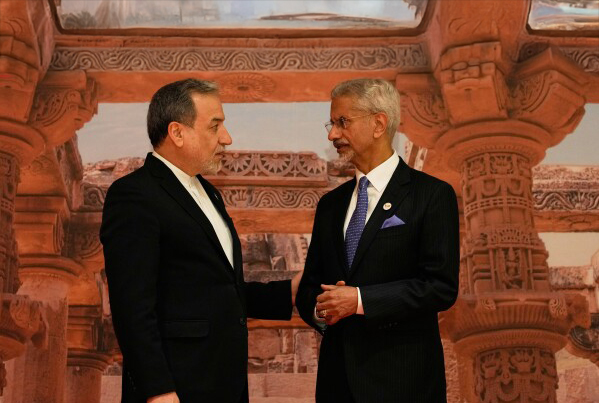
The most consequential drama of the first day unfolded in the plenary session on global and regional matters, where the structural incompatibility of Iran’s and the UAE’s positions was exposed with an acuity that no diplomatic formula could entirely contain. Araghchi urged fellow BRICS members to “unequivocally condemn” what he described as illegal aggression by the United States and Israel, and subsequently — in exchanges with the Emirati delegation — accused Abu Dhabi of “direct involvement in the aggression against my country,” alleging the provision of bases, airspace, territory, and intelligence to United States and Israeli forces. He noted, with revealing ambiguity, that he had “avoided naming the UAE in his main speech for the sake of unity” — a formulation that simultaneously acknowledged institutional norms and violated their spirit.
The UAE, represented by Minister of State Khalifa bin Shaheen Al Marar, maintained throughout a posture of restrained firmness that itself constituted a sophisticated act of diplomatic positioning. Abu Dhabi’s OPEC exit — driven by an irreconcilable combination of long-standing quota frustrations and the catastrophic security exposure created by Iranian attacks on its infrastructure — had already signalled to every observer in the room that the UAE’s tolerance for institutional arrangements that accommodated the state targeting its territory had reached its structural limit. As ORF Middle East’s May 2026 analysis argued, the UAE’s departure from OPEC reflected “a deeper cleavage in the global energy governance architecture” exposing the incompatibility between geopolitical solidarity and institutional membership when the former demands actions the latter prohibits. Yet it would be analytically premature to conclude from this that Abu Dhabi was preparing a comparable departure from BRICS. The economic rationale for membership — access to BRICS payment architecture, NDB financing, and the South-South trade network that BRICS facilitates — remains compelling for a state whose economic model depends on deep integration with the Global South’s largest economies. The UAE’s simultaneous deepening of US security relationships and maintenance of BRICS membership is itself evidence of the complex interdependence that characterises the polycentric order: states pursuing plural strategies across competing coalitions, refusing the binary alignments that Cold War logic demanded.
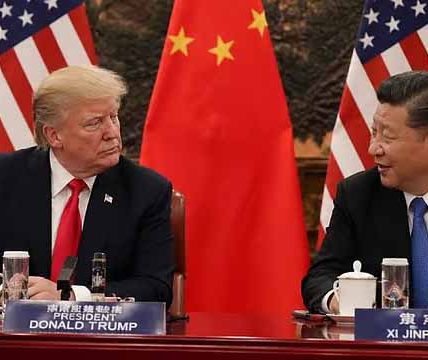
Russia’s Lavrov confined his intervention to general sovereignty principles — a posture of principled abstention reflecting Moscow’s own complex positioning: broadly sympathetic to Iran’s resistance narrative and hostile to American regional hegemony, but anxious not to further complicate its foreign policy environment by appearing to endorse Iranian military actions against Gulf states with which it maintained important economic relationships. China’s absence — represented by Ambassador Xu Feihong rather than Wang Yi, who was in Beijing for Donald Trump’s state visit — was itself geopolitically resonant. The coincidence of Trump’s first visit to Beijing as president with the BRICS ministerial in New Delhi placed China in a position of simultaneous diplomatic obligation to two of the defining dramas of May 2026, with reports suggesting Washington would press Beijing on its economic and strategic ties with Tehran. This structural absence illuminated the degree to which China’s engagement with BRICS’s West Asia debate is calibrated by its own bilateral calculations with the United States — a reminder that even within a putatively anti-hegemonic bloc, great-power interests shape institutional conduct in ways that theory of collective agency cannot fully anticipate.
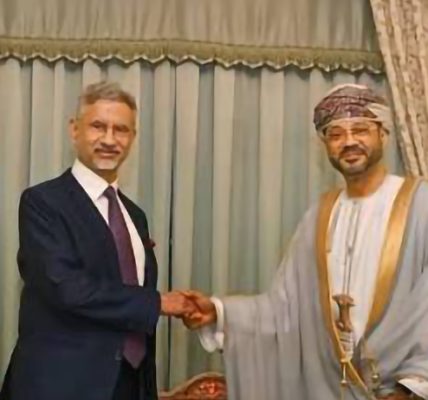
The outcome of these deliberations — a Chair’s Statement acknowledging “differing views” on West Asia while affirming dialogue, sovereignty, territorial integrity, civilian protection, and unimpeded maritime commerce — was precisely calibrated to preserve BRICS’s institutional coherence without endorsing any single member’s strategic framing. That one unnamed member state registered reservations on the Gaza section of the statement, while the statement itself confirmed Gaza’s status as “an inseparable part of the Occupied Palestinian Territory” and reaffirmed Palestinian statehood, reflected similar dynamics of managed disagreement on a second front. India, which has maintained close relations with Israel while consistently supporting Palestinian statehood in multilateral forums, was itself navigating its own layered positioning — simultaneously hosting Araghchi for bilateral discussions and having Prime Minister Modi, during the meeting’s margins, visit the UAE to condemn Iranian attacks as “unacceptable in any form.” This parallel conduct — bilateral engagement with adversaries at the ministerial level while the head of government offered solidarity to the other side — is not diplomatic inconsistency but rather the operational expression of strategic autonomy in a polycentric world.
Governance Reform and Geoeconomics: The Positive Agenda
The second day’s proceedings allowed India to advance the constructive institutional agenda at the heart of its Chairship. On global governance reform, India’s intervention was characteristically direct: the multilateral system “no longer reflects present-day geopolitical realities,” and institutional reform was “not a matter of choice, but of necessity.” The Chair’s Statement, encompassing 63 thematic points, reaffirmed on the landmark occasion of BRICS’s 20th anniversary the grouping’s commitment to “a more just, equitable, agile, effective, efficient, responsive, representative, legitimate, democratic and accountable international and multilateral system.” The demand for UNSC expansion. with greater permanent and non-permanent representation for Asia, Africa, and Latin America. commanded genuinely broad consensus, and the New Development Bank’s continued expansion was endorsed, with the 11th Annual NDB Board of Governors’ meeting taking place simultaneously in Moscow.
On geoeconomics and the “BRICS at 20” session, India advanced its most substantive and forward-looking agenda. Supply chain resilience — whose urgency had been dramatically underscored by the Hormuz disruptions, interrupting not only energy flows but fertilisers, petrochemicals, and goods critical to food security and industrial continuity across multiple BRICS economies — was connected explicitly to India’s connectivity ambitions, including the India-Middle East-Europe Corridor. The disruption of the world’s most critical energy chokepoint had simultaneously exposed the catastrophic vulnerabilities of single-corridor supply architectures and invested alternative routing proposals transiting India with renewed strategic credibility — a geoeconomic opportunity that New Delhi’s Chairship was deliberately positioned to exploit.
On financial architecture, India’s Unified Payments Interface was presented as a scalable model for interoperable cross-border payment systems across the Global South. The BRICS Pay platform — linking Russia’s SPFS, China’s CIPS, India’s UPI, and Brazil’s Pix — with full operational deployment targeted for the September 2026 New Delhi Summit, and the interoperability of BRICS members’ central bank digital currencies, represent the most concrete prospective steps in the practical gradualism of financial resilience-building. New Delhi has been consistent in distinguishing this agenda as diversification rather than confrontation — maintaining a coherent position that neither alienates Western interlocutors nor abandons the legitimate interest of Global South economies in monetary sovereignty. On artificial intelligence governance, climate finance, green energy transition, and digital public infrastructure sharing, the Chairship’s agenda drew on India’s G20 Presidency legacy and the 2025 Rio Declaration’s AI ethics framework, projecting India’s domestic digital infrastructure experience — Aadhaar, UPI, DigiLocker — as a governance model of genuine developmental relevance.
| The Hormuz Chokepoint as Geoeconomic Inflection The Strait of Hormuz crisis of 2026 functions simultaneously as a maritime security emergency, an energy governance failure, and a supply-chain resilience stress test whose implications extend far beyond West Asia. For BRICS as an institution, the blockade exposed a structural vulnerability: a grouping that encompasses both the state imposing the blockade and the world’s largest energy-importing economies cannot afford institutional paralysis on maritime security without forfeiting its claim to geoeconomic relevance. India’s explicit call for “safe and unimpeded maritime flows” — framed as a shared economic imperative rather than a geopolitical accusation — was the only formulation capable of commanding assent across the full membership, and it illustrates why the chair’s rhetorical architecture matters as much as the substantive agenda in diplomatically fractured multilateral settings. |
Strategic Significance: BRICS and the Architecture of a Plural Order
The New Delhi meeting’s outcomes must be assessed within the larger structural context of the transition from unipolarity to complex multipolarity — a shift whose pace and character remain deeply contested but whose directionality has been consistently confirmed by the events of the decade since 2015. The neo-realist framework of power balancing predicts the emergence of counterhegemonic coalitions as the distribution of capabilities becomes more diffuse; the complex interdependence literature anticipates that such coalitions will be characterised by intense economic integration coexisting with political friction; and the constructivist tradition illuminates how identity, narrative, and institutional habit shape the conduct of states within multilateral forums in ways that material interest calculations alone cannot explain. The BRICS of May 2026 simultaneously confirms and complicates all three traditions: a counterhegemonic coalition whose internal antagonisms are as structurally significant as its external postures, and whose institutional coherence depends precisely on the kind of normative and procedural framework — consensus, mutual respect, equal voice — that geoeconomic statecraft theory predicts will be under pressure when material interests diverge sharply.
The concept of structured pluralism, introduced in this article, captures the essential character of BRICS’s current institutional condition more accurately than either the triumphalist narrative of Global South solidarity or the dismissive narrative of institutional dysfunction. Structured pluralism describes a diplomatic architecture in which member states acknowledge irreconcilable differences on specific questions of security and foreign policy while maintaining shared commitments to broader institutional principles, shared interest in collaborative geoeconomic mechanisms, and shared identity as agents of a more equitable global order. It is a condition that requires active and sophisticated diplomatic management — precisely the kind of management that India’s Chairship provided at New Delhi — and whose maintenance is the necessary precondition for the deeper integration that BRICS’s more optimistic partisans envisage.
India’s own strategic position within this architecture deserves separate analytical attention. As the world’s most populous state, fifth-largest economy, democratic polity with deep civilisational relationships across the Global South, a major energy importer with profound interests in Gulf supply stability, a technological power with aspirations to shape AI governance, and a state simultaneously embedded in the Quad, the SCO, the G20’s 2023 host, and the 2026 BRICS Chair — India occupies a uniquely pivotal location in the geopolitical geography of the twenty-first century. Jaishankar’s conduct at Bharat Mandapam exemplified the strategic autonomy doctrine that has defined Indian foreign policy under the current dispensation: refusing alignment with any bloc’s predetermined narrative while advancing national interests and broader principles with equal firmness. The bilateral meeting with Araghchi — described as “detailed” — occurring alongside Modi’s direct condemnation of Iranian attacks on the UAE, illustrated the simultaneous maintenance of relations with adversaries that has become India’s diplomatic signature: not inconsistency, but the operational complexity of a genuinely pivotal power in a genuinely plural order.
| Structured Pluralism and the Limits of Solidarity The Chair’s Statement issued at New Delhi — acknowledging “differing views” across 63 thematic points while affirming shared principles of sovereignty, dialogue, and multilateral reform — is not the diplomatic residue of a failed negotiation but the deliberate architecture of what this article terms structured pluralism: a condition in which irreconcilable differences on specific security questions coexist with durable shared commitments to institutional principles and collaborative geoeconomic mechanisms. Far from representing BRICS’s weakness, the Chair’s Statement represents the only honest and sustainable form of consensus available to a grouping whose membership now spans the full spectrum of the contemporary geopolitical order. The alternative — enforced textual unity concealing fundamental strategic divergence — would be a more dangerous institutional fiction. |
Conclusion: Resilience, Equilibrium, and India’s Strategic Horizon
The September 2026 BRICS Summit in New Delhi will be the defining test of India’s Chairship, and it will be held in circumstances that none of the architects of its agenda could fully have anticipated. A Gulf in crisis, energy markets in structural turbulence, a US-China relationship whose trajectory remains uncertain, and a European strategic landscape still absorbing the consequences of the Ukraine war constitute the environmental pressures within which the September Summit must produce credible institutional outcomes.
The operationalisation of BRICS Pay — the most consequential prospective step in the financial architecture of the emerging plural order — will transform the de-dollarisation debate from rhetorical aspiration into operational reality, and its successful deployment at the September Summit would represent India’s most tangible institutional legacy from its Chairship. The Iran-UAE dynamic within the grouping will require active bilateral management that only a state of India’s relational breadth can credibly provide: New Delhi’s unique capacity to maintain productive channels with both Abu Dhabi and Tehran positions it as a potential facilitator of the kind of de-escalatory dialogue that a resumption of maritime commerce through the Strait of Hormuz would demand. The NDB’s expansion, the CBDC interoperability framework, the AI governance agenda, and the supply chain resilience architecture are not merely diplomatic talking points but genuinely transformative policy domains where the collective capacities of BRICS members — coordinated by a Chairship with both the institutional ambition and the strategic credibility to convert aspiration into delivery — could address developmental challenges that no bilateral relationship can resolve.
What the New Delhi meeting ultimately demonstrated is that the emerging polycentric international order will not be built through the ideological uniformity of a bloc but through the painstaking, unglamorous, and indispensable work of holding diverse coalitions together across their sharpest internal contradictions — advancing shared institutional agendas with intellectual consistency and strategic persistence, while managing, through the disciplines of structured pluralism rather than the coercions of enforced solidarity, the differences that a genuinely multipolar world will always contain. BRICS does not offer, and should not be expected to offer, a comprehensive replacement for the existing international order. What it offers is something arguably more valuable in the present transitional moment: a durable platform for the Global South’s assertion of agency, a set of institutional mechanisms that increase the financial and developmental autonomy of emerging economies, and a diplomatic forum within which the most consequential geopolitical actors of the Global South can manage their differences without recourse to bloc confrontation.
India’s emergence as a central architect of this order — evident in its G20 Presidency, its Voice of the Global South summits, its active multilateral engagement across every major institutional format, and its BRICS Chairship — represents the realisation of a strategic vision built across decades of patient diplomatic investment. In an era increasingly defined by fractured alignments and contested sovereignties, India’s conduct at New Delhi demonstrated that the future of multipolarity will depend less on ideological uniformity than on the diplomatic capacity to sustain strategic coexistence amidst difference — and that the construction of such coexistence is, in itself, the most consequential contribution any rising power can make to the architecture of a stable and plural world order.
In an era increasingly defined by fractured alignments and contested sovereignties, India’s BRICS Chairship demonstrated that the future of multipolarity will depend less on ideological uniformity than on the diplomatic capacity to sustain strategic coexistence amidst difference.
| Strategic Insight BRICS in its expanded form no longer represents ideological cohesion alone. It increasingly reflects a diplomatically managed architecture of strategic coexistence where geopolitical rivals continue to cooperate through geoeconomic interdependence, institutional negotiation, and calibrated consensus. |
Views: 336

Dr. Maheep
Dr. Maheep is Director, Indian Perspective on Global Affairs (IPGA), and a leading analyst of India’s foreign policy and South Asian geopolitics. He earned his PhD in Arab and Islamic Studies. With more than a decade of teaching and research experience in International Relations and Global Politics, he contributes regularly on issues shaping national and global affairs.