






Hydro-politics is fast eclipsing traditional military posturing as the new currency of power in South Asia, where rivers flowing across contested borders are becoming instruments of sovereignty, leverage and geopolitical manoeuvring. The emerging alignment between India and Afghanistan over the proposed Kunar River hydropower project represents one of the most consequential shifts in this evolving geostrategic matrix. It alters regional equations, unsettles Pakistan’s long-cultivated advantage over Afghan waters, and introduces a fresh grammar of statecraft rooted not in coercion, but in cooperative development and sovereign agency.
The contrast shaping this moment could not be sharper. India’s overture to help Kabul harness its own river resources reflects a constructive, stability-oriented vision grounded in development, mutual respect and long-term regional equilibrium. On the other hand, Pakistan’s behaviour has been marked by coercive refugee expulsions, punitive border closures, aerial bombardments and a systematic denial of Afghanistan’s right to exercise sovereign authority within its own territory. While India’s approach enhances Afghan capacity, human development and regional connectivity, Pakistan’s response has eroded its credibility as a fraternal neighbour and exposed a glaring disjuncture between its rhetorical claims of “Muslim solidarity” and its harsh treatment of Afghan civilians and leadership. The moral and strategic contrast is now stark enough to influence regional perceptions and diplomatic alignments.
For decades, Afghanistan watched the Kabul and Kunar rivers enrich Pakistan’s agricultural heartlands while its own villages remained underdeveloped, its farmlands parched and its power deficits acute. With no water-sharing treaty to safeguard Afghan interests, Pakistan drew more than four-fifths of downstream flows without compensation or cooperation, treating Afghan waters as an inherited entitlement rather than a shared resource. The decision of the Islamic Emirate of Afghanistan (IEA) to pursue the Kunar hydropower project marks not only an infrastructural shift but a historic reclamation of sovereignty over natural resources long used by another state. The dam embodies a move from a century of dispossession to a future of agency.
India’s indication of readiness to assist the IEA in developing the Kunar River reflects a calibrated return to the Afghan development arena after the political change of 2021. Unlike the transactional or security-centric approaches adopted by external stakeholders, India’s engagement has consistently centred on Afghan ownership and long-term institution-building. The Zaranj–Delaram Highway, the Afghan Parliament building, the Indira Gandhi Institute of Child Health, the Pul-e-Khumri transmission line, scholarships, community projects and over $3 billion in civilian assistance created a reservoir of goodwill unmatched by any regional power. Even after the Taliban takeover, India continued humanitarian support whether it was wheat, vaccines, medical aid etc and reopened its Kabul Embassy as relations cautiously stabilised in 2025. Against this background, the Kunar project is not a rupture, but a logical extension of India’s developmental diplomacy, now tailored to the emerging geopolitical reality.
The strategic significance of this cooperation lies in how profoundly it disrupts Pakistan’s long-maintained hydrological comfort zone. Islamabad’s water dependence on Kabul has been a quiet yet critical pillar of its internal food security and irrigation economy. Its dismissive approach towards Afghan proposals for upstream dams was designed to preserve this asymmetric advantage. By offering technical and developmental partnership to Kabul, New Delhi enables Afghanistan to transition from a passive provider of free water to an empowered actor capable of regulating flows, storing water for its own agriculture and generating electricity for economic revival. This shift transforms Afghan water from a naturally flowing asset for Pakistan into a strategically governed resource. It reduces Pakistan’s leverage, enhances Kabul’s bargaining position, and redefines the equation from dependency to negotiated coexistence.
This new dynamic gains further potency when viewed against the background of Pakistan’s sharply deteriorating relations with Afghanistan. Islamabad’s forceful expulsion of more than1.5 million Afghan refugees, many of whom had lived in Pakistan for decades, shattered the notion of cultural fraternity. Border clashes along the Durand Line, a boundary never recognised as legitimate by any Afghan government, have deepened resentment. Pakistan’s airstrikes inside Afghan territory under the pretext of counter-terror operations and its uncompromising stance on fencing and militarising the border have only worsened the trust deficit. The outcome is a region-wide recognition that Pakistan’s policy towards Afghanistan is neither guided by religious fraternity nor regional peace, but by a rigid security doctrine that resists Afghan sovereignty unless aligned with Pakistani strategic depth.
In this context, India’s hydro-diplomatic outreach resonates as a stabilising counter-narrative. By focusing on electricity generation, irrigation, and community development, India positions itself as a partner that respects Afghan sovereignty and invests in Afghan resilience rather than extracting political obedience. New Delhi’s approach aligns with its long-standing view that Afghanistan’s stability is essential for a peaceful Eurasian order and that durable peace cannot be manufactured through coercion or proxy politics. Supporting the Kunar project allows India to contribute to Afghan self-reliance without military presence, and to re-enter the Central Asian arc through development-led influence rather than confrontation.
The strategic contours of this engagement are reinforced by the revival of the Chabahar route following the U.S. six-month sanctions waiver to India recently. For the first time in years, India can move goods, assistance and developmental materials to Afghanistan without Pakistan’s veto over transit routes. The Taliban leadership’s renewed interest in Chabahar for trade and food supply diversification signals a shift away from Pakistan’s monopoly over Afghan access to seaports. Combined with water collaboration, this strengthens Afghanistan’s economic and strategic autonomy. When connectivity and water sovereignty converge, the geopolitical map itself begins to tilt.
The implications extend beyond a bilateral re-engagement. This India-Afghanistan hydro-diplomatic convergence subtly challenges the entrenched security template that has dominated South Asian affairs since the Cold War. It dilutes Pakistan’s self-assigned role as the arbiter of Afghanistan’s external ties and reduces the salience of zero-sum rivalry. It also nudges Afghanistan towards a more multi-vector foreign policy, where decisions are based on national interest rather than ideological alignment or historical coercion. For the IEA, this approach offers legitimacy through performance in delivering electricity, irrigation and livelihoods to ordinary Afghans. For India, it creates opportunities to shape an environment less conducive to extremist spillover, narcotics trafficking and geopolitical manipulation by rival powers.
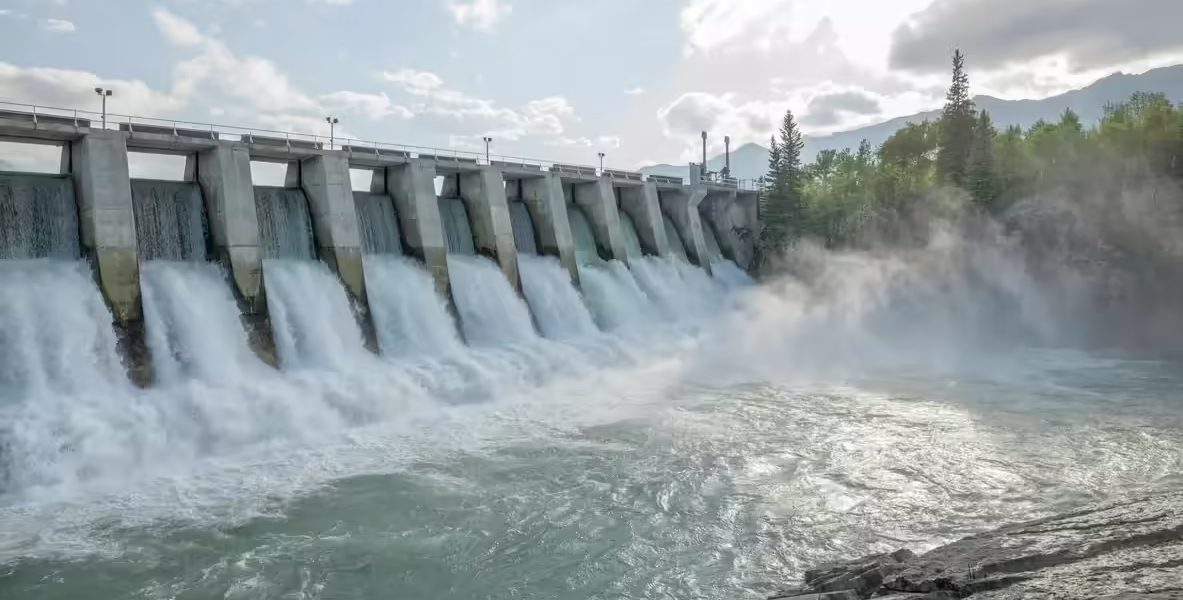
Consequently, the Kunar Dam becomes a symbol of recalibrated power rather than a mere infrastructure project. It underscores that the future of South Asia’s balance of power may be shaped not only by military budgets or diplomatic summits, but by who controls, cooperates on and benefits from natural resources. Water can divide or unite; India’s decision to make it a pillar of constructive engagement rather than pressure distinguishes its statecraft from Pakistan’s punitive model. If executed with foresight, this initiative could catalyse a more stable regional order in which development replaces dependency and sovereignty replaces subservience.
For Afghanistan, this is an opportunity to rewrite its place in regional geopolitics—from a theatre of proxy wars to a sovereign actor shaping its own resource future. For India, it is a strategic yet principled investment in a neighbour whose stability affects the entire arc from the Himalayas to Central Asia. For Pakistan, it is a moment of introspection, for its long-relied upon levers viz. refugee control, transit denial, and water dependence are slipping. A constructive recalibration of Pakistan’s Afghan policy is not only advisable but necessary if Islamabad wishes to avoid further regional isolation.
In essence, the Kunar Dam debate is not about water alone. It is about dignity, sovereignty and the evolution of South Asia’s regional order. It marks a shift from coercive geopolitics to cooperative hydro-politics, offering a rare window in which a historically fractious region could embrace a more balanced, development-centric future. India’s quietly assertive support for Afghanistan’s water rights may well prove to be one of the most strategic diplomatic interventions of the decade, reshaping the power dynamics of the Hindu Kush with the flow of a river rather than the firing of a gun.
Views: 190

Dr. Maheep
Dr. Maheep is Director, Indian Perspective on Global Affairs (IPGA), and a leading analyst of India’s foreign policy and South Asian geopolitics. He earned his PhD in Arab and Islamic Studies. With more than a decade of teaching and research experience in International Relations and Global Politics, he contributes regularly on issues shaping national and global affairs.