


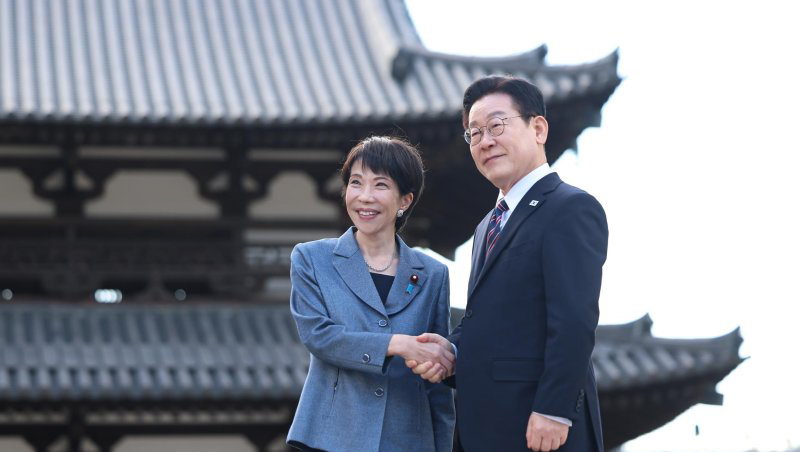







Diplomacy in Northeast Asia is often defined by paradox, nations bound by shared security interests yet divided by historical grievances. Prime Minister Sanae Takaichi’s recent visit to South Korea exemplifies this paradox, but also demonstrates how leadership can transform entrenched mistrust into strategic cooperation. Her outreach is not merely ceremonial. It is a calculated effort to build durable relations and coordinate joint actions against North Korea’s escalating threat.
Historical Burdens and Strategic Necessity. Japan and South Korea remain haunted by the legacy of colonial occupation and wartime atrocities. These unresolved issues have repeatedly obstructed security cooperation, even as both nations confront common dangers. Yet history cannot be allowed to dictate the future of regional security.
Takaichi’s visit signals a pragmatic recognition that reconciliation is not about erasing history but about prioritizing survival. By engaging Seoul directly, she acknowledges that the strategic necessity of cooperation outweighs the political convenience of division. This recalibration is indispensable if Tokyo and Seoul are to present a united front against Pyongyang’s provocations.
North Korea’s Expanding Capabilities. North Korea’s nuclear and missile programs have advanced to levels that threaten both Seoul and Tokyo. Recent tests point to increasingly sophisticated delivery systems, including hypersonic missiles and upgraded ICBM capabilities. The regime’s unpredictability magnifies the danger, making unilateral responses inadequate.
Joint action is therefore imperative. Coordinated missile defense, intelligence sharing, and sanctions enforcement multiply deterrent power. Takaichi’s visit underscores that Pyongyang’s threat is not bilateral but regional, requiring collective vigilance.
Trilateral Security with the United States. The United States has long urged closer cooperation between its two key allies in Northeast Asia. Yet tensions between Tokyo and Seoul have often undermined trilateral coordination.
Takaichi’s outreach strengthens this triangle. It reassures Washington that its allies are aligned, reducing the risk of gaps in defense coordination. For Pyongyang, the message is clear. Provocations will not exploit divisions but will encounter a united front.
Economic and Technological Synergy. Security cooperation extends beyond military drills. Japan and South Korea are technological powerhouses. Joint research in missile defense, cybersecurity, and AI-driven surveillance can enhance resilience against North Korean threats.
Takaichi’s visit lays the groundwork for such synergy. By linking economic and technological collaboration to security, she ensures deterrence is not only about weapons but also about innovation.
Symbolism and Public Diplomacy. Diplomatic gestures carry symbolic weight. A Japanese Prime Minister visiting Korea signals respect and recognition. It tells the Korean public that Japan values partnership, not hierarchy.
For North Korea, the symbolism is equally potent. It demonstrates that Pyongyang’s strategy of exploiting Japan-Korea tensions is failing. Instead of division, it sees unity.
Regional Stability Beyond the Peninsula. North Korea is the immediate concern, but the implications of Japan-Korea cooperation extend further. China watches closely, wary of a consolidated democratic bloc on its periphery. Russia, too, monitors these developments as it deepens ties with Pyongyang.
By strengthening relations with Korea, Takaichi positions Japan as a stabilizing force in the Indo-Pacific. This enhances Japan’s credibility in broader regional frameworks such as the Quad and CPTPP, where stability in Northeast Asia is a prerequisite for wider cooperation.
Domestic Political Courage. Takaichi’s visit is not without domestic risks. Nationalist voices in Japan often resist reconciliation with Korea, while Korean politics remain sensitive to Japanese overtures. Yet leadership requires courage.
By prioritizing strategic necessity over political convenience, Takaichi demonstrates statesmanship. She signals that security and prosperity cannot be held hostage to unresolved disputes.
Strategic Reset in Northeast Asia. Prime Minister Takaichi’s visit to Korea is more than a diplomatic courtesy. It is a strategic reset. By repairing historical fault lines, confronting North Korea’s escalating threat, strengthening trilateral ties with the United States, and fostering economic synergy, she lays the foundation for durable cooperation.
For Japan and Korea, the stakes are existential. For North Korea, the message is unmistakable. Division is no longer an option. For the region, Takaichi’s visit is a reminder that leadership can transform history’s burdens into tomorrow’s alliances.
Views: 65

Khedroob Thondup
Khedroob Thondup is the son of Gyalo Thondup, elder brother of the Dalai Lama. Educated at St. Stephens College Delhi University and the University of San Francisco. He was a personal assistant to the Dalai Lama and accompanied him on his first trip to the U.S. in 1979. He was sent by the Dalai Lama to Beijing from 1980 till 1993 for dialogue talks where he interacted with Xi Zhongxun and Hu Jintao. He has served as Member of the Tibetan Parliament in Exile for three terms and is the President of the Tibetan Refugee Self Help Centre Darjeeling since 1987. He has edited two books, Dalai Lama My Son and Tibet in Turmoil and presently lives in Taipei, Taiwan.


