






In the annals of international diplomacy, recognition is the currency of sovereignty. Yet no state has ever formally recognized the Central Tibetan Administration as a legal government. The reason is not a lack of internal legitimacy. The CTA is a functioning exile administration with democratic elections and institutions. The reason is the iron grip of realpolitik. To recognize the CTA would be to challenge the People’s Republic of China’s territorial claims, a step no government has been willing to take given Beijing’s economic leverage and geopolitical weight.
This silence is not accidental. Under international practice, recognition of governments in exile has precedent, from the Polish government during World War II to Kuwait’s exile government in 1990. Such recognition has generally depended on the prospect of restoration. In Tibet’s case, China’s consolidation of control and its permanent seat on the UN Security Council severely limit that possibility. States therefore avoid recognition not because the CTA lacks internal legitimacy, but because the costs of defying Beijing are prohibitive.
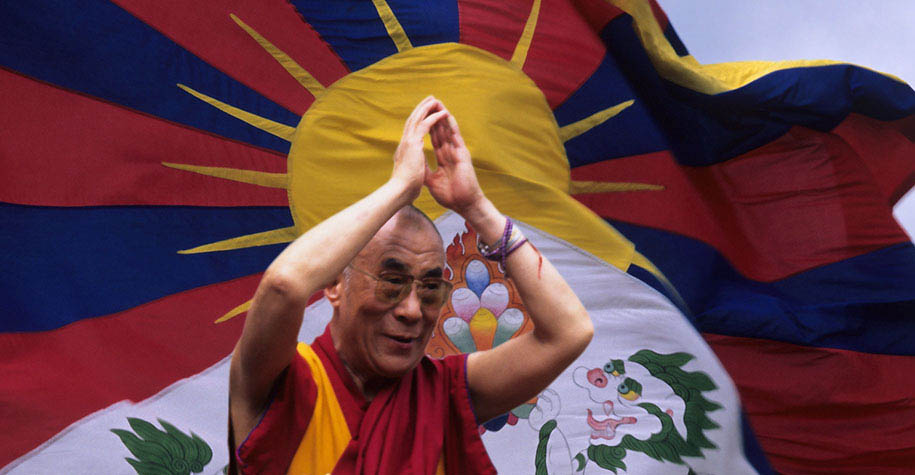
Yet the Dalai Lama occupies a unique space that transcends this diplomatic impasse. He is welcomed worldwide not as a head of state, but as a Nobel laureate, a spiritual teacher, and as the representative voice of many Tibetans in exile. This distinction allows governments to acknowledge Tibet’s cultural and moral cause without triggering China’s retaliatory machinery. Beijing can pressure states to avoid official dealings with the CTA, but it cannot erase the Dalai Lama’s stature as a religious leader whose teachings on compassion and nonviolence resonate across cultures.
The paradox is telling. The CTA embodies Tibet’s political aspirations, but remains constrained by non recognition. The Dalai Lama, by contrast, wields soft power that no decree from Beijing can extinguish. His moral authority ensures that Tibet remains present in global consciousness, even as its political institutions are denied formal standing.
For policymakers, this duality underscores the limits of international law when confronted with power politics. Recognition is withheld not because Tibet lacks a claim, but because China’s coercive and economic capacity makes that claim diplomatically untenable. The Dalai Lama’s enduring voice, however, demonstrates that moral legitimacy can outlast political silence. Tibet may never be recognized in the halls of the United Nations, but it continues to speak through the conscience of humanity.
Views: 225

Khedroob Thondup
Khedroob Thondup is the son of Gyalo Thondup, elder brother of the Dalai Lama. Educated at St. Stephens College Delhi University and the University of San Francisco. He was a personal assistant to the Dalai Lama and accompanied him on his first trip to the U.S. in 1979. He was sent by the Dalai Lama to Beijing from 1980 till 1993 for dialogue talks where he interacted with Xi Zhongxun and Hu Jintao. He has served as Member of the Tibetan Parliament in Exile for three terms and is the President of the Tibetan Refugee Self Help Centre Darjeeling since 1987. He has edited two books, Dalai Lama My Son and Tibet in Turmoil and presently lives in Taipei, Taiwan.