


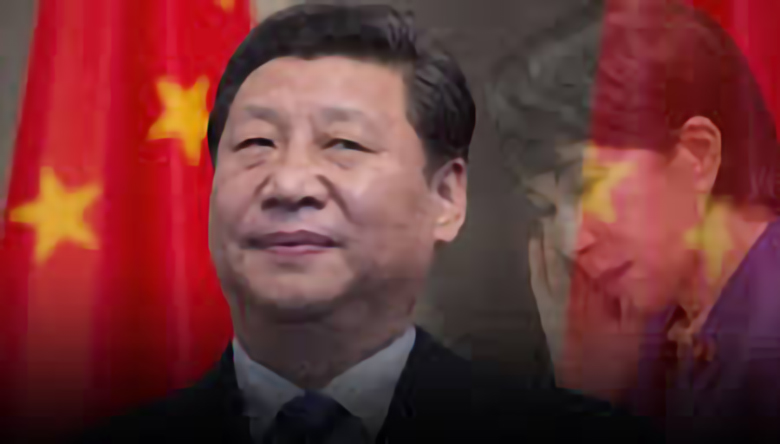







When Chinese officials declare they “can’t stand any more,” history shows it is not mere rhetoric but a prelude to military action. The phrase has been used only twice by the Communist Party of China (CPC), before the 1962 war with India and the 1979 war with Vietnam, each time signaling a decisive shift from narrative to force.
China’s political language is famously layered, often designed to leave room for ambiguity. Yet certain phrases carry unmistakable weight. “Can’t stand any more” is one such marker. It is not a casual complaint but a rhetorical threshold: the point at which Beijing signals that patience has expired and action will follow.
• 1962 Sino-Indian War: In the months leading up to the conflict, Chinese leaders repeatedly warned that India’s “Forward Policy”, placing outposts in contested Himalayan territory, was intolerable. When Beijing declared it “couldn’t stand any more,” the phrase crystallized frustration into justification. Within weeks, China launched a full-scale offensive across the border.
• 1979 Sino-Vietnamese War: After years of tension over Vietnam’s invasion of Cambodia and its alignment with the Soviet Union, Beijing again invoked the phrase. This time, it was a signal that China would “teach Vietnam a lesson.” The short but brutal war followed almost immediately.
1. Narrative to Action: China’s leadership often couches grievances in historical victimhood or sovereignty claims. “Can’t stand any more” marks the pivot from narrative-building to kinetic response.
2. Domestic Legitimacy: The phrase rallies domestic audiences, portraying China as patient yet firm, forced into action by intolerable provocation.
3. Strategic Warning: Internationally, it functions as a final warning. Those who dismiss it risk misjudging Beijing’s resolve.
The rarity of the phrase underscores its gravity. Unlike routine diplomatic protests, it is a threshold signal, a declaration that China’s strategic calculus has shifted. For policymakers and analysts, recognizing this linguistic marker is essential. When Beijing says it “can’t stand any more,” history suggests the next step is not negotiation but confrontation.
China’s political lexicon is a battlefield in itself. Most phrases are designed to obscure intent, but “can’t stand any more” is stark in its clarity. Twice in modern history, it has preceded war. If uttered again, the world should understand: Beijing is no longer speaking in narratives. Now It is preparing to act against Japan.
Views: 165

Khedroob Thondup
Khedroob Thondup is the son of Gyalo Thondup, elder brother of the Dalai Lama. Educated at St. Stephens College Delhi University and the University of San Francisco. He was a personal assistant to the Dalai Lama and accompanied him on his first trip to the U.S. in 1979. He was sent by the Dalai Lama to Beijing from 1980 till 1993 for dialogue talks where he interacted with Xi Zhongxun and Hu Jintao. He has served as Member of the Tibetan Parliament in Exile for three terms and is the President of the Tibetan Refugee Self Help Centre Darjeeling since 1987. He has edited two books, Dalai Lama My Son and Tibet in Turmoil and presently lives in Taipei, Taiwan.


