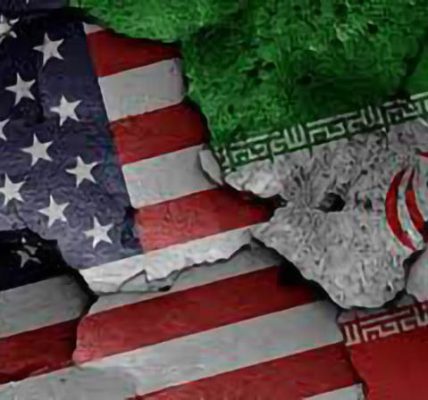
The Shanghai Cooperation Organization (SCO) summit in Bishkek this week offered a revealing glimpse into Beijing’s delicate diplomatic choreography. On paper, the ten-country bloc stood united in condemning “military strikes” against fellow member Iran. Yet Xi Jinping’s decision to avoid a formal bilateral meeting with Iranian President Masoud Pezeshkian underscored the careful tightrope China is walking: supporting Iran enough to preserve strategic ties, but not so visibly as to alienate Washington or Gulf partners.
The SCO’s Collective Voice vs. China’s Silence
The SCO’s statement of solidarity with Iran was predictable. As a regional security forum dominated by China and Russia, it often positions itself as a counterweight to Western-led institutions. But Beijing’s muted approach—no official readout of Xi’s brief exchange with Pezeshkian—signals that China is unwilling to let Iran’s grievances dominate the summit agenda. Instead, China prefers to keep the SCO’s consensus broad and symbolic, while avoiding commitments that could complicate its global balancing act.
Why China Keeps Iran Close but at Arm’s Length. Strategic Utility
Iran provides Beijing with discounted energy supplies, access to Middle Eastern markets, and a partner in challenging U.S. influence. Geopolitical Risk: Openly embracing Tehran risks further confrontation with Washington, especially as U.S.–China relations remain strained over trade, Taiwan, and technology. Gulf Partnerships: Beijing has cultivated deep economic ties with Saudi Arabia and the UAE. A visible tilt toward Iran could jeopardize these relationships, particularly in energy and infrastructure sectors. Diplomatic Choreography: By limiting engagement to a brief, undocumented conversation, Xi signals support without binding China to Iran’s confrontational posture.
The Gulf Dimension
China’s economic footprint in the Gulf has expanded dramatically. The UAE is a hub for Chinese logistics and finance, while Saudi Arabia is a cornerstone of Beijing’s energy security. Both states view Iran with suspicion, and Beijing knows that overt alignment with Tehran could undermine its credibility as a neutral partner. Thus, China’s silence in Bishkek was not indecision—it was strategy.
Implications for Washington
For the United States, China’s maneuvering is a reminder that Beijing seeks to play all sides. Washington cannot count on China to isolate Iran, but nor should it assume Beijing will fully back Tehran. Instead, China’s approach is transactional: it will support Iran when useful, but hedge when costs outweigh benefits. This balancing act complicates U.S. efforts to rally Gulf states against Iran, as Beijing positions itself as an indispensable partner to all.
Conclusion
A Carefully Managed Ambiguity. The SCO summit highlighted China’s preference for ambiguity over confrontation. By condemning strikes on Iran collectively but avoiding bilateral fanfare, Beijing preserved its credibility with Tehran while protecting its broader interests in the Gulf and beyond. This is not indecision—it is deliberate choreography. China’s balancing act is less about choosing sides than about ensuring it never has to.
Views: 69

Khedroob Thondup
Khedroob Thondup is the son of Gyalo Thondup, elder brother of the Dalai Lama. Educated at St. Stephens College Delhi University and the University of San Francisco. He was a personal assistant to the Dalai Lama and accompanied him on his first trip to the U.S. in 1979. He was sent by the Dalai Lama to Beijing from 1980 till 1993 for dialogue talks where he interacted with Xi Zhongxun and Hu Jintao. He has served as Member of the Tibetan Parliament in Exile for three terms and is the President of the Tibetan Refugee Self Help Centre Darjeeling since 1987. He has edited two books, Dalai Lama My Son and Tibet in Turmoil and presently lives in Taipei, Taiwan.